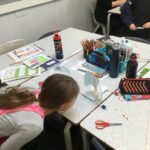
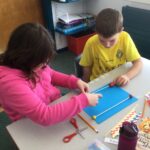
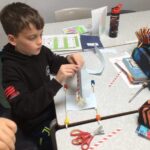
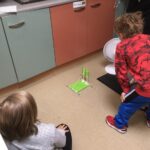
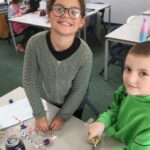
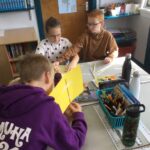
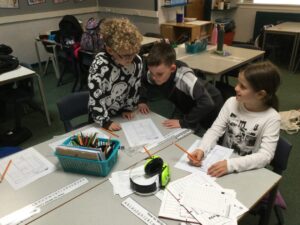
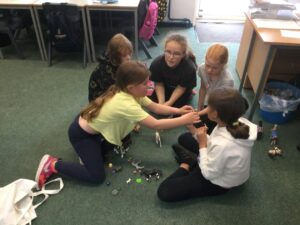
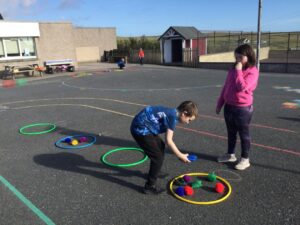
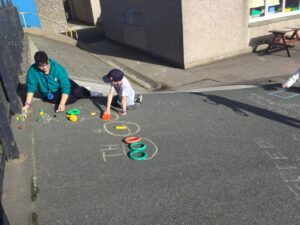
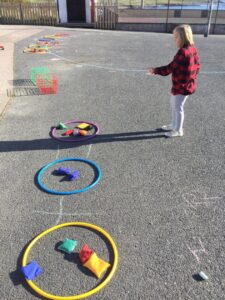
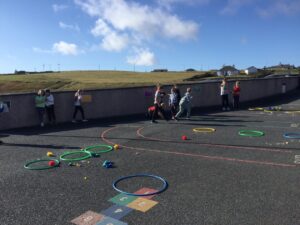
We have been looking at place value and how larger numbers are constructed. Each hoop represented a digit within a number. We placed the correct number of objects in each hoop to show our understanding of the value of each part of the number.
There is a lot to think about when we talk about the value of each part of a number.
We tested the last of our wind powered cars today. Some groups needed more time to make slight modifications to their sail or car structure. As well as engineering skills being developed here, the pupils were working with a partner to share ideas, make decisions and persevere with the task when it didn’t always work first time. What a lot of learning going on!
Some cars didn’t get finished in time, but those pupils will still get the chance to test their sail making abilities, using a ready made toy car.
As each car was tested. it was lovely to hear the positive feedback given to each group, along with some helpful tips on how to improve on each design. Some common themes were:
Getting the right shape and size of the sail
Can the wheels turn?
Is anything on the bottom of the car creating too much friction? We realised that the car would need even more wind energy to help it to move.
How the sail was held up – was it secure enough?
With Mrs Smith, the class have been working on their measuring skills and these skills were put into good use for this task! There were lots of helpful pupils who were keen to read how far each car had travelled. Very accurate measuring from all!
All of the cars moved when wind energy was provided, even if just a little bit. However, the most successful wind powered car travelled a massive 1m 80cm!
Even when things didn’t go to plan, it didn’t matter! We had fun watching the results and learning from the process. This car was even pushed over by the wind!
As part of our topic looking at Renewable Energy, we have been working with a partner this week to construct a wind powered car. Each group were only allowed to select up to 4 “wheels” using the materials provided, along with straws, wooden skewers and tape.
This was definitely a task to test our patience and perseverance! We quickly found that our first designs were not quite right and needed to be modified.
Then it was time to have a little test to see if their cars were going to work. Most groups found that there were still small changes to be made to improve on their design.
It was lovely to see everyone working together to solve the problem. What a helpful bunch we are in our class!
Next week we will set up a fair test and measure how far each car travels when wind energy is provided. We will also evaluate our own designs, thinking about what could be adapted to make improvements. We’ll let you know the results next week!
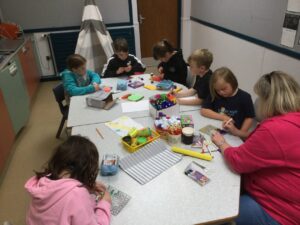
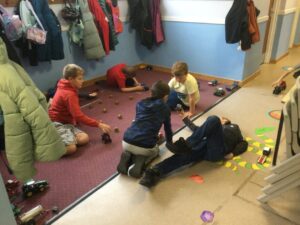
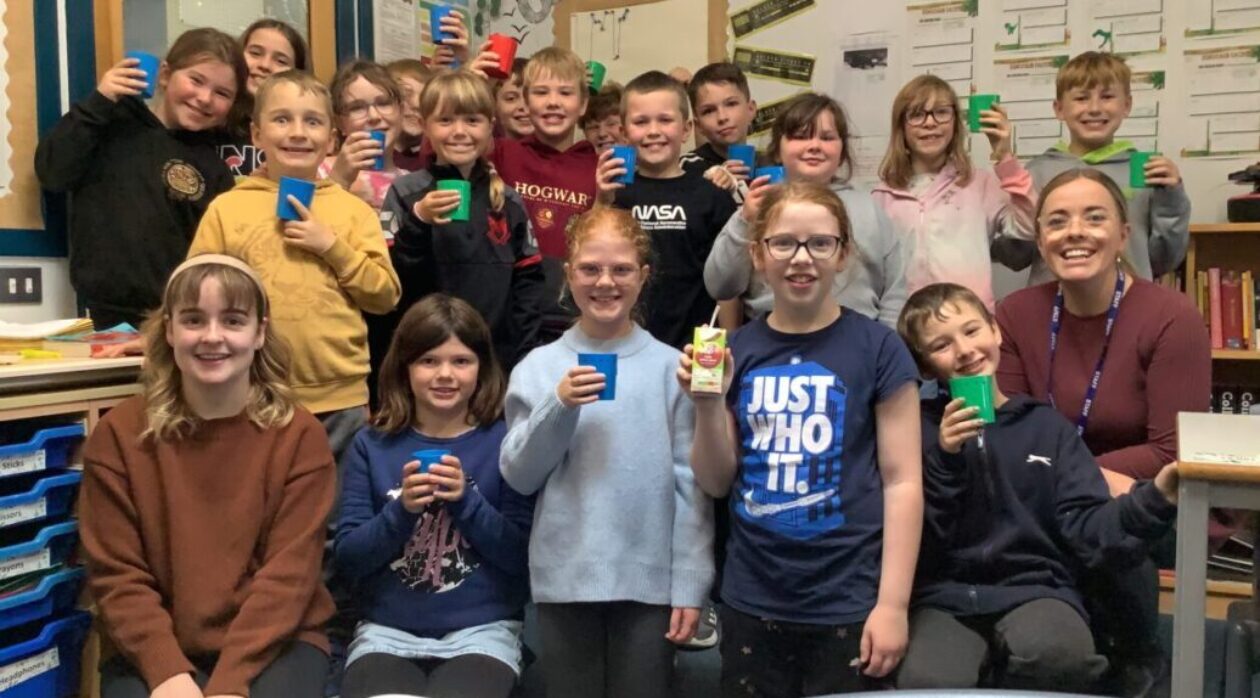
What a lovely afternoon we had, playing together with friends!
Playing Dungeons and Dragons
Playing with horses
Craft and play dough
Busy on the farm
A photo opportunity was missed for those who were playing table tennis and Boccia in the hall, but they had lots of fun too!
When the class were asked if they had been doing any learning this afternoon, it was amazing to hear what they felt was important as they were playing.
Some of the main themes were:
Sharing
Helping
Taking turns
Solving problems
Thinking of others
What a great start P4/5/6! I can’t wait until the next one!
Here is a brief overview of some of the learning that will be taking place in P4/5/6 over the coming term.
Maths – Place Value, Number Bonds & Measuring Tasks
Language – Spelling Groups, Grammar Groups and Handwriting Activities
Reading – Daily ERIC Time (Everyone Reading In Class) alongside Reading Groups and our class novel, ‘The City of Ember’.
Writing – Creative writing ideas that arise from our novel and other written tasks that allow us to work on our use of punctuation, sentence structure, spelling etc…
Listening & Talking – Encouraging good listening skills, especially to new routines and instructions. Encouraging respectful talking to both staff and peers alike.
We had an introduction to basic work on probability for something a little bit different this week, as we head towards the end of term. Work in this area also takes in work on Fractions and Information Handling which we are looking at in class just now so the game ‘Blocko’ fitted in well!
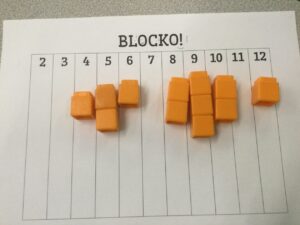
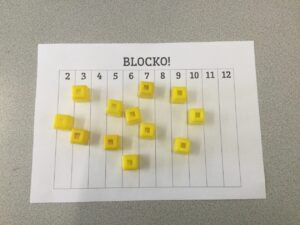
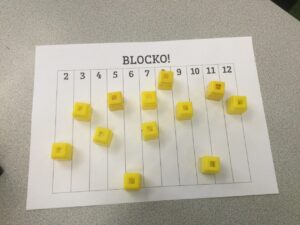
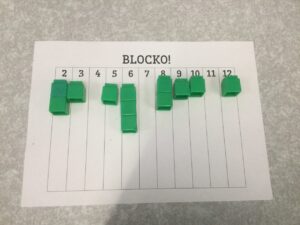
Each pair were given a board with sections marked 2 -12 and 12 cubes. They were asked to arrange the cubes in any way they liked.
Some chose their favourite numbers.Some placed them randomly.Some placed one on each number with one extra placed randomly.
They were then told the rules of the game and were given the chance to rearrange their cubes once they had been given the full instructions! When two dice were rolled, the total of the two numbers would be shouted out and if they had a cube on that number, they could remove it. The winners would be the first to remove ALL cubes and shout, “BLOCKO!”
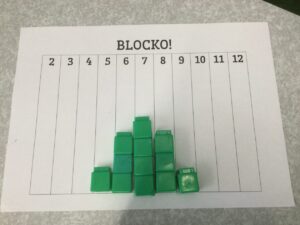
Some were happy with their choices and chose to leave them as they were. Others began to think about our introduction to probability and began to realise that some totals are more likely to be rolled than others, given the number of combinations that can make them.
Random placement but changed as the photo below shows.This pair thought there would be more likelihood that the totals 5, 6, 7, 8 and 9 would be thrown.
We had a couple of competitive games with everyone keen to be the first to remove all their cubes!
For our second run through, we recorded the results we got and displayed them in a Frequency Chart. We discussed what this tells us about the probability of rolling certain totals and we talked about what surprised us. We did not expect 3 to be rolled so often given that there is only one way to make it!
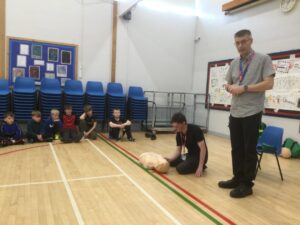
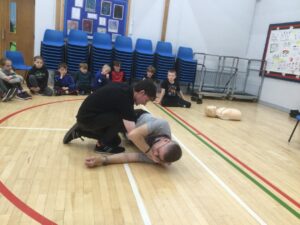
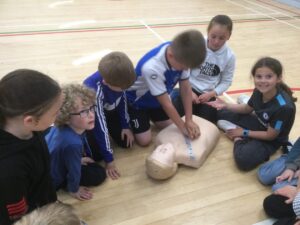
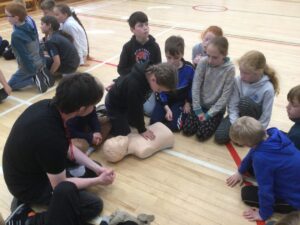
Our Health and Well-being work this term has centred around the safe use of medicines. This led us to find out about basic first aid techniques that should be carried out when minor injuries happen. Discussions naturally developed into what would happen if….? We decided to invite Andrew Best, a First Aid Responder, to talk to our class and to demonstrate what would happen in more serious situations.
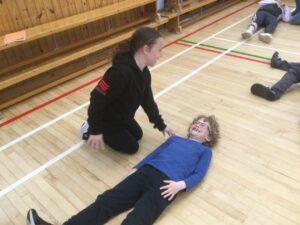
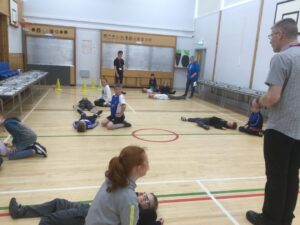
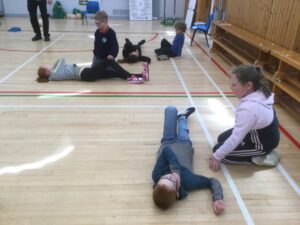
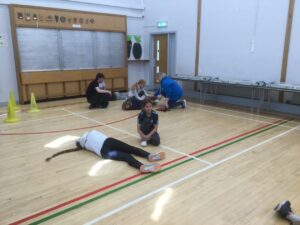
We were told about the first action to take on finding someone who is clearly unwell. Check you are safe and speak to them, gently shaking them, to see if they respond.Check for signs they are breathing and, if so, put them into the recovery position and call for help.
We then had the opportunity to practise putting our partners in the recovery position.
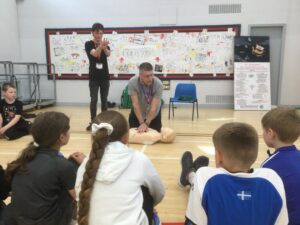
Andrew and Jack then showed us what to do if the person wasn’t breathing. He talked us through making a 999 call and emphasised the importance of getting help quickly. We’ll talk more about this next week.
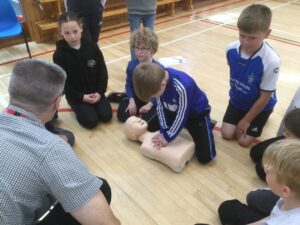
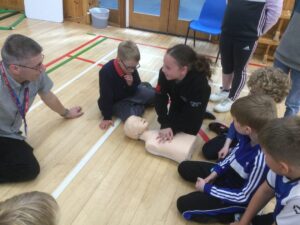
He talked us through giving CPR on adult bodies, children and babies. We all got to experience what this felt like using his dummies. We were surprised at how hard and deep you had to press down!
Andrew showed us how to use a defibrillator and we talked about where to find the nearest one to our school.
We would like to say a big thank you to Andrew and Jack. Everyone has hopefully learned some life long skills today and, who knows, maybe a spark of interest for some future careers has been lit!
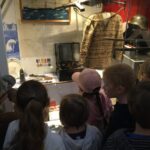
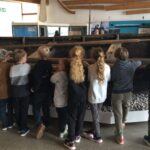
Primary 4/5 visited The Shetland Museum on Wednesday 5th June to learn more about Shetland in World War Two.
Lots of changes were taking place in Shetland during that time and it was interesting to learn about how people lived and adapted to these changes.
We looked at World War Two exhibits, learning about the Home Guard, The Shetland Bus operation, stories about men who were fighting in other countries and how soldiers created their own entertainment here in Shetland to boost morale.
We learned that materials were rationed and it was common for children to make their own toys out of things they could find around the house. We made our own peg dolls! What a creative bunch in P4/5!
Just another blogs.glowscotland.org.uk – Shetland site
 (1 votes, average: 1.00 out of 1)
 Loading...