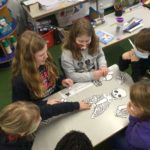
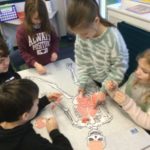
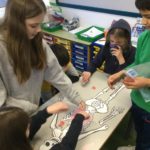
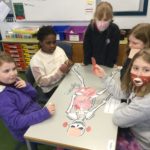
Today we worked in groups to try to build a skeleton! It was interesting to see if anyone knew how our bones are connected. We had fun trying to identify the internal organs too and where they are located inside our bodies.
Last week we wrote down all of the things that we would like to find out about the Human Body. So many excellent questions! We are going to begin group research projects soon to try to answer some of our questions.
I wonder where this goes…?
Working as a team to decide where each organ is located.
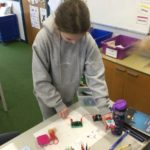
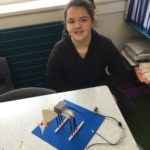
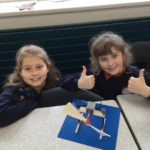
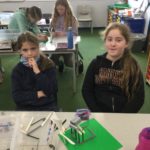
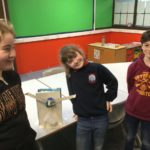
In P4/5/6, we have been learning how to build electrical circuits as part of our topic work. We have also looked at which materials act as conductors of electricity and which materials are insulators.
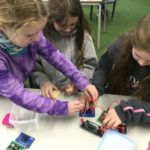
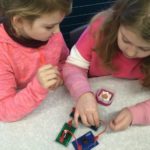
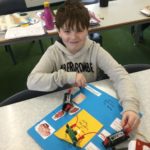
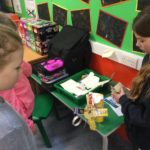
We found out that metal is a conductor, so we used tin foil to help us build an electrical quiz board for the younger pupils in our school.
We thought carefully about the focus for our quizzes and tried to keep in mind how to make the questions suitable for younger pupils.
It was amazing to see how many social skills were developed during this process: turn taking, co-operation, talking and listening, compromising and providing support and encouragement to each other. Of course, there were opportunities to develop ICT skills too. It was lovely to see so many pupils eager to pass on their ICT knowledge! What a team!
To play our games, you need to use an electrical circuit. Instead of completing the circuit, the wires at each end connect to our quiz board – one wire to a question and the other wire to the answer. If the question and answer match, the bulb will light up! This means that we have completed the circuit!
We can’t wait to show you the finished quiz boards soon and test them out on the P1/2 and P2/3/4 classes!
Did you manage to complete the circuit?
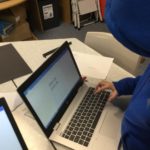
Using ICT skills to create questions and answers.
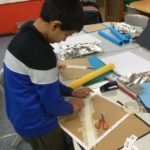
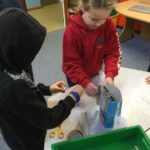
Ayanda is connecting his question and answer on the back of his board with tin foil. Then he has to cover this with tape before connecting the next question with its answer. The tape acts as an insulator to make it safe and help the game to work!
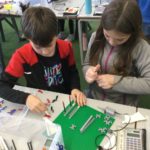
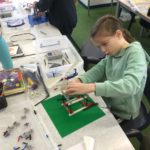
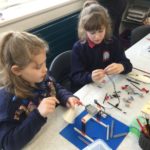
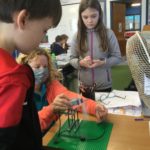
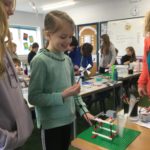
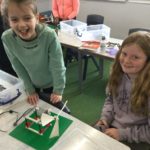
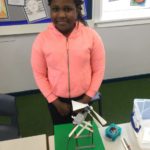
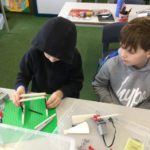
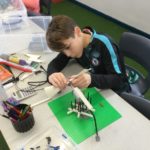
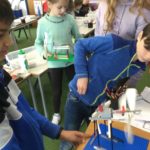
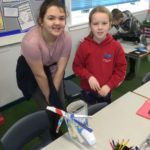
Emma Chittick, who is a STEM Engagement Advisor for Skills Development Scotland, came in to help us with another STEM wind turbine challenge., but this time we used LEGO!
She set a competition to see which design could generate the most power. The tricky part was trying to build a strong structure to set the turbine on. The class also had to consider how they attached their blades and in which direction they were facing.
Everyone was so engaged and worked well on their own or with a partner to complete the task.
Well done P4/5/6! You did a great job!
Great teamwork to build a successful wind turbine.
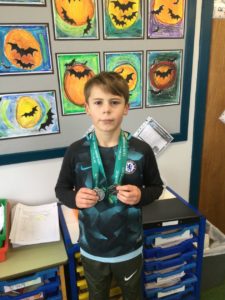
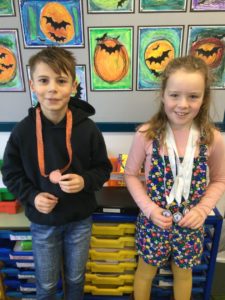
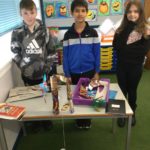
Some pupils in our class took part in a swimming competition in Lerwick recently. Robbie and Kirsty took in their medals to show us! Didn’t they do well!
As part of our topic work, we have been learning about Renewable and Non Renewable energy sources. We discussed the advantages and disadvantages of these and which ones would work best in Shetland.
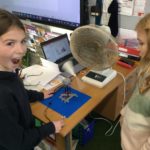
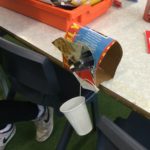
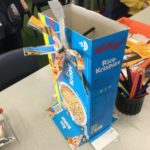
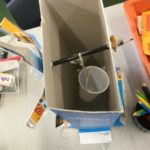
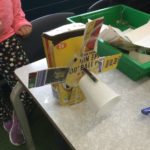
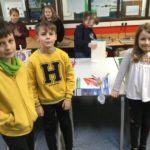
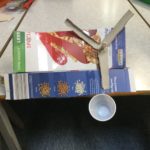
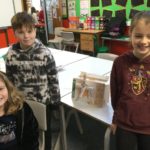
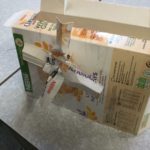
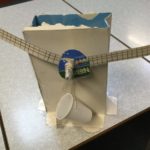
Last week, we worked in teams to design and create a wind turbine using a selection of materials. The turbine had to turn when we used a hair dryer on it and it also had to lift a plastic cup! Lots of things to consider in their designs!
It was lovely to watch everyone interacting and taking turns to contribute. Everyone showed consideration towards the ideas shared and compromises were made as to what the design would look like and how it would work.
It was important to try little tests now and again, to check if any changes needed to be made. Some groups found that when the hair dryer was switched on, the blades of their turbine were not strong enough and required further reinforcement. Some found that there blades were the wrong size or shape and some discovered that they needed to attach their cup differently so that it would lift without getting tangled in the turbine blades. Lots of learning going on!
We tested all the designs and everyone had the chance to add their thoughts on what they thought had worked well and what could be done to improve their designs further. I was impressed with how the children were able to make suggestions in a such a positive, caring and considerate way. Look out world…some future engineers here!
All very busy!
Great team work going on here.
Everyone worked well in their group.
It was definitely a case of try, try and try again!
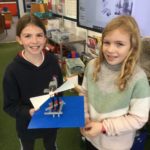
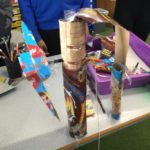
This team managed to design a turbine that could turn and lift the cup!
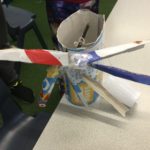
Great idea for the blades here!
Brilliant social skills being developed with this group. Lots of challenges, but they took it in their stride!
Super team work to create this design.
Another successful wind turbine. Lots of discussion and changes to their design allowed them to make a successful design.
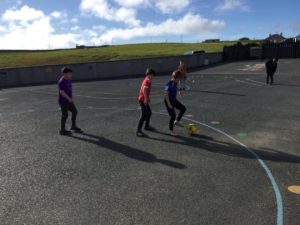
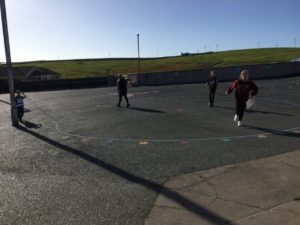
On Monday we had a “Time Scavenger Hunt” for our Maths session. Some helpers hid various time cards around the playground for others to find. Everyone had to work out the time shown on their sheets and look for the matching time in the playground.
On each time card was a letter. When all of the letters were found, we were able to work out the secret message!
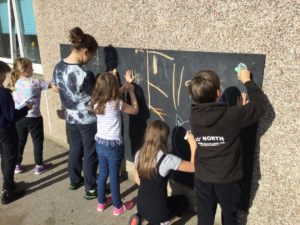
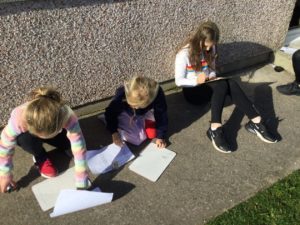
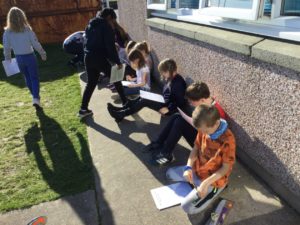
On Tuesday it was so sunny and warm outside our classroom that some of the children wanted to work outside on their multiplication problems.
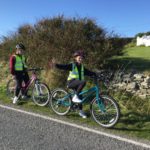
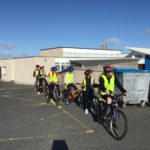
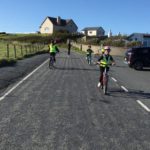
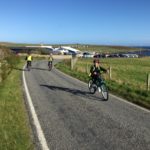
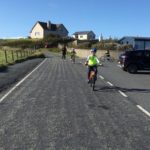
For 6 weeks this term, P6 have been learning about how to stay safe when cycling out on the roads. On Monday this week, they had their final session. They have all done so well!
(1 votes, average: 1.00 out of 1) Loading...
Just another blogs.glowscotland.org.uk – Shetland site

 (1 votes, average: 1.00 out of 1)
 Loading...