Primary 5b have been trying some tongue twisters in Spanish and French. We thought it was challenging but really fun!
Spanish tongue twister
Cuchara, cucaracha
cucharita, cucarachita.
French tongue twister
Mon père est maire, mon frère est masseur.
Primary 5b have been trying some tongue twisters in Spanish and French. We thought it was challenging but really fun!
Spanish tongue twister
Cuchara, cucaracha
cucharita, cucarachita.
French tongue twister
Mon père est maire, mon frère est masseur.
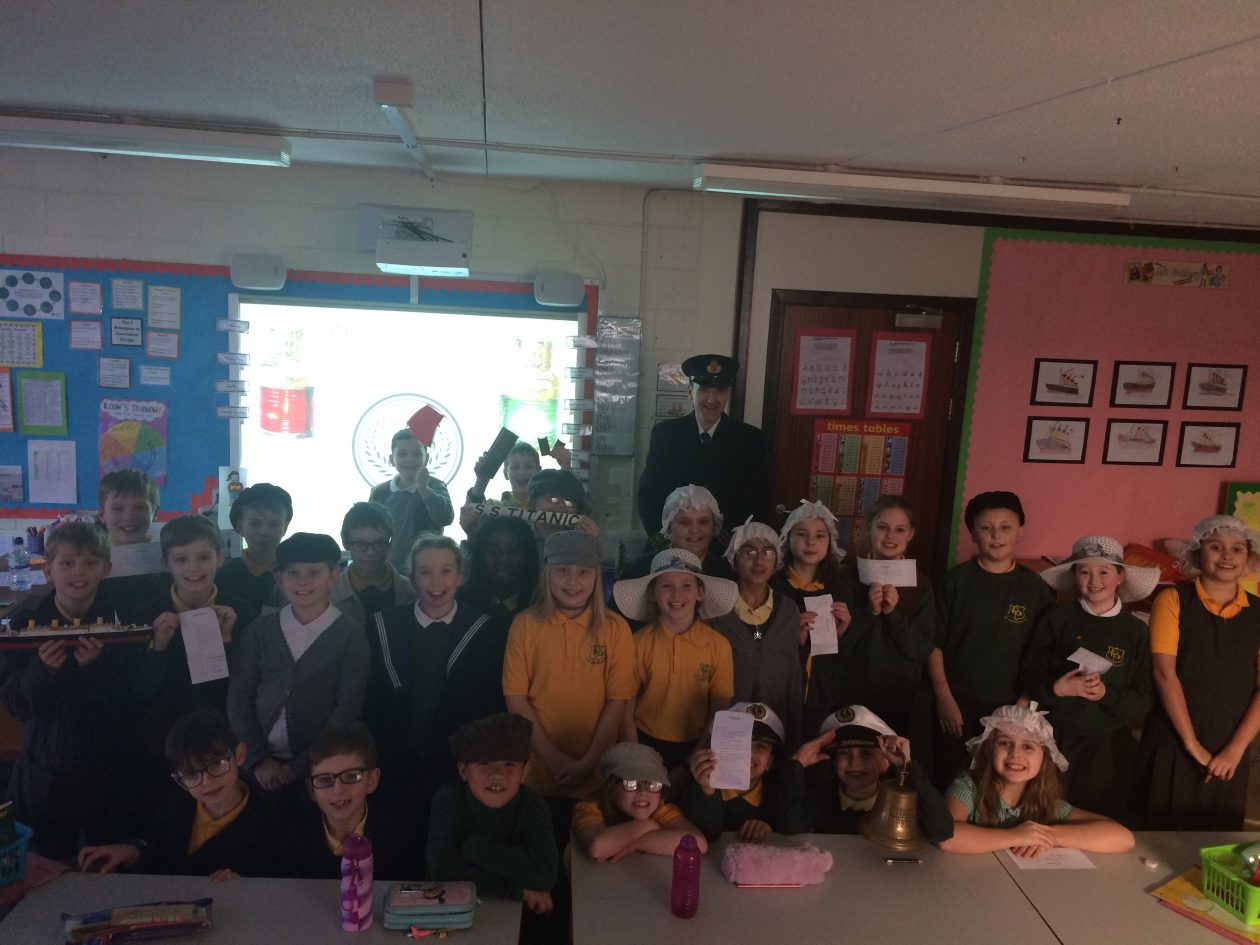
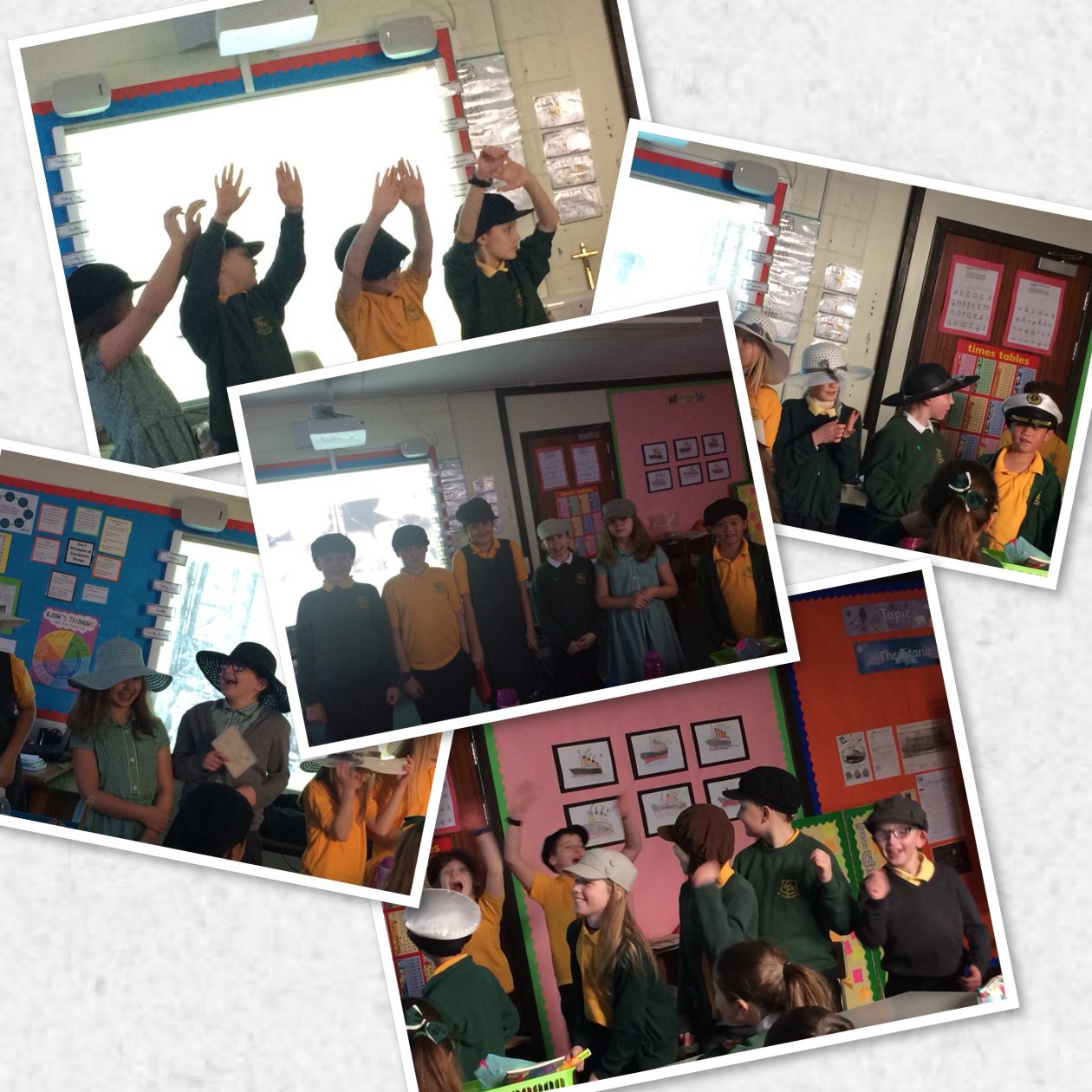
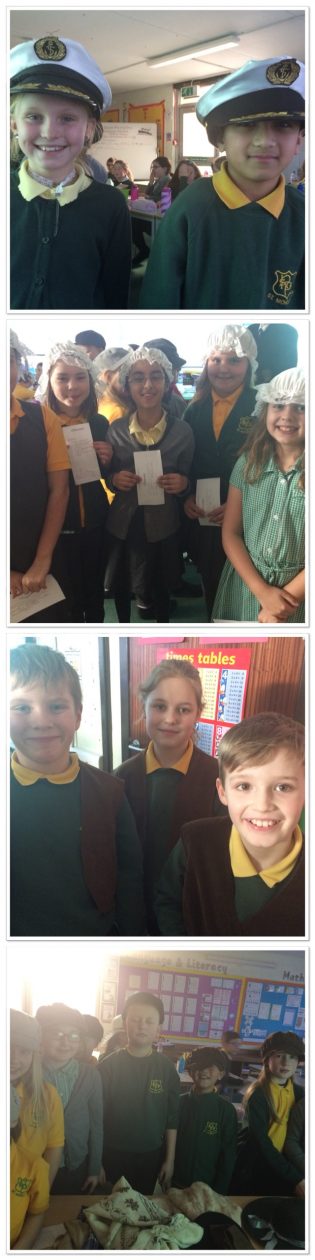
Natalia – I liked when we dressed up and played a character on the Titanic
Adam – I learned that workmen had to be at 6:00 am sharp or they would be sent home by the time keeper.
Maisie – I learned that when the Titanic left Southampton it almost crashed.
Lilya – I learned that the people that worked in the Titanic had 6 minutes to go to the toilet. Once one of them fell asleep and the time-keeper started banging on the door.
Adil – I learned that the smoke from the cooking went through the fourth funnel to make it look like it was working.
Archie – I enjoyed dressing up as a purser.
Marta – I learned that the carpenters who worked on the Titanic took spare pieces of wood home to show their families how nice the wood was.
Primary 4 have been learning about the very famous Scottish poet, Robert Burns. We now know lots of facts about him!
Milo – Robert Burns is sometimes called ‘Rabbie’.
Erin – He is a famous poet and songwriter who lived in the 1700s.
Tatenda – He started writing poems when he was younger to impress the ladies.
Finlay A. – He lived in a cottage in Alloway.
Alex – Robert Burns grew up on a farm. His Dad died when he was 25 so Rabbie had to take over the farm with his brother.
Ellie – Robert Burns died when he was only 37 years old.
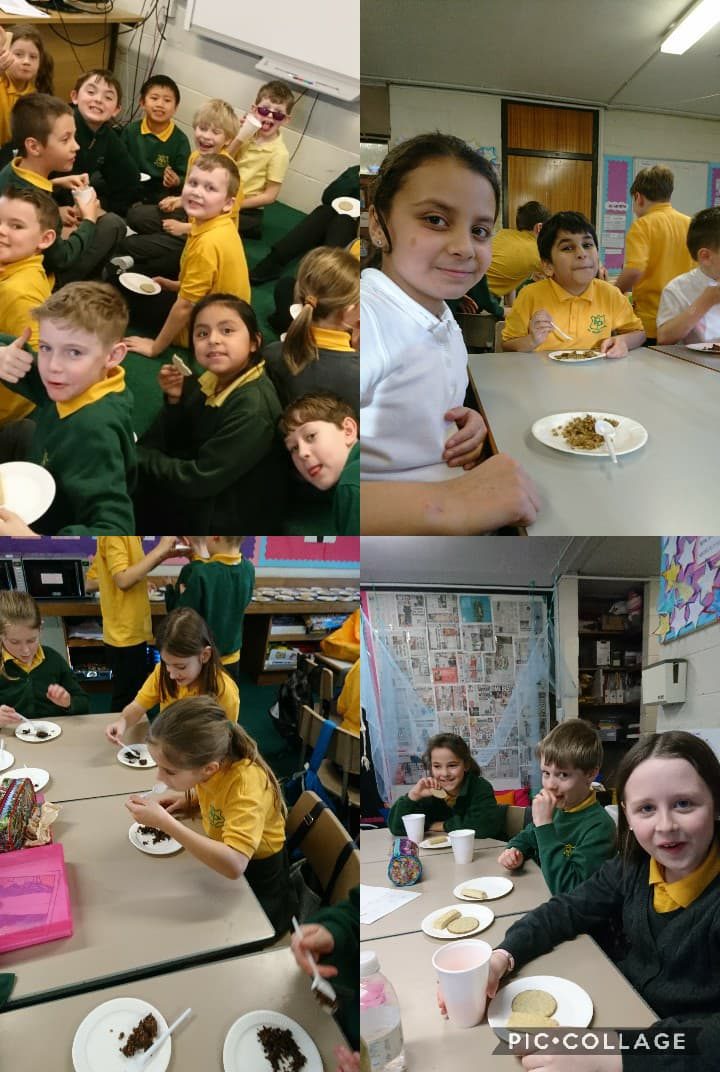
On Robert Burns Day we celebrated in class by tasting some Scottish foods and celebrating our Scottish culture.
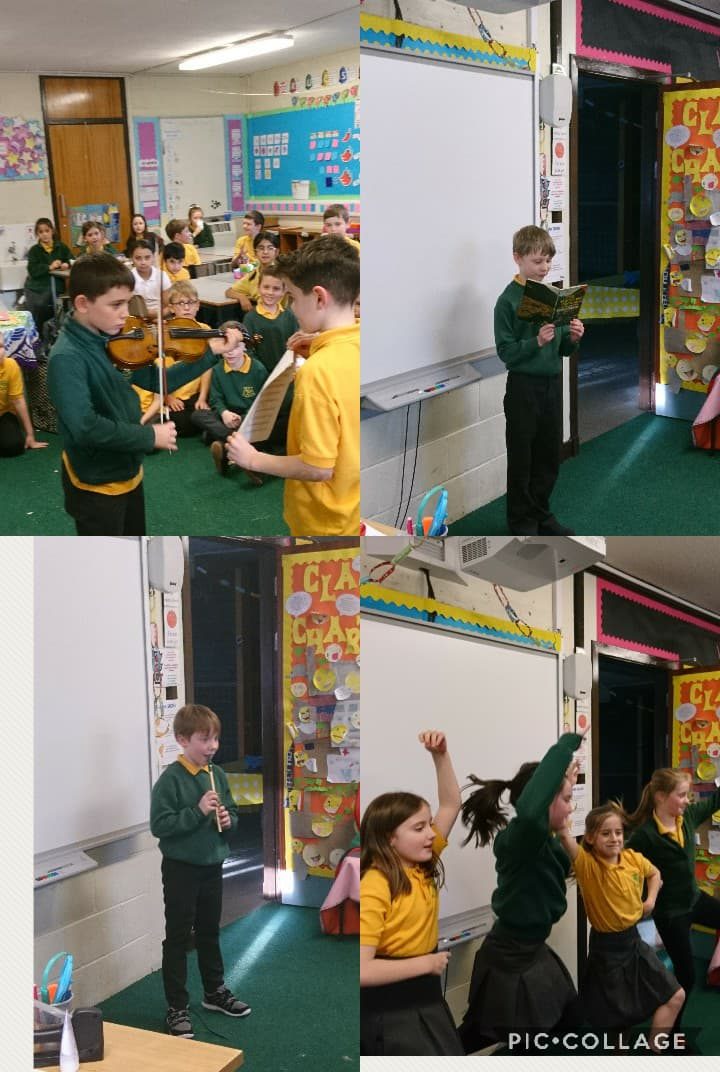
Neve, Neve, Fallon and Carson entertained us with some Highland Dancing. Finlay F. treated us to ‘Auld Lang Syne’ and both he and Connor played ‘Scotland the Brave’. Matthew read one of Burns’ famous poems called ‘Address to the Haggis’.
We got to taste haggis, shortbread, oatcakes and Irn-Bru. Yum! We took a vote to see which was the most popular of the foods. Irn-Bru had the most votes, while haggis had the least number of votes because it was ‘too spicy’!
During our STEM activities this week we decided to explore floating and sinking as it would be useful learning alongside our Titanic topic.
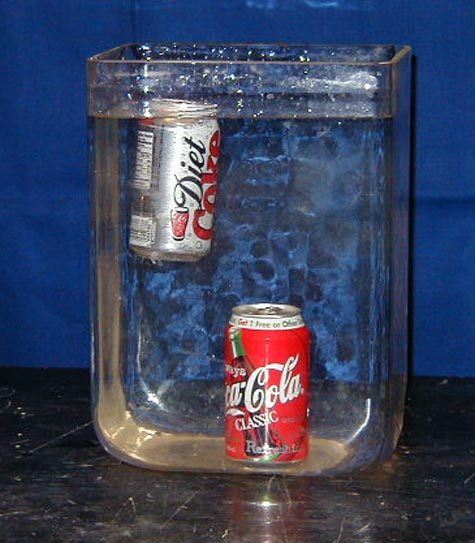
Our first activity involved making a prediction to decide if cans of juice would float or sink and why we made this hypothesis. We discovered that the cans of diet juice floated as they were less dense than the cans with sugary drinks. We also discovered that the non-diet juice contained over 18 café sized packets of sugar. After much discussion we concluded that water or milk would be a healthier option.
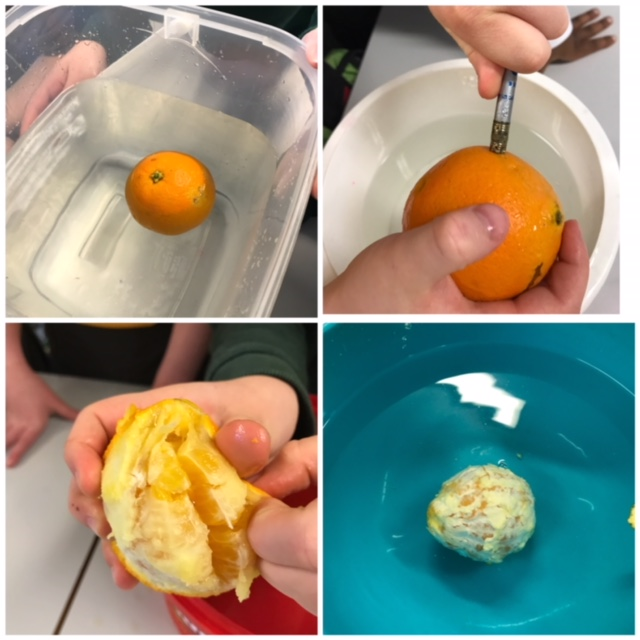
The next challenge was to make a change so that the floating orange would sink. The groups worked well coming up with different ways to achieve this: trying to squeeze the juice out, making holes in the skin and cutting it into smaller pieces. However the removal of the skin did the trick and Luke was able to explain why. Here’s the science: Drop an orange into water and it floats, but remove the peel from that same orange and it will sink. The unpeeled orange floats because the rind is very porous and filled with tiny pockets of air. Even though you’re removing mass when you peel the orange, the peeled orange is more dense and sinks in the water.
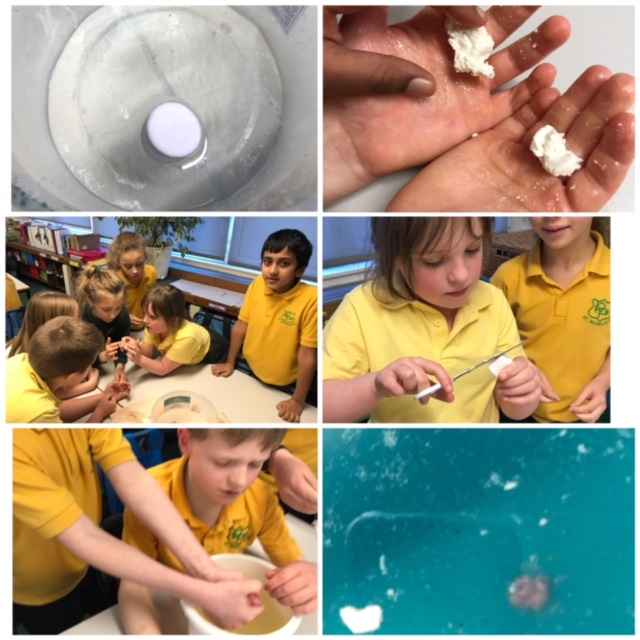
The final challenge was to make a marshmallow sink and again imaginative ideas were at work. Making it smaller, cutting off the powder coating, squeeeeeezzzing it so hard to remove the air trapped inside. After much strenuous and messy activity the successful team managed to sink a small piece of pink marshmallow by making it smaller and squeezing it flat. We wondered what would happen if we dropped the marshmallow into different liquids such as cooking oil or used mini marshmallows. Further investigations are required.
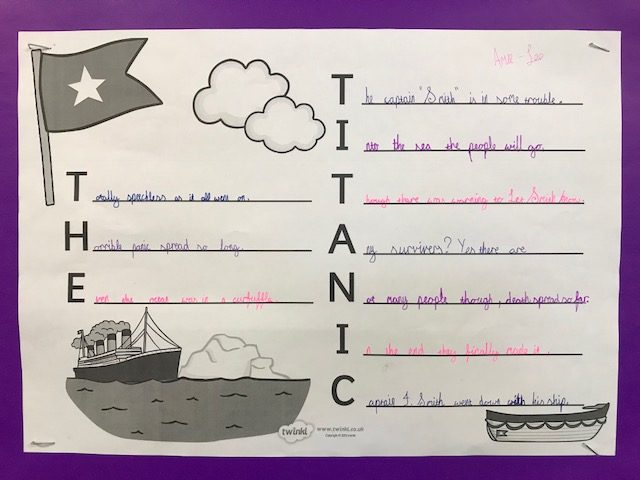
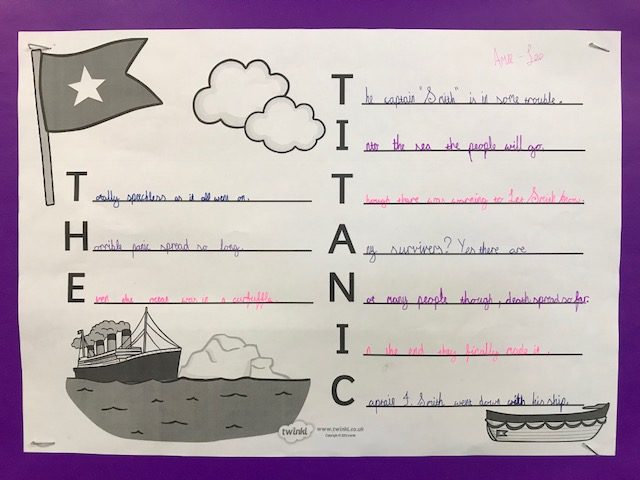
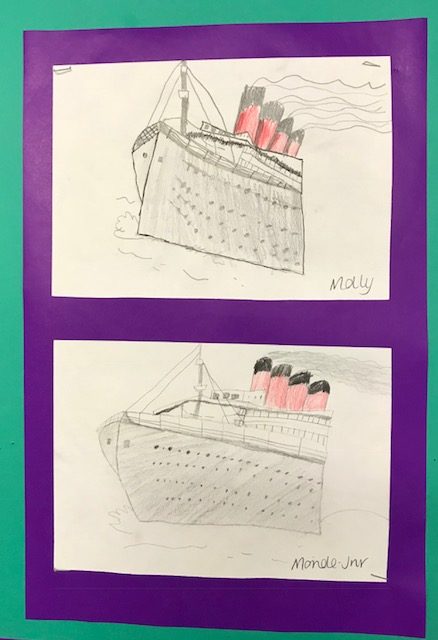
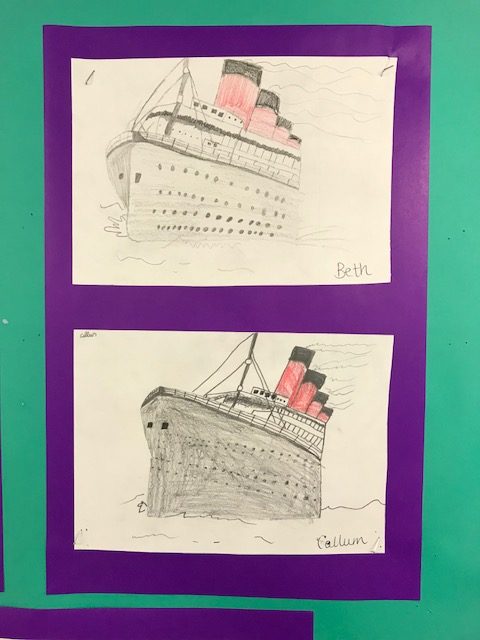
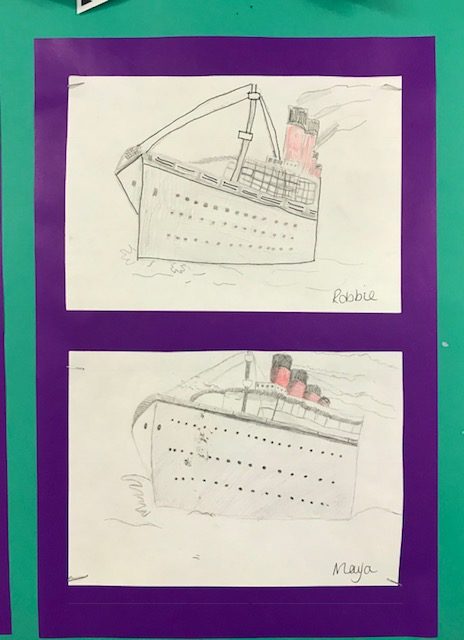
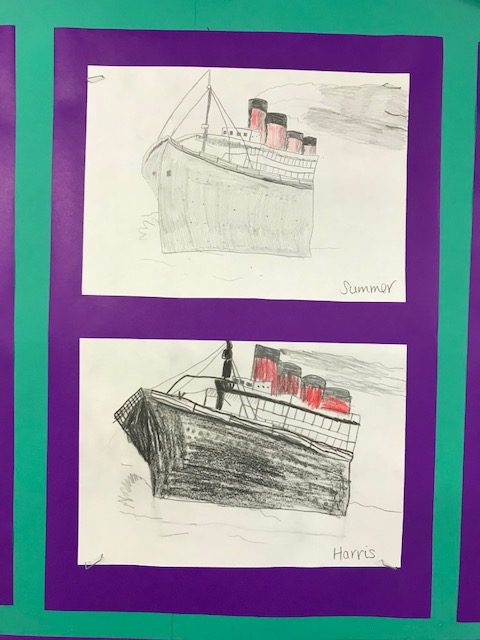
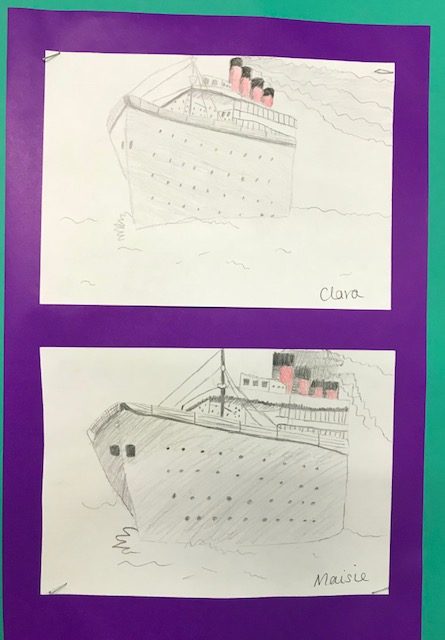
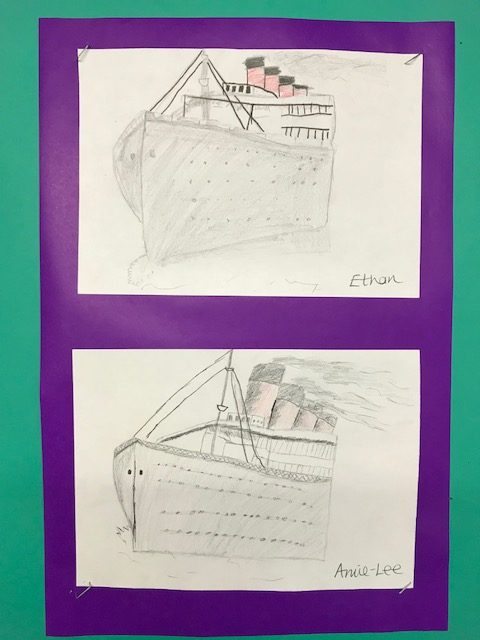
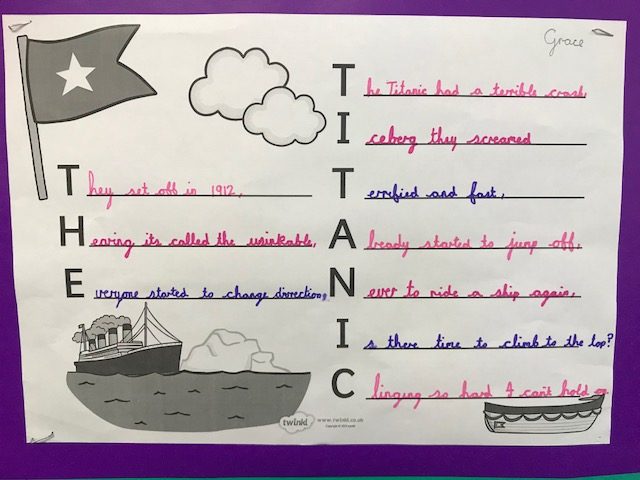
Primary 5 have been using their creativity to record their learning about The Titanic. All pupils created a pencil drawn image of the ship on her maiden voyage and also used fantastic vocabulary to describe the sinking of the ship in the Atlantic Ocean. Tomorrow we will be using the medium of drama to extend our learning during our Titanic Workshop.
http://www.titanichonourandglory.com/
Primary 6 did a bit of research on Rabbie Burns today, finding some more unusual facts about him and presenting it to the class on a ‘Sway’ presentation (a programme similar to powerpoint). Did you know that Robert Burns had 12 children? Or that he almost moved to Jamaica? Or that he was the first person to appear on a bottle of Coca Cola? Neither did we until today. We then had a wee Scottish treat – some shortbread and a thimble full of Irn Bru.


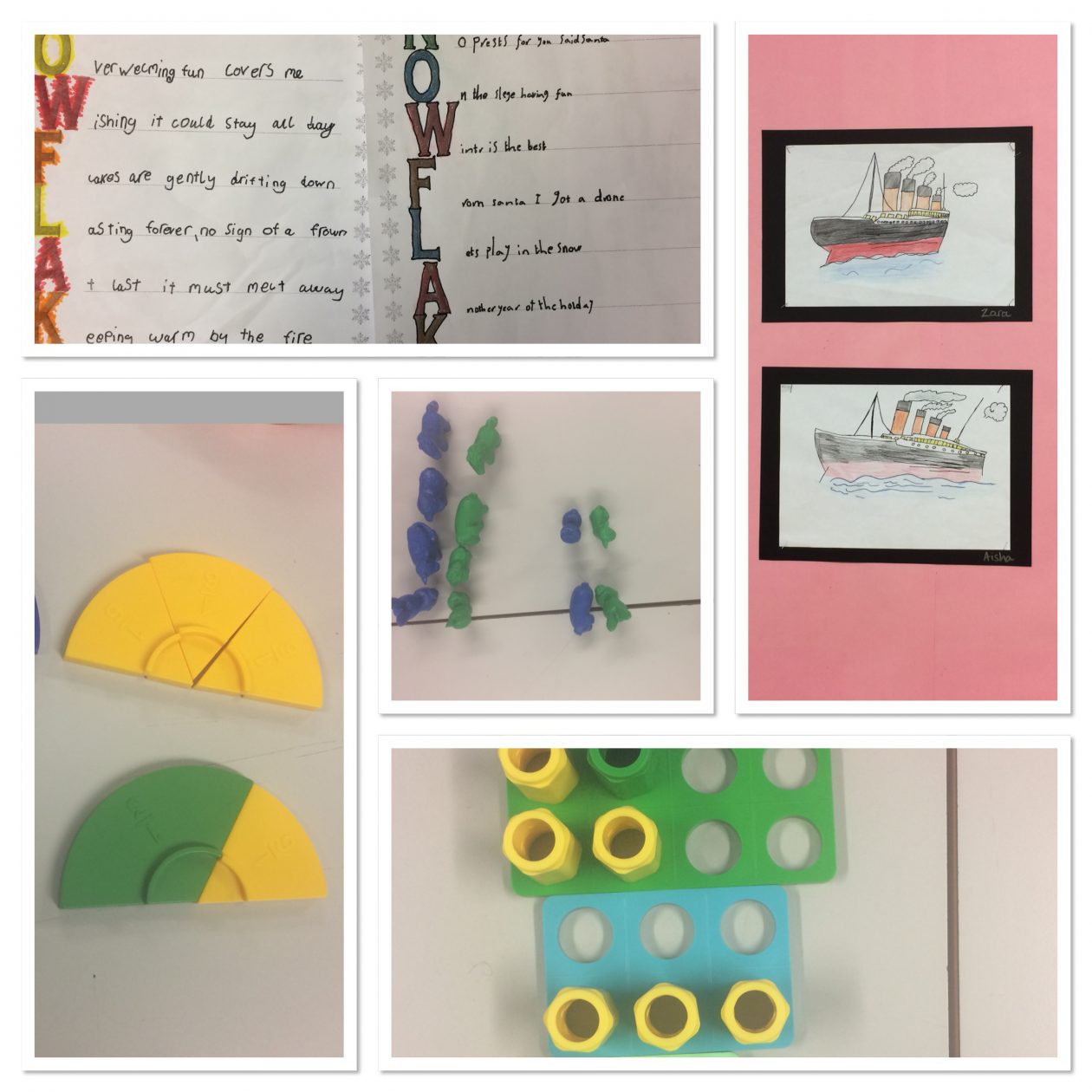 Today we learned about 3D shapes. I liked it because were learning the names of all the shapes better. – Archie
We learned about the Titanic, for example that people said it was unsinkable. We also learnt how it was built and what 1st class and 3rd class was. – Victor
I learned that they used silver and gold paint for the first class rooms. – Megan
We did fractions like half, third, quarters tenths. We looked at different ways to represent them, for example in a number line, groups, fraction bar and circle model. – Zuzanna
We did the numbers in French up to 10. I liked it because I like speaking in French. – Lilya
We played a board-game to learn about the past tense. It was good because if you are not sure of how to spell the past tense you can use the game to practise. – Natan
We learned about sleeping: why it is important and what we should do to get a good night’s sleep. – Marta
We wrote winter acrostic poems using the word Snowflake. I think I did a good job because I took my time and checked my work using a dictionary. – Alicja
We drew the Titanic. I found it really fun but difficult too. I was very proud of my work. – Maisie