Trauma is an event that is experienced by an individual as physically harmful, emotionally harmful or life threatening. This could be a single incident (such as an assault), or series of incidents which take place over a prolonged period of time (such as domestic abuse). Experiencing a traumatic event can have a long-term impact upon our emotional, social, and physical wellbeing (such as higher risk of mental health difficulties; higher rates of preventable disease; education difficulties and reduced opportunities).
It is important to remember that we are all affected by traumatic events in different ways. Research shows that there are many factors which play a role in the impact that trauma can have, such as the age at which the trauma occurs and the presence of other stressors or protective factors.
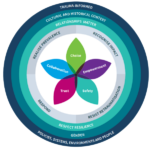
Being “trauma informed” means being able to recognise when someone may be affected by trauma, adjusting how we work to take this into account and responding in a way that supports recovery, does no harm and recognises and supports people’s resilience.
Being “trauma informed” is underpinned by the following:
- Realising how common the experience of trauma is;
- Recognising the different ways that trauma can affect people;
- Responding by taking account of the ways that people can be affected by trauma to support recovery, and recognise and support people’s resilience;
- Looking for opportunities to resist re-traumatisation and offer a greater sense of Choice, Trust, Empowerment, Collaboration and Safety with everyone that we have contact with; and
- Recognising the central importance of relationships in trauma informed practice.
Exposure to traumatic events is common and it is likely that many of the people we interact with in our day-to-day work—both within the communities we serve and among our colleagues—have been impacted by trauma. Being trauma-informed isn’t just about improving outcomes for those who access our services; it’s also about creating supportive, compassionate workplaces for staff.
Trauma-informed approaches have been shown to enhance both the accessibility and quality of services. While adverse outcomes are not an inevitable result of trauma, research shows a strong link between traumatic experiences and challenges across mental, physical, and social domains. However, positive and supportive engagement with services can play a vital role in reducing these impacts.
Research has also shown that working within a trauma informed and responsive organisation has a positive impact upon staff in terms of staff wellbeing, skills and knowledge.
Trauma training is offered at the informed, skilled and enhanced practice type levels. To find out what level of trauma training you require, you can take a quick quiz here: Knowledge and Skills – National Trauma Transformation Programme
E- Learning
Trauma Informed: Basic Awareness
Trauma Skilled 1: Understanding the impact of trauma and responding in a trauma-informed way
Trauma Skilled 2: Trauma in children and young people
Trauma Skilled 3: Understanding the impact on mental health and evidence based pathways to recovery
Trauma Skilled 4: Understanding the use of substances to cope with the impact of trauma
Council staff can find all these e-modules hosted on OLLE (Falkirk Council’s eLearning Platform). They are located within the “Health and Safety/Employee Wellbeing” folder or you can find them by typing “trauma” into the search bar at the top of the page. OLLE can be accessed by using the following link: Olle – Login
Those outwith Falkirk Council are able access the Trauma Skilled e-modules by signing up for a free TURAS account.
In person training
In person trauma training is currently being offered at the informed, skilled and enhanced levels to multi-agency partners across Falkirk’s Community Planning Partnership.
You can access Falkirk’s Multi-Agency Learning & Development Calendar and book your place on upcoming training at the link below: FALKIRK Children and Adult Services Multiagency Training – Forth Valley Practitioner Pages
Check back soon for details – update pending.
Elected Members: Introduction to Trauma as part of Elected Member core learning
All Council Staff and Students: Trauma Informed learning within Public Protection is Everyone’s Responsibility Online Learning
Skilled Level Learning
Trauma Skilled 1: Understanding the impact of trauma and responding in a trauma-informed way
Trauma Skilled 2: Trauma in children and young people
Trauma Skilled 3: Understanding the impact on mental health and evidence based pathways to recovery
Trauma Skilled 4: Understanding the use of substances to cope with the impact of trauma
Staff, Students, Foster Carers and volunteers are able access the Trauma Skilled e-modules by signing up for a free TURAS account
Enhanced Level Learning
Enhanced level learning is available to support teams and services – staff and managers should raise a MyPortal helpdesk request for more information to suit their team/service context.
Trauma Informed Workshop
You may wish to undertake a Trauma Informed Workshop within your team. We recommend that you take at least three hours to complete this session (though you could break this down into smaller, more manageable chunks if you wish). After completing this workshop, you will have an understanding of psychological trauma and its effects on individuals. It offers an opportunity to consider the importance of staff care, support and wellbeing when engaging in assisting those who have experienced trauma. You will hopefully be able to recognise the ways in which you are already being trauma informed and some changes you are able to make to become more trauma informed.
The workshop and further guidance can be accessed here: Trauma Informed Workshop
Trauma Informed Lens Walkthrough Tool
You can also undertake a “walkthrough” of your service using the “Trauma Lens Walkthrough tool”. It will guide you to look at your service through the eyes of someone affected by trauma. It helps you consider practical things such as the physical environment, or the communications or materials your service uses. You can also work in partnership with those affected by trauma who use your service to help you consider changes that can be made. Falkirk’s Trauma Informed Development Officer can support you to do this. Implementation (traumatransformation.scot)
A Guide to Trauma Informed Policies and Processes
The document provides a number of prompts and questions to help you consider existing and new policies, guidance, protocols and processes through a trauma informed lens. Implementation (traumatransformation.scot)
The Roadmap for Creating Trauma Informed and Responsive Change
The Roadmap for Creating Trauma Informed and Responsive Change provides more detailed guidance for organisations looking to implement change. It considers factors such as Organisational Culture; Leadership; Staff Care, Support and Wellbeing; Feedback Loops and Continuous Improvement; Power Sharing with People with Lived Experience of Trauma; Staff Knowledge, Skills and Confidence; Policies and Processes; Budgets and How we Design and Deliver Services.
It can be accessed here: Implementation (traumatransformation.scot)
If you wish to discuss implementing trauma and responsive change in your service, or you need support with any of the tools mentioned above, you can contact:
Cheryl Aitken
Trauma Informed Development Officer (Falkirk)
SW Training and Workforce Development Team
cheryl.aitken@falkirk.gov.uk
Check back soon for details – update pending.
As well as undertake learning to support our skills and knowledge:
Applying a Trauma Lens and Coaching Support
Teams and Services are supported to consider how trauma informed and responsive their services are in relation to aspirations and the National Trauma Transformation Plan road map. You can also undertake a “walkthrough” of your service using the “Trauma Lens Walkthough tool.” It will guide you to look at your service through the eyes of someone affected by trauma. It helps you consider practical things such as the physical environment, or the communications or materials your service uses. You can also work in partnership with those affected by trauma who use your service to help you consider changes that can be made. Stirling Council’s Trauma Practice Officer can support you to do this.
The Roadmap for Creating Trauma Informed and Responsive Change
The Roadmap for Creating Trauma Informed and Responsive Change provides more detailed guidance for organisations looking to implement change. It considers factors such as Organisational Culture; Leadership; Staff Care, Support and Wellbeing; Feedback Loops and Continuous Improvement; Power Sharing with People with Lived Experience of Trauma; Staff Knowledge, Skills and Confidence; Policies and Processes; Budgets and How we Design and Deliver Services.
It can be accessed here: Implementation – National Trauma Transformation Programme
If you have any questions about trauma practice in Stirling, please contact Lisa Woodbridge, Senior Workforce Development Adviser OD@stirling.gov.uk (Stirling Council employees can raise a MyPortal Helpdesk request).
If you’d like to know more about Attachment, Nurture & Trauma Informed Practice (Inc. Five to Thrive) you can see further information here: Attachment, Nurture & Trauma Informed Practice (Inc. Five to Thrive) – Forth Valley Practitioner Pages
The National Transforming Trauma website has a range of further trauma related information:
Homepage – National Trauma Transformation Programme
A list of helpful video resources in relation to trauma informed practice:
Opening Doors: Trauma Informed Practice for the Workforce on Vimeo
Sowing Seeds: Trauma Informed Practice for Anyone Working with Children and Young People
Childhood Trauma and the Brain | UK Trauma Council
Common Ground: Trauma Informed Working with People with Learning Disabilities
A piece of the puzzle: Trauma Informed Practice in dementia care on Vimeo
Staff care, support and wellbeing
More information can be found here: Staff Health & Wellbeing – Forth Valley Practitioner Pages