Bramble Clan Learning

Literacy

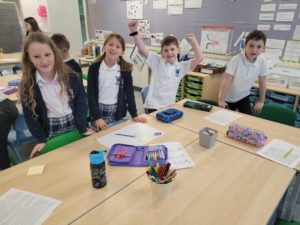
In reading and writing, we have been looking at the different building blocks that make up a story.  We have looked at the structure of a story, making sure we know all the names of the different sections and what should be included within each of these.  We even came up with our own actions to remind us what to include.  We looked at this further in our reading books and, after reading, we used the story mountain to show the plot of the story.

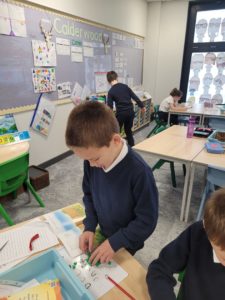
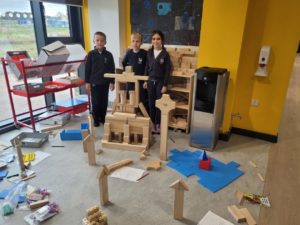
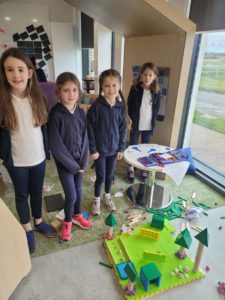
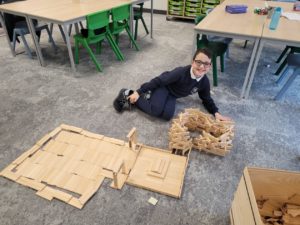
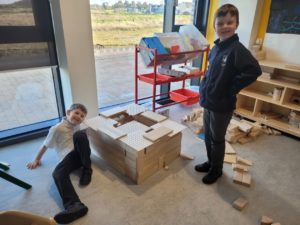
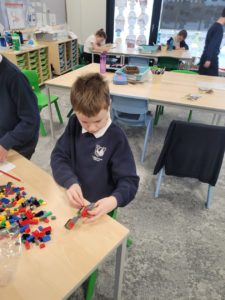
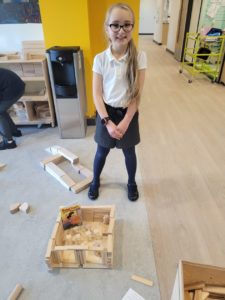
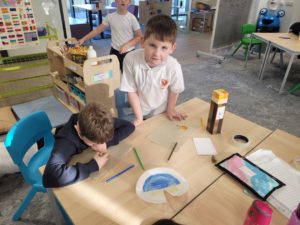
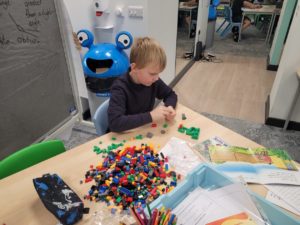
This week, we have been looking at the setting of a story.  After reading, we either drew or built the setting from our story, giving evidence from the text to back up our ideas.  We really enjoyed using Kapla, the building blocks and lego to build our settings.
 

Numeracy

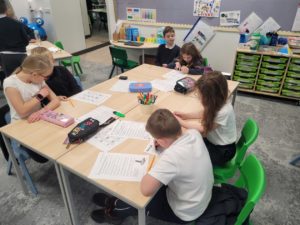
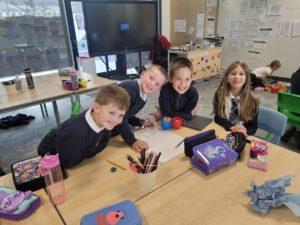
In numeracy, we have been learning different strategies to support us when adding and subtracting.  We have been learning about the ‘round and adjust’ strategy and found this was an efficient way to add numbers if one of the numbers is close to a multiple of 10.  Some of us realised this might be a strategy that gets us to the answer quicker than if we used a different one.  We will continue to explore selecting the most efficient strategy in order to answer a calculation quickly.

We have also explored addition and subtraction word problems.  We used the method RUCSAC to support us in solving problems. 

R-Read

U-underline the words

C-circle the numbers

S-select the correct operation

A-answer the question

C-check the answer.

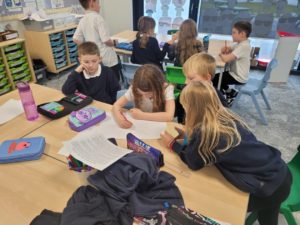
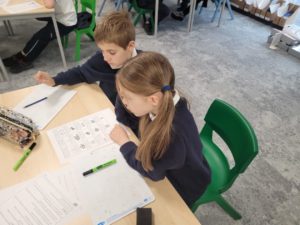
We worked in partners to solve the word problems.  Some us decided to act out the word problems which helped us to fully understand how to solve them.  We will continue to develop this in our learning.
IDL

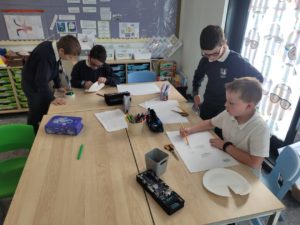
In IDL, we have been learning about Myths and Legends.  We have been working across the clans and visiting other clan rooms and champions to develop our relationships with each other.  We have been able to work with others in our area and get to know each other better.  In each clan room we have been exploring what a fable, myth or a legend is and then listening to different stories from our champions.  We enjoyed listening to the story of the Kelpies this week and enjoyed building a scene from the story and including information about the origin of the story.  We have realised that stories change over time and are very different from the original!
Published
Categorized as Bramble

Term 2 Learning Letters

P1 Learning Letter term 2

P2 Learning Letter- T2

P3 Learning Letter- T2

Term 2- P4 Clans Learning Letter

Learning-Letter-Term-2-Primary-5

Learning Letter Term 2 – Primary 6

Learning Letter Term 2 – Primary 7

Term 2 Homework Grids

P1 Home Learning Choice Board T2

P2 Home Learning Board Term 2

Primary 3 Home Learning Board Term 2

P4 Home Learning Choice Board T2

P5 Home Learning Choice Board Term 2

P6 Home Learning Choice Board Term 2

P7 Home Choice Learning Board Term 2

Bramble Clan – IDL and Maths through stories


The Brain

In Bramble clan, we have been learning all about our Fantastic Elastic Brain. Through this IDL we have been learning what the names of the parts of the brain are, what each part can do and help us to do and how we can use our brains to help us problem-solve.  We have thought about our own unique brains and what makes our brain fantastic.

Matchstick puzzles

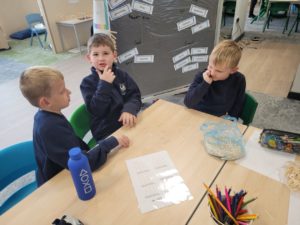
We have been exploring matchstick puzzles in problem-solving.  Through this learning we have been exploring what parts of the brain we have been using and how they are helping us to complete the puzzles. We are aware that our hippocampus will store our memories and so each time we try to complete the puzzle and we get it wrong, our hippocampus remembers this and we can try something new next time. Our Amygdala is in charge of our emotions and we have realised it can be frustrating and uncomfortable when we struggle to complete a puzzle but when we manage to complete it, it makes us feel good and proud. Our pre-frontal cortex helps us make plans and decisions and we are able to think through what is expected in the puzzle and what we might do to solve it. We realised we were developing our resilience and perseverance while completing these puzzles too.

What is a neuron?

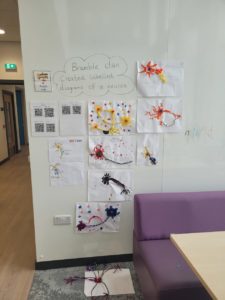
We have learnt that our brain is filled with lots of neurons but what do they look like? We explored our nervous system to learn how our nervous system works and what part neurons play in this. We then looked more closely at what a neuron is and what it looks like. We then were given lots of craft materials to create our own version of a neuron. We could use any materials we wish. We really enjoyed this and have displayed our neuron creations out in our Bramble clan area.

3D shape – Maths through stories

We have been exploring the names of 3D shapes and their properties. First of all, we listened to the story, ‘Samantha’s Search’. Samantha the fairy was on a search for 3D shapes in the environment. She found lots of different 3D shapes and explored lots of real-life objects that are in fact 3D shapes. One of us realised why the sun was called a sphere in a text he had read saying “oh, that’s why the sun is called a sphere because that is its shape!”

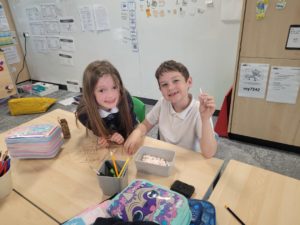
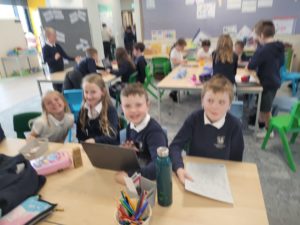
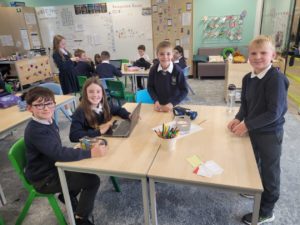
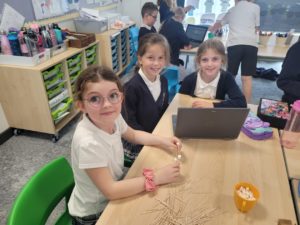
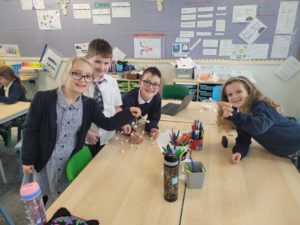
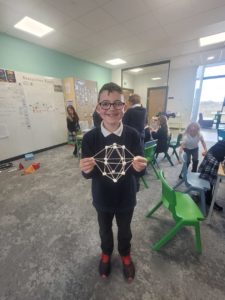
After listening to the story, we were set a group challenge. In our groups, we had to research 3D shapes and find out their names and properties. We had to create a Power-point, sway or poster, detailing what we found out – the name of the shape and its properties. Our group also had to create 3D shapes out of cocktail sticks and small marshmallows. We created triangular prisms, cubes and pyramids. Some of us even combined 2 shapes to create larger, more interesting shapes. Mrs Scobie asked everyone if they thought their brains had grown a bit more today and we all agreed that they had. We had learnt more knowledge and were using our fantastic brains to create the shapes and learn more about them whilst using technology to present our information.

We had a great time doing this task and may have sneakily eaten a few marshmallows along the way!

Published
Categorized as Bramble

Speak Out, Stay Safe

NSPCC’s Speak out. Stay safe. online programme

This term we participated in the NSPCC’s Speak out. Stay safe. online programme. This consists of an online assembly and supporting classroom based activities. Speak out. Stay safe. is a safeguarding programme available to all primary schools in the UK and Channel Islands. It aims to help children understand abuse in all its forms and to recognise the signs of abuse in a child friendly way. Children are taught to speak out if they are worried, either to a trusted adult or Childline.

In the online assembly, the Speak out. Stay safe. messages were delivered in a fun and interactive way with the help of their mascot Buddy as well as special guest appearances from Ant and Dec.

We studied the content of the materials and are extremely confident that they are appropriate for primary-school-aged children. By the end of the programme, the aim is that children feel empowered – knowing how they can speak out and stay safe.

If you would like to know more about the Speak out. Stay safe. programme you can find information on the NSPCC website www.nspcc.org.uk/speakout

Additional resources

Adapted assembly for home use

The NSPCC has also developed an adapted version of their assembly for parents/carers to use at home with their children.  This can be found here: www.nspcc.org.uk/keeping-children-safe/support-for-parents/safety.  With the help of celebrities, the film focuses on how a child can get support if they have any worries or concerns.

To complement the assembly, there are some resources that can be used to enable further discussion whilst doing activities with your children.  These are hosted on the NSPCC website www.nspcc.org.uk/activities.

Online safety hub

You may also like to visit the NSPCC Online Safety Hub where you will find advice and information on a range of different online safety topics including gaming, social media, sharing nudes, parental controls and more.

You will also find online safety information for families of children with additional needs and disabilities. We have worked with Ambitious about Autism and parents and carers who have children with additional needs and disabilities to create activities to help talk about online safety which you can find at www.nspcc.org.uk/keeping-children-safe/online-safety/online-safety-families-children-with-send.

Childline Under 12’s Website

Childline also have a website with age appropriate advice for primary school children on topics such as bullying.  It also has games and other interactive tools. Your child can visit it at www.childline.org.uk/kids.

If you’d like to know more about the NSPCC’s work, or take a look at the wide range of information and advice which is available for parents and carers, please visit their website www.nspcc.org.uk/parents.

Talking PANTS with your children

Talk PANTS is a simple conversation to help keep your child safe from sexual abuse. From P through to S, each letter of PANTS provides a simple but valuable rule that can help keep your child safe. You can find out more and download the free resources at www.nspcc.org.uk/pants.

Penguin and Ladybird have partnered with the NSPCC to create a brand new Pantosaurus book aimed at children ages 4 – 8. You can find copies of the new book on sale, either in Matalan’s selected stores and online, selected SPAR stores or at https://shop.nspcc.org.uk/. All profits from the sale of this book will support the NSPCC.

Support the NSPCC

You may be interested in the NSPCC’s new selection of BUDDY goodies available from the NSPCC shop at https://shop.nspcc.org.uk/collections/buddy which make perfect gifts for children – and all profits go to help keep children safe.

Report a Glow concern
Cookie policy  Privacy policy