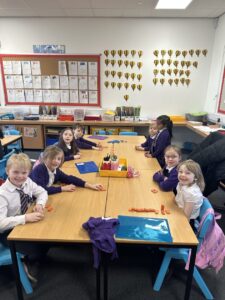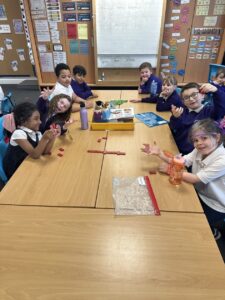
It has been an incredibly exciting week in Room 6! We all know the universal childhood joy of lining dominoes up in a massive row just to watch them tumble down in a satisfying clatter. While that’s fantastic for exploring cause and effect, this week, we gently moved away from the domino rallies to learn the proper game.
You might be surprised to hear that playing a traditional game of dominoes is one of the most effective—and fun—ways to build foundational numeracy and social skills. The children have fully embraced the challenge, and the classroom has been buzzing with concentration and teamwork!
What Room 6 Have Been Learning
Learning to play dominoes properly isn’t just about matching pictures; it requires a surprising amount of brainpower Here is what we have been focusing on:
-
Subitising: This is a big word for a simple concept—being able to instantly recognize the number of dots on a tile without having to count them one by one (just like recognising the dots on a dice).
-
Strategic Thinking: The children are learning to look at their own tiles and the tiles on the table, working out not just if they can make a move, but which move is best.
-
Patience and Turn-Taking: A massive part of the learning curve! Waiting for your turn, keeping your tiles hidden from your neighbour, and drawing from the pile when you are stuck takes serious self-control.
-
Gracious Winning and Losing: We have been having great discussions about how to say “good game” whether we are the first to empty our hands or the last one holding tiles.
How We Play in Class
To keep things manageable for P2, we started with a standard “Double-Six” set and the most basic set of rules:
-
The Deal: Each player gets 5 tiles to keep hidden in their “hand.” The rest go face down in the middle as the drawing pile.
-
The Start: The person with the highest double (e.g., the double-six) goes first by placing it in the middle.
-
The Match: Taking turns, players must match the number of dots on one of their tiles to the dots on either end of the domino chain on the table.
-
The Draw: If a player cannot make a match, they must draw a tile from the middle pile.
-
The Winner: The first person to use all their tiles wins the round!
Bring the Learning Home!
If you have a set of dominoes gathering dust in a cupboard, this is the perfect weekend to get them out. Playing a quick game after dinner is a brilliant way to support what we are doing in the classroom.
Don’t worry if they still want to build towers or knock them down afterward—that’s all part of the fun! But sitting down for a proper match will give them a wonderful chance to show off their new skills to you.