Author: George Milliken

Using Easi-Speak to develop storytelling and writing by Lynn Eileen Allison, Hoddom Primary in Dumfries and Galloway

We have been using film literacy and voice-recording to develop our learners’ comprehension of a text.


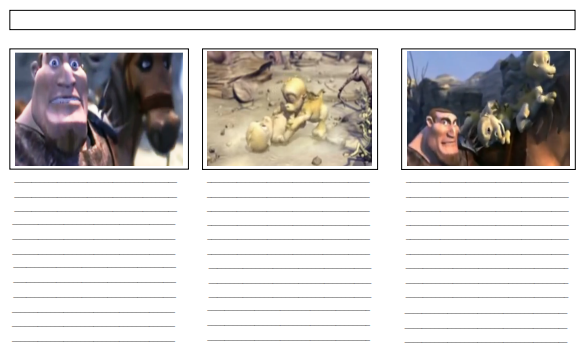
We watched this video: Dragon Slayer | A Short Film by Robert Kuczera and then used stills from it after the viewing to ‘read it’. The pupils in the class were given one picture each to make notes about what they
could see in their photo. They were then asked to put the photos in order that they felt the story took
place.

Having put the images in chronological order they were asked to use their notes to narrate the story by using an Easi-Speak microphone, which in a previous lesson they had been taught how to use, to record and download. Listening to what had happened, it was passed onto the next speaker to build upon the story with their own ideas.

The class loved developing the story and sharing their narration with other classes. So, the following week  they were given a storyboard with fewer shots and asked to retell their story by adding a twist to the story line. Once again, the children enjoyed developing their personal story, with the ideas they had previously generated as a class.


This is the story board they used:

Bebras Computing Challenge at Portlethen Academy

post by Ian Simpson (@familysimpson), Faculty Head of ICT at Portlethen Academy (@portyacad)


What is the Bebras Computing Challenge?

The Bebras Computing Challenge is a long-running international competition which promotes the importance of computational thinking and problem solving skills in a wider world context. It is organised in over 50 countries and designed to get students aged 6 to 18 from all over the world excited about computing.

Students have to employ a variety of problem-solving strategies in order to complete up to 18 challenges in the allotted time. High scoring students may be lucky enough to qualify for a celebration event which, in previous years, has taken place at Hertford College, Oxford.


Why we entered the competition

At Portlethen Academy all S1-3 students take part in the competition, with those in senior phase given the chance to participate as part of their Computing Science or Mathematics classes. Every individual who takes part receives a digital certificate from the University of Oxford which can be printed out in school or at home and those who achieve scores in the top 25% of the cohort are invited to take part in the TCSOCC Challenge in February as recognition of their strong computational thinking skills and to increase their exposure to computer programming problems.

Faculty Head of ICT Ian Simpson has coached groups of students to take part in the Bebras Computing Challenge since 2013. “To get the best out of the groups it shouldn’t be an add on or break from ‘normal lessons’, it is in the school’s best interest to embed teaching of computational thinking skills and prepare for the challenge using the practice challenges or the Perfect Day app.”


What pupils learnt from it

Seven students from S1 and 2 scored highly enough in the 2019 challenge to receive an invitation to the celebration event at Hertford College in January 2020. Thanks to support from contacts at Total and Aberdeenshire DYW six were able to travel to Oxford to take part in the final round, experience Computing Science sample lectures and find out more about life as a student at the University of Oxford. Ian Simpson added “This was the first time that such a high number of students from a state school in Aberdeenshire had qualified for the final round. It was a surprise in some ways but testament to the hard work the students put in preparing for the challenge.”

As well as giving students the chance to think creatively and apply their knowledge from across a variety of subject areas the Bebras Computing Challenge helps build student resilience. These skills have increasing demand in further and higher education and will serve them well in the workplace of the future. Taking part in the final round also gave the students increased confidence in their own abilities and, on the drive back to Heathrow, many were sharing strategies they had learned from other participants to improve on their scores next year.


Sign up for Bebras here.

Race for the Line Event by Liz Dighton at Boroughmuir High School

On a rather cold, but thankfully dry, Wednesday all 220 of our S1 pupils were involved in an inter-disciplinary project which was part of the National BBC micro:bit Model Rocket Car Challenge called Race for the Line.  Over 400 schools from all over the UK are participating in the competition.  The inspiration behind the national project is the Bloodhound car which is attempting to beat the 1000mph world land speed record and also inspire the next generation of engineers to get involved in Science, Technology, Engineering and Maths.  #STEM 

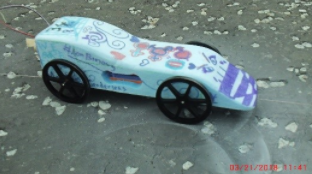
In Design and Technology classes leading up to the Race Day, pupils worked together in teams of 4 to make a foam rocket car creating a design folio which showed how they had considered aerodynamics, friction etc.  In Computing classes the pupils programmed the Micro:bits which were used to carry out the timing mechanism on the race track and in Science they explored the forces which would be applied to the cars. 

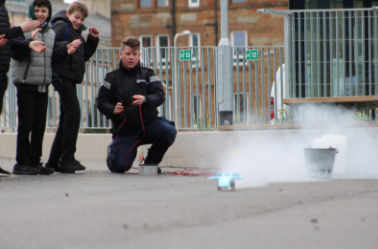
On Race Day we were joined in school by a team from the Royal Navy who are based at Rosyth and are members of the crew of the new aircraft carrier HMS Prince of Wales.  The Navy team equipped each car with a solid fuel rocket and setup the Race Track in the playground.  Each class took turns to race their cars and the times were recorded for each car.  The Navy had brought along one of their PT instructors so to keep warm pupils carried out a fitness test with a couple of our S1’s managing to reach the fitness standard for the Royal Navy while wearing their school shoes!!!  After racing the cars the pupils then used our new Dual teaching space on the 3rd floor to create some posters to summarise their learning in this project.  Some of these are now on display in the classrooms around the school. 

The top 3 car teams went forward to the Regional Final on the 3rd of May when they competed against all of the teams from other school in East Central Scotland @ the Royal Navy facility at Rosyth and 3 also qualified for the Scottish Final at the Barracks at Redford.   


Ada Lovelace Day – Opening Opportunities with Digital Technology by Emma Hedges

Digital technology skills are one of my favourite things to teach because of the opportunities and experiences they provide pupils with. I have taught children who struggle with putting pen to paper, however when provided with the correct technology they flourish. The technology we use in the classroom has allowed my pupil’s imaginations and creativity to come to life and it has boosted the confidence of shy children, allowing them to become more animated and involved with their learning.

Technology allows learners to engage in their education in ways that haven’t always been possible. I hope that this will allow my pupils, who may previously have disengaged from education, to go on to explore avenues that wouldn’t otherwise have been possible.


Fun fact: Ada Lovelace and I share a birthday, just a few hundred years apart!

@MissHedgesVPS

Having the skills and opportunity to work with others using digital technology, Heriot Primary, Renfrewshire

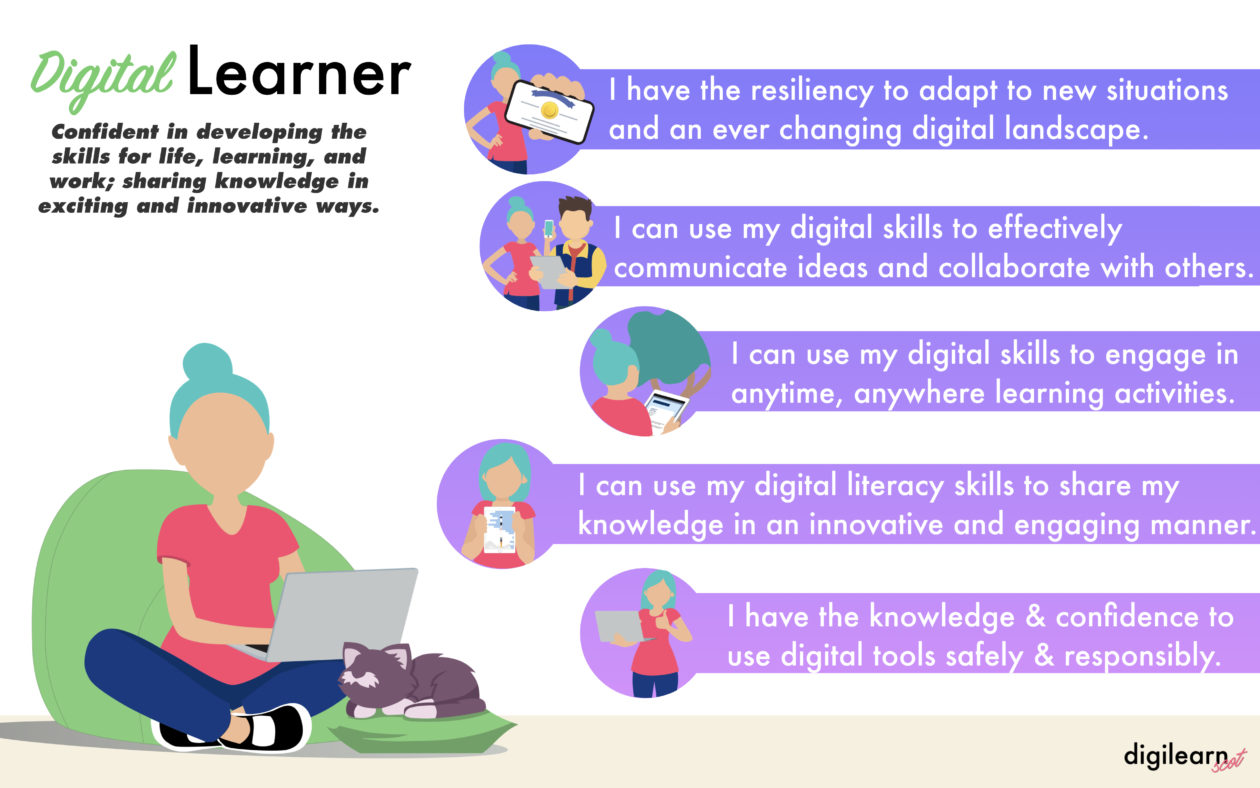
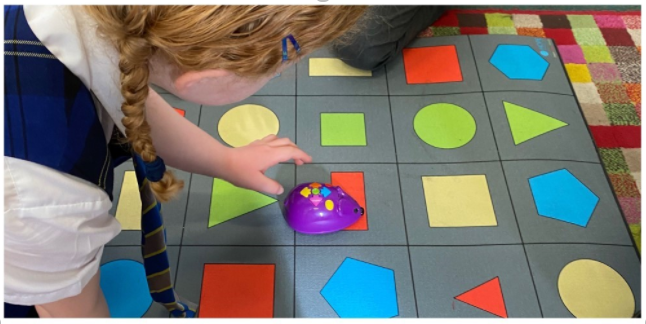
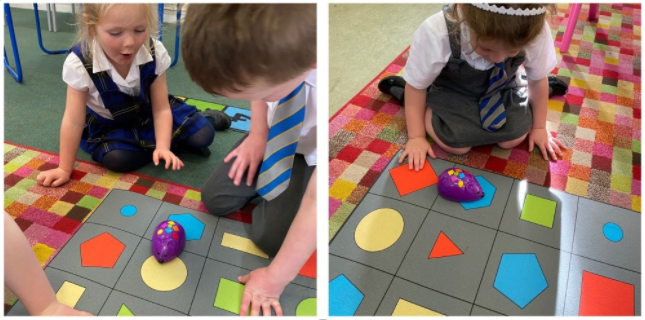
Whenever I plan a lesson, I refer to the Digital Learner poster to ensure that I am incorporating at least one of these skills in my lesson. In my primary one class, we had been learning about shapes and their properties. In order to consolidate their learning, I brought out a shape mat and told them we were going to play a game where they had to travel from one shape to another using a Robot Mouse. This instantly grabbed their attention and I initially let them play around with the mouse to see what they knew and if anyone could work out how to programme the mouse.

A few of the children immediately recognised the arrows from games consoles and their computer keyboard. They began playing with the mouse, using words like forwards and backwards. I then stepped in to show them how to ‘clear’ their instructions and asked them to input one direction, press go and then press clear after the mouse carried out the instruction. This allowed all pupils to take part in the activity at a very basic level.

At this point, some of the children started to ask if they could do a “long move” to get the mouse there quicker. This then opened a discussion about how would you remember what instructions you had put into the mouse. A 4 year old boy suggested working with a partner, where one child could input the instructions into the mouse and the other child could use their hand, place it on the mat and move it along the squares on the mat following the instructions. Working together, the pupils managed to programme the mouse to move across the mat.

This was a great activity to introduce directional language, introduce the concept of coding, as well as ensure that the pupils were confident in being able to identify different shapes. Working together as a team, the pupils were quick to point out if the instruction was correct (that’s right, not left) and would help guide each other to the correct shape, especially if they mistook a pentagon for a hexagon.


St Patricks PS blog post header

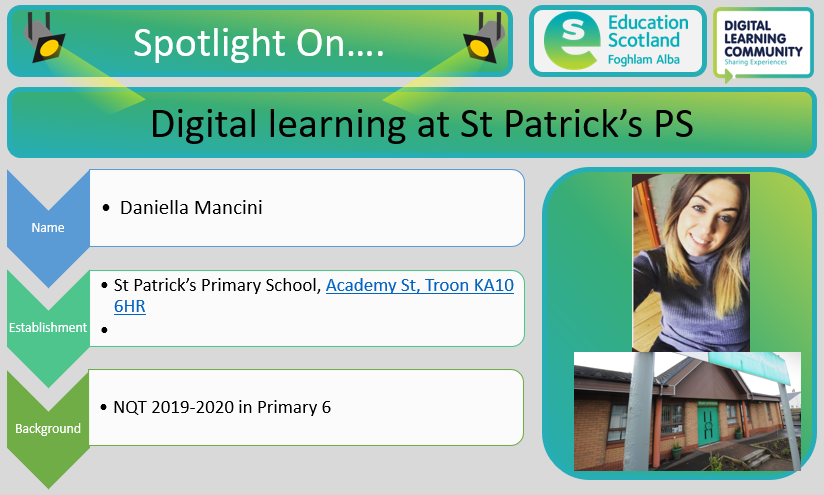
How digital technology enhances the engagement of learning across the primary stages? St Patrick’s, South Ayrshire

How digital technology enhances the engagement of learning across the primary stages? – A Professional Enquiry

Daniella Mancini (@missmancini27)

I set out to investigate the following points:

  • to explore whether the use of digital technology enhances engagement levels in the primary class
  • to measure the importance of digital skills across a range of primary class stages (P1- P7)
  • to explore the impact of digital technology across the primary stages

The justification, methodology and results can be viewed in the enquiry here:

maths clip art

Developing Conceptual Understanding of Maths through Blended Learning – Dalmilling Primary School, South Ayrshire

Scott Morrow, Principal Teacher of Numeracy from Dalmilling Primary School in South Ayrshire has created a YouTube channel to host his videos that help learners, teachers and parents to develop their
understanding of maths and numeracy concepts.
This is his channel, where you can view his tutorials:
or you can contact him by:
cargenbrige primary school logo

Self Portraits on Purple Mash from Cargenbridge Primary in Dumfries and Galloway