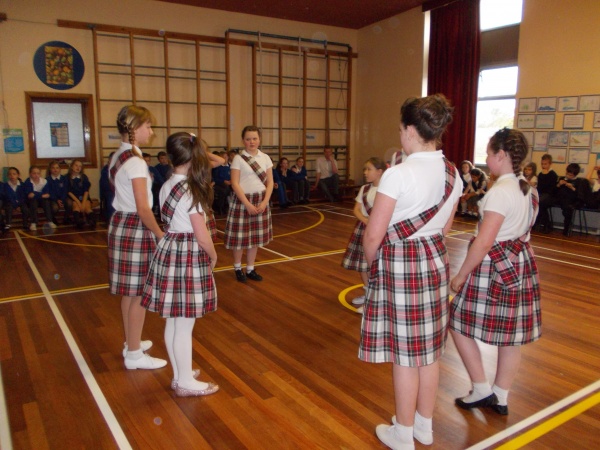
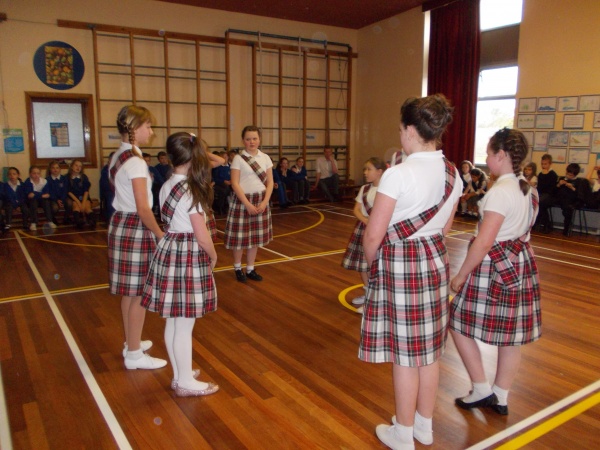
 Morag Young and Morag Simpson, PE Lead Officers for Falkirk Council Curriculum Support Team arranged a visit to Avonbridge Primary School to work with their Scottish Country Dance group. The purpose of this visit was to showcase good practice in Scottish Country Dance and create a resource for class teachers. The resource will help with the delivery of this activity context through curricular PE or as an extra-curricular club in preparation for the annual Day of Dance . We would like to take this opportunity to say a huge thank you to the pupils and staff of Avonbridge for their warm welcome and willingness to assist us with this project. Particular thanks to Mrs Rankine for all her input with the dancers.
Visitors from the Flemish Community in Falkirk.
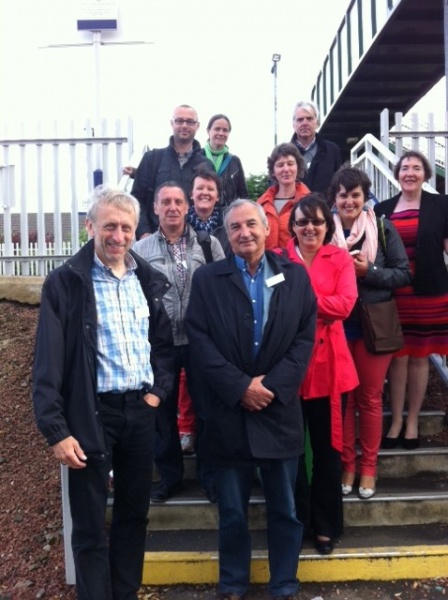 Anne Hutchison (Support Officer for Professional Development), Hazel Cunningham and Nicola Soroka (Probationers Supporters) and colleagues in the Curriculum Support team welcomed educationalists from the Flemish Community. This gave them a flavour of life in Falkirk’s schools and an overview of the unique support provided by the Council for Probationer teachers.
In the morning, the group visited Airth Primary School, Grangemouth High School and St. Mungo’s RC High School, where they had the opportunity to meet staff and pupils.
In the afternoon, the group participated in the Induction Meeting for next session’s Probationer teachers.
We would like to thank GTCS for providing the opportunity to work with a great group of people! Thanks also must go to Julie McKenna, Paul Dunn, Stephen Phee and their colleagues for making the group welcome in their schools.
Inter-Authority Moderation

Gillian Campbell (CSO Secondary) has been working with two Falkirk Primary Head Teachers and Glasgow, West Lothian and North Lanarkshire Education Authorities on a major project on moderation. This Education Scotland funded piece of work focused on moderation of their self evaluation procedures and Falkirk were represented by Cathy Quinn (St Bernadette’s RCPS) and Linda-Anne Reid (Stenhousemuir Primary).
One Head Teacher from each of the four authorities involved joined in two seperate groups to visit each other’s schools and act as critical friends. Suggested discussion points had been devised by the group based on the Self Evaluation expectations from Education Scotland. Meanwhile the 4 Local Authority leads met to discuss how each handled quality assurance at a strategic level in their councils. From this work we will look at impact and how individuals, authorities and the whole group will further develop aspects in our schools and authorities.
All 8 Head Teachers and 4 authority represenatives will meet to share their experience and contribute to the final report. If Education Scotland give their approval to the content of the final report then the work will be put on the National Assessment Resource during the summer.
For more information on this project, or assessment/moderation in Falkirk generally, email: gillian.campbell@falkirk.gov.uk
Subject Development Groups
 Gillian Campbell (Curriculum Support Officer for Secondary) has been working, since taking up post in September, on the creation of ‘Subject Development Groups’ (SDGs) for Falkirk schools. At present we now have 25 groups representing the subject areas which our secondary schools present to SQA for new National Qualifications.
Each secondary school can appoint a subject specialist to join this group and the majority of the 25 SDGs have represenatation from each of the schools.
In their most recent meetings these groups have created action plans detailing the development work they feel is needed for the coming year in their specific subject area. Individuals and groups have opted to take on pieces of development work which will then be shared across the authority.
In additon to planning upcoming developments these groups discuss their experiences in implementating the NQs and as a platform for quality assurance of materials and for completing authority level moderation. In a time of massive curricular change in Scotland there has been recognition of the importance of secondary teachers working across schools to share workload and these groups are an excellent example of such collaboration.
For more information on SDGs and their work email: gillian.campbell@falkirk.gov.uk
Taking ICT Outdoors with Mobile Devices
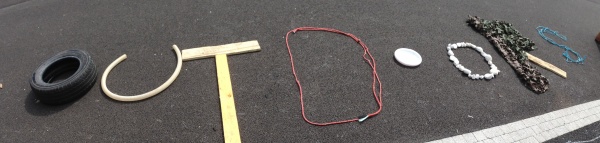
Malcolm Wilson, ICT Curriculum Development Officer within the Curriculum Support team of Service and School Improvement, Falkirk Council Education Services, led a session at the Outdoor Learning Conference organised by Jane Jackson, Outdoor Learning Development Officer, Falkirk Council Curriculum Support Team. This session explored using mobile devices in outdoor learning.
So why use mobile devices?
Many schools are now looking to use mobile devices to enhance the educational experience of learners – whether to provide the means to explain a task, to enhance engagement of learners, to record what’s been achieved, or to facilitate sharing of learner activity with others. And many schools are also trying to make the most of the outdoors to bring learning alive. So here are ideas for using mobile devices outdoors, making use of the features of smartphones to help engage pupils in learning outdoors.
What was needed on the mobile device?
To avoid the need for an active Internet connection (to avoid pupils using their own device incurring any cost, or to avoid wifi-only tablet devices needing a connection when aweay from any signal) none of the activities described below require to use an Internet connection to operate. However prior to going outdoors the device would require to have the following features found or apps installed as required (so may require to be downloaded in advance on a wireless connection) so that they can be used outdoors where there is no WiFi availability and so that no user’s personal 3G connection data plan should incur them in a cost.
Note that the mobile device will require to have previously installed apps:
1. QR code reader to read QR codes (e.g. RedLaser)
2. Camera app (which needs to be able to take still images and video with audio)
3. Audio recorder (e.g. voice recorder)
4. Note-taking app (e.g. Notes)
5. Timer (may be a feature of a clock or alarm app)
6. Email set up with an email account which will be able to send the resulting work from the activities
How was the session organised?
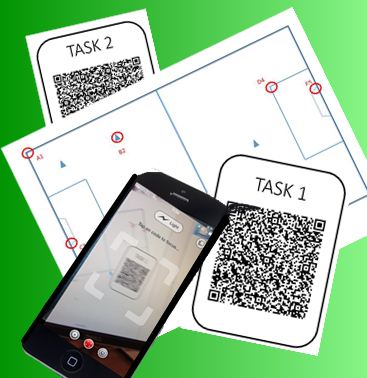 In groups of around 5, each group with one mobile device (smartphone or tablet), participants udertook a series of activities making use of apps on the mobile device.
Each group was given a map of the school grounds with locations labelled by number or letter. Each group was given a different starting point and then rotated round locations in different sequences from the other groups. When they arrived at the noted location they found a QR code in that location. The QR code reader on the mobile device was then used to scan the QR code – this then provided written text explaining the task to be undertaken at that location.
The activities which will require to be undertaken at each location were revealed in instructions via the mobile device to each group only when they scanned the QR code with the mobile device.
For more information about the use of QR codes within an educational context see:
The site used to create the text-only QR codes for this session was https://www.unitaglive.com/qrcode
What were the activities?
Here are the task instructions which were revealed on the mobile device once each QR code was scanned. Click on the following link for the document (in Word format) with the QR codes ready for printing: QR-code_sheets-for-Outdoor_Learning_with_mobile_devices
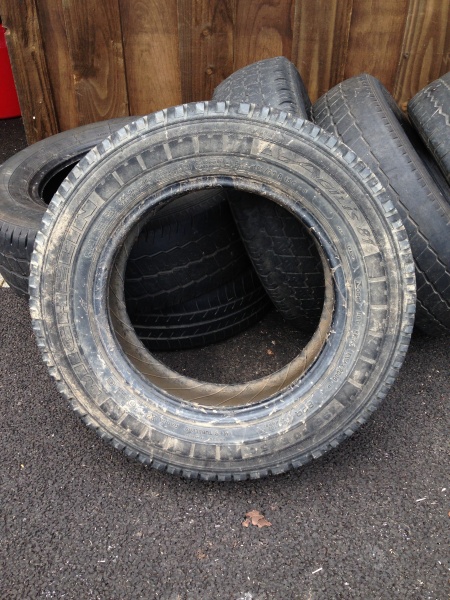 1. Take pictures using the mobile device camera app of the shape of each letter in the word OUTDOORS which your group will create out of materials at hand near the location (e.g. sticks, grass, stones, feet, etc). No faces should appear in the photographs.
2. Take a video, lasting no longer than 30 seconds, where no faces appear, and involving everyone in the group, where each person says what they feel learners get out of outdoor learning – be creative about what you point the camera at – anything other than faces (and give it some movement so it is not static picture but scanning around) – ensure the speaking is done near the mobile device so that it can be heard clearly.
Click on this link to view a video created by one group in response to this task:
3. Use note-taking app on the mobile device to type words which the group comes up with which describe how you feel when looking at a view or an object outdoors which you can see where you are now – jot down the words then use the cut/copy/paste option to rearrange the words to make a rhythmic piece of writing.
One group together came up with the words: Cold, Energetic, Inspired, Mad, Creative, Moved, Free, Enthusiastic, Jealous, Carefree, Motivated, Encouraged.
Then they moved the words around on the note-taking app and created the following: “I feel Happy, I feel mad, when I’m outside I don’t feel sad I feel jealous, I feel crazy, I’m so energetic I don’t feel lazy I feel creative, I feel inspired, of the outdoors I don’t get tired!”
4. Use an audio recording app (voice recorder microphone app) to record a chant/rap made up by the group (of a few lines length), including background improvised rhythmic sounds your group creates e.g. something starting like “1-2-3-4, Get outdoors more!”
Click on the following links to hear rap/chants created by two groups in response to this task:
5. Use timer app on the mobile device to have the group collectively name as many birds in one minute as they can. Repeat this for flowers. Repeat this for trees. One member of the team acts as the timer using the app. Another member of the team counts the number of items covered in one minute each time.
One group reported they had managed the following number of items in response to this task: 20 birds, 25 flowers, 15 trees.
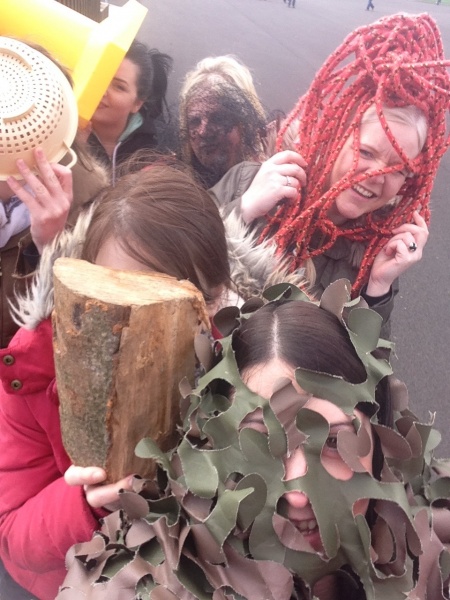 6. Create a funny “selfie” using the mobile device camera app in which everyone in the group appears (including the photographer) but where everyone’s face is obscured by objects found outdoors.
How did learners share their learning?
There are different ways of sharing materials created on a mobile device. The way which was chosen for this activity was as follows. At the end of all of the activities, once back into an environment where WiFi was available to the user of the mobile device, the resulting work was then shared by email to a single email contact. Depending on the size of attachments they may require to have been sent as separate emails rather than all at once. And in some cases in order to find the audio recordings, video, etc on the device it may be that users required to go into the individual app and click on the file, then click share and choose email as the method of sharing.
What did participants say?
Feedback from participants included:
“The ICT workshop was amazing and I learned a great deal. I can appreciate how these lessons would motivate pupils and encourage their learning and creativity.”
“Gained some ideas about using mobile technology.”
“The session with QR codes was great for a) learning how QR codes work, b) using new apps on my phone!, c) how easy it could be to use QR codes for OL activities. It supports my plans for developing our John Muir Award activities for sharing information about Polmont woods.”
“The ICT workshop in the afternoon was great fun and I could see how this could so easily be adapted for use with pupils and I can see that it would thoroughly motivate and enthuse them.”
“I enjoyed the afternoon session which gave me a better understanding of how using mobile phone with regards to children’s learning might be used”
“Doing the ICT outdoors was great fun and I came away with great ideas.”
Primary Engineers Programme – Professional Learning Event
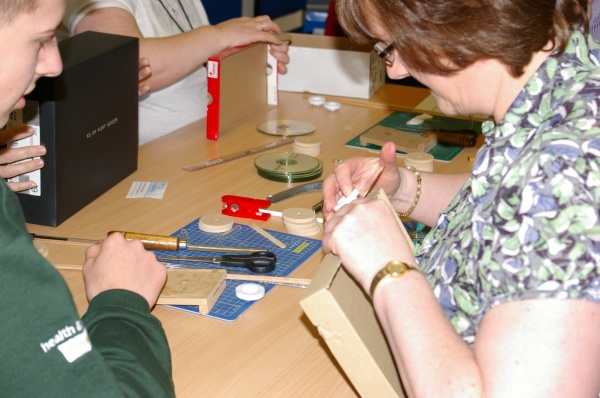 Lynne Lauder, Enterprise Co-ordinator, welcomed 21 Primary school teachers who attended a professional development session, facilitated by Primary Engineers, on Friday 25th April at Camelon Education Centre.
Science Engineering and Maths skills are critical to economic development of the Falkirk Area and this initiative will see schools working closely with the business community to develop these skills with our primary school pupils.
The session increased knowledge and understanding of skills related to Science, Engineering and Maths and provided teachers with a range of practical resources to support learning in the classroom.
Key to the success of the programme will be the links established between the schools and the engineers and apprentice engineers from various companies. Teacher will deliver the project to whole classes of pupils and the engineers will act as the expert in the room.
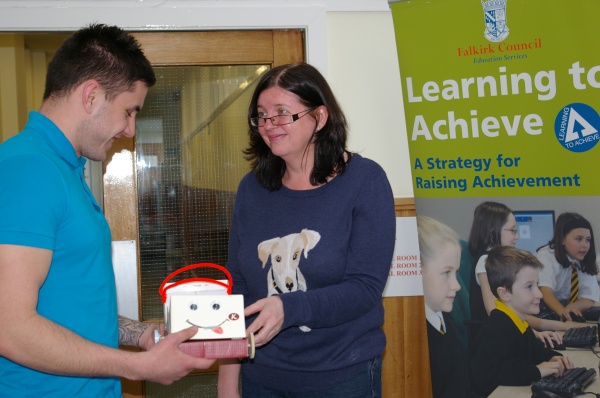
Engineers and Apprentices from Forth Valley College, Heriot Watt University, ADL (Alexander Denis Logistics) Petrofac, The Wood Group & Scottish Power attended the professional learning day. This was the first step in cementing the relationships which will drive the programme forward.
Bookbug
Carolyn Sharp, Learning Resource Service, Service & School Improvement Team, Falkirk Council Education Services. Bookbug provides free book packs to children aged 0-5 years. During 2013-14 we gifted the following packs to children in the Falkirk Council area;
- 1576 Bookbug baby packs
- 1720 Bookbug toddler packs
- 1767 Bookbug pirate packs
- 1953 P1 family packs
For more information on the Bookbug programme, please visit the Scottish Book Trust website.

Professional Update
 Claudia Flynn, Management Information Systems Assistant, for Falkirk Council Education Services would like to share a news article on the Professional Update Process for the attention of all GTC registered staff. Claudia has been involved in the development of CPD Manager to support the Employee Review and Development Process. She has been supporting a pilot group of users who have been testing the new system before it becomes available to all Education Services staff after Easter. This group of users included school based staff and a number of centre based staff.
The following article was recently published on the GTC Scotland website and gives an overview of everything you need to know about the Professional Update process with links for further information.
Professional Update will be introduced for all teachers in August 2014. It aims to support, maintain and enhance teachers’ continued professionalism
The key purposes of a system of Professional Update are:
•To maintain and improve the quality of our teachers as outlined in the relevant Professional Standards and to enhance the impact that they have on pupils’ learning.
•To support, maintain and enhance teachers’ continued professionalism and the reputation of the teaching profession in Scotland.
What do I need to know?
Professional Update is a continual process, which includes the following elements:
•An annual update of contact details to GTC Scotland
•Engagement in professional learning
•Self-evaluation against the appropriate GTC Scotland Professional Standard(s)
•Discussion of this engagement and the impact of this, as part of the PRD process
•Maintain a professional learning record and portfolio of evidence five-yearly confirmation of this engagement to GTC Scotland
We asked a number of leaders what Professional Update means to the profession. Here are some of their thoughts:
Update your details every year
The easiest way to do this is via your MyGTCS account. You can create or access your account at: www.gtcs.org.uk/GTCS-login.aspx
Engage in Professional learning
Professional learning is what teachers do to ensure their professional knowledge and practice is informed, up-to-date and stimulating. It is important that professional learning provides rich opportunities for teachers to develop and enhance their professional knowledge and practice, in order to progress the quality of learning and teaching and school improvement. Find out more about Professional Learning at: www.gtcs.org.uk/professional-learning
We know that some supply teachers can have difficulty accessing aspects of professional learning and the Professional Review and Development (PRD) process. We are monitoring this as part of the pilot programmes, and will publish further guidance for supply teachers prior to the national roll out of Professional Update in August 2014. Equally, some registered teachers who are working outwith the education system may not have access to appropriate professional learning. We are working on guidance for such teachers, to help ensure that they will be able to participate in the Professional Update process. This will be published on: www.gtcs.org.uk/professional-update
Self-evaluate using professional standards
The GTC Scotland Professional Standards offer support for teachers as they develop their professional knowledge and skills through on-going self-evaluation and professional learning. The Standards for Registration provide a gate-keeping function for entry into teaching in Scotland and Full Registration continues to be the baseline Professional Standard for competence. For teachers who have achieved the Standards for Registration, we have developed the aspirational Standard for Career-long Professional Learning and the Standards for Leadership and Management to support their ongoing development. As the revised Standards have been designed to meet the needs of teachers at all career stages working in Scotland’s schools, all aspects of the Standards may not be relevant to teachers working outwith the school system – we are developing further guidance notes and support materials to cover these circumstances. Find out more about the GTCS Professional Standards at: www.gtcs.org.uk/standards
Discuss the impact of professional learning in the PRD process
Professional Update is based on effective, consistent PRD and high-quality professional learning focused on outcomes for a teacher’s own development as well as aiming to improve outcomes for children and young people. We know that, where PRD operates successfully, it provides a valuable opportunity for teachers to reflect on their practice and to consider how they can improve their professional skills and knowledge. GTC Scotland has a validating role in this process, helping to ensure that local authority PRD systems are robust and that teachers are enabled to demonstrate the skills they already have as well as to learn new ones. Guidelines are available on the Education Scotland website: www.educationscotland.gov.uk
Maintain a record
Maintaining a record of Professional Learning, along with a portfolio of evidence, is an integral part of the Professional Update process. We are currently exploring a range of possibilities for recording professional learning, including an online profile linked to MyGTCS. We are working to ensure this process is neither bureaucratic nor time consuming.
The system of recording that you will use for the purposes of Professional Update will vary depending on where you are currently employed. Teachers employed in local authorities will receive further information from their employers about the systems in place in their authority. We are also looking at how these may be used by supply teachers working across a number of local authorities and by teachers currently employed in roles outwith the education system.
Five-yearly confirmation of this engagement
Engagement in Professional Update is an ongoing process, with professional learning and PRD at its heart. Every five years, teachers will be required to confirm their engagement in this process with GTC Scotland. Like the professional learning record, this will be completed in a number of ways depending on the system applicable to you – MyGTCS or another online system (e.g. Gateway, SOPRA). We recognise that there will be circumstances which may make completion of the process within the designated timescale difficult, such as career breaks or extended leave, and we are developing clear guidelines for deferral processes.
In April of this year you will receive a letter and information leaflet from GTC Scotland outlining what is required of you in order to successfully complete your Professional Update. This will also provide details on how to contact GTC Scotland if you have further queries.
For more information please visit www.gtcs.org.uk/professional-update/
Teaching for Deep Learning Facilitators Review Their Impact So Far
 On Thursday 3rd April 2014 Falkirk Teaching for Deep Learning programme facilitators reviewed the impact of the programme with Yvonne McBlain, Curriculum Support Teacher. Falkirk’s team of facilitators noted that the sessions they have delivered in their schools so far have had the following impact:
Learners are more aware of intended learning and children are now becoming more skilled in generating SC.
We are more aware of the HOTS vocabulary and using them in our LI & SC.
The children are more familiar with the terminology.
Staff are more creative with embedding HOTS in the learning.
More opportunities for sharing good practice.
More opportunities for doing peer visits.
Teachers have been made aware of the importance of professional dialogue.
Staff are valuing the opportunities for professional dialogue.
We now have solution-focused meetings.
Teachers decide on an action from the session to focus on.
Teachers are learning from each other – practice/dialogue
Programme has developed devolved leadership in schools and has developed facilitators’ presentation skills/confidence/professional knowledge of own craft.
General practice of dedicated professional – skilled in delivery of sessions & building capacity.
Distributive leadership opportunity through delivery of sessions.
While making these assertions about the impact of the programme, the group identified the following sources of evidence:
Gateway feedback/evaluations
Teachers created their own action plan linked to the session.
5 teachers will have observed other teachers by the end of the session. This has never happened before!
Start of session staff feedback on previous actions & impacts – share in pairs/lollipop sticks/graffiti board – “post its” kept by facilitators as evidence.
Limited – barriers of school culture/workload
Lack of understanding of the possible impact but hopefully will develop through ERD process.
Traffic lighting – daily plans, QA feedback for LI & SC
Feedback, monitoring visits, evaluations, child’s learning, child’s awareness of HOTS.
In addition, facilitators are also beginning to compile specific evidence of impact on their colleagues and pupils within their establishments. Mary Jalland facilitated Session 6 – Using Higher Order Skills Taxonomies as part of Teaching for Deep Learning (Click to view), and Session 14 – Creating a Positive Learning Environment which Supports Teaching for Deep Learning (Click to view). Click here to read how Mary and her colleagues at Westquarter PS noted their impact.
Iain Farrington facilitated Session 6 and Session 3 – Effective Questioning as part of Teaching for Deep Learning (3 Questioning click to view). As a result of these, Iain and his colleagues are trialling the use of a higher orders skills planning sheet as part of their planning processes (Click to view). Together they have integrated a range of changes to their practice in order to deepen pupil understanding of the skills they are developing. In the longer term, this will support pupils in recognising and recording their own progression and achievement, and help them maintain a strong learning log and/or profile.