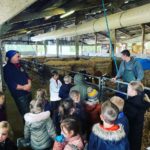
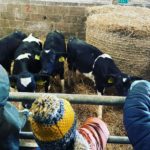
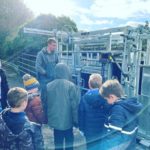
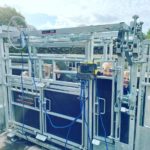
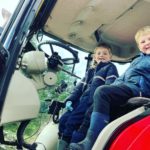
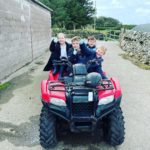
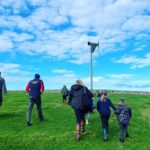
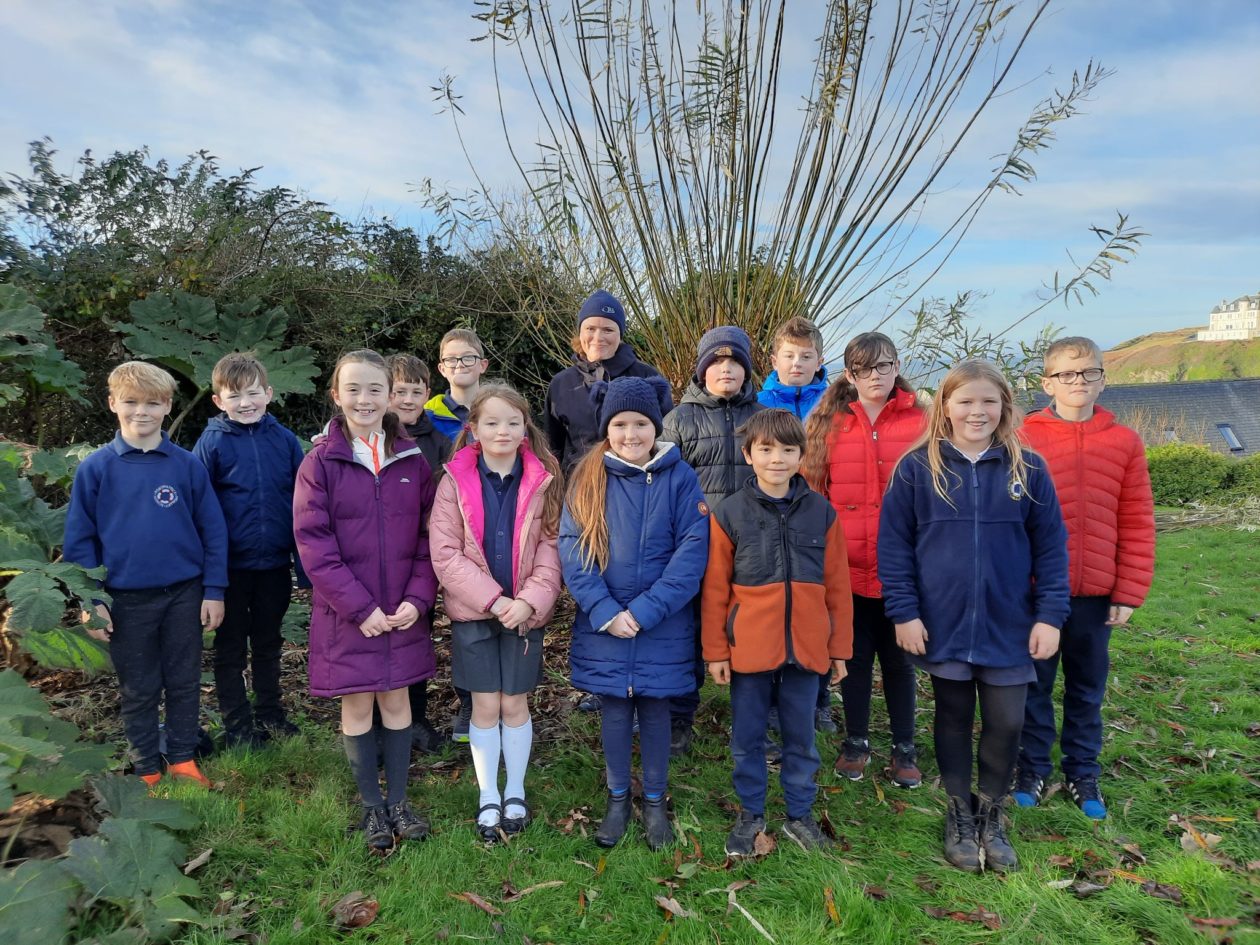
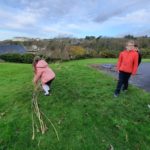
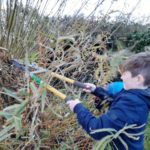
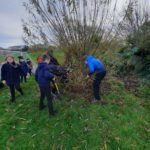
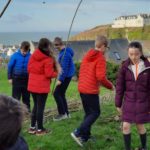
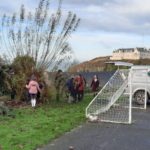
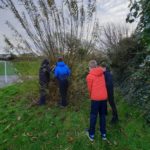
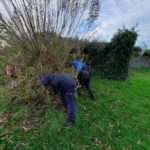
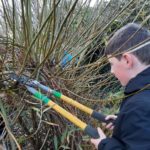
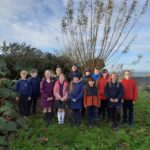
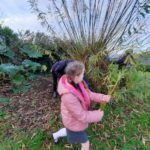
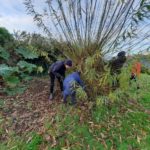
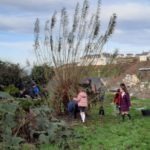
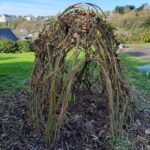
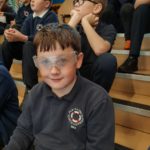
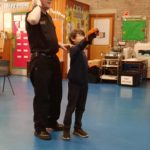
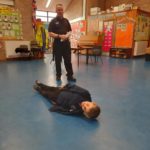
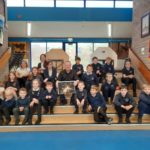
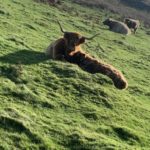
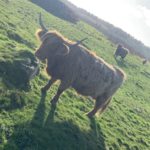
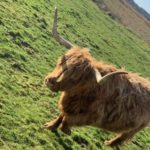
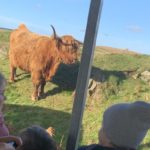
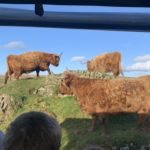
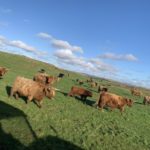
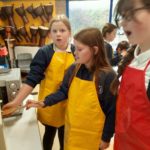
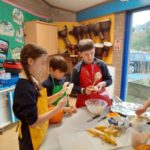
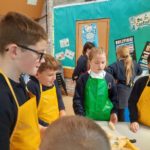
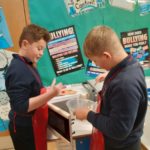
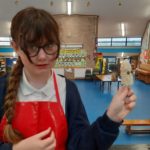
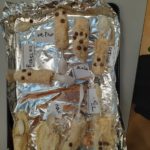
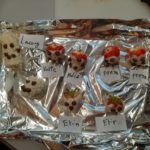
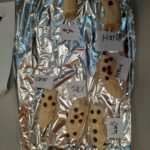
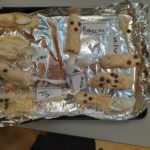
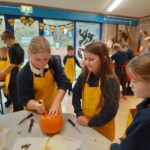
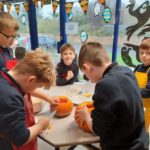
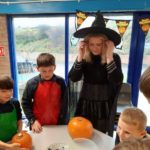
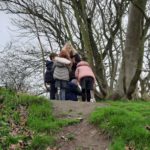
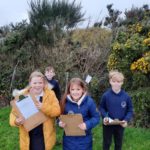
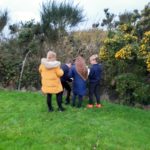
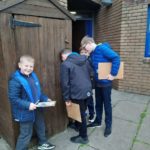
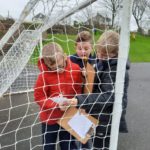
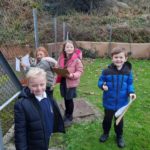
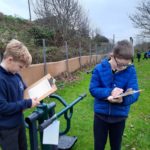
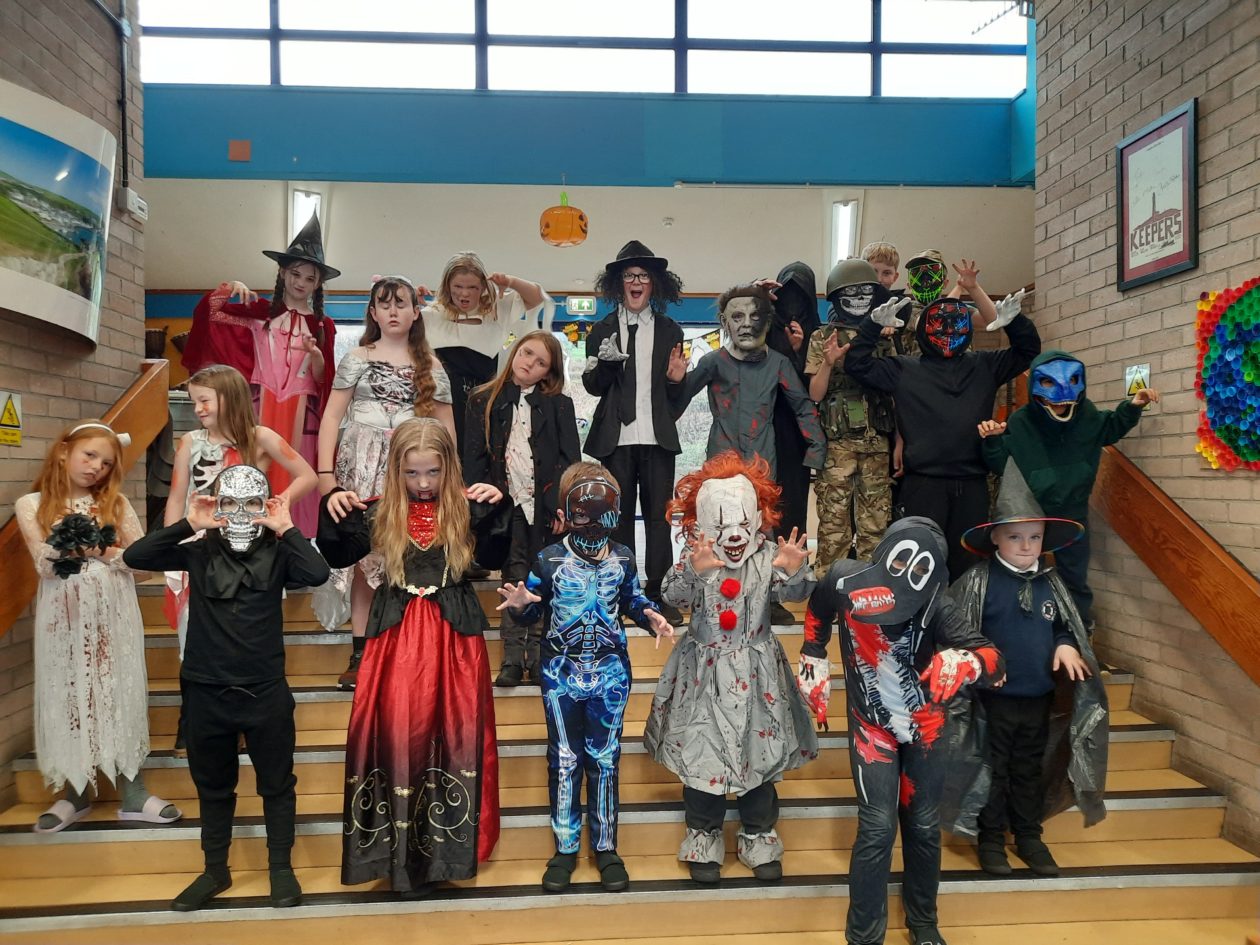
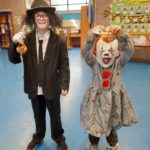
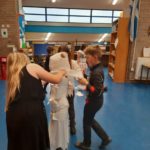
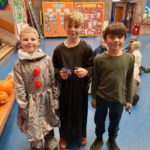
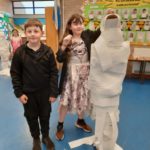
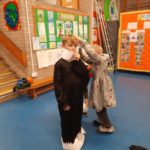
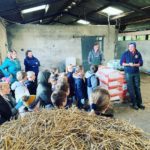
As part of learning where our food comes from, P1 – 4 donned their wellies and headed off to a farm visit courtesy of Jacqui, Scott and Gregor Service.
Author: Ms Whorlow
Lego Wedo Workshop
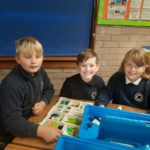
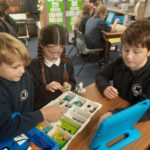
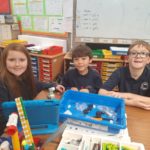
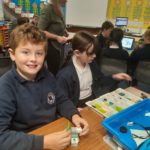
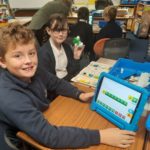
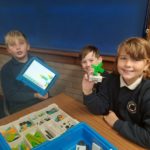
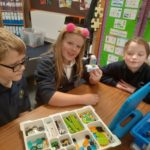
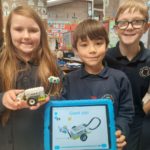
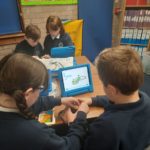
Mrs Hall of DG STEM Team joined us today to deliver a Lego Wedo Coding Workshop to P5 – 7 pupils.
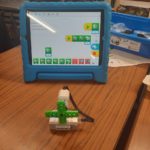
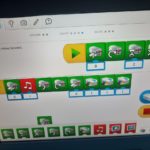
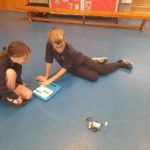
The children explored the component parts in the construction kit before using bluetooth to pair their controller to their IPad.
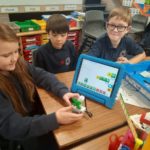
Using a theme of sustainable sources of energy to fit with our science and social studies topic, the children built a wind turbine from a schematic diagram. Next, they assembled the coding blocks to turn the blades. As an extension, the boys and girls varied the r.p.m. of the blade rotation and also changed to direction of rotating – pulsed and fixed.
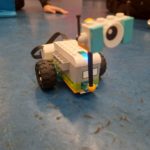
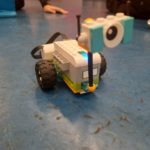
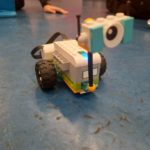
The next challenge was to take what we had learned about turning motors and varying speeds to construct a moon rover. The children thought hard on which coding blocks to use to make the rover move forwards and backwards, change light colour and make sounds. As an even bigger challenge, they were tasked with what construction part to make the rover turn. This was achieved by reducing the size of one of the wheels on the front axle. This changed the rotation rate of one of the wheels, thus creating a turn.
Thank you to Mrs Hall for giving the children the opportunity to use and apply computational thinking.
# Successful Learnerx
Digital Literacy Week
As part of Education Scotland’s Digital Literacy Week, P5 – 7 have participated in activities designed to promote digital literacy and learning for our children.
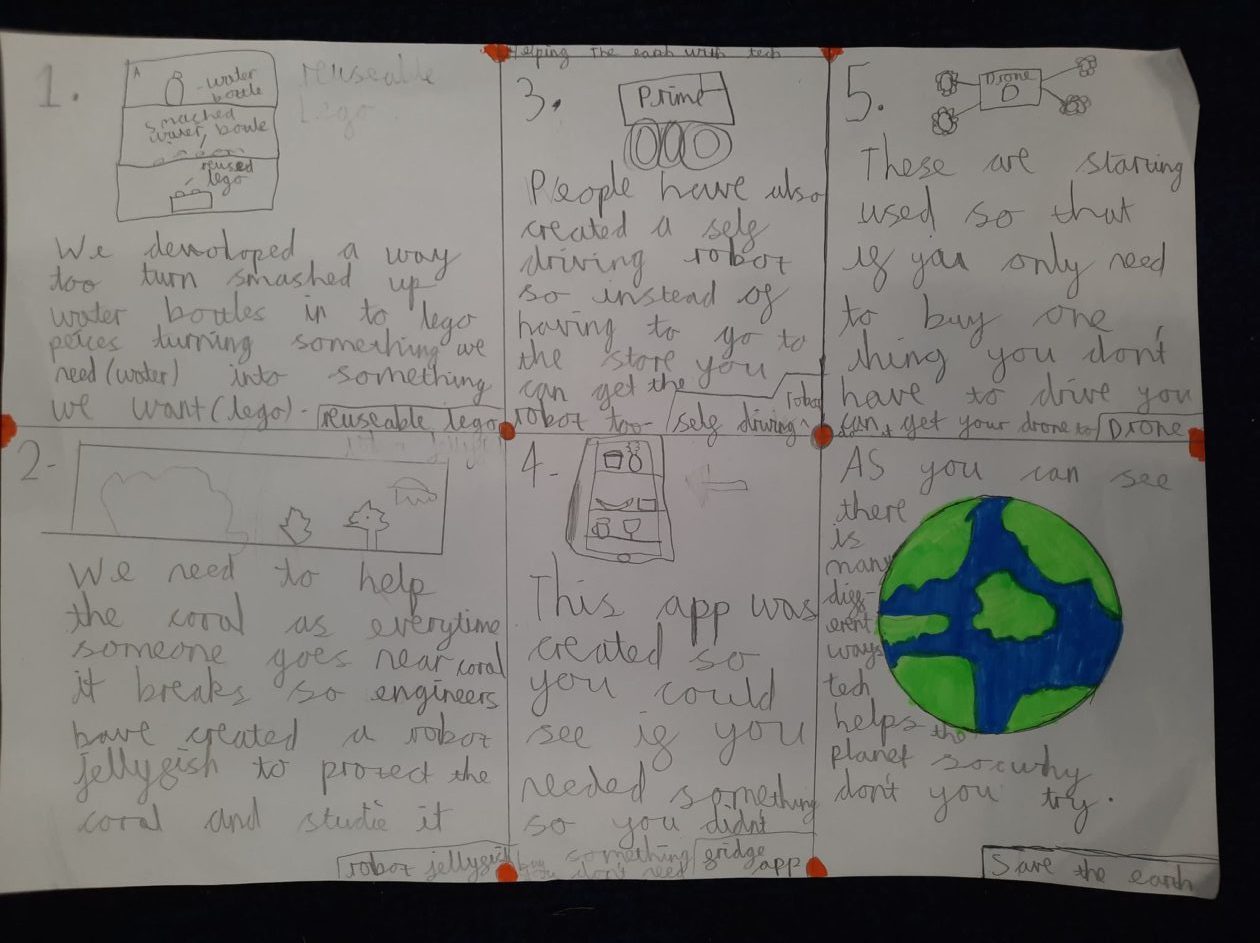
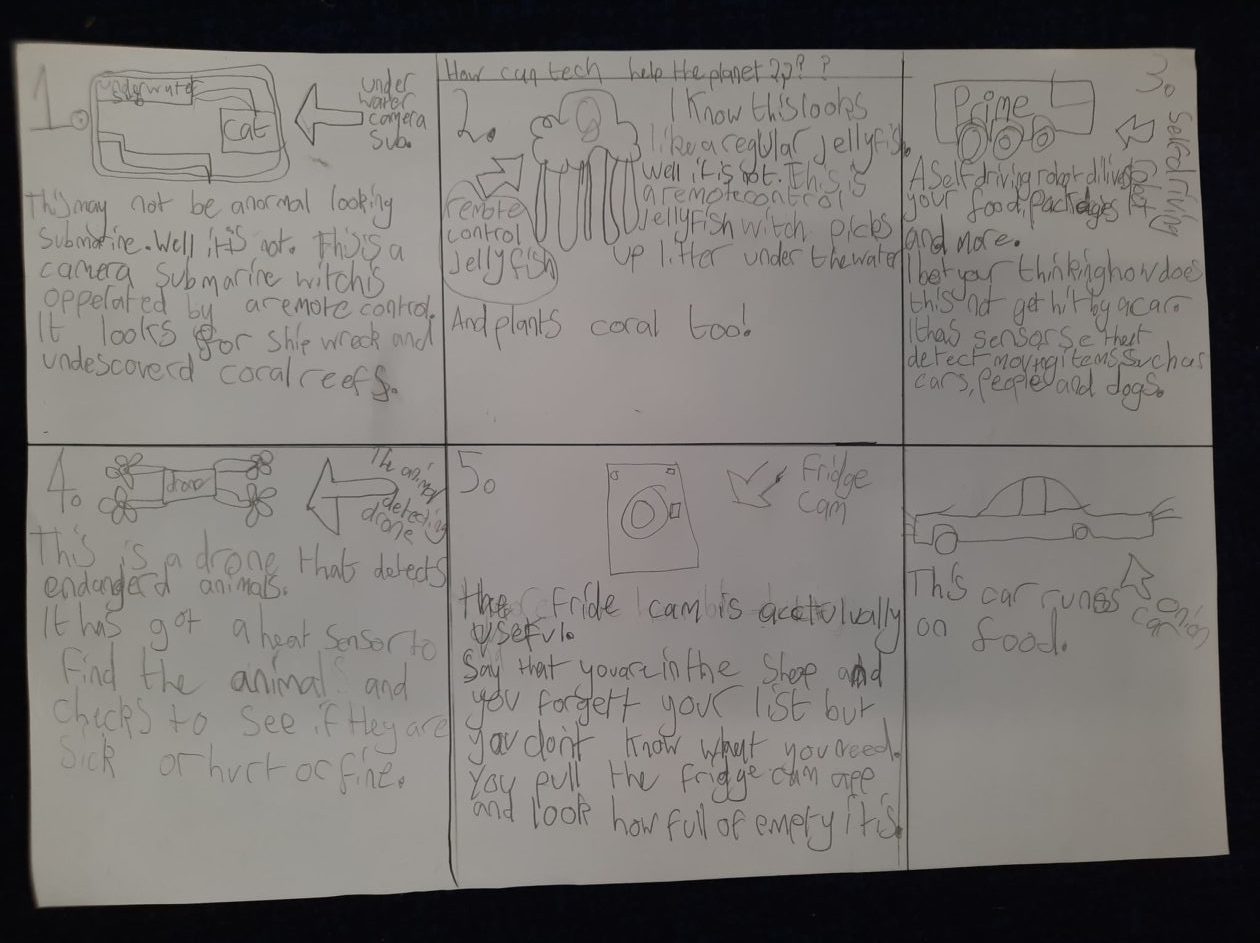
On Monday, we joined in a live workshop with Becky from Tech She Can. We learned how technology is helping us to protect our planet and how technologists around the world are using tech to protect our air, reduce waste, help clean the oceans and preserve our wildlife.
Linking with Developing the Young Workforce (DYW), we also heard about the types of jobs we could do if we wanted to pursue a career in this important area; from marine biologists to ecologists and aeronautical engineers to product designers. Techshecan champions women in industry with a mission to make sure that everyone has the opportunity to participate in developing technology, and for women to play an equal role in how our world works, looks, thinks and feels.
We then watched a short animation looking at drones and how they’re being used for environmental sustainability.
We used this activity as a stimulus to create our own information posters to demonstrate how technology is being used to protect our planet from environmental damage from humans.
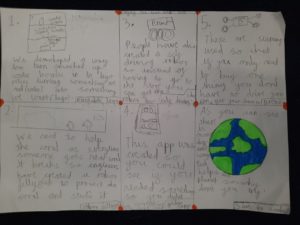
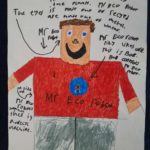
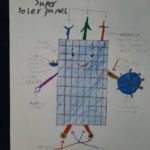
We linked this learning to help develop this year’s Eco School’s Mascot. We considered the ways technology can be used to produce clean, renewable energy for our planet and created technology that can help reduce pollution and waste. One example is a mascot with hoover feet to clean up litter. 🙂
On Wednesday, we joined Digilearn Scotland’s Keeping My Devices and Accunts More Secure (CRIS). The children had a discussion on what we use to Consume – Create – Communicate on devices. We then identified the difference between safe and secure, giving examples of each.
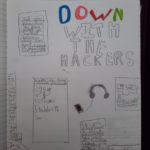
The boys and girls moved on to apply the featuers of persuasion in an information poster highlighting the benefits of using secure passwords, along with helpful tips.
# Successful Learners
# Responsible Citizens
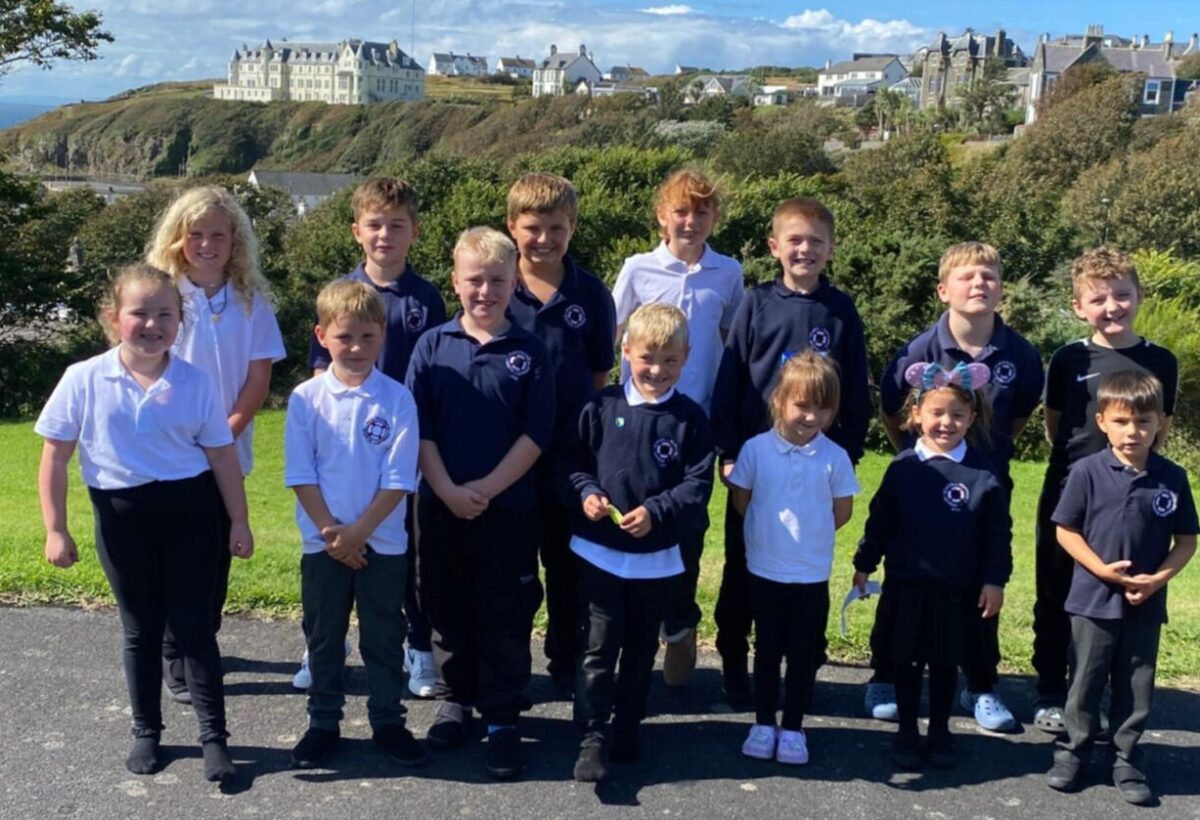
Marvellous Maths Week
What a busy week of maths we have had at our North Rhins Partnership!

To celebrate Maths Week Scotland, our boys and girls have engaged in ‘all things maths’ from art to catering and beyond…
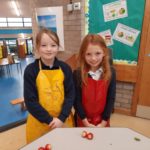
Have a look at our Sway to see the fantastic learning experiences our children have been involved in on the theme of The Beauty of Maths.
Simply click on the link below, click on the play icon in the top right and enjoy the journey. 🙂
|
International Podcast Sharing
Mr Alan Cameron, Education Advisor for Soundtrap and Spotify, visited our school this week to talk about the Anne Frank story. He is engaging in a Eurotech Education Convention in Amsterdam and invited our pupils to create a podcast on the story of Anne Frank. This will also be shared with the Anne Frank Museum located in this city.
Katie (P7), Lewis (P6), Erin (P5) and Lacey (P5) provided the voices for this recording.
Have a listen to their expressive podcast.
# Confident Individuals
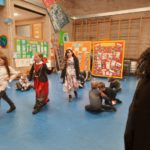
Careers Talk and Remembering Our Queen
Maths Week Scotland At Our Local College
As part of our participation in Maths Weeks Scotland, Primary 5 – 7 from Leswalt, Kirkcolm and Portpatrick were fortunate in being invited to attend the Stranraer Campus of the Dumfries and Galloway College to engage in DYW (Developing the Young Workforce) careers taster sessions linked to how maths is used in the world of work.
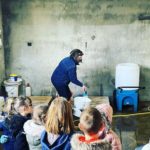
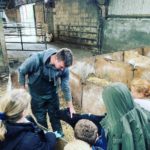
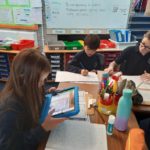
We took advantage of their wonderful STEM (Science, Technology, Engineering & Maths) room to undertake a wide range of STEM challenges. Using K’Nex kits, one group constructed a model of a renewable energy sourcing windmill whilst another followed a schematic to construct a wind powered vehicle. A third group applied physics and balance to build structures using Keva Brain Kits whilst a fourth group constructed 3D shape models using a straw connection kit.
Working collaboratively, the children had the opportunity to build the following skills which are all vital for the world of work:
Throughout our STEM challenges, the boys and girls applied their Higher Order Thinking Skills. They recorded the competencies they felt they were making use of on a dry-wipe board to promote discussion and awareness.
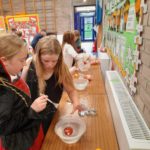
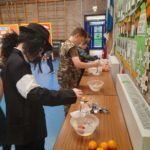
Next on the agenda was a visit to the Childcare department. Here, lecturers, Susan and Lyndsey, and the students introduced our group to the ways in which maths is used in this sector. The pupils had the opportunity to mix up a bottle of baby milk formula (with cold water for safety). The children had to measure accurate quantities of water to milk powder. Discussion was had on the ratios required if we wanted to make a smaller or large quantity e.g.
If we add 4 scoops to 120ml of boiled water, how many scoops would we add to 30ml of water? 120/4 = 30, thus one scoop per 30ml of water.
In addition, the children used and applied a range of maths skills younger children would develop through play i.e.:
- Snakes and ladders for random outcomes and counting
- Twister for coordination and direction e.g. left/right/colour matching
- Bingo for number recognition
- Connect 4 for problem solving and strategizing.
- Logical thinking to solve puzzles and jigsaws
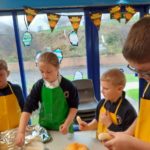
The children then had the opportunity to follow a recipe to make playdough for younger children to play with. They had to measure out flour, water, oil and salt in the right quantities to create an effective and pliable mix.
Our last adventure of the day was ‘mocktail’ making and healthy snack preparation. We headed into the very well-equipped training kitchen and set to work learning how to mix together our drinks by measuring out quantities of different fruit juices. There was discussion on the brownie cake recipe displayed in the kitchen as to the weights and measured used to produce these delicious treat. There was also an opportunity to chop up some tasty fruit as an accompaniment using fractions of quantities.
The staff and students were just fabulous with our children, giving them their undivided care and attention with ready smiles. Our very grateful thanks go to all at the college and, in particular, to Fiona Heron, Stranraer Campus Manager, for making this happen.
We successfully applied for funding from the Edinburgh Mathematical Society to pay for transportation costs for all three schools from our trio to attend this great event. Thank you also to this organisation for making today’s learning experience possible.
# Successful Learners
Microbits Live Code Along
Live Code Along – Create an Emotions Badge using Microbits
We joined over 1000 pupils from schools across Scotland in a live event today as part of the Scottish Learning Festival and STEM learning (Science, Technology, Engineering & Maths).
A Microbit is a small computer that fits into the palm of your hand. It has lots of inputs and outputs to allow it to be programmed.
We discussed what is meant by the term abstraction, namely looking at things as a whole rather than as part of the individual details. We used abstraction to draw emotions on a facial expression e.g. our hair or ears don’t change when we show an emotional facial expression but our lips and eyes will; just like emoji faces. They only show the important bits to focus on.
We created programmes using inputs and basic blocks to design our own L.E.D. emoji faces.
We downloaded our code onto our microbits devices by clicking and dragging it to our device icon on the computer. We were then able to toggle buttons A & B to change the LED patterns to display two emotion ‘emojis ‘. We were able to do this both on our device and our simulator on the website.
To enhance our programming, we combined a function of when Button A AND B are pressed, a new facial expression emoji can be displayed.
We then added in musical sound melodies by adding a play melody code block to our coding bricks.
Our pupils used and applied HOTS (Higher Order Thinking) skills by tinkering to explore the capabilities of the devices – Creating, Analysing, Applying and Evaluating.
It’s great to use technology to link with organisations and opportunities that might not otherwise be possible. The children really enjoyed the session and are keen to do more. They can code at home without a Microbit at any time using this simulator on Microsoft MakeCode for micro:bit (microbit.org) and selecting New Project.
# Successful Learners
MUS£UM on the MOUND
As part of our upcoming Maths Week Scotland event starting soon, Primary 5 – 7 met with Gillian from the Museum on the Mound in Edinburgh today. We participated in a live online, interactive workshop to explore the History of Money.
The session began by discussing what do we use money for? The children came up with the explanations that we use it to exchange something to get something else. We could save or we can gift it. Tilly said that we have to earn money. Erin explained that we use coins and notes, Apple Pay, Contactless cards today.
We tried ripping polymer samples of bank notes but couldn’t do it. They are pretty tough.
The children were given samples of items which were used as money long ago. The first items were cowry shells. These were used as money in China 4000 years ago and in Africa 100 years ago.
These are strong, rare and couldn’t be copied. They were used far away from the sea. 500 years ago, one shell would buy you a cow, approx. £1500 in today’s money.
We then looked at a tevau, which was used as money in the Solomon Islands. The children tried to identify what this 9 metres long item is made from. It turned out to be made of bird feathers which are trimmed from the bird and it is then released. It would take one person over a year to make a tevau, thus it was a very valuable item. Cameron stepped out 9 metres with string in the classroom. It was 40 of his foot lengths. Everyone agreed that not everyone has the same sided feet so the length might be inconsistant if measured using different people’s feet sizes.
Further sample envelope was shared with the children in groups. They had to consider these discussion points:
- How would you describe this object?
- What do you think it is?
- Why do you think it would be valuable to the people who used it?
- Can you work out the object’s length?
- Do you think it would be easy to use as money? Why/Why Not?
Group 1 – Tea was packed in to bricks and used as money, heavy. Used in China & Tibet as money. It could be drunk and broken into smaller parts. One tea brick weighed about 1kg and would dissolve if wet.
Group 2 – Cocoa beans pods. These were used by the Aztecs in Mexico as money and were valuable and used in lots of ways; to drink, buy things with them. A rabbit would cost 35 cocoa beans. They would make good money as they were easy to carry around, but fake ones made of mud were common.
Group 3 – Tobacco leaf. This is ground up and made into cigarettes. When they didn’t have enough coins, Americans would use it in big barrels which weren’t easy to transport. People used to be paid in tobacco.
Group 4 – Salt. Big blocks were used in Ethiopia in Africa until about 100 years ago. They would cut it up into little bricks and use as money. It was big and heavy and was used to preserve food. A timani of salt would buy you 8 chickens.
Erin noted that all these items had other uses besides money.
We learned that anything could be used as money as long as everyone agrees how much an item is worth. We sometimes don’t even use physical coins and money any more. During the pandemic, bartering of items returned in many places around the world when people were unable to get to banks to use modern forms of money.
The children then had an opportunity to design their own badge with a money themed design. These will be posted off to the Museum on the Mound and returned as real badges for the children to enjoy.
# Successful Learners
Farming Fun For North Rhins
If we don’t get to the farm, then the farm comes to us!
Today saw an extravaganza of farming fun for the children of the North Rhins Partnership. All three schools came together to participate in a carousel of farming activities kindly organised by Mrs McKnight. This was an opportunity for us to learn more about farming as a career first hand, seeing a range of farming roles up close. Jack Milroy kindly allowed us to use his field for the event.
Stuart McCrindle demonstrated the great team work skills of himself and Zak rounding up sheep. Zak is the Scottish Sheep Dog Trial Champion this year, so we were treated to an exceptional demonstration of skill. Stuart explained that he became interested in this aspect of farming as a young boy and has made a career out of his interest. He also explained that it takes about 4 years to fully train a sheep dog – one year for each leg, as he put it. 😉 Stuart brought along a very cute puppy that the children were able to pet and nominate names for. The winner will be announced shortly.
Grant Hurcomb and Jack Milroy delighted the children with a sheep sheering demonstration. The boys and girls were amazed at how quickly a sheep could be fully sheered – the work of seconds! Grant talked about why we sheer sheep, and explained the uses of wool. The children had an opportunity to feel the freshly clipped wool for themselves. There was a discussion on careers as a sheep farmer. Grant has taken part in lots of shearing competitions, clipped sheep in New Zealand and even clipped sheep for 50 hours raising nearly £50,000 for charity.
Ian McKnight (Mrs McKnight’s husband) educated the children on sheep animal husbandry. He explained what a farmer must do to ensure his flock is healthy and happy. He shared examples of the medication and vitamins that are given to sheep, as part of an ongoing yearly calendar, to prevent diseases and ensure they have the right minerals. He also shared the different kinds of feed given to the sheep for different purposes. There were two very lovely calves and sheep nearby for the children to pet.
And last, but not least, Steven Adams and Angus Brown brought along tractor and a chopper to show the children. They chatted about what they use them for and the children were very excited to get the opportunity to sit in the vehicles and even toot the horn. could have a seat inside.
It was a highly successful afternoon learning about the world of work in the farming industry. We certainly have a few budding farmers in the making!
Prior to the farming event, the children enjoyed connecting with their friends across the partnership with some outdoor play time.
Thank you to Mrs McKnight and our Farming Volunteers who took the trouble to come along and share with us.
# Successful Learners
As a wee surprise, the children arrived back at school to find that Kim and Mark had kindly fitted swings in the playground for them to enjoy. They didn’t want to go home at 3 O’clock as they were having so much fun!