
Latest Developments in the Teaching for Deep Learning

Yvonne McBlain of Falkirk Education Services Curriculum Support team has been working with our team of facilitators for the Falkirk Teaching for Deep Learning programme. There are 18 trainee facilitators for the programme – 15 from the primary sector and 3 from the secondary sector. Some are already taking on a distributed leadership role in facilitating teacher learning communities within their own establishments. Others are willing to facilitate sessions across the authority, and anyone wishing to access their services should contact yvonne.mcblain@falkirk.gov.uk . The latest training meeting on 3rd October was the first opporunity for the facilitators to practise delivering the programme content to each other. Kim Davidson from Bo’ness Public PS, Jaime Thomson and Shirley Gallivan of Comely Park PS led the rest of the group through session 12 “Using professional collaboration to reflect upon & support teaching for deep learning”. The group was able to experience this session as participants, and then give feedback to Kim, Jaime and Shirley on their delivery. Read some of the feedback below:

Reflected and developed comments really well; Calm and purposeful

Pace really good – just right amount of time to reflect; Nice conversational feel

Allowed discussion to keep going – allowed it to go deeper; Circulated well

Deep understanding of content;  Made participants feel comfortable

This meeting also gave Laura Wallace, Fiona Caygill and Mary Jalland an opportunity to share how sessions they had facilitated in their schools had gone. Staff colleagues gave these facilitators very positive feedback about the value of the sessions for them. Mary reported that her colleagues had put into practice some of their actions from the session the very next day! This training session was a very positive experience for all concerned, and we look forward to the remaining 3 meetings this year where the other facilitators get a chance to deliver their chosen session to our group. Click here to visit the Falkirk Teaching for Deep Learning Glow group and browse the session materials. * You may have to request permission to join the group – just click and ensure you type a short message explaining who you are and what establishment you work in.
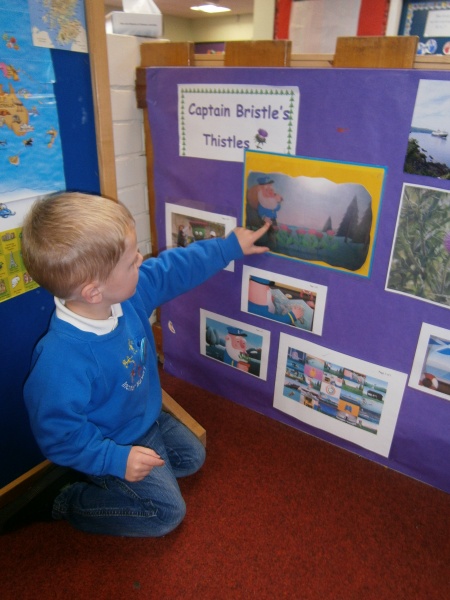

Inchlair Nursery learns about the Commonwealth Games

Yvonne McBlain from Falkirk Education Services Curriculum Support team has been finding out about some active and engaging interdisciplinary learning happening at Inchlair Nursery School. The pre and ante-pre school children have become immersed in preparations for the Commonwealth Games following their reading of the story “Captain Bristle’s Thistles”. This story (click to see the story video) really captured the imaginations of the children and has led very naturally into development of their knowledge within various disciplines. Isobel Edmond, head teacher at the nursery, has worked with staff colleagues to involve parents in extending and deepening pupil understanding of this international event. Click here to see one of the documents used to keep parents informed of developments with this interdisciplinary work. Click here to see how one of the children continued to develop his learning at home with his mum. Staff are responding to the children’s interest in the progress of the Queen’s Baton Relay by using a map display within the nursery. The children are developing this display by noting and bringing in photos or other items which show their links to the relay route on the map. Click on the photograph at the start of this post to watch Inchlair pupils sharing their learning.

Reading is Rubbish?! Engaging Families in the Learning

 Sharon Wallace, Curriculum Support Officer, Curriculum Support Team has taken part in a recent workshop activity held at Falkirk High School.

The title of the event was ‘Reading is Rubbish’ and was aimed at parents and families of pupils in Falkirk schools. There were several workshops on offer at the event, which was led by author and patron of reading at Falkirk High School, Catherine MacPhail.

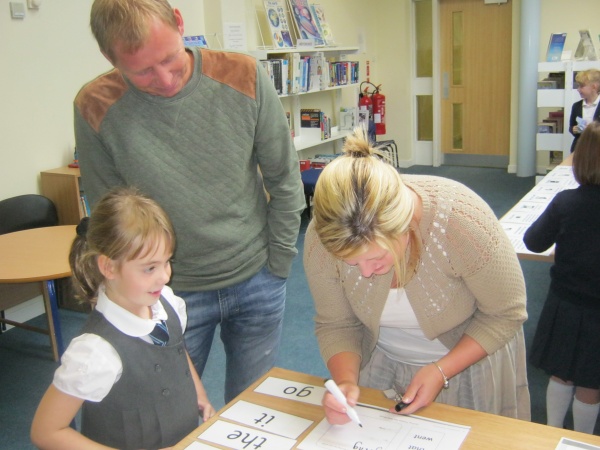
Sharon delivered two workshops to several parents, carers and pupils entitled: ‘Using Chocolate Cake to Demonstrate Reading Strategies’. Sharon used Michael Rosen’s poem ‘Chocolate Cake’ as a stimulus for developing reading and writing skills.

Participants engaged in several activities which addressed the six key comprehension strategies in active literacy reading. They were tempted by the lure of a piece of rich, icky-sticky, ooey-gooey, scrumptious chocolate cake and used fabulous adjectives to describe the treat.

Feedback from the workshop was extremely positive and families went away learning several new strategies to help their children with the development of reading skills at home.

Feedback included:

“I just wanted to say how much we thoroughly enjoyed the “Reading is Rubbish” event on Wednesday. Having attended the “chocolate poem workshop” – My daughter, who is 3, stood up in nursery and told all of her peers that “reading is not rubbish, it’s great fun and you even get chocolate cake!”  My son who is P5 (and my reluctant reader) actually enjoyed it more than I thought he would have, he was telling everyone how great it was. I thought the workshop I attended was excellent.”

Better Movers and Thinkers at Wallacestone

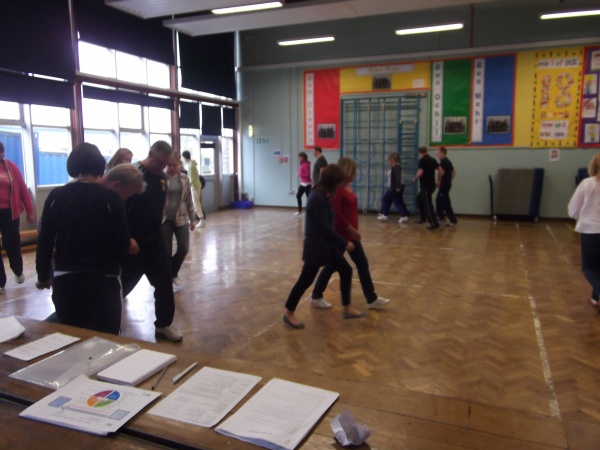
Morag Young and Morag Simpson, Physical Education Lead Officers for Falkirk Council Curriculum Support Team delivered an inservice course to primary teachers from Wallacestone on the  Better Movers and Thinkers Programme. This programme is an innovative, exciting and challenging movement and learning programme for Physical Education, that focuses directly on enhancing the links between moving and thinking and how these elements scaffold the development of physical performance and inter-disciplinary learning.  This was a practical session and all participants rose to the challenge!  Initial feedback was extremely positive.

Subject Development Work in Falkirk’s Secondary Schools

As newly appointed Curriculum Suport Officer (Secondary) for the CS Team I have responsibility for orgnanising the ‘Curriculum Manager’s Groups’ that bring together Principal Teachers/Faculty Heads from across the authority to discuss, share and generally raise standards for their subject areas.

In addition to this responsibility I also have a role in working with the SQA Nominees that we have appointed to work on behalf of Falkirk Council. Last year 35 Nominees were selected through a rigorous application and interview process and are now being deployed to various panel events and school visits to moderate assessments for the new National Qualifications.

In light of the recent devlopments in Nationals (1-5), and the imminent implimentation of the new Highers, it was felt that the authority would benefit from the creation of ‘Subject Development Groups’ to drive forward subject specific work in the council and these will replace CMG meetings for 2 of the 4 scheduled slots for the year.

Principal Teachers will have an important role to play in these groups, as will the relevant SQA Nominees who can bring first hand experience of the verification process.

Intitial Subject Development Group meetings will be held at the end on November and then a second meeting in late February. I look forward to updating you with the porgress of these groups later in the year.

For more information on Curriculum Managements Groups, Subject Developments Groups or SQA Nominees, please contact me via email; gillian.campbell@falkirk.gov.uk

Scottish Learning Festival 2013 – Sharing Good Practice

Sharon Wallace, Curriculum Support Officer, Curriculum Support Team delivered a workshop to 95 colleagues from across Scotland and beyond at this year’s Scottish Learning Festival.

The theme of the presentation was ‘Sharing the Learning with Parents/ Carers – Active Methodologies’ and the aim of the session was to provide an overview of the wide variety of approaches Falkirk establishments are using to share active methodologies with parents and carers.

The agenda for the workshop was:

  • An overview of the Falkirk picture
  • An explanation of the range of active methodologies used in Falkirk
  • Parent/ carer workshops on offer
  • Literature/ leaflets used
  • Online methods – blogs/ you tube/ twitter
  • Working in partnership with schools/ partners
  • How this fits into Falkirk’s Literacy Strategy 2013 – 2016

Three pupils from Kinneil Primary School spoke eloquently and confidently about their experiences helping out at active learning workshops for parents. They talked about how attending the parental workshop gave their own parents ideas on how to support their homework.

Sharon shared a short video of Susan Dyer from Bankier Primary School explaining the impact an active learning workshop had on her school, as well as a video from a Bankier parent describing what it meant to her and her family.

[kml_flashembed movie="http://www.youtube.com/v/TnXMSAcKcCo" width="425" height="344" allowfullscreen="true" fvars="fs=1" /]

https://blogs.glowscotland.org.uk/fa/LiteracyStrategy/

[kml_flashembed movie="http://www.youtube.com/v/r5CmD5FkicY" width="425" height="344" allowfullscreen="true" fvars="fs=1" /]

[kml_flashembed movie="http://www.youtube.com/v/97EOc9Tks_Q" width="425" height="344" allowfullscreen="true" fvars="fs=1" /]

[kml_flashembed movie="http://www.youtube.com/v/iiFjsaCTy08" width="425" height="344" allowfullscreen="true" fvars="fs=1" /]

Feedback included:

"Inspirational, you have really motivated me!"

"Thank you for sharing the Active Literacy parental leaflets - they are very useful."

Lots of delegates who attended this seminar then came along to Falkirk Council's stand in the Local Authority Village to enquire about our short animations Falkirk has developed on CfE and Active Literacy.

Active Literacy – Stirling University Input

Sharon Wallace, Curriculum Support Officer, Curriculum Support Team has delivered an input to 45 second year ITE students at Stirling University. The session was based around Active Literacy and covered the following aims:

  • To provide an overview of active approaches to literacy in the Early Years
  • To outline key strategies and methodologies used for effective teaching and learning
  • To examine ways forward for the student teachers careers to incorporate active approaches to literacy 

Sharon provided these students with an overview of how Falkirk Council are meeting the literacy needs of our pupils from early to second level.

The students developed their knowledge and awareness of spelling and phonics strategies such as: five finger strategy, Elkonin boxes, diacritical marking, mnemonics, words within words, syllabification and compound words.

The active literacy animation for parents was shared, as well as Falkirk Council’s Literacy Strategy online support tool blog.

Sharon provided the students with an overview of the phoneme programme for each year group and how the 40 phonemes are covered across P1-3. Students used the reciprocal teaching method to work with a range of phoneme words to see how these are taught in Falkirk establishments.

There was an overview given of the six reading comprehension strategies and Sharon used the text ‘The Gruffalo’ to exemplify how each strategy can be used with this picture book.

The session concluded with the students reflecting on what they had learned, how this new knowledge impacts on their beliefs and understandings and what their next steps will be.

Using a Smart Board to support active learning in the classroom

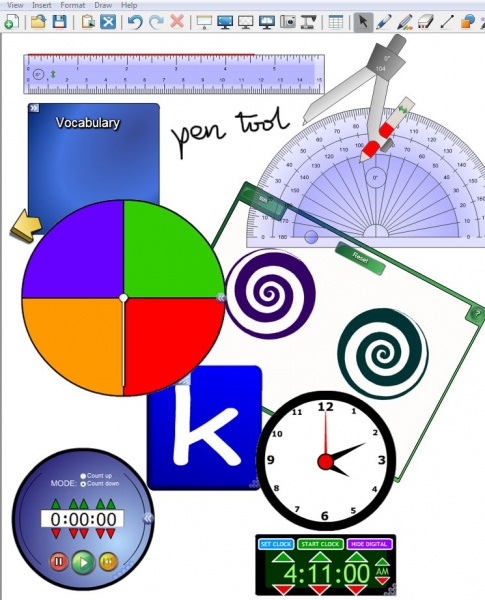
Malcolm Wilson, ICT Curriculum Development Officer in Falkirk Council Education Services Curriculum Support team, presented a hands-on continuing professional development session for staff from primary and secondary schools in Falkirk on the use of Smart Notebook software with the Smart Board interactive whiteboard to support active learning across the curriculum.

Participants were guided through hands-on use of a host of interactive techniques using Smart Notebook software with the Smart Board which a teacher could use to support learning and teaching in the classroom across the curriculum. These included different ways of using tools like the magic pen tool (to zoom in, magnify, spotlight, and fade out annotations), using pen tools for annotations and sorting on screen as well as handwriting recognition, moving pictures to hide and reveal, matching images within tables, and page activity recording.

The variety of different gallery items including engaging interactive tools such as timers were illustrated in various activity contexts, as well as how to adapt the host of lesson activity toolkit pre-created game-type interactives to any topic. Hands-on use of the resources on the Smartboard by participants illustrated how the activities can be used to help engage pupils in their learning.

There are also many free pre-created templates and question sets ready to be downloaded and adapted by teachers from Smart Exchange to suit the needs of their own pupils. Click here for the online Smart Exchange site where these can be downloaded.

The resources used during the session can be accessed by clicking here (note that a Glow username and password is required to access these resources).

Comments from participants included:

“Well delivered and well organised course with a clear focus, interesting and relevant content and an engaging presenter.”

“Taught me new ways to use my SMART board which will in turn enhance learning of my pupils.”

“Showed me how to use different functions on a SMART board that I had never seen or used before, with examples of how they could be used, which was helpful so I can start using these with my own class.”

“Provided practical opportunities to engage with the materials presented, and the delivery of the course was engaging and accessible to someone looking to develop their use of a SMART board in their classroom.”

“A very well presented course that catered for a cross section of abilities.”

“The hands on overview was very helpful and the delivery style of the presenter was at a pace that was very easy to follow.”


Larbert Cluster Interdisciplinary Planning

Yvonne McBlain of Falkirk Curriculum Support Team was thrilled to attend the first of a series of cross-sector cluster interdisciplinary planning sessions on Tuesday 17th September 2013. As chair of the Commonwealth Games Interdisciplinary Project sub-group, Linda-Anne Reid worked with colleagues to co-ordinate this collegiate planning. Early year’s practitioners and primary 1 teachers met in Stenhousemuir PS, first level teachers met in Carron PS, and second and third in Kinnaird PS. All staff were given relevant planning materials and information in advance, including the cluster plan, NAR planning flow chart, NAR planning flow chart  instructions and Falkirk Community Trust/Active Schools Going for Glasgow Accreditation paper. Isobel Edmond provided early level practitioners with a very clear introductory overview of the potential benefits of this interdisciplinary learning context.  Morag Carson then explained that each of  the 3 hour-long planning sessions would involve same stage groups planning within 3 bundles of E & Os. This means that the Larbert cluster will generate at least 3 interdisciplinary plans per level which meet experiences and outcomes from: Social subjects & Expressive Arts, Social subjects & Technology, & Social subjects and Science. They are more than happy for these plans to be made available across the authority when complete. Once these groups were established, their first task was to identify the small bundle of E & Os they felt could be progressed by this context, for their learners. Yvonne and Linda-Anne enjoyed a whistle-stop tour of the nursery and primary 1 groups, and then nipped up to Kinnaird PS to pop into the second and third level groups. The staff involved had already made choices about their E & Os , and begun to consider learning intentions, and the best activities to develop knowledge, understanding and skills within the Commonwealth Games context. There will be 2 further planning sessions on 30th October and 21st November, but some groups have opted to do one double session instead. Although clearly linking into national events taking place in 2014, this way of working across-cluster offers potential benefits on many levels: the planning of robust interdisciplinary learning, development of understanding of skills progression, and the sharing of practice generally. All in all, a really active, purposeful form of collegiate professional learning!