Engineering Habits Of Mind

We have been learning about Engineering. We have been looking at the Engineering habits of mind here are some and what they mean.  Curiosity: asking lots of questions about something. Open- mindedness: showing and telling new ideas. Resilience: don’t give up.  Resourcefulness: always organized. Collaboration: able to work in a group.  Reflection: look back at your work and rethink your ideas. Visualising: think in your head about what you think your idea is going to turn out like.   We have been learning these because the whole schools topic is Engineering. I think that I have learned how to work in a group, how to ask questions, to keep working hard and never give up and how to look back at my work and improve it to make it better. I also learned that Engineers are not just men some engineers are women as well.

By Abi Logan

Curious about Cars

As part of our Transport topic, P1/2/3 wanted to find out all about cars, how they worked and what made cars go faster.  So they wrote to Dugald McKerral and went on a trip to the garage.  They saw a car up on the hydraulic ramp and could see the wheel axels and the chassis that they had learned about in class.  Lots of interesting questions were asked and we are going back to class to find out more about pistons. This learning ties in really well with the Rolls-Royce Science Prize.

STRAMASH!

On Tuesday the 19th of September P6/7s from Islay and Jura went to Oban for the fabulous Stramash trip. At first I didn’t feel too sure about going but as it got closer I felt more and more exited. We were on the ferry first and then the bus for 1 hour in order to get to the hostel. By the time we were in Oban we had already got told who was in our groups and who was in our rooms. After the chat we went into our groups and discussed what we were unsure about and what we were exited for. That night we had already been in our rooms so we went and played games at the lovely Ganovan beach and grass. We played fun games in our groups but by then I just wanted to go to bed.

The next morning I woke up to a shock when I found out we were doing canoeing in about an hour, I wasn’t really sure about canoeing so it just made it even worse when I found out I had to wear a wetsuit! At the end of canoeing I found it WAS really fun so it made me more confident about the rest of the week. That afternoon we were doing coasteering, another one I wasn’t to sure about!  I thought it was just jumping off a rock into the sea but that was a small part of it. You had to climb rocks with barnacles on them then at the end you got to jump of the rock which was fun. That night we got to go swimming, the pool had a big slide in it so I went down it. My friend Taylor also belly flopped into the pool! 

On Thursday morning my group was going gorge walking so I had to put on another wetsuit sadly. We got into the bus and drove to the gorge. Once I saw the currents I knew it would be fun so I had a go at going down on my back. I knew whatever I did I would be happy with but this one was even more fun than I thought,  it was so deep at the waterfall I couldn’t touch the bottom. We carried on up the woods until it came to a dead end then we went to the hostel to have lunch. There was lots of different instructors for each activity. After lunch my group did an adventure walk to the woods then a castle. Some of my friends that went before me said it was rubbish but when we got to light a fire it got interesting because it took my friend Craig  32 tries with the Swedish fire stick to light a fire. We then drew a picture of what we could hear and see. We then set off to the castle. Once we got to the bottom of the hill at the castle the instructor said a story about a whale a guy and a girl attached to the whales heart. After that we got to the castle and saw an eagle. That excellent day we had a bonfire that night so we got to toast marshmallows on it. 

The last day we only had one activity left that was rock climbing. Once we got to the amazing Ganovan beach and grass we walked to the rocks. I never knew how much equipment you needed to wear until he explained that it was so safe. The first rock we climbed was easy. I did it with Robbie from Keils then we moved on to the next rock! It was scary at first because it was big but when I started I was up there in seconds. We had the choice to abseil down but I didn’t but some people did.  

Overall I achieved making friends, rock climbing, abseiling, gorge walking and coasteering. The one that I found most challenging was coasteering because of the wave splashing up on to you. I found gorge walking the funnest because you got to float down the gorge. I also found rock climbing boring because you had to wait but when it was your turn it was so fun. I was scared of jumping of rocks and swimming in the sea but when I finished coasteering I overcame my fear.  Overall Stramash was brilliant and I did stuff I would of never thought I would of and I would certainly go back to Oban for Stramash.   

By Jack

Naves Soaps

On Monday 18th September Nave was selling soaps to the school and for a big soap it was 50p and for a small soap it was 10p. At the end of the day Nave counted up all the money and they raised £16.80. That £16.80 is going to our school breakfast club so that we can buy some food for it.  Things that we are hoping to buy with the money that we raised; Bread, chocolate spread, fruit, rolls, cereal, butter, jam, cheese and eggs.

Port Ellen Primary P6/7 Engineering

P6/7 are learning about engineering. We have drawn and annotated a picture of a engineer and discussed what and engineer is. We have found out different types of engineers there are (electrical, biotechnology, chemical engineers, etc.)  We have watched a video of a engineer and videos on what an engineer is. We have done research about a type of engineer and we wrote the facts down on a piece of paper.

We have found out that you need to be good at linear algebra to be a computer engineer. We also found out that that coding engineers work with a lot of other types of coding engineers, such as programmers.  We can’t wait to do some of our own engineering.  Watch the video on engineering below…


FARMING ON ISLAY

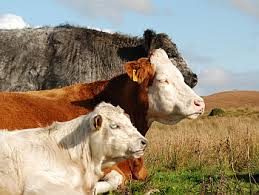
Islay is a beautiful island off the west coast of Scotland, and one of the reasons it is so lovely is because farmers work hard to keep the land the way it has looked for generations, conserving the environment. But the land has also influenced how and what types of farming happen on Islay. As an Island the costs of transport are also an important consideration, as is the weather. All these factors contribute to the difficulties and successes of farming beef, sheep and barley on Islay.

Farming on Islay is very important to  Islay’s landscape and the farmers  that work hard to get paid and have more than just one job but two! The farmers on Islay have kept the landscape as it was years ago. The farming on Islay gives jobs to many people so that they can make money and live their lives as the years pass by.

The main land types found on Islay are rough grazing, grassland, peat bog and moorland.  Grassland is low lying and is used by farmers to grow grass for silage, grass to feed animals and can also be used to grow barley; this is the most useful land for farmers, but in the winter it gets very wet and muddy and can’t be used to keep animals on.  Rough grazing land can’t be used to grow grass or crops, it tends to be hilly with plants like heather, rushes and patches of rough grass.  Animals can graze it, although it is mostly used by sheep.  Rough grazing is useful in the winter because it stays dry, drains well and you can overwinter animals on it.   It can’t be used to grow vegetables or crops because it is stoney and the soil is poor.    Peatbogs are of no use to farmers as animals can get stuck in the bogs and the grazing is too poor.  Farmers on Islay often drain the land to keep it dry enough to grow grass.  Because of the limits imposed by the type of land on Islay, the main farming is Beef and Sheep, with a little barley production.

Islay has a wonderful type of weather for grass which has mainly rain and wind with a tint of sunshine as there is hardly any snow or frost on the island. The normal temperatures varies as seasons pass as in the summer there is more sun and it is not as rainy as autumn or winter as in winter it is mainly rainy and windy but it is still sometimes sunny. The lowest average temperature on islay is 3’c. In autumn the weather is changing to winter and during that there is sometimes gale force winds  and there is about 130mm of rain through the season. In summer the weather becomes less rainy and becomes more sunny.

Islay is an island than can only be reached from the mainland by ferry or plane.  This means farmers have to pay to get their produce off the island and also pay extra to get the equipment and resources they need to farm on the island.  As a result of this farmers on Islay struggle to compete financially with those on the mainland.  For example, fertilizer and concentrates need to be brought over on container ships and unloaded onto lorries.  This means fertilizer and concentrates cost more for Islay farmers. The type of farming that can happen here is also affected by transport; milk, soft fruits and other products will go off when transported for long periods of time so are not farmed on Islay.  However, sheep and cattle are easy to transport over time, and the barley that is grown is sold locally.  So farmers on the mainland have an advantage over famers on Islay.
 

Investigating wheels


As part of our transport topic, P1/2/3 wanted to find out about wheels.  They found lots of tyres out in the garden and checked out wheels on cars in the car park and bikes in school.  They found out that wheels are attached to axels and have written to Mr MacKerrell at the garage to see if they can find out more about how cars work.

What is an Engineer?

P1/2/3 have been wondering about engineering and what engineers do?  Evie (P1) thinks that engineers ‘fix cars’ and are ‘always men but sometimes ladies’ while Iona in P2 thinks engineers can be ‘boys and girls’ and that engineers make boats.

We asked these questions as part of a baseline assessment for the Rolls-Royce Science Prize. We will be asking children to revisit these ideas at the end of the project and see how their views have changed.

The Local Mod

On Saturday 9th September the joint choir, gaelic choir and individual competitors performed at the local mod in Islay High School. Both choirs came back with trophies for the unison, peurt ubeil and two part competitions. Lots of individuals came back with medals for poems, solo’s, duets and instruments. Mrs MacDonald was very pleased with all the trophies that the joint choir and the gaelic choir won.

Rolls-Royce Science Prize- Find out more!

We are pleased and proud to announce Port Ellen is one of 6 finalists in the Rolls-Royce Science Prize 2017-18!  We are going to be carrying out a year long project on engineering and renewables.  Read more about the prize taken from the Rolls-Royce Website below:

About the prize

The Rolls-Royce Science Prize is an annual awards programme that helps teachers implement science teaching ideas in their schools and colleges. The Prize recognises and rewards excellence in Science teaching across the full spectrum of teaching, from special education needs to high ability pupils. It also promotes innovative and sustainable strategies for teaching science which addresses a specific need in the schools or colleges and at the same time contributes to teachers’ continuing professional development.

Picnic Lunch

On Tuesday 27th we had a picnic lunch to celebrate us winning the STEM awards. When we went down for lunch, everyone was excited because there was music playing. We got told there would be a surprise at the end but we didn’t know what it would be. Everyone was dancing and then we went up to get lunch. There was cakes and sandwiches. After we all got told to look out the door and when we looked out we seen and heard the ice cream van. We then got told we were getting ice cream. Everyone was really surprised. We went outside to eat our ice cream and when we came back in we watched the movie sing.  It was fun!

Skin Care And The Beauty Industry Endeavour

Endeavour is a long term person topic of your own choice that has to be ambitious and is carried out all through the year.

My endeavour was on skin care and the beauty industry. I chose this because of Lush. Lush is a well known brand because it is all organic and doesn’t test on animals and I wanted to be able to know how to look after my skin and make products.

In my endeavour I was able to make my own recipe book, which had recipes I had made. I made products to sell. I made a video on how to make lip balm. I had a poster all about animal testing, I also had research and I had a sway that I added to as my endeavour progressed. I also had my Aunty Bam in for an interview because she use to run Body Shops and knows all about working in the industry.  I also learned about the chemistry behind products.

I had to over come problems when I was learning about allergies. I had to keep on checking if the information was reliable.

This year I definitely improved my time management and I was definitely more organised that I was previous years.

The reasons why my endeavour was ambitious was because I had to learn how to follow recipes, I learn about things I didn’t really know about, I also learnt how to write recipes out. I learnt how to make different products.

I want to say a thanks to everyone who helped me. My Aunty Bam for coming in and helping me. My Gran and Papa for letting me use their computer and my Mum for buying me ingredients.

By Eva Munro

Horse Care And Instructing

My Endeavour was Horse Care and Instructing, through my Endeavour  I achieved how to teach someone to ride, a leaflet on diseases, a model horse that is labelled and a poster about safety and care about horses. I chose this Endeavour because it was challenging on what horse care actually is and what it takes t own a horse and how much it costs.

Endeavour is an independant project we chose to work on from October to June then  we share it with family and friends who want to come to the school and see what we ahve learnd. The P7s also go to the High School to share it there aswell to get to know more people and what they have learned.

The skills I learned through out my Endeavour is to be organised all the time and also to watch my time on stuff. In the video I made I thought about editing and that was a struggle. I lost my video half way through my Endeavour so i had to try find all the videos and edit again so that was a struggle so i learned to keep work on a school computer.

In my Endeavour I learned a lot new things, I learned how important safety actually is and how much is costs to buy a horse. Also how to draw horses much better that I did.

Problems I over came in endeavour are my video where it is and what I made my model horse with but I slowly over came these problems.

I shared my learning in a video and on the endeavour day and also on a poster.

I am thankful for the people who helped me through out my Endeavour. The people who helped me are Mrs Clark with my model horse, Harriet at Ballavicar for letting me use her horses and my sister for helping me edit my video.

Natalie

Report a Glow concern
Cookie policy  Privacy policy