
Recorded Lessons
lesson 1
lesson 2
lesson 3
Room for them to follow along: https://tryhackme.com/jr/introdigitalforensics
Room to complete after https://tryhackme.com/jr/windowsforensics1
Room for them to follow along: https://tryhackme.com/jr/introdigitalforensics
Room to complete after https://tryhackme.com/jr/windowsforensics1
The latest CIDREE Yearbook was published towards the end of last year. Titled Digital Literacy: Curriculum Development and Implementation in European Countries, we contributed the Scottish chapter on how digital literacy has been embraced by education practitioners and learners across Early Learning and Childcare, primary and secondary schools (ages 3-18).
It details how adapting and diversifying modes of professional learning are critical in providing practitioners with relevant, motivating and skills-building opportunities to improve their own digital learning and subsequently provide better digital learning for young people. It then expands on how this has led to the development of knowledge, skills and application in the use of digital tools and on pedagogical practice.
The Digital Wellbeing Award for Cyber Resilience and Internet Safety is designed to provide education professionals with the resources and support required to help pupils safely navigate the digital world.
Schools that successfully complete the programme receive a nationally recognised award by Education Scotland.
Register your school
Find out more about:
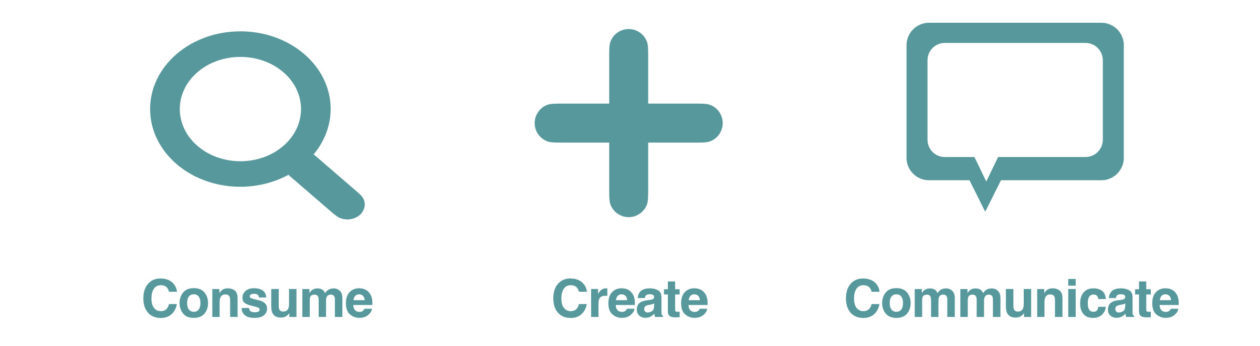
To more effectively support our learners with their online lives it is important to understand their behaviour as consumption, creation or communication. The apps and platforms they use may be ever-changing but their behaviours are not. Understanding the behaviour will help educators make more effective use of our Teacher Toolkit which has ideas, information and resources to support with cyber resilience learning and teaching.


Learners should be aware of the behaviour of others and themselves online. Teachers should promote positive behaviours and discussing how learners may develop these, while supporting them to overcome challenges they face online.
Learners should be SAFE when online. In order to do this they need to understand the potential risks to their safety, such as grooming, harassment or threatening behaviour.
Learners should be SMART online. They should be aware of scams, consider how much personal information they share online, and be developing confidence to question online media.
Finally, they should be KIND to others online. It is more likely that learners have been exposed to unkind behaviour online and tackling this should lead them to identifying more positive behaviours and also how to deal with cyberbullying, griefing, trolling and other online behaviours.
At Viewforth High School, we are on a digital journey to ensure all learners and educators are able to benefit from digital technology to raise attainment and improve outcomes for all.
Most of our students are familiar with Microsoft Teams accessing via Glow and staff have been using it to set work and assignments during previous lockdowns and continue to do so now we are back in school.
However, some pupils are faced with challenges when trying to access digital learning both in school and at home and to support our pupils in accessing their learning we identified areas where both the skills of staff and pupils needed to be developed. One of these key areas was the accessibility features (and knowledge of these) of digital tools for pupils and ensuring staff know how to use these tools with pupils.
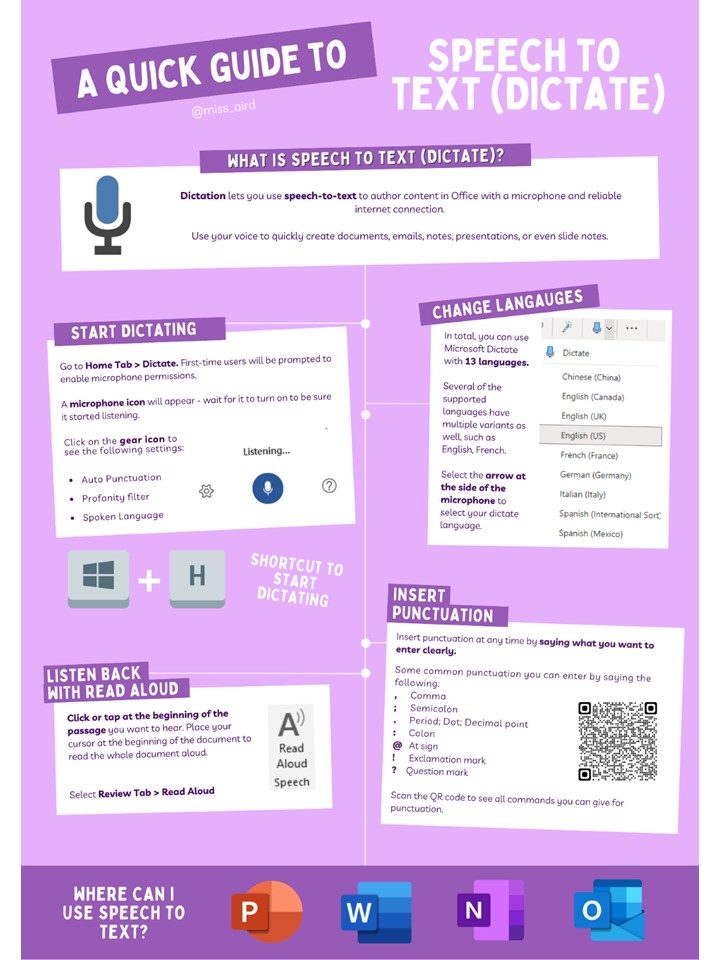
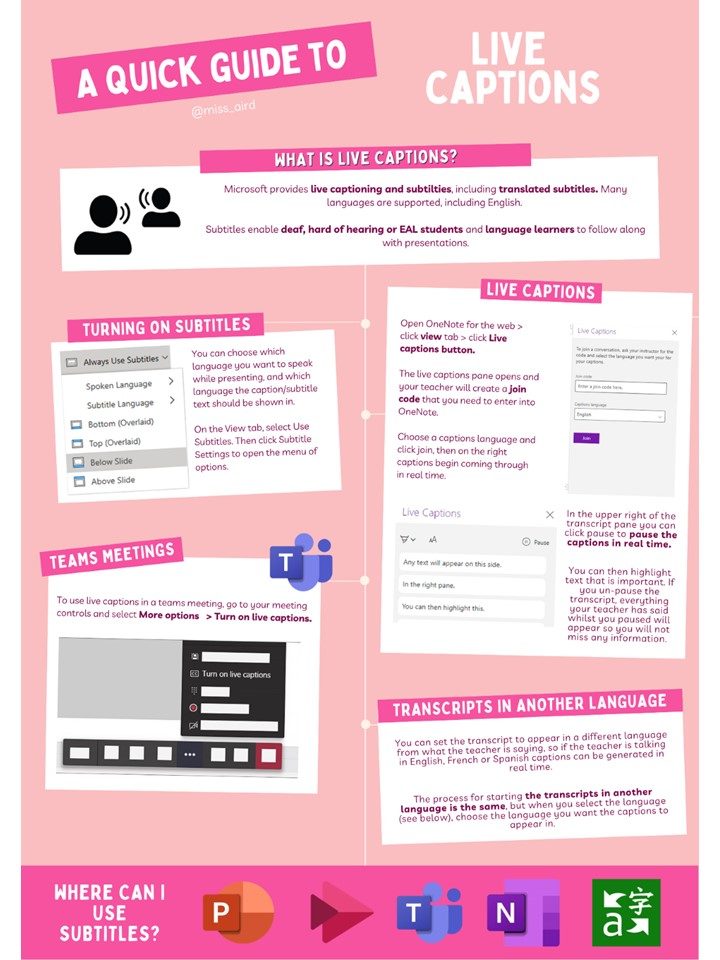
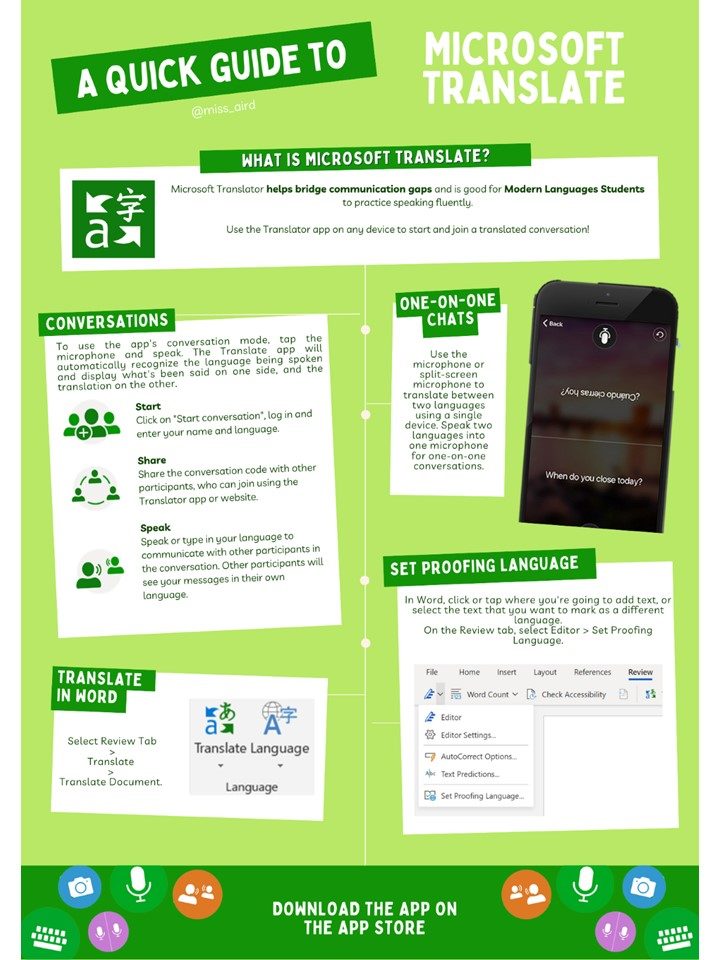
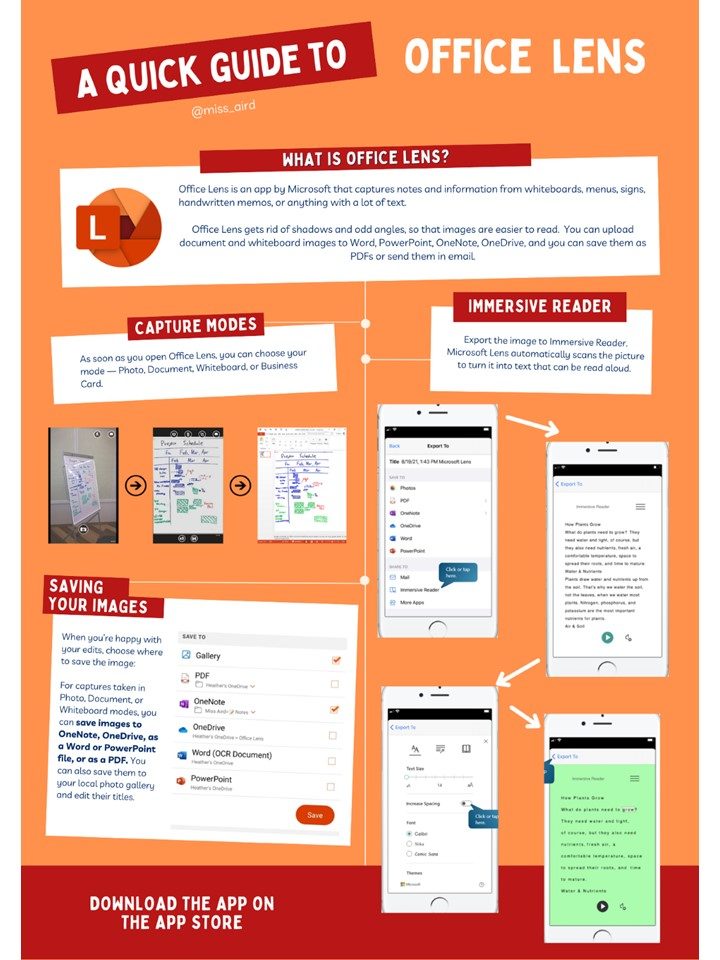
In response to this, I have created several Quick Guides to support both staff and pupils in accessing and using the features of Microsoft Tools.
I created guides for each of the following tools:
These guides have been shared amongst staff and with colleagues in other schools across the country to support them to support their pupils.

Tech She Can is delighted to share the brand new Tech We Can lesson, ‘Tech for the Planet’ which is out now!
“Since the COP26 climate summit earlier this month, topics such as sustainable living and protecting the future of our planet have dominated the news agenda, as well as entering our everyday conversations, including those taking place in schools and among young people.
Our latest free on-demand Tech We Can lesson, ‘Tech for the Planet’ aims to show some of the innovative ways in which technologists around the world are using technology to protect our air, reduce waste, help clean the oceans and preserve our wildlife. It also highlights role models working in these areas – Lucinda Jones from Unilever and Mikya Rozner from Tesco – which we hope will inspire young viewers to consider a future career in technology.
You can watch the lesson, aimed at 8 – 14 year olds, and taught by Becky Patel and Katie King here.
If you’d like to explore other Tech We Can educational resources, for use at school or at home, please head over to techwecan.org to gain access to a wide range of on-demand lessons and lesson packs. Each explores the use of technology in a different area – from sport, to food and outer space – and highlights the types of careers that students could go into in the future.
Education Scotland have collaborated with Girvan Academy in South Ayrshire to produce a set of resources that combine the SQA level 4 units in Cyber Security Fundamentals and Internet Safety. These resources reinforce our belief that every learner should have the knowledge and skills to use the internet and online services safely, allowing them to spot potential risks and recover from any potential harm, they face while using online services.
The following teaching resources have been created:
Assessment evidence
The assessor will use the portfolio approach to generate evidence that learners have achieved these units.
A learner must complete the Getting Started with Online Accounts booklet, one of the relevant ”Getting Started with Chromebook/iPad’ booklets (depending on what device they have set up), and then the assessor must complete an observation checklist for every learner:
The teacher answer booklet and prior verification certificate can be downloaded from the SQA secure site.
The Stop It Now! programme is designed to help teachers support learners with Technology-Assisted Harmful Sexual Behaviour.

Communicating online carries greater risk than just consuming or creating content because it involves other people and their ability to influence or affect our behaviour.
This page looks at email, which is typically the information required to create other accounts or activate devices, is still the most common form of communication in the workplace and is targeted relentlessly by criminals for financial gain.
The risks:
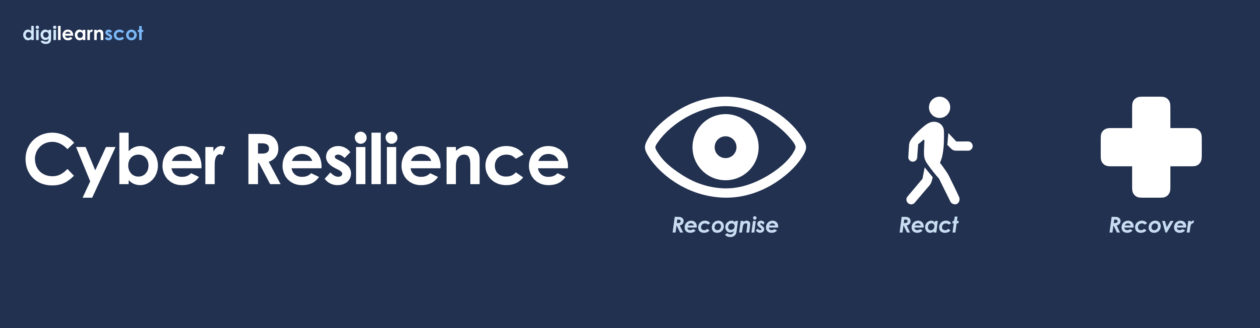
Becoming cyber resilient is the first step to being safer online. Talk to your learners about the devices and accounts that they use to access online information:
Being more cyber resilient reduces the risk of internet safety issues arising. We all want the internet to be a more welcoming space for children and young people and that is why we promote this positive message of safe, smart and kind.
With your learners:
Information:
When people’s posts are getting you down – Own It –
I want to know more about Cyberbullying – Childnet
Just a joke? – Childnet
I want to know more about Sexting – Childnet
Bullying or Harassment (reportharmfulcontent.com)
Staying-Safe-Online-advice-for-parents-and-carers.pdf (cyberscotland.com)


You must be logged in to post a comment.