
At St Francis’, we are continuing to develop our understanding of the UNCRC by exploring different children’s rights throughout the school year
.
Children’s rights belong to every child, everywhere.
Each month at St Francis’, we will explore an article from the United Nations Convention on the Rights of the Child (UNCRC).
Our Article of the Month gives pupils, staff and families an opportunity to learn about a particular right, think about why it matters and talk about how children experience this right in their everyday lives.
You do not need to be an expert on the UNCRC. We hope the simple explanations and discussion questions below will help everyone join the conversation.
🌟 A Few Important Things to Remember
Children’s rights are:
Universal – Every child, everywhere, has rights.
Indivisible – All rights are important and work together.
Unconditional – Children do not have to earn their rights.
Inherent – Children have rights simply because they are human.
Inalienable – Children’s rights cannot simply be taken away.
Adults are duty bearers. This means adults have responsibilities to respect, protect and uphold children’s rights.
August: Article 3
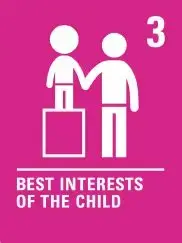
Best Interests of the Child
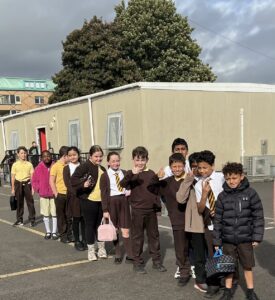
At St Francis’, we want children to know that their wellbeing, safety and needs matter when decisions are made.
💙 What Does This Mean?
When adults make decisions that affect children, they should think about what is best for the child.
Children’s safety, wellbeing, development and individual needs should be considered when decisions are made.
💬 Let’s Talk About It
At home or in school, you could discuss:
For younger children:
What do grown-ups do to look after you?
Who helps to keep you safe?
What helps you feel happy and cared for?
For older children:
What kinds of decisions do adults make for children?
What should adults think about before making those decisions?
Can what is best for one child be different from what is best for another? Why?
🏠 At Home
Families might notice Article 3 when adults make decisions about children’s health, safety, education and wellbeing.
Can you think of a time when an adult made a decision because they wanted the best for you?
🌍 Think Globally
This right belongs to every child in the world. As you explore our Article of the Month, think about whether all children are able to enjoy this right equally and what might make it more difficult for some children.
September: Articles 7 & 8
Name, Nationality and Identity
At St Francis’, we celebrate what makes each of us unique and respect the identity of others.
💙 What Does This Mean?
Every child has the right to a name, a nationality and an identity.
Our identity is part of what makes us who we are. It can include our name, family, culture, language, nationality and other important parts of our lives.
Children also have the right to have their identity protected.
💬 Let’s Talk About It
For younger children:
What is your full name?
What makes you special?
What are some things you enjoy doing with your family?
For older children:
What makes you who you are?
Why is a person’s identity important?
Why should we respect identities that are different from our own?
🏠 At Home
This is a lovely article for families to explore together.
You could talk about family names, traditions, languages, places, celebrations or family history and how these contribute to who we are.
🌍 Think Globally
This right belongs to every child in the world. As you explore our Article of the Month, think about whether all children are able to enjoy this right equally and what might make it more difficult for some children.
October: Article 12
Respect for Children’s Views
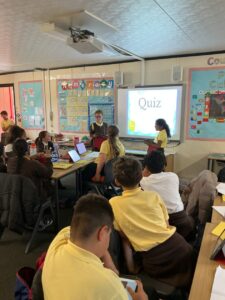
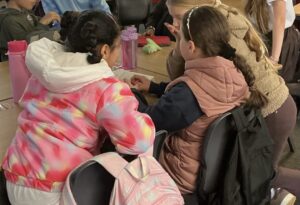
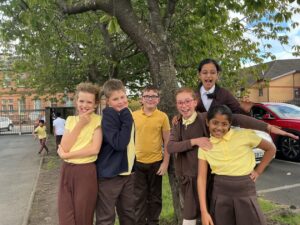
Through class discussions, our Rights Ambassadors and opportunities to share their ideas, pupils are helping to shape our Rights Respecting journey.
💙 What Does This Mean?
Every child has the right to express their views about matters that affect them.
Adults should listen to children’s views and take them seriously, taking account of the child’s age and maturity.
Article 12 does not mean that children always get whatever they ask for. It means that children should have meaningful opportunities to share what they think and that their views should be considered.
💬 Let’s Talk About It
For younger children:
Who listens to you?
How can you tell someone what you think?
How does it feel when somebody really listens to you?
For older children:
What is the difference between being listened to and always getting your own way?
Which decisions should children have a say in?
How can adults make sure children’s views are taken seriously?
Are there children whose voices might be harder to hear?
🏠 At Home
Families could choose a simple decision that affects everyone and make sure each person has an opportunity to share their view.
Afterwards, ask:
Did everyone have a chance to speak?
Did we listen respectfully?
Did listening to someone else’s view change our thinking?
🌍 Think Globally
This right belongs to every child in the world. As you explore our Article of the Month, think about whether all children are able to enjoy this right equally and what might make it more difficult for some children.
💙 Keep the Conversation Going
Children learn about their rights not only in school, but through the conversations they have with the important adults in their lives.
We hope our Article of the Month encourages pupils, families and staff to talk, wonder, question and learn together as we continue to develop our understanding of the UNCRC.
