 Yvonne McBlain, Curriculum Support Teacher with Falkirk Council Education Services recently met with Julia Branch, THI Heritage Engagement Officer from Falkirk Community Trust. During this meeting, Julia and Yvonne explored a range of ways in which the Falkirk Townscape Heritage Initiative (THI ) http://glo.li/194nhCZ could contribute to the range of teaching and learning experienced by our pupils. The THI Team has been given permission to start, and are keen to work with interested establishments, practitioners and young people. The THI is grant giving initiative funded by the Heritage Lottery Fund, Historic Scotland & other local partners. The project’s overall aim is to breathe new life into Falkirk’s historic Town Centre by improving the physical appearance of the area and enhancing the things that make Falkirk special and unique. This will include repairing and conserving important historic buildings, restoring traditional shop frontages, and improving the public realm. Alongside the physical regeneration work, Julia will be implementing a ‘Community Engagement’ programme, which will bring local history to life, offer the community and schools opportunities to learn about and promote Falkirk’s rich heritage. If you are interested in taking part in this part of the project or want more information please contact Julia via email julia.branch@falkirkcommunitytrust.org or phone 07739328530. Julia has created a really useful Pathfinder pack of classroom resources within Scran which you can access here http://glo.li/194nDtb , and more resources will follow.
The Thinking Reader – Active Literacy
 Sharon Wallace, Curriculum Support Officer, Curriculum Support Team has delivered a CPD session to 22 teachers entitled ‘Active Literacy Reading – The Thinking Reader Approach’.
The aims of the session were:
To provide an overview of the thinking reader approach
To provide an overview of the six comprehension strategies in reading
To examine ways forward for the teaching of reading using active approaches.
After examining the benefits of reading, Sharon explained that the thinking reader approach is used to teach children reading strategies to improve their ability to understand what they read. It is an approach which can be applied to a range of ‘texts’.
Sharon demonstrated the thinking reader approach using the text ‘Chinese Cinderella’. Colleagues gained a deeper understanding of this text through the following activities:
- Using prior knowledge – what do you already know about Cinderella?
- Metalinguistics – colleagues were asked to include the word ‘unwanted’ in a sentence and highlight words/ phrases they like/ don’t understand in an identified paragraph
- Visualisers – colleagues were asked to produce a visualiser of the character Naing using the information in the extract
- Inference – two questions were posed about the text relating to inference e.g. What is the relationship between Naing and Jun-Ling
- Main Ideas – What are the main themes from the text you can gather using the information you have already been given
- Summarising – summarise the character of Naing in a tweet
Sharon then explored how the thinking reader approach relates to the key reading skills which are assessed in the context of the Scottish Survey for Literacy and Numeracy.
Sharon then shared how she had previously used the thinking reader approach with the following texts:
P2 – The Daily What article/ Beware of the Bears
P3 – The Wish Cat
P4 – Michael Rosen’s poetry
P5 – Moving Image Education film
P6 – Poetry from the Active Literacy Pack
P7 – Poetry from the Active Literacy Pack
S1 – Chinese Cinderella
The course also looked at the comprehension triangles from the Active Literacy programme:
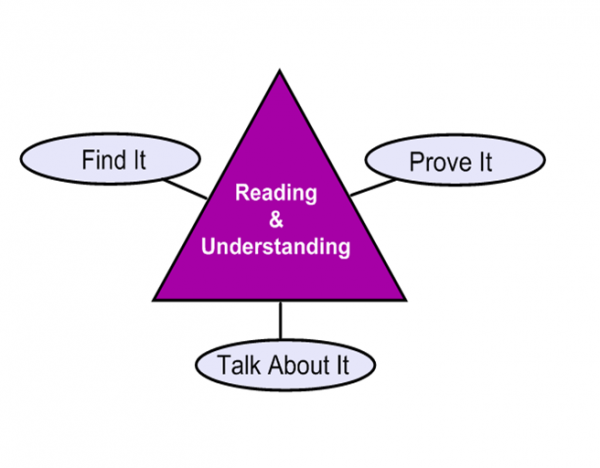
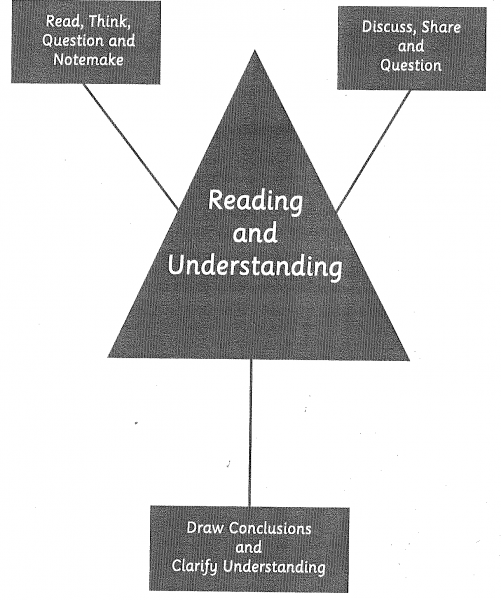
Sharon then examined ways to use effective questioning in reading lessons, examining the role of Blooms fans and how these can be used at different ages and stages.
The course was well received and feedback included:
“I wanted to thank you for the CPD last night. It’s really helped me work out a plan of action for all of my reading groups and not just the group that weren’t ‘getting’ the Bloom’s Fans work. It was good to have input on the key comprehension strategies and I’m going to start as of Monday”.
“I really enjoyed the course last night and I think (or hope!) that I am starting to understand the type of questions and activities that the pupils should be completing”.
This course will be re-run on Tuesday 11th March from 4 til 5.30pm for any colleagues who didn’t get an opportunity to attend this one.
Active Numeracy
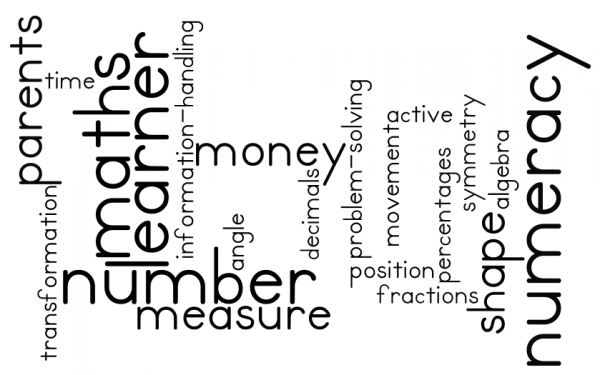 Sharon Wallace, Curriculum Support Officer, Curriculum Support Team for Falkirk Council has delivered a lecture to 91 second and third year ITE students at Stirling University entitled ‘Active Approaches to Numeracy’.
The aim of the session was to provide an overview of how Falkirk establishments are using active methodologies to increase attainment in mental mathematics.
Sharon explained that numeracy is a skill for life, learning and work. It is not just a subset of mathematics, it is also a life skill which permeates and supports all areas of learning. (Maths and Numeracy Principles and Practices paper).
Sharon asked the students to make a list of all the numbers they had encountered on their way to Stirling Uni that morning and the students surprised themselves at how many numbers there are in society. Answers included: car number plates, alarm clocks, measures on their breakfast cereal/ milk, house numbers, cash line etc.
After giving the ITE students a short mental maths ‘quiz’, Sharon encouraged the students to share the strategies they used to calculate the answers. One question was ‘If a loaf of bread is £1.19, how much would four loaves cost?’ There were a range of strategies used and discussed.
Sharon then shared the ‘Every day’s a learning day’ numeracy video which is available on Falkirk Council’s you tube channel.

The session went on to look at ways in which pupils can benefit from more active approaches to numeracy with examples.
Sharon also provided the students with examples of how asking effective questions can gain a deeper understanding of mathematical concepts.
The students had to devise their own numeracy problems for a class they are currently supporting using just the answer as a starting point. There were a wide variety of questions devised which stimulated lots of thought and discussions.
Sharon then went onto ask the students to consider how they can create effective maths environments looking at inside and outside spaces.
The final part of the course looked at a variety of different numeracy websites available to enhance and increase knowledge and understanding of mental maths.
Active Literacy Podcasting
 Sharon Wallace, Curriculum Support Officer, and Malcolm Wilson, ICT Curriculum Development Officer, in the Curriculum Support team of Falkirk Council Education Services, presented a professional development course for school staff on Active Literacy at second level using podcasting to develop talking and listening, reading and writing skills. This is part of a series of three courses examining how literacy skills can be developed using ICT. Other courses in this series are: ‘Using fakebook, twister and email to develop summarising skills’ and ‘Using animation tools to support writing skills’.
Section three of the reading for second level Active Literacy programme is ‘Using media to develop higher order literacy’ and this course is part of a series of CPD opportunities for teachers at this level. Other courses in this series are: Using fakebook, twister and email to develop summarising skills and using animation tools to develop literacy skills.
The course looked at ways in which using ICT as a tool facilitates, supports and develops confident and accurate literacy to add value to all aspects of Literacy Across Learning. It explored ways teachers can plan for opportunities to use digital technologies to enhance and contribute to overall meaning, communication and understanding of texts. It examined ways in which talking and listening, reading and writing skills can be developed using podcasting.
What is podcasting?
•A podcast is a digital audio and/ or video site that can be accessed using any computer that can play media files using recording software such as audacity
•Podcasting involves pupils in recording and broadcasting
•Broadcasting allows pupils to listen, watch, discuss and analyse the content of the material.
Listen to the audio links below to hear the different verses of a poem, as an example of how audio files can be shared on a class blog.
Participants on the course were all very positive stating they were going to use ideas gained at the session immediately.
Free Audacity software for creating and editing audio
 Audacity is free software to download which lets users record and edit audio in order to create mp3 files for use on websites, blogs, podcasts or anywhere online. Audacity lets users combine multiple tracks (to include music, sound efftecs and voices) and to add shorter sound segments together to create longer audio files. Audacity also lets users edit out unwanted sounds, re-order a sequence of sounds, add a whole host of effects to sound (including changing pitch, adding echo, and much more). Click here for more information about Audacity (including resources showing how to use it).
Royalty-free sound-effects and music for adding to podcasts
 Schools are often looking for royalty-free sound-effects and music for multimedia presentations – music or sound effects which pupils and staff can use in their podcasts (or videos, stop-motion animations, online or Powerpoint presentations). And of course they wish to ensure that they are not infringing the rights of others so look for free sources of music and sound effects where permission to use for school projects has been granted by the creators. Click here for sources of royalty-free music and sound-effects free to use in school podcasts.
Alternative online tools for hosting audio files/podcasting
 There are online spaces specifically set up for hosting podcasting, some of which are specifcally suitable for school use. So while school websites and class blogs can easily host audio files you may wish to consider using a tools specifically set up for podcasting hosting and sharing. Click here for links to some of these online podcasting tools.
Visitors from Sweden to see our Storyline practice
 Yesterday, Yvonne McBlain, Curriculum Support Teacher with Falkirk Council Education Services was pleased to accompany two Swedish student teachers from the University of Gothenburg on their visit to find out about Falkirk storyline practice. Catrin and Sofia are working on their final dissertations and are exploring how teachers in two different education systems employ the storyline approach to progress learning in their classrooms. At St Francis Xavier’s RC PS, they interviewed Vikki Williamson, Joanna Rowe and Margaret Priest about their piloting of Learning Unlimited “Joyning the Learning” materials. Vikki, Joanna and Margaret worked on Fairyland, The Circus and The Unsinkable Ship last session with their primary 1-3 classes, and were enthused by the levels of pupil engagement and parental involvment generated. These resources make extensive use of the Storyline approach to enrich interdisciplinary learning for pupils. The teachers have exchanged email addresses with Catrin and Sofia and supplied them with lots of really valuable reseach information. Yvonne then took our guests to Stenhousemuir PS where Laura Swan welcomed them and shared a loose timetable for their whole day visit on Thursday 21st November. Catrin and Sofia will be able to interview Laura and her primary 1 pupils, about the recent Space storyline they worked on. They will also be able to spend some time with teachers in their classrooms, and speak to the regular Thursday parent’s group. Yvonne enjoyed finding out how Swedish teachers use storyline and discovered that the Swedish curriculum has significant similarities to our Curriculum for Excellence – including a definite place for interdisciplinary learning.
Physical Education Conference
Morag Young and Morag Simpson, Physical Education Lead Officers for Falkirk Council Curriculum Support Team attended the inaugural conference for the Scottish Association of Physical Education Teachers (SATPE). This was held at Tulliallan Castle on Saturday 2nd November 2013. The occasion highlighted the importance of professional dialogue, the sharing of good practice and the unity of practitioners across the country. The key note speaker was Paralympian David Smith, a truly inspirational individual.
Presentations from the event will be available from the website shortly. www.SATPE.co.uk
Individuals can join SATPE for £25 or a primary school membership costs £40. For this membership you will gain access to an online journal, teaching resources, notification of relevant events and discounts from association sponsors.
The PE Lead Officers across Scotland are encouraging schools to join the association to assist their professional development in reaching the 2 hour PE target.
New Higher Order Skills CPD
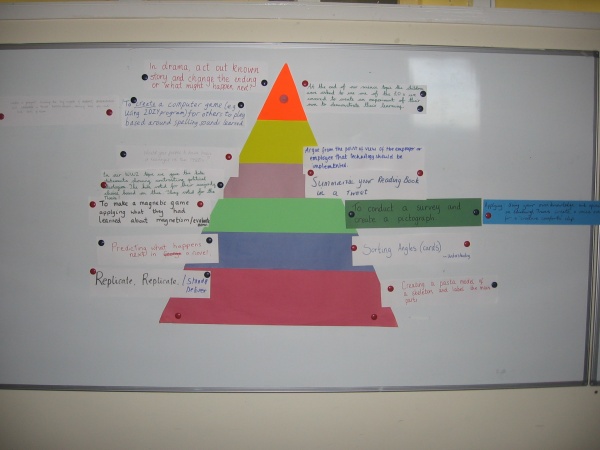 Yvonne McBlain, support teacher with Falkirk Council Curriculum Support Team delivered some new professional learning around the Higher Order Skills on 7th November. Click here to take a look at this session and contact Yvonne on yvonne.mcblain@falkirk.gov.uk for more detail about this course.
Feedback from participants in the course was very positive on the whole, and impact reported included:
I will continue to use the HOTS within the classroom and embed this within planning.
I will use the skills matching exercise as part of a professional discussion surrounding skills for learning which will take place within my establishment.
A greater understanding of the Higher Order skills and examples of how they can be used in practice.
A number of delegates suggested that the course was very comprehensive and would benefit from being run over two sessions and/or repeated, and Yvonne will be addressing this feedback.
Better Movers and Thinkers
 Morag Young and Morag Simpson, Physical Education Lead Officers for Falkirk Council Curriculum Support Team delivered a twilight course to primary staff on the Better Movers and Thinkers Programme. This programme is an innovative, exciting and challenging movement and learning programme for Physical Education, that focuses directly on enhancing the links between moving and thinking and how these elements scaffold the development of physical performance and inter-disciplinary learning. The practical content was delivered and developed in response to the questions and identified needs of the participants.
Feedback was extremely positive and participants are looking forward to the follow up session in February.
Examples of some feedback are shown below:
“Really interesting course with many ready to use ideas, can’t wait to try with my class!”
” Enjoyed the layering effect of tasks as it really allows for differentiation”
” ..will implement right away, very motivational”
Physical Education – Dance
 Morag Young and Morag Simpson, Physical Education Lead Officers from Falkirk Council Curriculum Support Team organised a Dance twilight for primary class teachers and specialists. This course was led by Anne Murphy, from Education Scotland. Anne demonstrated how to provide a progressive Dance programme covering the Physical Education Experience and Outcomes, focussing on the Significant Aspects of Learning in PE from Early Level through to Second Level. She also showed how to incorporate numeracy skills, literacy skills and topic work. This was a practical course and participants enjoyed the way in which the course was delivered in an extremely inclusive and creative manner. Course participants were able to identify that this method of teaching Dance would ensure a positive learning experience for all and highlighted that you didn’t need to be a dancer to teach Dance!!
Examples of the very positive feedback are shown below.
“Fantastic ideas for creative dance which I could see working with my class, they would be motivated and would get a lot of enjoyment from it”
“ How to allow pupils to take ownership and problem solve”
“I did two dance twilights last year and both were difficult to implement. This one was fab!
“Plan to use these ideas in term 3 and link to literacy”