
Maths Matters: The hidden maths behind the A9 Dualling Project
Maths Week Scotland 2026 | For secondary school pupils

Maths is not just something you do in maths class at school. It helps real people protect wildlife, understand the land, design safer roads and keep big construction projects running smoothly.
When you hear the word maths, you might think of equations, percentages or algebra homework. But on the A9 Dualling Project, maths is used every day to help people make practical decisions. It helps teams work out what is happening, compare different options, spot risks and explain their ideas clearly.
Ecologists might use maths to track wildlife. Geologists use it to understand the ground beneath our feet. Engineers use it to design safe roads and drainage. Site managers use it to plan deliveries, time and equipment. In lots of different careers, numeracy helps people solve real problems.
To celebrate Maths Week Scotland 2026, the Academy9 team has pulled together some examples of maths in action on the A9 Dualling project so you can see that maths matters!
There are also a few short challenges, so you can try using your own maths skills too. You’ll find the answers at the end.
A note before you begin
The people working on the A9 did not know how to solve every problem when they were your age either. They built their skills through school, apprenticeships, college, university, training and experience. These challenges are here to help you explore how maths works in real life – they are not a test. If you are not sure where to start, take a guess, talk it through with someone else and keep going. That is exactly how project teams solve problems too.
Ecologists: using data to protect wildlife

Ecologists study plants (flora), animals (fauna) and habitats. On a project like the A9 Dualling, their work helps teams understand what wildlife is nearby and how construction can be planned carefully. Maths helps them turn what they see in surveys into useful evidence.
In this job, maths could help with:
- counting and recording wildlife populations
- calculating the area of habitats
- comparing survey results collected over time
- analysing percentages, averages and trends
- measuring distances between habitats and construction activities
Maths in Action Challenge
| Year | Number of bats |
| 2023 | 48 |
| 2024 | 54 |
| 2025 | 63 |
Between 2023 and 2025, what was the percentage increase in the recorded bat population?
Need some help?
Find the number increase between 2023 and 2025 first. Then divide the number increase by the original number of bats in 2023 and multiply by 100.
Geologists: understanding what is beneath our feet
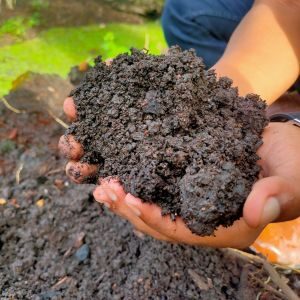
Before construction starts, geologists investigate rocks, soils, groundwater and slopes. Their measurements help engineers understand what the ground is like, so they can design for real conditions rather than guessing.
In this job, maths could help with:
- measuring the depth of soil and rock layers
- calculating slopes and gradients
- analysing borehole and laboratory test data
- estimating volumes of earth and rock
- creating graphs, maps and ground models
Maths in Action Challenge
A hillside rises 18 metres over a horizontal distance of 120 metres. Calculate the gradient as a percentage. Why might this information matter when work is planned near the slope?
Need some help?
Gradient (%) = rise ÷ horizontal distance × 100.
Engineers: designing safe and effective infrastructure
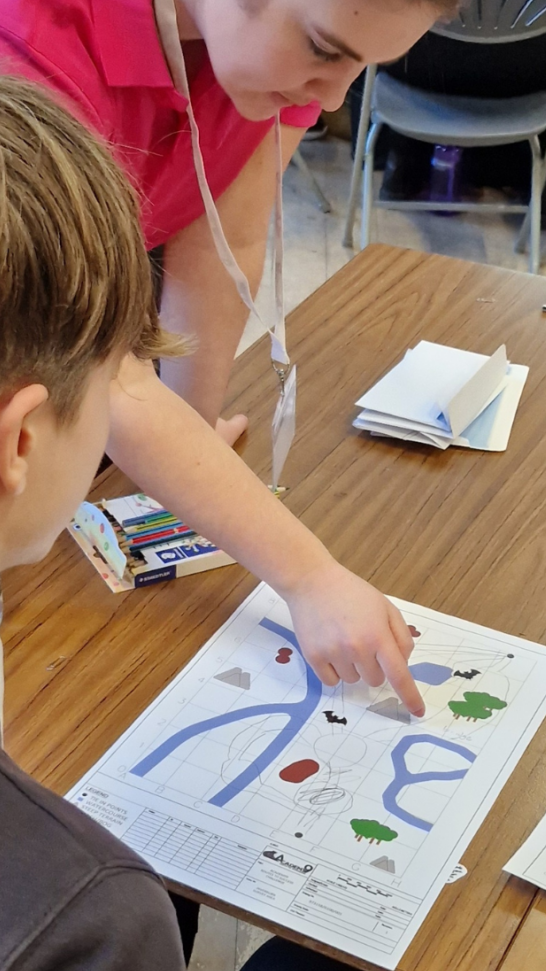
Engineers use maths to design roads, bridges, drainage systems and other structures. Their calculations help them check whether ideas will work, compare options and give clear information to the people building the project.
In this job, maths could help with:
- geometry for road layouts, curves and junctions
- measurement, scale drawings and coordinate systems
- ratios, proportions and algebra
- calculations involving speed, distance and time
- statistics, modelling and the interpretation of data
Maths in Action Challenge
A pond designed to collect surface water from the road is 30m long, 18m wide and has an average depth of 2.5m. What volume of water can it hold in litres?
Hint: 1m3 = 1,000 litres.
Need some help?
For a rectangular pond, volume = length × width × average depth. Once you’ve calculated the volume, in m3, you can then convert into litres.
Site managers: keeping construction moving
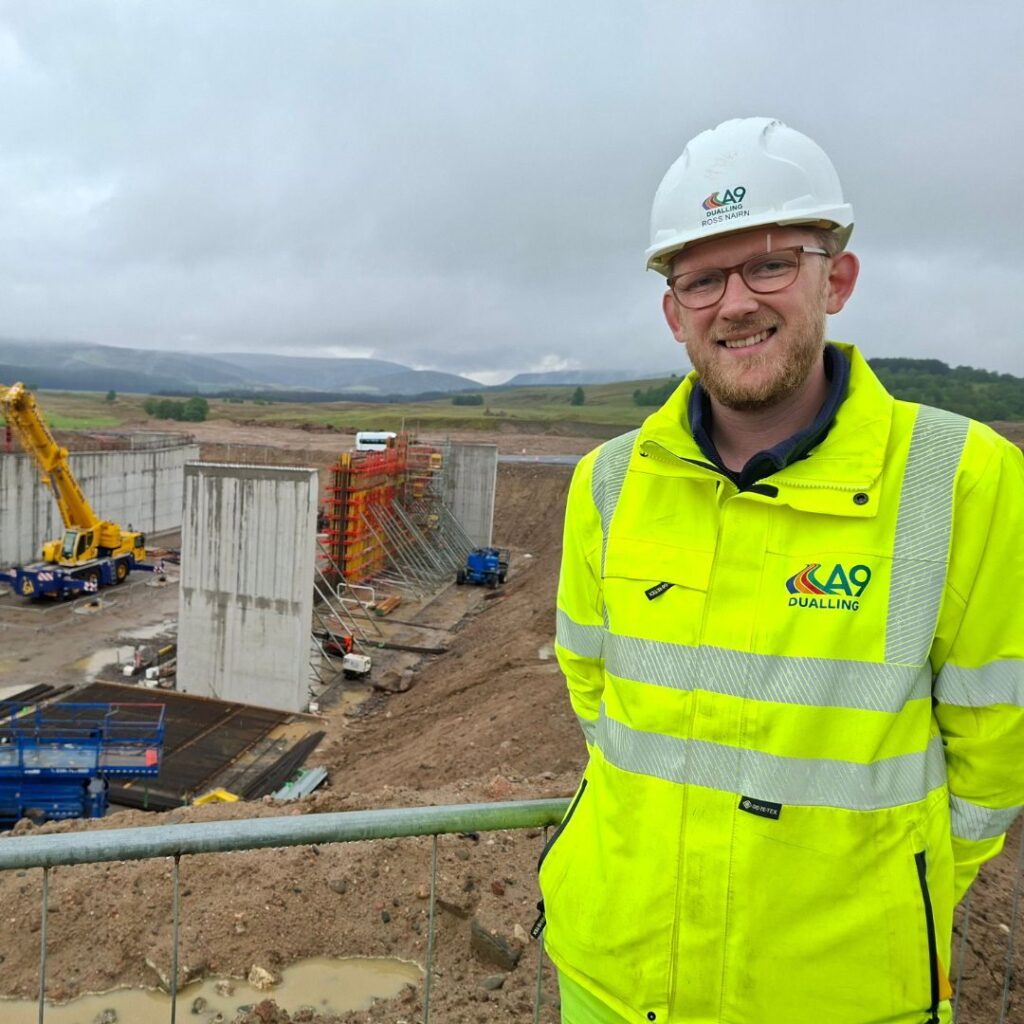
Site managers help keep construction work moving. They organise people, materials, equipment, time and budgets. Maths helps them plan ahead, check progress and make changes when things do not go exactly to plan.
In this job, maths could help with:
- planning work schedules and resources
- calculating quantities of materials
- organising deliveries and equipment
- tracking costs and progress
- reviewing productivity and safety information
Maths in Action Challenge
A site needs 425 safety barriers. Each delivery lorry can carry 32 barriers. How many lorry loads are required?
Try this method
Divide the total number of barriers by the capacity of one lorry. Think about what any remainder means in the real situation.
Bonus challenge: bringing the work together
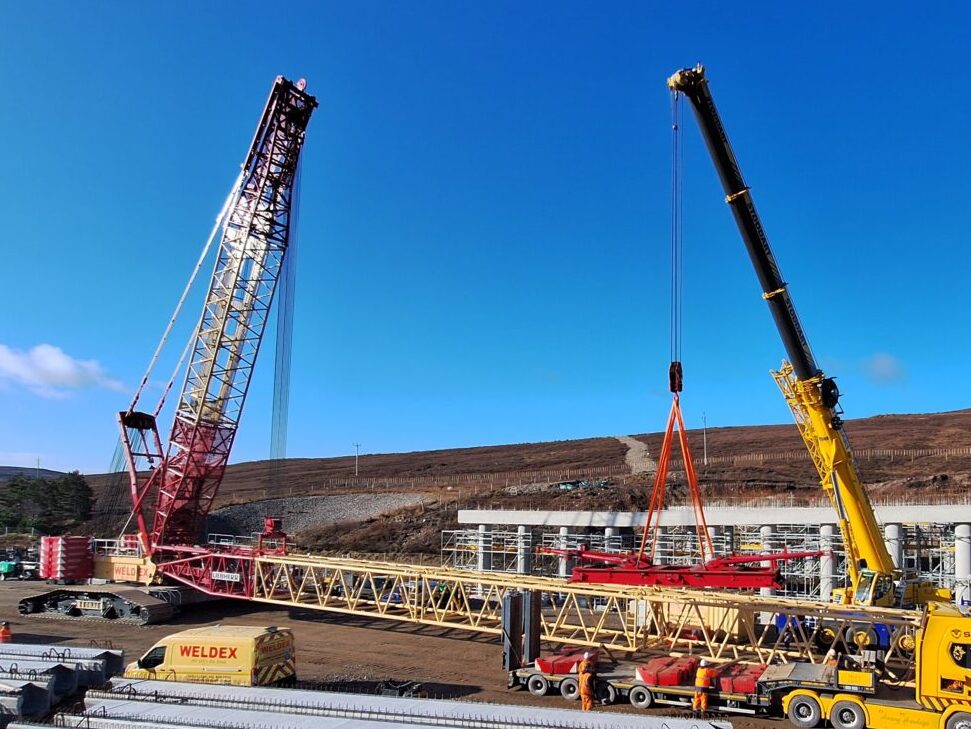
Big projects like the A9 Dualling only work when different teams share information and plan together. Maths helps them understand how quickly work is moving and how long different activities might take.
Maths in Action Challenge
A construction crew can install 650 metres of drainage each week. If a section of road is 23 kilometres long, approximately how many weeks would it take to install drainage along the whole section, assuming the rate remains constant?
Try this method
First convert kilometres to metres. Then divide the total distance by the weekly installation rate. Decide how to round your answer in the context of completing all the work.
Maths is a skill you build
You do not need to be able to solve every challenge in this blog today to work in one of these careers in the future. The people helping to deliver the A9 built their maths skills over time through education, training and real experience.
What matters is being willing to learn, ask questions and keep practising. Whether you are interested in wildlife, geology, design, technology or construction, maths can help you solve real-world problems and play a part in shaping Scotland’s future.
Maths Week challenge
Look for the maths hidden in your own day. You might estimate journey time, compare prices in a shop, measure out ingredients for a recipe, or find the perfect angle for your shot in pool. Where else can you spot maths in action?



Challenge answers and worked solutions
Check your approach as well as your final answer. In applied maths, explaining what a number means is often just as important as calculating it.
1. Ecologist challenge
Increase = 63 – 48 = 15 bats. Percentage increase = 15 ÷ 48 × 100 = 31.25%. The recorded population increased by 31.25% between 2023 and 2025.
2. Geologist challenge
Gradient = 18 ÷ 120 × 100 = 15%. This helps describe the steepness of the slope and can inform further investigation and planning.
3. Engineer challenge
Volume = 30 × 18 × 2.5 = 1,350 m³.
Convert to litres: 1,350 × 1,000 = 1,350,000 litres.
4. Site manager challenge
425 ÷ 32 = 13 remainder 9, or about 13.28.
14 lorry loads are required because 13 full loads would not deliver all 425 barriers.
5. Bonus challenge
23 km = 23,000 m. 23,000 ÷ 650 = 35.38 weeks. The result rounds up to approximately 36 weeks because the full length still needs to be completed.