Stirling University – Outdoor Learning

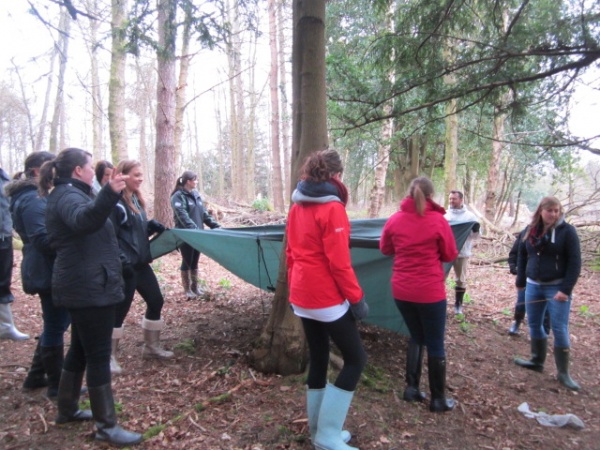
Initial Task - Den Building

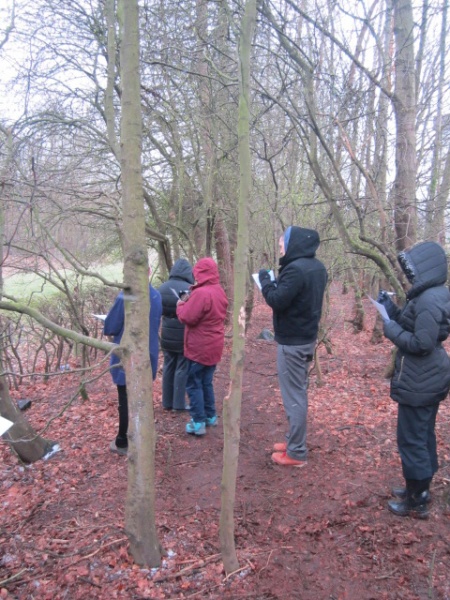
Karen Thomson, Senior Early Years Officer, Falkirk Council Curriculum Support Team was invited to facilitate an Outdoor Learning session  for Third year initial teacher education students at Stirling University. The students were provided with a brief overview of how Outdoor Learning has developed in early years establishments over the last year.

The students then took part in a variety of different activities ranging from den building to  storytelling.  Here are some of the comments received from the students:-

“Unlike the weather, the morning we spent with Karen was fantastic.  Not only was it great fun and full of inspiring ideas, but I feel it’s really given me the confidence I was lacking to take children outside and utilise the natural resources we are surrounded with.  I’ve since contacted a local nursery and I’m scheduled to spend time with them during their forest school sessions.  This will help develop my knowledge and confidence further in this aspect of teaching, however without Karen’s enthusiasm its not something I would probably have done.”  

“The session served in the first instance to help when dealing with concerns from care-givers on the risks associated with outdoor learning, Karen and Laura highlighted that the use of research and associated data on accidents would be key in allaying concerns.  The practical element of the lesson highlighted the opportunities for cross curricular learning with the literacy and story telling exercises, numeracy with the clock making, learning new skill, taking risks through novel physical activity and hopefully the children then becoming advocates in their own households when they return home expressing the enjoyment they have had during the lesson.”

 “The session was great, I really enjoyed the teaching ideas for the early level, such as finding the numbers hidden in the woods, and making a clock to teach time. I feel a lot more confident about taking learning outdoors and can’t wait to try out some of the ideas!”

[kml_flashembed movie="http://www.youtube.com/v/Rh2G7b_EVqs" width="425" height="344" allowfullscreen="true" fvars="fs=1" /]

The Tireless work towards Wireless


Stuart Lennie, ICT Curriculum Development Officer in Falkirk Council Education Services Curriculum Support team, has been working with ICT Corporate Services to implement Wireless Technology into Education Services establishments. The installations follow many months of work to research and evaluate the best solution, with small scale pilots being undertaken in both Primary and Secondary schools.

The chosen solution, using Cisco Wireless Access points, provides fast and reliable Internet connectivity throughout the school. This means that Council ICT mobile devices, such as laptops, can be used at the point of learning, rather than the pupils moving around the school to access ICT. At the moment the solution is being deployed across all Secondary establishments, but by the new session work will have begun to progress installations in Primary schools too.

One added benefit of the solution is the additional provision of guest access for personal devices- which could be a laptop, tablet, phone, or media player. This access, often referred to as BYOD (Bring Your Own Device) or BYOT (Bring Your Own Technology) allows staff and pupils to connect to the wireless network using their existing username and password, providing them with filtered and secure Internet access in the school building.

Currently a small scale pilot is underway in Denny High school to allow pupils in two Senior Phase classes to receive this access on their personal devices. This work will allow for the development of policies and guidance documentation, as well as starting to build good practice in safe mobile device use in schools.

[kml_flashembed movie="http://www.youtube.com/v/JCB_Q3gZOf4" width="425" height="344" allowfullscreen="true" fvars="fs=1" /]
[kml_flashembed movie="http://www.youtube.com/v/LkiRWTJYPS0" width="425" height="344" allowfullscreen="true" fvars="fs=1" /]
Nethermains Outdoor CAT Session

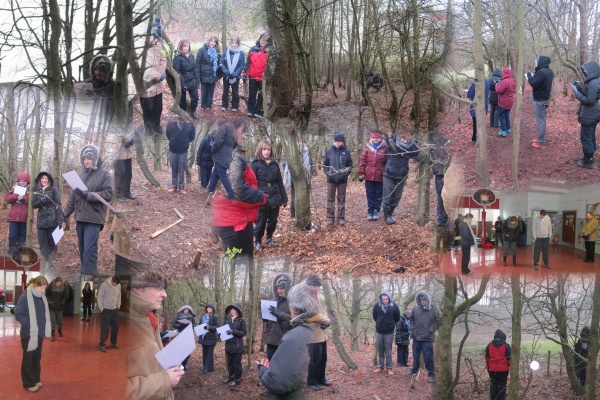
Following on from the success of the Nursery Class visits to the woods and the parents sessions, Karen Thomson, Senior Early Years Officer and Jane Jackson, Outdoor Learning Development Officer, Falkirk Council Curriculum Support Team were invited to facilitate a CAT session for the teaching staff on 27th March 2013.

The site has been part of an outgoing project within the school and has been transformed and developed with the help of Criminal Justice Team.

During this session the staff took part in practical activities for maths and literacy lessons and discussed how these activities could be differentiated for all children. All staff were given a copy of Activity Descriptors that could assist in planning for outdoor learning.

[kml_flashembed movie="http://www.youtube.com/v/hZFt9gl8cec" width="425" height="344" allowfullscreen="true" fvars="fs=1" /]
Creative Conversation with Paul Collard

Gayle Martin, Arts & Culture Offiicer, Curriculum Support Falkirk Council Education has been working in partnership with Clare Hoare at Stirling Council to develop Creative Conversations.  The lastest event was led by Paul Collard.  Paul has over 25 years experience of working in the arts and is an expert in delivering programmes that use creativity and culture as drivers of social and economic change. He joined the U.K government’s flagship creative learning programme, Creative Partnerships in January 2005 and played a crucial role in clarifying the purpose of Creative Partnerships and streamlining the delivery of the programme in schools.  Paul delivered our latest Creative Conversation ‘How do we Capture & Measure Creativity’ on Wed 17th April at the Tollbooth. 

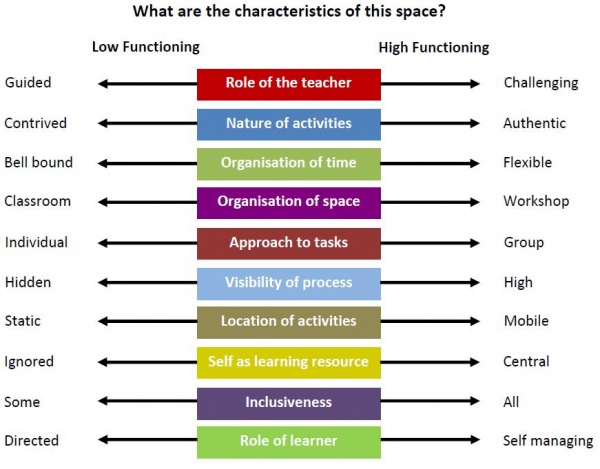
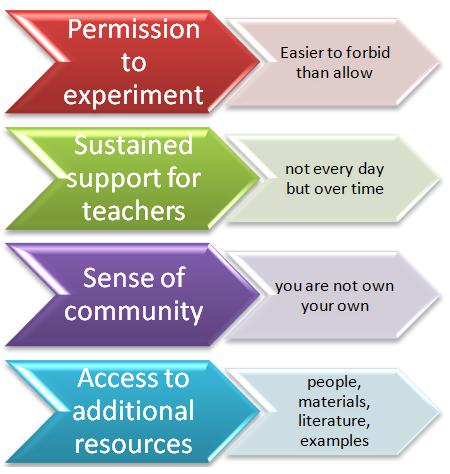
Throughout the session Paul discussed how to identify and recognise creativity in order to measure.  As part of the Creative Partnerships work in England Cambridge University carried out research examining the pedagogy of creative practice, as part of this they outlined the following:

Pupils need risk for motivation – this gives learners incentive to work. Schools can be too low risk – pupils need high visibility outcomes.  High functioning pupils will be physically, socially, emotionally and intellectually engaged equalling high performance pupils.  

 Other Creative indicators are:

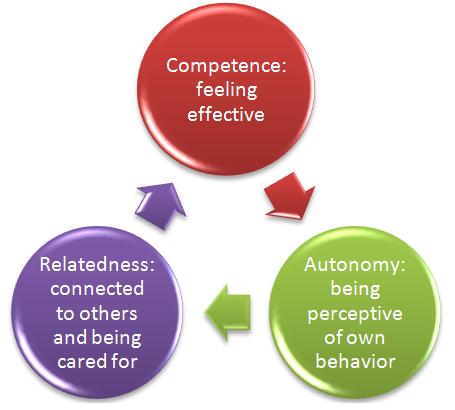
Essential Psychological Needs

Key Ingredients

Defining Creativity

Taking Science Outdoors

A group of primary teachers spent a very wet morning with Jane Jackson,  Outdoor Learning Development Officer, Falkirk Council Curriculum Support Team, exploring how to deliver Science in the outdoors.

Practical ideas from several of the CfE science organisers were demonstrated, and included exploring how small mammals keep warm during the cold, wet winter months.  The participants insulated their own ‘home made’ mammals in a range of ways and there was a lot of competition when we re-tested their core temperatures after 20 mins!

As well as giving teachers some practical ideas, the course encouraged participants to think about their planning, and consider where taking their learning outdoors would enhance the teaching and learnng experience for pupils.

Links to some of the supporting material used on the day can be found below:

minibeast ID key

nature detective resources

Science E’s and O’s handout

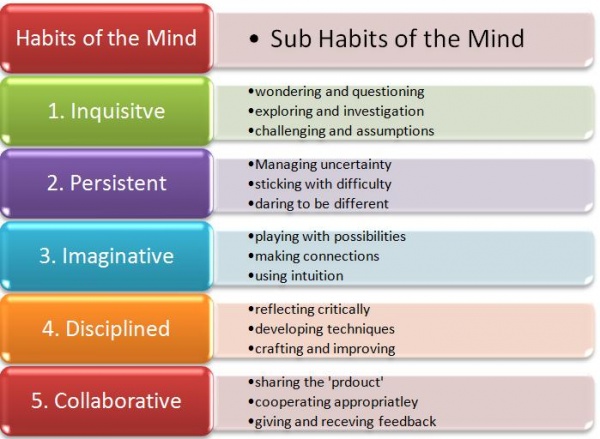
Creativity – What Is It?

Gayle Martin, Arts & Culture Officer, Curriculum Support Falkirk Council is working in partnership with Stirling and Clackmannanshire Council to develop Creative Learning.  Gayle recently attended a presentation by Sheila Paige of Education Scotland who is leading Creativity Across Learning, which is a creative review across a range of education establishments in Scotland.  The review will complete in June and results will be published in September.  As part of this Sheila was able to share how Education Scotland has defined Creativity, which is listed below:

 Definitions of Creativity

 Creative skills, sometimes referred to as capacities, include being:

  • Inquisitive
  • Open-minded
  • Able to harness imagination
  • Able to identify and solve problems

 We also define people who have well-formed creative skills as being:

  • Confident in their right and ability to influence change

 These organisers are used to describe more fully those key learning behaviours which will support the development of these skills and capacities.  The following list aims to expand these concepts.  It is not exhaustive but includes:

  • Being curious
  • Registering patterns and anomalies
  • Drawing on previous knowledge
  • Researching productively
  • Formulating good questions
  • Defining problems
  • Exploring multiple viewpoints
  • Functioning with uncertainty
  • Lateral thinking
  • Hypothesising
  • Synthesising and refining multiple options and viewpoints
  • Inventing
  • Crafting, delivering and presenting solutions
  • Applying discipline and resilience
  • Evaluating impact and success of solutions
  • Identifying next steps in refinement or development of process

We would also expect children and young people to become increasingly:

  • Motivated and ambitious for change
  • Confident in validity of their own viewpoint
  • Able to apply a creative process to other situations
  • Able to lead and work well with others

Falkirk Music Show Reel

Gayle Martin, Arts & Culture Officer, Falkirk Council Curriculum Support Team has created a show reel of some of our senior music ensembles and projects that performed at the School Senior Concerts in March.  The clips were filmed during rehearsals prior o the concerts at Falkirk Town Hall on 25th & 27th March.  The film shows both the talent and achievement by pupils and staff, with new compositions and arrangements by three senior pupils – Christopher Paully of Falkirk High, Andrew Brown of Graeme High and Danielle McKenna from St Mungo’s High.  Their composition was part of New Found Sound Project, where they worked alongside composer Tom Butler from the Royal Conservatoire of Scotland to create a new piano composition to accompany silent film.  Percussion Tutor Stuart Blackwood composed a new piece of music The Americas and Guitar Tutor Keith Jenner arranged The Beatles Eleanor Rigby, which was conducted by Strings Tutor Gisela Hans and performed by Senior String Ensemble.  Also performing in the clip is Falkirk Traditional Music Project band Up Beat, supported by senior YMI Trad Tutor John Somerville and YMI Trad Tutors Marc Duff and Steven Holland.  The final clip is an excerpt from Falkirk Schools Senior Orchestra rehearsal which is conducted by Brass Tutor Ian Boutler, with pupils from across all secondary schools.

[kml_flashembed movie="http://www.youtube.com/v/AOv9sFyxPOw" width="425" height="344" allowfullscreen="true" fvars="fs=1" /]
Active Literacy in the Secondary School

Sharon Wallace, Effective Teaching and Learning Teacher, Curriculum Support Team is currently working with two Falkirk Secondary Schools on a very exciting Active Literacy transition project.

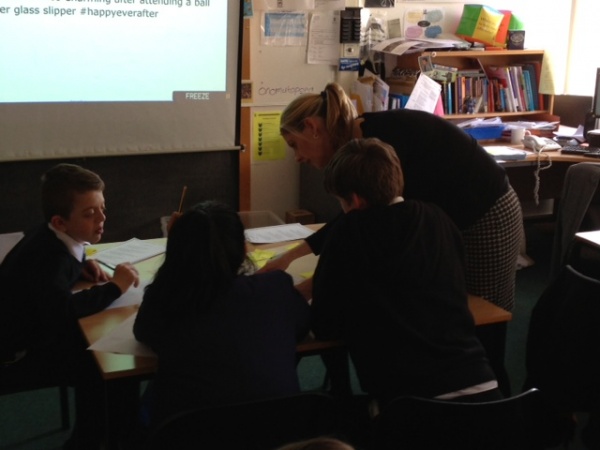
The recently published Active Literacy pack takes the Active Literacy programme into S1 and Sharon is currently team teaching with John Doherty at Larbert High School and an S1 class, and soon Graeme High School, also with an S1 class on higher order reading skills.

The P4/5 Active Literacy pack develops the higher order skills introduced at P1-3 and the P6/7/S1 pack takes these skills even further.

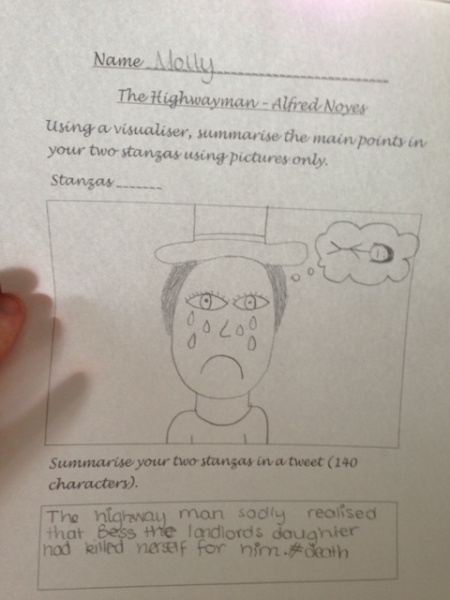
The S1 classes are developing the six key reading comprehension skills using the Alfred Noyes poem ‘The Highwayman’ as a ‘text’.

The initial lesson looked at Strategy 1 – prior knowledge of ‘highwaymen’ and this period in time, followed by Strategy 2 – using ‘metalinguistics’ – picking out key phrases/ interesting vocabulary. The pupils then used Strategy 3 – using visualisers to produce a mind-map which incorporated the main themes of a non-fiction text about ‘Highwaymen’.

This is a very exciting project taking the Active Literacy programme into S1 and the skills even further into real life.

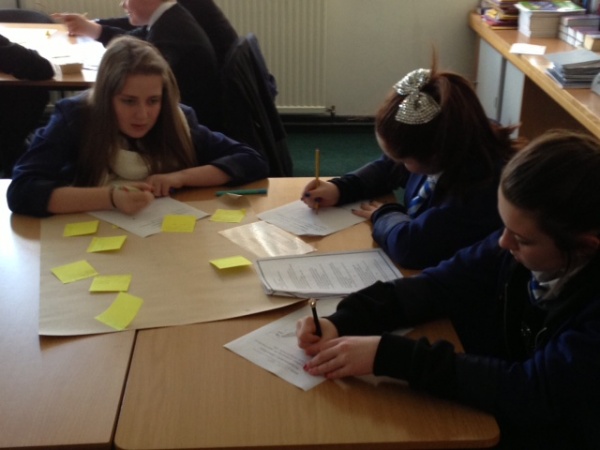
The second lesson in this series was really successful and examined comprehension strategies 3 (using visualisers), 4 (inference), 5 (main ideas) and 6 (paraphrasing). In a very short timescale, S1 pupils from Larbert High were able to produce visualisers to summarise the main ideas of two stanzas from the poem. Working in cooperative groups on two different stanzas each, the pupils were able to cover the entire poem. They then went onto producing a summary/ paraphrase of those two stanzas using only 140 characters and published these live on twitter.

Some of the tweets included:

‘The highwayman knocks on the window of the inn and finds Bess #younglove x’

‘The Highwayman is a structured poem which has good describing words #shotottheface

‘The highwayman rides to the inn. Sings a song to the girl. Redcoats make her shoot herself. #death

Sharing the Learning of Active Literacy – A Collaborative Approach to Achieving!

Sharon Wallace, Effective Teaching and Learning Teacher, Curriculum Support Team has been investigating the role of other stakeholders to support pupil attainment in Active Literacy. Sharon has devised a series of sessions useful for Support for Learning Assistants in order to share the Active Literacy Programme. These two sessions have already been delivered in establishments across Falkirk and proving popular, as these quotes demonstrate:

“I wish the sessions were longer, I have learned so much already this morning!”

“I am excited to try out some of these ideas with the pupils I support!”

The two sessions look at spellings and phonics, and reading and writing and Sharon provides participants with useful handouts on activities which consolidate classroom learning in Active Literacy. Support for Learning Assistants are given a brief overview of the programme, along with practical tips to use with the pupils they support. These are hands-on sessions with Support for Learning Assistants having a go at some activities such as the five finger strategy, Elkonin boxes and diacritical marking.

The impact on pupil learning is that Support for Learning Assistants are able to use the same language associated with the Active Literacy programme and look at alternative ways to enhance the learning e.g. through the use of the outdoor environment, Smart boards, CD-roms and other sensory experiences.

These sessions are proving very popular and have so far been delivered at St. Bernadette’s, Bainsford (incorporating Drumbowie Primary) and Laurieston.