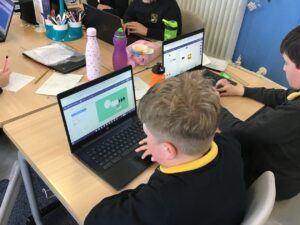
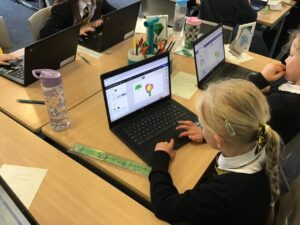
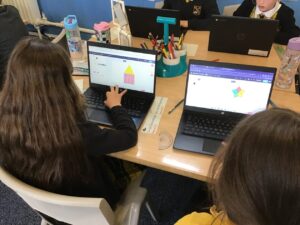
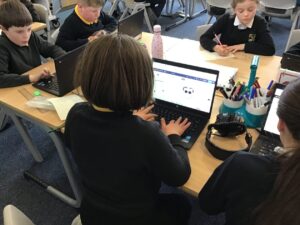
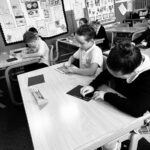
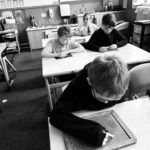
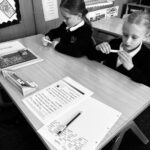
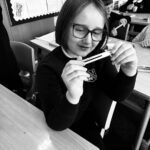
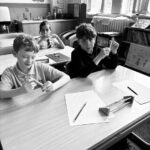
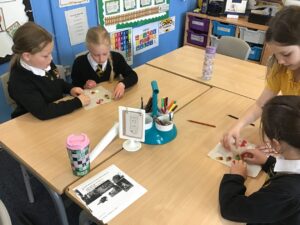
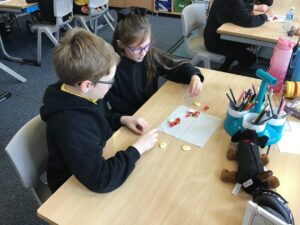
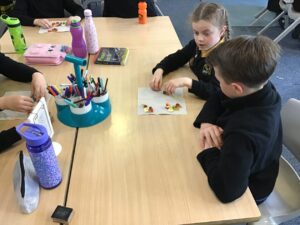
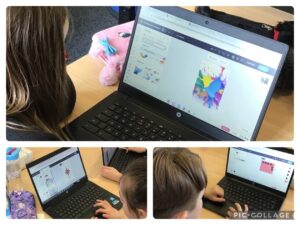
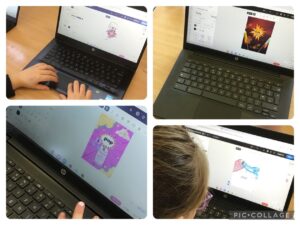
We have been discussing how to stay safe online and which information is ok to share and which information should be kept private.
We watched a video about internet safety, completed a paired task sorting public and private information and then created our own avatar with a username, which allows us to keep our full name private.
As part of our Scotland topic we were learning about where foods come from ‘Farm to Fork’ such as oats, milk and bread. After learning about milk production Emily was able to experience milking first hand and shared some photos with us. When learning about lochs and mountains in Scotland we talked about the Gaelic names and meanings they have been given. Rosie brought in a Gaelic book she has from home.
As part of our topic learning about Australia we explored Aboriginal designs and symbols. Matilda brought in her didgeridoo and an Australian hat. We also read the Australian story The Missing Bilbies as part of World Book Day and explored Australian animals.
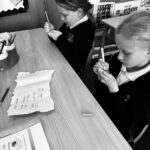
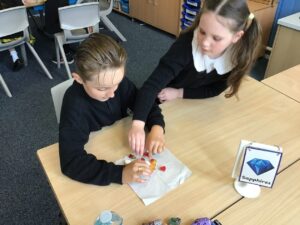
We had great fun using the knowledge we had learnt to create models of 3D shapes. It was tricky at times getting the sticks together, but everyone showed patience and perseverance. Well done!
We braved the elements to go outside and participate in the RSPB big bird watch. There were a variety of different birds and it was interesting to watch their movements and behaviour.
As part of our Social Studies topic, Scotland, we explored the production of oats from field to bowl then we made some delicious Scottish porridge 🏴
We have been using Venn Diagram to sort 3D shapes by their properties. The class were then challenged to create their own criteria to sort the shapes by.
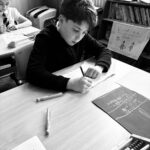
We have been investigating 2D shapes including more complex shapes such as rhombus, parallelogram, octagon. We created posters explaining the properties of these shapes including the number of sides and the number of vertices.
This week in Number Talks, we have been revising all the different addition strategies we have learnt. We selected a chilli challenge calculation and then completed the addition calculation using 4 different strategies – adding in chunks, vertical calculations, place value and compensation.
We had great discussion about which strategy we preferred. We also recognised that sometimes our favourite strategy might not always be the quickest or most efficient. Great work, P4/5!