Category Archives: Uncategorized

MVP Newsletter 2nd Edition

Hello and welcome back! We hope you had a fantastic summer and are feeling refreshed for the year ahead. In this second edition of our newsletter, you’ll find updates on current training and scenarios, our latest Annual Report, brand new ASN scenarios, information on the Bookflix resource, developments in MVP in the Community training, and everything you need to get your programme off to a great start this year.
Current Training and Scenarios

Our training offer continues to support schools and organisations in delivering the MVP programme. Be sure to check out the latest changes to our current training in the MST tab on the MVP Glow Blog and revised scenario (messaging) to give more of a focus on cohesive control.

Mentor Training Resources | Mentors in Violence Prevention in Scottish Schools

MVP Sessions / Scenarios | Mentors in Violence Prevention in Scottish Schools

Annual Report

We are delighted to share our latest Annual Report, highlighting the achievements, impact, and growth of MVP over the past year. The report celebrates the commitment of staff, mentors, and partners across Scotland, and showcases the positive difference the programme continues to make in communities and schools.

MVP Annual Reports | Mentors in Violence Prevention in Scottish Schools

New ASN Scenarios

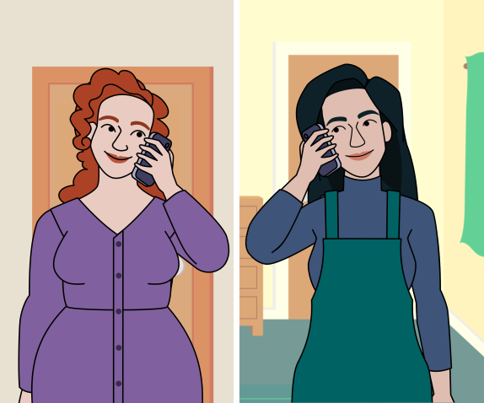
We are excited to introduce a range of new Additional Support Needs (ASN) scenarios. Developed to support more inclusive programme delivery, these resources provide relatable and accessible discussion topics that encourage engagement, participation, and learning – topics include Misogyny 1 and 2, Knife and Body Image.
ASN Materials | Mentors in Violence Prevention in Scottish Schools

Bookflix Resource

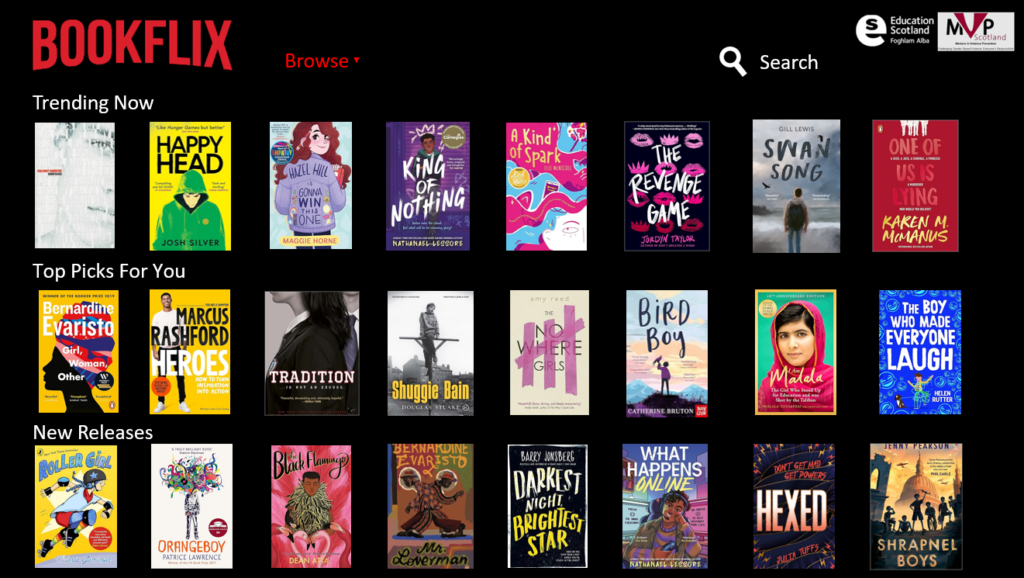
Our new Bookflix resource can be used as a valuable tool for exploring themes linked to MVP through books. The resource helps spark conversations around gender-based violence topics and offers an engaging way to reinforce key MVP messages with young people. Bookflix can be used to strengthen partnership with your school or local library, using a format that is accessible and engaging for young people.

Instructions to use Bookflix are also available on the additional resources tab.
Additional Resources for Mentor Support Team | Mentors in Violence Prevention in Scottish Schools

Case Studies

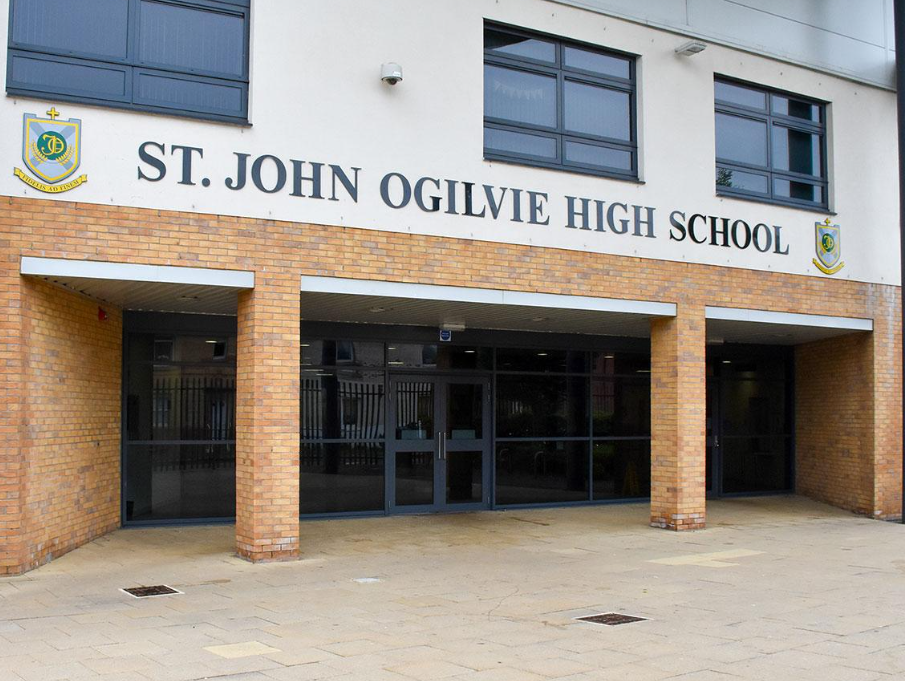
St John Ogilvie High School in Hamilton has developed a strong whole-school approach to the Mentors in Violence Prevention (MVP) programme, placing young people at the heart of creating positive change. S5 and S6 mentors deliver sessions to younger pupils, supported by trained staff and wider links across the curriculum.

A particular success has been the growing engagement of boys and young men, with male mentors increasing from 12 in 2023/24 to 35 in 2026/27. Through MVP, young people are building confidence, leadership and communication skills while developing the confidence to challenge harmful language, stereotypes and behaviours. The programme has also strengthened relationships across year groups and helped establish MVP as a valued part of the wider school culture.

Read the full case study below.

Case Studies | Mentors in Violence Prevention in Scottish Schools

MVP in the Community Training

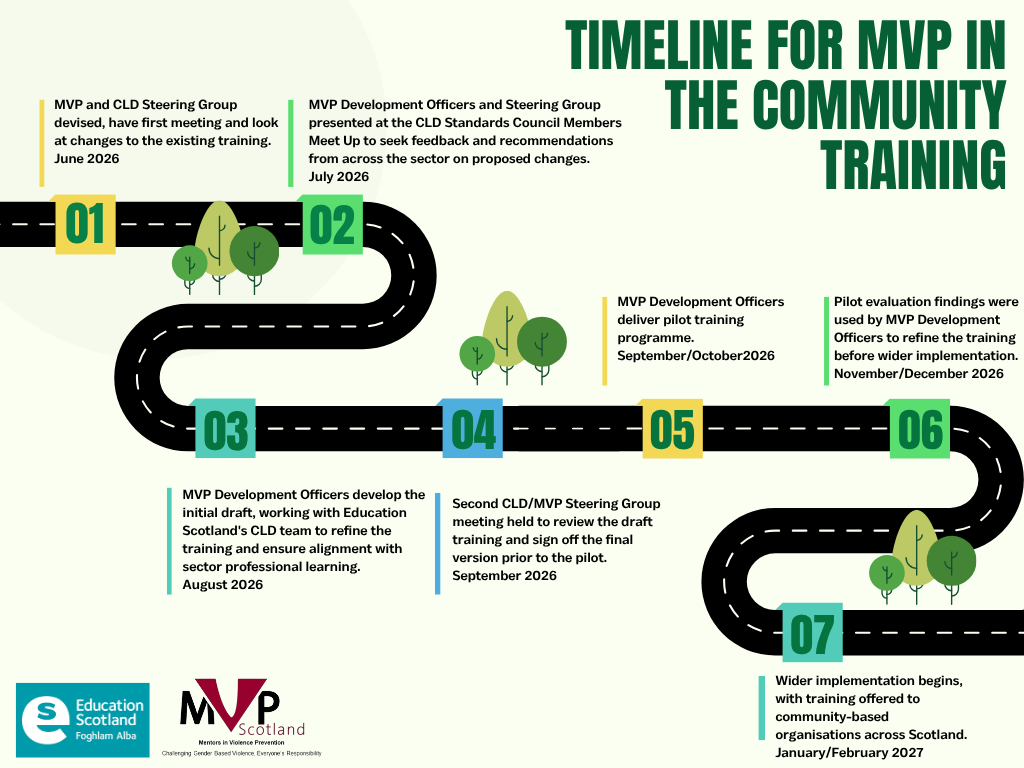
Work is progressing on our MVP in the Community training programme, designed to extend MVP principles beyond school settings. This exciting development will support community organisations and youth groups to build confidence in using the MVP approach to create safer and supportive environments. See the graphic below for more information.

More info here: Information and Training for Staff | Mentors in Violence Prevention in Scottish Schools
Getting Your Programme Off to a Great Start

As the new academic year begins, now is the perfect time to review your delivery plans, recruit and train mentors, and schedule sessions. Making use of the latest resources and guidance will help ensure your MVP programme is well-organised, engaging, and successful from the outset.

A gentle reminder about using the pre and post surveys for Mentors and Mentees, this will help us track and evaluate any changes in young people as they go through the programme. These can be found below or in the School Lead Quality Assurance Booklet.

Pre Mentor Survey*

Post Mentor Survey*

Pre Mentee Survey*

Post Mentee Survey*

How to duplicate a form

Dates for your Diary

Train the Trainer – There are 2 events each year in March and November. If you have been delivering MVP for at least a year, have capacity to deliver training and would like to train as a staff trainer within your authority, our next one is being hosted by Edinburgh City Council on the 4th and 5th of November. Please get in touch with your Local Authority coordinator or email the national team on the emails below.

School Leads Network – You may already be networking in your local authority or you may not have had the opportunity. This network meeting will involve a short update on changes to the programme and a chance for staff to share news and ask questions about programme delivery in their setting across the country. Join us online on the 22nd October 4-5pm. Please complete this form HERE for sign up.

The 16 Days of Activism – The campaign runs from 25 November to 10 December, bringing together organisations to take a stand against domestic and gender‑based violence. If you are planning any activities or events in your local authority, please share this with us and we can showcase the collective efforts from across the country in our Winter newsletter!

Finally…

We hope you find this edition informative and inspiring. Thank you for your continued commitment to MVP. We wish you every success for the year ahead and look forward to supporting you along the way.

Sign up for an email alert to receive our newsletter by scanning the QR code or clicking here.

If you have any good news stories about what is happening in your school or local authority we would love to hear from you. You can email us at:

Pauline.Lynch@educationscotland.gov.scott

Kevin.Gillick@educationscotland.gov.scot

Case Study: A whole school approach to delivering the MVP Programme

St John Ogilvie High School is a large Roman Catholic secondary school located in the Burnbank area of Hamilton, South Lanarkshire. The school serves communities across Hamilton and surrounding areas within the local authority. With an enrolment of approximately 1236 pupils across S1–S6, St John Ogilvie supports a diverse school community, with young people coming from a wide range of socio-economic backgrounds, reflected across multiple SIMD quintiles with 62% of learners coming from Q1/2 and 49% identified as equity.   

Overview

This case study demonstrates how St John Ogilvie High School has embedded the Mentors in Violence Prevention (MVP) programme using a whole school approach that combines youth leadership, staff commitment and curricular integration. The school has developed a strong peer education model, with trained S5 and S6 pupils delivering MVP lessons to younger year groups, supported by a broad range of trained staff across departments.

A particular strength of the approach at St John Ogilvie is the intentional engagement of boys and young men, supported by visible male staff role models and high levels of male participation among senior mentors. This has contributed to positive shifts in peer culture, increased confidence to challenge harmful behaviours and stronger cross year relationships with an increase in boys volunteering as MVP mentors from 12 in 23/24 to 35 in 26/27.

Aims
  • Strengthen the prevention of gender‑based violence (GBV) by embedding MVP across the school community.
  • Develop and sustain a whole school culture of respect, aligned with the school’s values and Rights Respecting Schools ethos.
  • Increase and maintain high levels of male participation among both staff and pupil MVP mentors.
  • Empower young people to act as leaders and active bystanders, building confidence, communication skills, and emotional literacy.
  • Ensure pupil voice is central to the ongoing development and delivery of MVP.
What action was taken 
  • A wide range of staff across departments were trained as MVP mentors, ensuring shared ownership and consistent messaging across the school.
  • S5 and S6 pupils volunteered to become MVP mentors and took part in dedicated training days focused on GBV, bystander intervention, stereotypes, and online harm.
  • Trained S5/6 mentors delivered MVP lessons to S1 and S2 pupils through a planned progression model, revisiting key themes over time.
  • All pupil mentor groups were supported by assigned staff mentors who met with them before and after delivery for preparation, reflection, and feedback.
  • MVP themes were identified and aligned across the curriculum, including PSE, Modern Studies, English, History and RE, reinforcing learning beyond MVP lessons.
  • Pupil voice was captured through feedback forms and focus groups involving mentees, mentors and staff, with learning used to inform ongoing improvement.
  • Male staff actively promoted MVP and modelled engagement, helping normalise male involvement in discussions around respect, masculinity and allyship.
Impact
  • S5/6 mentors reported increased confidence, communication skills, leadership and empathy, alongside greater willingness to challenge harmful language and behaviour.
  • Boys and young men demonstrated increased engagement, with staff observing more peer to peer challenge and reflection on harmful stereotypes and online influence.
  • Younger pupils described mentors as relatable, approachable and engaging, contributing to more open and meaningful discussions.
  • Mentees developed a clearer understanding of gender stereotypes, healthy relationships and bystander responsibility.
  • Cross year relationships were strengthened, creating “big brother / big sister” dynamics that increased trust and belonging.
  • Staff reported that MVP language and concepts were routinely referenced by pupils in other lessons and contexts.
  • The wider school culture shifted, with MVP becoming a recognised, valued and embedded approach rather than a standalone programme.
Next Steps
  • Continue embedding MVP across additional year groups and curriculum areas.
  • Further strengthen alignment with Equally Safe, GIRFEC and whole school improvement priorities.
  • Sustain and grow high levels of participation among boys and young men, supported by male staff role models.
  • Explore formal accreditation opportunities for MVP mentors to recognise leadership and volunteering.
  • Expand youth led activity linked to MVP, including whole school events and campaigns such as 16 Days of Action.
  • Ensure structures are in place to meet growing interest from younger pupils who wish to become future mentors.

Read the full case study here.

Infographic of St John Ogilvie High School’s journey with MVP.

Infographic of links to GIRFEC and MVP.

Jackson Katz Conversations

St Paul’s Youth Forum – An online event with Jackson Katz.

Click on thumbnails in the gallery to play videos.

St Paul’s Youth Forum – An online event with Jackson Katz.

In conversation with Jackson Katz – An Introduction https://www.youtube.com/watch?v=WKVcIIR-Gag&list=PLzPLttaYsXhkHwZuC1bv-z1yq3LLn-GcX

In conversation with Jackson Katz – What is Gender Based Violence https://www.youtube.com/watch?v=WL0ywxEGig8&list=PLzPLttaYsXhkHwZuC1bv-z1yq3LLn-GcX&index=2

In conversation with Jackson Katz – Do we need to be experts?  https://www.youtube.com/watch?v=tnOJkCzzraA&list=PLzPLttaYsXhkHwZuC1bv-z1yq3LLn-GcX&index=3

In conversation with Jackson Katz – What Needs to Change?  https://www.youtube.com/watch?v=agr0YQKcC_8&list=PLzPLttaYsXhkHwZuC1bv-z1yq3LLn-GcX&index=4

In conversation with Jackson Katz – What Can Men Do?  https://www.youtube.com/watch?v=tSJ_PmHEtlQ&list=PLzPLttaYsXhkHwZuC1bv-z1yq3LLn-GcX&index=5

In conversation with Jackson Katz – Masculinity  https://www.youtube.com/watch?v=NqOBF6VZF_Y&list=PLzPLttaYsXhkHwZuC1bv-z1yq3LLn-GcX&index=6

In conversation with Jackson Katz – Challenging attitudes & Values  https://www.youtube.com/watch?v=BvWbItLlS5M&list=PLzPLttaYsXhkHwZuC1bv-z1yq3LLn-GcX&index=7

In conversation with Jackson Katz – Age & Stages  https://www.youtube.com/watch?v=v-zf05Ny5No&list=PLzPLttaYsXhkHwZuC1bv-z1yq3LLn-GcX&index=8

In conversation with Jackson Katz – Creating Safe Spaces  https://www.youtube.com/watch?v=6YSJyz4Lffs&list=PLzPLttaYsXhkHwZuC1bv-z1yq3LLn-GcX&index=9

In conversation with Jackson Katz – Michael Hail  https://www.youtube.com/watch?v=iUwKIGajqQw&list=PLzPLttaYsXhkHwZuC1bv-z1yq3LLn-GcX&index=10

In conversation with Jackson Katz – Linda Thomson  https://www.youtube.com/watch?v=ouSsXu7UBrc&list=PLzPLttaYsXhkHwZuC1bv-z1yq3LLn-GcX&index=11

MVP Experiences

1. From MVP Mentor to class teacher

    by MaryAnne Murphy, NQT Biology, Bishopbriggs Academy

    From 2014-15, during my sixth year, I was an MVP mentor at Portobello High School, Edinburgh. I got involved primarily as a way to give back to the school community and was eager to try new things whilst deciding what to study at university. Throughout the school year we ran weekly sessions with small groups of around 10-12 pupils from S1. We would discuss various topics including bullying, sexism and gender roles, often aided by resources including videos. These sessions provided the younger pupils with the opportunity to learn about these topics in a safe environment where they could ask questions and share their opinions. I feel this was mainly possible because we weren’t teachers but other pupils. We were able to build positive relationships and be a friendly face for younger pupils around the school. It was a privilege for me to watch the young pupils grow in confidence over the course of the programme and develop their own moral compasses.

    Through MVP pupils gain the ability to recognise situations where others, or themselves, may require help, and how to ask for that help. This provides them with the confidence to challenge inappropriate behaviour and language. I personally found the areas of the programme which discussed sexism and gender roles eye-opening. It provided pupils with a chance to not only recognise what these terms mean, but time to reflect on exactly how these did, or could, affect their lives. For example, discussions around consent created opportunities for pupils to consider their own safety and views on different situations. This also positively benefitted others safety as pupils and mentors passed on their knowledge in conversations with friends.

    I found many of the conversations and discussions were things I wish I had learned, or had the opportunity to discuss, at a younger age. The programme provided me with the tools to view situations in a different lens, and shaped how I viewed and reacted to life experiences. I was able to challenge my own beliefs, and discuss these topics with my own friends and other mentors. It gave us a great platform to have informed discussions on topics which we may have wanted to before, but weren’t sure how to. I am still able to use these communication skills to discuss and consider situations today whether it is a story in the news or a scene in a film.

    Throughout sixth year, and into our time after school, my fellow mentors and I would discuss topics and themes which we had touched on during MVP. I often reflect on my time with MVP in school and believe it was the best thing I participated in. The opportunity to work with, and teach, younger pupils nurtured my love of helping others and eventually influenced my decision to become a teacher. MVP has had a lasting impact on my views and ability to discuss sensitive and challenging topics.

    MVP provides opportunities to educate and protect yourself, whilst equipping you with the knowledge and experiences to help others too. It sets up both mentors, and younger pupils with the knowledge they require to navigate the world. Across the whole school MVP created an ethos of caring for others which was reflected in the positive relationships built between teachers and mentors, and mentors and the younger pupils. It created an inclusive and positive atmosphere across the school as pupils gained a deeper understanding of social issues and many felt more confident in standing-up for themselves, and one another.

    2. Mentors in Violence Prevention (MVP) and Police Scotland

    By Scott Menmuir, Preventions Officer, Police Scotland with a responsibility for Children and Young People across Tayside.

    “From a policing point of view, if we allow victim blaming, any person who becomes the victim of a crime is less likely to report it if they are blamed for what happened. This is particularly pertinent to sexual crimes – it is vital that we encourage survivors to report these to the police and seek support”

    “I have also found the learning techniques very useful for me… I am now using the same techniques during my school inputs for other subjects, be it drugs, internet safety or hate crime”

    Given my role in Police Scotland, Mentors in Violence Prevention should be a no-brainer. After years of policing in Tayside on the street, it regularly occurred to me that I was continually chasing my tail, reacting to things after they happened. Surely preventing something from happening was the way it should be, to prevent someone becoming the victim of a crime? I also realised that preventing someone from becoming a perpetrator could also be a focus.

    From a police perspective, arresting and reactive work is something we do on a daily basis. Whilst there is a need for this, as we cannot influence everyone to take a positive path, prevention is surely the key. Primarily it means that we should have less people who become the victim of crime and, more importantly, by adopting MVP, we will change attitudes towards violence and gender which should influence our future generations. Whilst I am involved with numerous preventative programs, none of them should be used in isolation and MVP is undoubtedly part of the jigsaw and complements the others. A couple of the other programmes I am involved with include:

    • No Knives Better Lives, which complements MVP by looking at bystander and public perception
    • Safetaysiders, a primary 7 partnership program looking at personal safety for 11 and 12 year olds. Part of this looks at challenging negative behaviours and domestic abuse, again part of the MVP narrative

    The senior management team within Police Scotland are well aware of the MVP program and see it as part of the preventions program for young people as prevention of crime is undoubtedly our main priority, rather than reacting.

    Whilst I appreciate MVP has been developed by Education Scotland, it is important that the practitioners are not all teaching staff, but include partner agencies like Police Scotland. Through working with education, I have developed a great relationship with school staff and understand a small (very small) part of what their job entails. It has now come to the stage where the secondary schools in Tayside know that I am MVP trained and will come to me for training and advice. I am also part of the MVP planning teams in Angus, Dundee and Perth & Kinross.

    There are numerous benefits for the young people around the attitudes and narratives behind MVP, but from a personal point of view I have also found the learning techniques very useful for me, in particular the “agree/unsure/disagree” method and the bystander material. In the schools where MVP has been adopted, the young people will come across these techniques and the words used during the MVP sessions. I am now using the same techniques during my school inputs for other subjects, be it drugs, internet safety or hate crime. By doing this, the young people become very accustomed to them, and will understand their meanings as second nature.  This is for primary and secondary schools and higher education.

    One of the main changes in my own mind set which attracted me to MVP, has been a heightened awareness of victim blaming, particularly from the media. Embedded into the MVP programme, there is a section discussing victim blaming and I would say that I see new examples on this on a daily basis, in both conventional and social media. I am now in the habit of saving copies of these examples so that I can use up to date examples during the mentor training. From a policing point of view, if we allow victim blaming, any person who becomes the victim of a crime is less likely to report it if they are blamed for what happened. This is particularly pertinent to sexual crimes – it is vital that we encourage survivors to report these to the police and seek support.

    Positive and healthy relationships among young people in schools is probably the main reason I am passionate about MVP. As mentor trainers, we are leaders and role models who can influence the young people to think positive thoughts and challenge harmful behaviour.

    MVP Partnerships between Coatbridge High School / Portland High School, North Lanarkshire

    By Jamie Dungavell, Home School Partnership Officer, Coatbridge High School and Alanah, S6 MVP mentor

    “this programme has supported the Community Learning and Development (CLD) priorities of empowering young people to be heard within the school while building upon their social capital and wider experiences and achievements”

    “It is a good feeling to be there for them to open up to and trust”

    As the Home School Partnership Office (HSPO) in Coatbridge High School part of my role is to support the recruitment, training and delivery of the MVP programme while also promoting its overall ethos within the school. Over the years this programme has supported the CLD priorities of empowering young people to be heard within the school while building upon their social capital and wider experiences & achievements.

    In the most recent year of delivery, a number of our young people expressed enthusiasm for doing more in relation to promoting the MVP message in Coatbridge. In looking to share the impact that MVP has, I extended a hand of partnership out to other high schools in the area and Portland high school responded asking if there was any way in which the two schools could work together. Portland High School offers day support, as part of the spectrum of special educational provision within North Lanarkshire, to young people who are experiencing social, emotional and behavioural problems. Through some initial discussions with their HSPO, the plan was to challenge some of the negative stereotyping and behaviours that often come from the hardest to reach pupils within schools like Portland. Many of the boys and girls at this school engaged in a variety of anti-social and negative behaviours that we were looking to challenge.

    After discussing the idea with the Coatbridge High MVP mentors, a plan was formed that trained leaders from the school would come to Portland and deliver the core sessions to their pupils. Initially the young people were a bit apprehensive as they knew of the challenging nature of the pupils in Portland. To address this concern, I came up with additional training for the volunteers to take part in. This training focused on understanding the life circumstances that these boys and girls came from while also providing them extra facilitation techniques. I also focused on supporting them feel more confident in their own skills and helped them highlight the range of skills and qualities they had for the task ahead.

    In the lead up to the initial deliveries in the school I helped our delivery group prepare for any difficult circumstances they might encounter. Although they were apprehensive initially, they were now in a more confident frame of mind in regards to the message they were trying to get across, alongside the experience they had under their belt. When they began their delivery it was clear they would have some of the core views of MVP challenged right away from gender based roles to what language and behaviour is acceptable to view as a bystander. Using all their experience and training the leaders remained robust in their approach and stayed true to the message of MVP, often having difficult debates with the Portland young people taking part. I could see as they had these discussions that some of the MVP views were being taken on board by the Portland young people. You could see an impact being made as the discussion taking place was between young people instead of staff and pupils.

    The sessions were ultimately very successful with everyone taking part fully. These core sessions around empathy, types of violence and gender stereotyping seemed to set up a brilliant foundation for discourse between all the young people involved.

    I believe this whole process was a success and the young people who delivered got a lot out of it. It was also clear that the Portland pupils had their views challenged in a way that they had never experienced. I believe that going forward, a team that could consistently deliver to these young people would develop a strong working relationship with them. It would mean that the dialogue and views that are shared would be very transparent and real. Ultimately this would allow those involved, who often come from the most difficult and challenging life circumstances, to begin to change their views and question some of the behaviours they participate in or see every single day.

    Jamie Dungavell, HSPO, Coatbridge High School

    My experience of delivering MVP to Portland High School was extremely positive and gave me the opportunity to talk to vulnerable teenagers my age on sensitive and important topics which affect us every day in society. Talking to the pupils and getting to know them better whilst doing these topics gave me the opportunity to understand how they feel about the topics and how it affects them.  It helped some of the pupils open up to us and tell us their own experience at home, which was hard to hear as they are the same age as me and had been through so much. It is a good feeling to be there for them to open up to and trust, as by them opening up about their stories and things they’ve seen happen, it helped them build trust with us and help them when experiencing a difficult time, no matter the situation. While delivering the MVP lesson the pupils engaged in every activity enthusiastically. As well as them telling their own experiences, I share my own, which caused the pupils to realise that they can talk to us and we have all been through situations but opening up about them makes us strong. If they don’t feel comfortable opening up to staff and asking them questions, they could come to us and ask, as if they are close in age to us and we can relate to the feelings they may feel.

    Alanah, S6 Mentor, Coatbridge High