

Category Archives: Case Studies

Case Study: A whole school approach to delivering the MVP Programme

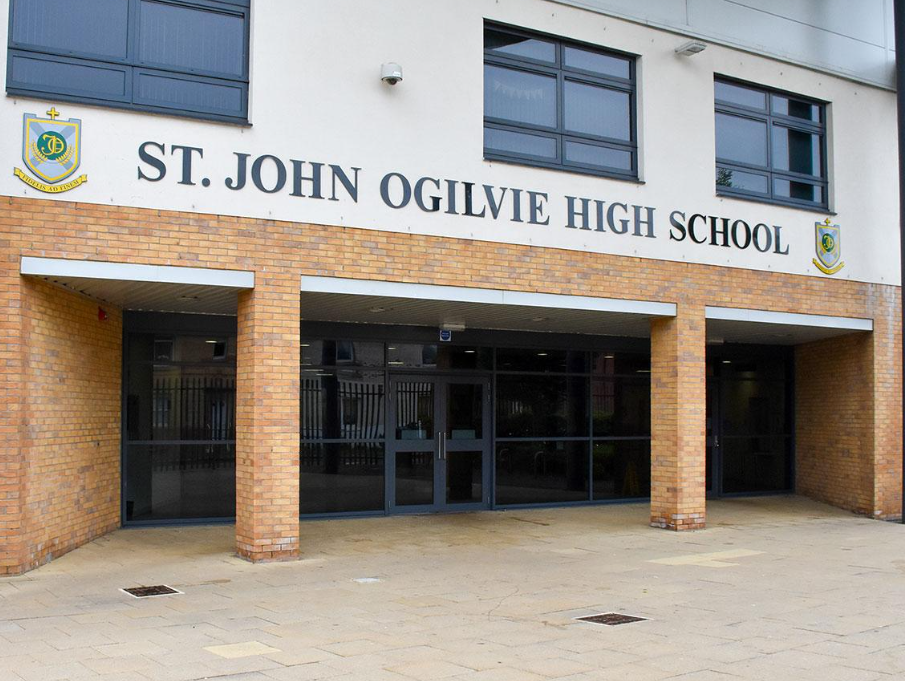
St John Ogilvie High School is a large Roman Catholic secondary school located in the Burnbank area of Hamilton, South Lanarkshire. The school serves communities across Hamilton and surrounding areas within the local authority. With an enrolment of approximately 1236 pupils across S1–S6, St John Ogilvie supports a diverse school community, with young people coming from a wide range of socio-economic backgrounds, reflected across multiple SIMD quintiles with 62% of learners coming from Q1/2 and 49% identified as equity.   

Overview

This case study demonstrates how St John Ogilvie High School has embedded the Mentors in Violence Prevention (MVP) programme using a whole school approach that combines youth leadership, staff commitment and curricular integration. The school has developed a strong peer education model, with trained S5 and S6 pupils delivering MVP lessons to younger year groups, supported by a broad range of trained staff across departments.

A particular strength of the approach at St John Ogilvie is the intentional engagement of boys and young men, supported by visible male staff role models and high levels of male participation among senior mentors. This has contributed to positive shifts in peer culture, increased confidence to challenge harmful behaviours and stronger cross year relationships with an increase in boys volunteering as MVP mentors from 12 in 23/24 to 35 in 26/27.

Aims
  • Strengthen the prevention of gender‑based violence (GBV) by embedding MVP across the school community.
  • Develop and sustain a whole school culture of respect, aligned with the school’s values and Rights Respecting Schools ethos.
  • Increase and maintain high levels of male participation among both staff and pupil MVP mentors.
  • Empower young people to act as leaders and active bystanders, building confidence, communication skills, and emotional literacy.
  • Ensure pupil voice is central to the ongoing development and delivery of MVP.
What action was taken 
  • A wide range of staff across departments were trained as MVP mentors, ensuring shared ownership and consistent messaging across the school.
  • S5 and S6 pupils volunteered to become MVP mentors and took part in dedicated training days focused on GBV, bystander intervention, stereotypes, and online harm.
  • Trained S5/6 mentors delivered MVP lessons to S1 and S2 pupils through a planned progression model, revisiting key themes over time.
  • All pupil mentor groups were supported by assigned staff mentors who met with them before and after delivery for preparation, reflection, and feedback.
  • MVP themes were identified and aligned across the curriculum, including PSE, Modern Studies, English, History and RE, reinforcing learning beyond MVP lessons.
  • Pupil voice was captured through feedback forms and focus groups involving mentees, mentors and staff, with learning used to inform ongoing improvement.
  • Male staff actively promoted MVP and modelled engagement, helping normalise male involvement in discussions around respect, masculinity and allyship.
Impact
  • S5/6 mentors reported increased confidence, communication skills, leadership and empathy, alongside greater willingness to challenge harmful language and behaviour.
  • Boys and young men demonstrated increased engagement, with staff observing more peer to peer challenge and reflection on harmful stereotypes and online influence.
  • Younger pupils described mentors as relatable, approachable and engaging, contributing to more open and meaningful discussions.
  • Mentees developed a clearer understanding of gender stereotypes, healthy relationships and bystander responsibility.
  • Cross year relationships were strengthened, creating “big brother / big sister” dynamics that increased trust and belonging.
  • Staff reported that MVP language and concepts were routinely referenced by pupils in other lessons and contexts.
  • The wider school culture shifted, with MVP becoming a recognised, valued and embedded approach rather than a standalone programme.
Next Steps
  • Continue embedding MVP across additional year groups and curriculum areas.
  • Further strengthen alignment with Equally Safe, GIRFEC and whole school improvement priorities.
  • Sustain and grow high levels of participation among boys and young men, supported by male staff role models.
  • Explore formal accreditation opportunities for MVP mentors to recognise leadership and volunteering.
  • Expand youth led activity linked to MVP, including whole school events and campaigns such as 16 Days of Action.
  • Ensure structures are in place to meet growing interest from younger pupils who wish to become future mentors.

Read the full case study here.

Infographic of St John Ogilvie High School’s journey with MVP.

Infographic of links to GIRFEC and MVP.

Case Study – Engaging boys and men in the MVP programme

Park Mains High School is a large, non-denominational secondary school in Erskine, Renfrewshire, serving the community of Erskine, Inchinnan, Bishopton, Langbank and Dargavel. With roughly 1,500 pupils from SIMD 4 to 10, it is currently expanding to support a 2,000-pupil capacity by summer 2027.

Overview

This case study demonstrates how Park Mains High School has successfully engaged men and boys through the Mentors in Violence Prevention (MVP) programme. By harnessing the influence of senior S5/S6 males from the school’s football team, Park Mains has helped shift aspects of school culture, develop positive male role models and strengthen friendships and soft skills. Staff delivered 2 days of training to senior students – including members of the boys’ football team – preparing them to become peer mentors. This case study highlights the positive impact of the MVP programme on these young male mentors, the younger pupils they worked with, and the wider school ethos.

Aims
  • Strengthen approaches to the prevention of gender-based violence (GBV) by embedding MVP across the school.
  • To challenge gender perceptions and stereotypes within the S5/S6 football team that can inform the delivery of the programme to lower year groups.
  • Increase the number of male mentors trained as MVP mentors.
  • Raise awareness of the role of boys and men in the prevention of GBV.
  • Empower young people to be agents of social change as leaders and active bystanders, building skills, knowledge, and confidence to challenge harmful norms.
Actions

Aims
  • Strengthen approaches to the prevention of gender-based violence (GBV) by embedding MVP across the school.
  • To challenge gender perceptions and stereotypes within the S5/S6 football team that can inform the delivery of the programme to lower year groups.
  • Increase the number of male mentors trained as MVP mentors.
  • Raise awareness of the role of boys and men in the prevention of GBV.
  • Empower young people to be agents of social change as leaders and active bystanders, building skills, knowledge, and confidence to challenge harmful norms.
Actions
  • MVP trained staff from Park Mains High School, co-delivered mentor training in partnership with Renfrewshire Council Youth Services and Children’s Services and Women and Children First.    
  • Mentor training took place over 2 days with 87 young people at Park Mains High School, creating a safe space where young people could engage more openly.
  • Trained MVP staff from Park Mains High School delivered specific scenarios in school with S5 and S6 pupils including Expectations and Party which explore the harms around pornography and alcohol and consent.
  • The school introduced participation in the 2-day MVP training as a condition of securing a place on the football team.
  • Senior mentors from the football team, delivered Core Session 1 to S1 pupils involved in
  • the Goals for Growth programme, exploring gender stereotypes and their impact.
Impact
  • Members of the football team who were initially reluctant during training, quickly recognised the value of the programme, with particularly significant behavioural and attitudinal changes evident by the second day.
  • Mentors developed personal confidence, empathy, and the ability to challenge harmful language or behaviour.
  • Mentors became aware of the pressures created by harmful masculinity norms and helped younger pupils navigate them.
  • Younger pupils found mentors relatable and more engaging because they were close in age and from the football team.
  • Mentees gained a clearer understanding of gender stereotypes and recognised that everyone can participate equally regardless of gender.
  • The football team experienced a more positive, less hostile atmosphere with improved communication.
  • Teachers observed increased engagement from boys, especially after recruiting the football team into MVP.
  • Whole‑school culture shifted: MVP became more widely discussed, accepted, and valued across staff and pupils.
Next steps
  • Park Mains High School staff to deliver MVP sessions to more year groups.
  • Continue engaging influential pupil groups, such as the football team, to maintain strong male participation and ensure each mentor group includes boys who can positively influence younger pupils.
  • Expand and sustain mentor training so senior pupils can continue to build confidence, leadership skills, and the ability to challenge harmful language and behaviours.
  • Increase visibility and involvement of trained staff, helping reinforce consistency across the school and strengthen whole‑school commitment to MVP.
  • Provide additional leadership opportunities for mentors, enabling them to further support younger pupils and develop strong role‑model relationships.
  • Support pupils to recognise and challenge harmful online content, building on the toolkit the programme already provides for identifying problematic messages and behaviours.
  • Prepare for growing demand, ensuring structures are in place for future cohorts, as younger year groups are already expressing interest in becoming trained mentors.

MVP: An effective school and youth work partnership

Smithycroft Secondary School & St Paul’s Youth Forum

Case Study Summary

Overview

This case study explores the partnership between Smithycroft Secondary School and St Paul’s Youth Forum (SPYF) to deliver the Mentors in Violence Prevention (MVP) programme. Supporting Scotland’s Equally Safe strategy, the collaboration combines classroom learning with community youth work to address issues such as consent, pornography, and harmful gender norms. SPYF staff co-facilitated MVP sessions in school and in the youth group, creating informal, trusted spaces for open discussion and empowering students as active bystanders and leaders. This case study highlights the positive impact of this integrated approach in reinforcing prevention messages across school and community.

Aims
  • Strengthen approaches to the prevention of gender-based violence (GBV) by embedding MVP across both school and community settings.
  • Create a whole-community prevention model, moving beyond individual lessons.
  • Empower young people as leaders and active bystanders, building skills, knowledge, and confidence to challenge harmful norms.
  • Develop a sustainable MVP model that aligns with Scotland’s national priorities.
Actions
  • SPYF staff were trained in MVP as adult facilitators.
  • MVP trained staff at Smithycroft Secondary School co-delivered mentor training with SPYF youth workers. 
  • Mentor training took place over 2 days off site at SPYF, creating a safe space where young people could engage more openly.
  • Trained MVP staff from SPYF delivered specific scenarios in school with S5 and S6 pupils including Expectations and Party which explore the harms around pornography and alcohol and consent.
  • Trained SPYF staff also facilitated the Knife scenario within the youth club.
Impact
  • Teachers observed that sessions delivered by SPYF youth workers changed the classroom dynamic with pupils engaging more openly. Their presence made discussions flow more easily and encouraged pupils to participate more freely.
  • SPYF youth workers were well received by pupils within the school environment. This finding has helped to build confidence among school staff and laid the foundations for a model of delivery that bridges formal education with community-based practice.
  • The partnership allowed SPYF to support school staff to embed MVP within the curriculum.
Next Steps
  • SPYF staff to deliver MVP sessions to more year groups at Smithycroft.
  • SPYF will continue to support recruitment and training of senior MVP mentors.
  • SPYF will continue to deliver Party and Expectations both in school and community settings.

Full Case Study