Bringing Water Quality to Life with the LEGO Flood Model
Clean water is essential for people, plants and animals. Rivers, burns, ponds and lochs provide homes for wildlife, water for communities and spaces for us to enjoy. Keeping this water clean is really important, but pollution from roads, towns, agriculture and construction can easily be washed into watercourses when it rains. Understanding how this happens and how we can prevent it is a key part of protecting the environment.
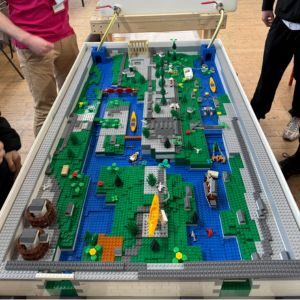
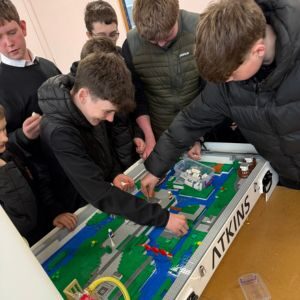
At the recent Apprenticeship Academy event held in Grantown Grammar School, pupils from Grantown Grammar and Kingussie High explored water quality and pollution in a fun and practical way using a LEGO flood model. The model helped bring real‑world environmental challenges to life and showed how engineering can be used to protect local ecosystems.
Exploring pollution and rainfall
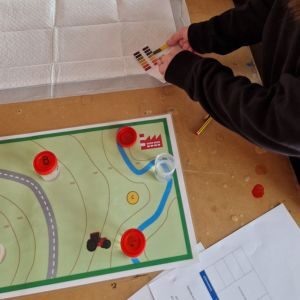
After learning about water quality and common sources of pollution; such as greenhouse gases, fertilisers and dirty run‑off from roads, pupils were asked to think about what happens when it rains. Working together, they predicted where pollutants would travel once rainfall began and how they might spread through the local area.
Using the LEGO flood model, pupils then tested their ideas by creating simulated rainfall. As the “rain” fell, everyone could clearly see the pollutants moving away from their original source and flowing through the landscape. This visual demonstration helped pupils understand just how quickly pollution can reach rivers, ponds and habitats if it isn’t controlled.
What impact could this have?
Once pupils observed how the pollutants moved, the group discussed what problems this could cause for the local area. Together, they explored how polluted water can harm wildlife, damage habitats and affect water quality downstream. Seeing the pollution move in real time made these issues easier to understand and much more memorable.
Protecting a pond ecosystem
To finish the activity, pupils were given an environmental challenge. Their task was to design and build a protection measure to safeguard a pond ecosystem within the model. Using the materials provided, teams created barriers and solutions to reduce polluted run‑off entering the pond.
This encouraged creative thinking, teamwork and problem‑solving, while showing how engineers help protect the environment through clever design and planning.
Learning through doing
The LEGO flood model was a big hit with pupils. It turned complex ideas about water quality, pollution and environmental protection into a hands‑on experience that was easy to understand and fun to explore. Activities like this help show how engineering plays a vital role in caring for our environment, and how small design choices can make a BIG difference.