Why is literacy important?

Literacy is one of the cornerstone to success to life. Being able to read and write (and communicate successfully) is essential for engaging in education and in other areas of life (for example, in employment and personal relationships)

A significant number of adults have very low levels of literacy and, without adequate literacy skills, are at a higher risk of experiencing poor mental health, unemployment and involvement in crime.

What is Literacy?

Early experiences lay essential foundations for future success in literacy. Literacy is ‘the set skills which allows an individual to engage fully in society and in learning, through the different forms of language, and the range of texts, which society values and find useful.’ (Curriculum for Excellence, 2010, pg1)

Literacy is commonly understood as the ability to read and write. However, listening and talking are also important literacy skills.

From birth to 5 years, literacy is viewed in its broadest sense, as children’s early interactions and experiences lay the foundations step-by-step for future learning and success in literacy.

Aspects of the child’s environment, routine, motivation and skills can support literacy learning at all stages of development.

From 5 years onwards primary schools take the lead in teaching literacy, but in the early years literacy is everybody’s responsibility. All staff, parents and carers who spend time with a child can provide experiences which promote and enhance the foundations for literacy.

It is possible to detect children at risk of future difficulty with literacy, so we can be pro-active to prevent those difficulties arising.
Centre Improvement Plan 2025/26

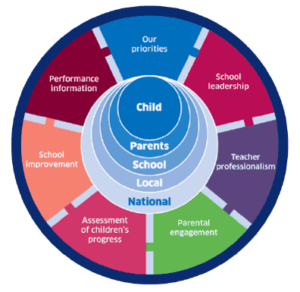
What Influences our Priorities 

National Improvement Framework & Local Authority Service Plans 

The National Improvement Framework (NIF) and Improvement Plan sets out the vision and priorities for Scottish education that have been agreed across the system, and the national improvement activity that needs to be undertaken to help deliver those key priorities. This complements the ongoing implementation of Curriculum for Excellence (CfE), Getting It Right for Every Child (GIRFEC), and Developing the Young Workforce (DYW), which are the three supporting pillars of the Scottish education system.

The local authority uses the NIF to inform a local plan which is updated annually.

How Good is our Early Learning and Childcare & Care Inspectorate Quality Framework for daycare of children, childminding and school-aged children.

We use ‘How good is our Early Learning and Childcare’ and Care inspectorate indicators to evaluate our capacity for improvement in centre. Challenge questions support self evaluation and quality assurance.

2024 – 2025 Standards & Quality Report

The evaluation process of the previous year’s Centre Improvement Plan often flags areas in which can be identified as an area of priority for the following or naturally lead us into an area for improvement focus.  Our accomplishments from this year are published in our  CPPS EYC Standards and Quality Report 2024/25

To read this years improvement plan in full click on the link below

Colquhoun Park EYC CIP 25-26

Report a Glow concern
Cookie policy  Privacy policy