 What is “Teaching Talking”?
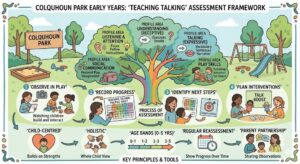
Teaching Talking is not a “test” that a child passes or fails. Instead, it is a profile used by keyworkers to observe and record how a child is developing in their communication skills.
It is specifically designed for children aged 1 to 5 years and focuses on identifying:
How they listen and pay attention.
How they understand what is being said to them.
How they use words and sentences to express themselves.
How the Assessment Works
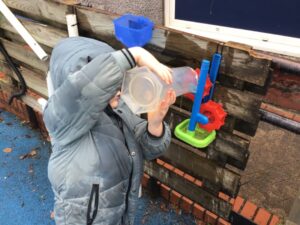
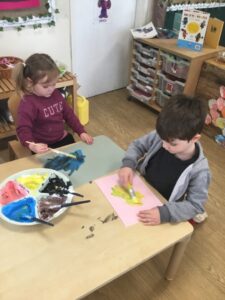
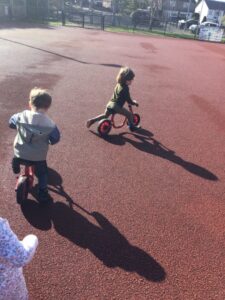
The assessment is “playroom-based,” meaning it happens naturally while your child plays and interacts with others. You won’t see your child being taken into a quiet room for a formal exam.
Observation
Staff observe your child during daily activities—like snack time, together time, or free play—to see how they communicate in a real-world setting.
The Profiles
The early years worker checks off milestones the child has reached, such as:
Following simple instructions.
Using two-word or three-word phrases.
Taking turns in a conversation.
Creating a Plan
Once the profile is complete, it creates a “map” of your child’s strengths and areas where they might need a little extra help.
Why is it used in Colquhoun Park Early Years?
We use this tool to promote Early Intervention. By catching a slight delay in speech or listening early (between ages 2 and 5), we can put simple strategies in place—like specific language games or extra layers of support to help the child catch up before they reach higher primary stages.
Note: If the profile suggests a significant delay, the centre will discuss this with you first. They might then suggest a referral to a Speech and Language Therapist or the Early Years Community Assessment Team (EYCAT) for more specialist advice.
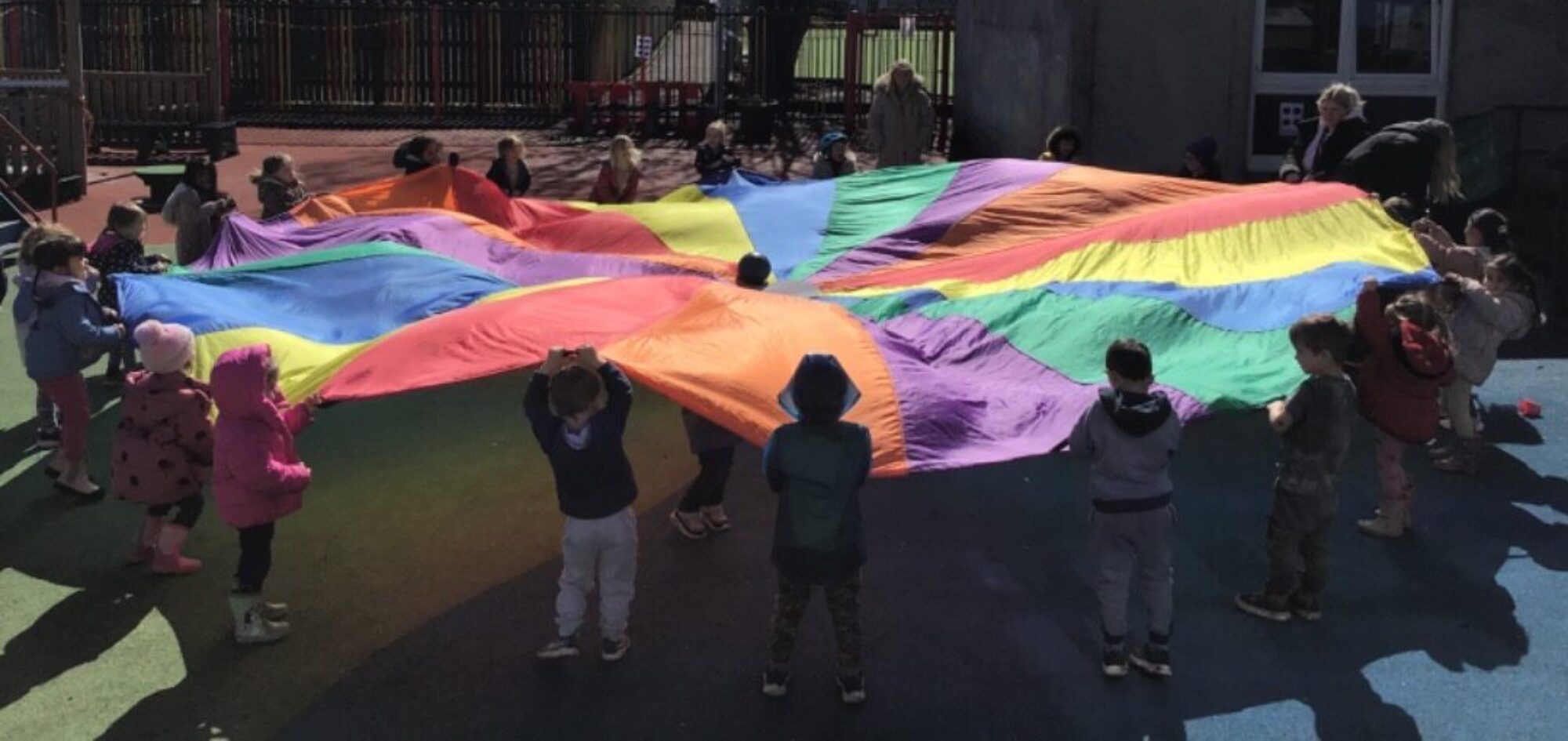
 As part of our ongoing Children’s Rights commitment, we are continuing our journey to embed children’s rights at the heart of everything we do.