Teaching Talking

What is “Teaching Talking”?

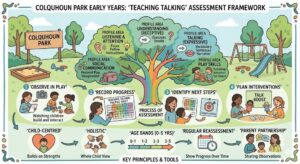
Teaching Talking is not a “test” that a child passes or fails. Instead, it is a profile used by keyworkers to observe and record how a child is developing in their communication skills.

It is specifically designed for children aged 1 to 5 years and focuses on identifying:

How they listen and pay attention.

How they understand what is being said to them.

How they use words and sentences to express themselves.

How the Assessment Works
The assessment is “playroom-based,” meaning it happens naturally while your child plays and interacts with others. You won’t see your child being taken into a quiet room for a formal exam.

Observation
Staff observe your child during daily activities—like snack time, together time, or free play—to see how they communicate in a real-world setting.

The Profiles
The early years worker checks off milestones the child has reached, such as:

Following simple instructions.

Using two-word or three-word phrases.

Taking turns in a conversation.

Creating a Plan
Once the profile is complete, it creates a “map” of your child’s strengths and areas where they might need a little extra help.

Why is it used in Colquhoun Park Early Years?
We use this tool to promote Early Intervention. By catching a slight delay in speech or listening early (between ages 2 and 5), we can put simple strategies in place—like specific language games or extra layers of support to help the child catch up before they reach higher primary stages.

Note: If the profile suggests a significant delay, the centre will discuss this with you first. They might then suggest a referral to a Speech and Language Therapist or the Early Years Community Assessment Team (EYCAT) for more specialist advice.

ARTICLE 12 – The Right to be Heard

As part of our ongoing Children’s Rights commitment, we are continuing our journey to embed children’s rights at the heart of everything we do. 

A key focus for us this month has been the United Nations Convention on the Rights of the Child (UNCRC) Article 12 – the child’s right to be heard.

What is Article 12?  

Article 12 states that every child has the right to express their views, feelings, and wishes in all matters affecting them, and for those views to be taken seriously. 

What this looks like in our setting?

We have been working hard to ensure that children feel confident, respected and safe to share their thoughts and feelings.

You may have noticed some of the ways we are doing this:

– Daily conversations and check-ins where children are encouraged to talk about how they feel.

– Group discussions that allow children to share ideas and listen to others.

– Child led activities, giving children a voice in what and how they learn.

– Staff actively listening and responding, showing children that their voices matter.

Why this is important? 

When children know they are listened to it builds confidence, self-esteem and a sense of belonging. It also helps them develop important skills such as enriched communication, empathy and decision making. It also shows them that their opinions matter.

Thank you for your continued support as we work together.

Children’s Rights – Working together for change

Our 2025/2026 centre improvement plan recognised Children’s Right as a priority.

Since August we have been reflecting on which rights best represent our centre vision, values, aims and ethos. We have also considered the way we in which already support children and families within our setting and how to build on these.

The articles we feel most reflected our practice, will be the first to be introduce and explored by our children, creating opportunity to share this journey with you as our families.

The United Nations Convention on the Rights of the Child (UNCRC) includes many important articles.

We have chosen the following 4 to begin our introduction as focus areas within centre.

• Article 24 – The Right to Be Healthy

• Article 12 – The Right To Be Heard

• Article 28 – The Right to Education

• Article 31 – The Right to Play

Over the coming months, we will be gradually introducing these rights to the children in age-appropriate and meaningful ways. We look forward to sharing updates, activities, and information with you as this journey continues.

Thank you for supporting us as we work together to ensure children’s rights at the heart of everything we do.

What are Children’s Rights?

Report a Glow concern
Cookie policy  Privacy policy