Parent Council
The Parent Council contacts are listed below:
Chairperson: Elaine Paton
Secretary: On rotation
You can contact the Parent Council at: kilmarnockacademyparentcouncil@gmail.com
| Name | Year group(s) |
| Claire Louise Davidson | S1/S4/S6 |
| Karen Patterson | S2 |
| Claire Brands | S2/S4 |
| Laura McChristie | S2/S5 |
| Allan Reid | S2/S6 |
| Elaine Paton | S3 |
| Clare Purewal | S3 |
| Julie Connor | S4 |
| Stephen Coyle | S4 |
| Carol MacInnes | S4 |
| Lynsey Kerr | S4 |
| Jen Graham | S5 |
| Donna Rae | S5 |
Kilmarnock Academy Constitution
Parent & Carer Improvement Plan
KA Parent and Carer Improvement Plan 2026-27
Highlights of 2025/26
KAPC Summary Highlight Report 25 26
Parent Council Meetings for session 2026/27
Below are some websites you may find useful:
- East Ayrshire Council Relationships Framework
- SCQF Framework and Website
- Educational Maintenance Allowance
- Kilmarnock Academy Respect for All Anti-Bullying Policy
- NSPCC (Bullying and Cyberbullying)
- National Bullying Helpline
- Respect Me
- Cyberbullying Information
- Child Protection (Parent Information)
- Child Protection System in Scotland
- Online Resources for Higher
School Improvement Plan
School App
Information can be found here: New Safer Schools Scotland App
Tracking Reports
S4 Tracking Support Guide
S4 Tracking Parent Carer Support Guide 2026
Restorative Approaches
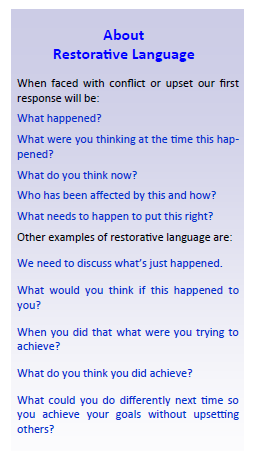
At Kilmarnock Academy, we use Restorative Approaches to improve relationships and address behaviour concerns. Restorative Approaches are not new. Many schools have used this for over 20 years. It has already been proved to enable schools to improve behaviour and relationships.
Your child may be invited to attend a Restorative Conversation to resolve a conflict that they are having at school. This is a meeting with those involved to:
– discuss what is happening
– Look at who has been affected
– decide how it can be resolved
– find a way forward that avoids resentment
This is done in a way that is fair to everyone. To ensure that those who have been engaging in poor behaviour can be held accountable,
they will be expected to take responsibility for their actions before the meeting starts. This allows us to support those engaging in harmful behaviour so they are able to change that behaviour in a way that also holds them fully accountable.
Mobile Phone Policy
At Kilmarnock Academy, we recognise that mobile phones can be both valuable learning tools and significant distractions. Our “Bag It or Box It” approach is designed to strike a balance between supporting learning opportunities and maintaining a focused, respectful learning environment.
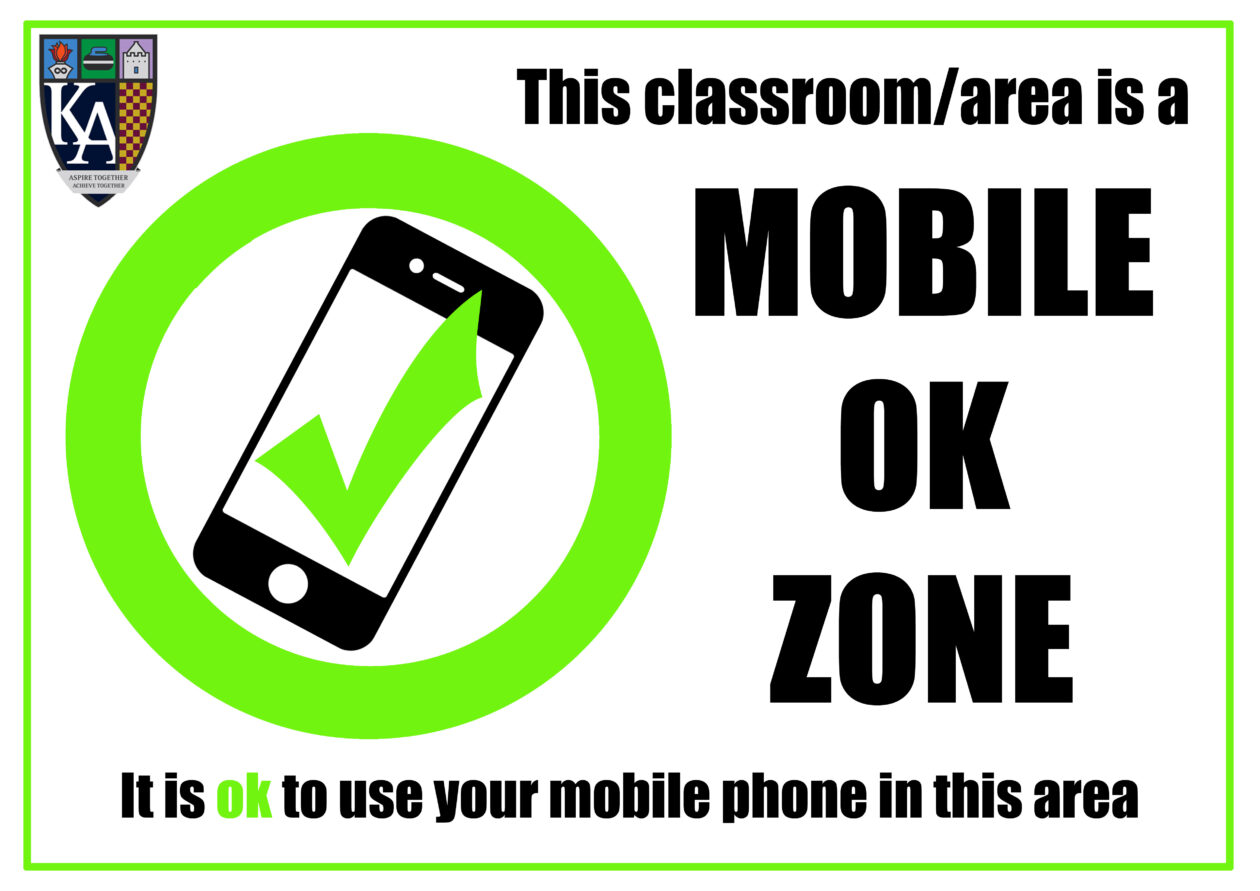
Mobile phones can enhance learning when used appropriately and purposefully. Teachers may choose to allow pupils to use their devices for specific educational activities such as photographing completed work, recording performances, rehearsing presentations, conducting research or capturing evidence of learning. This can enable pupils to reflect on their progress, celebrate achievements and develop important digital skills.
However, we also know that unrestricted access to mobile phones can impact concentration, engagement and positive interactions during lessons. For this reason, teachers have the professional discretion to decide when mobile phones are appropriate and when they should remain out of sight.
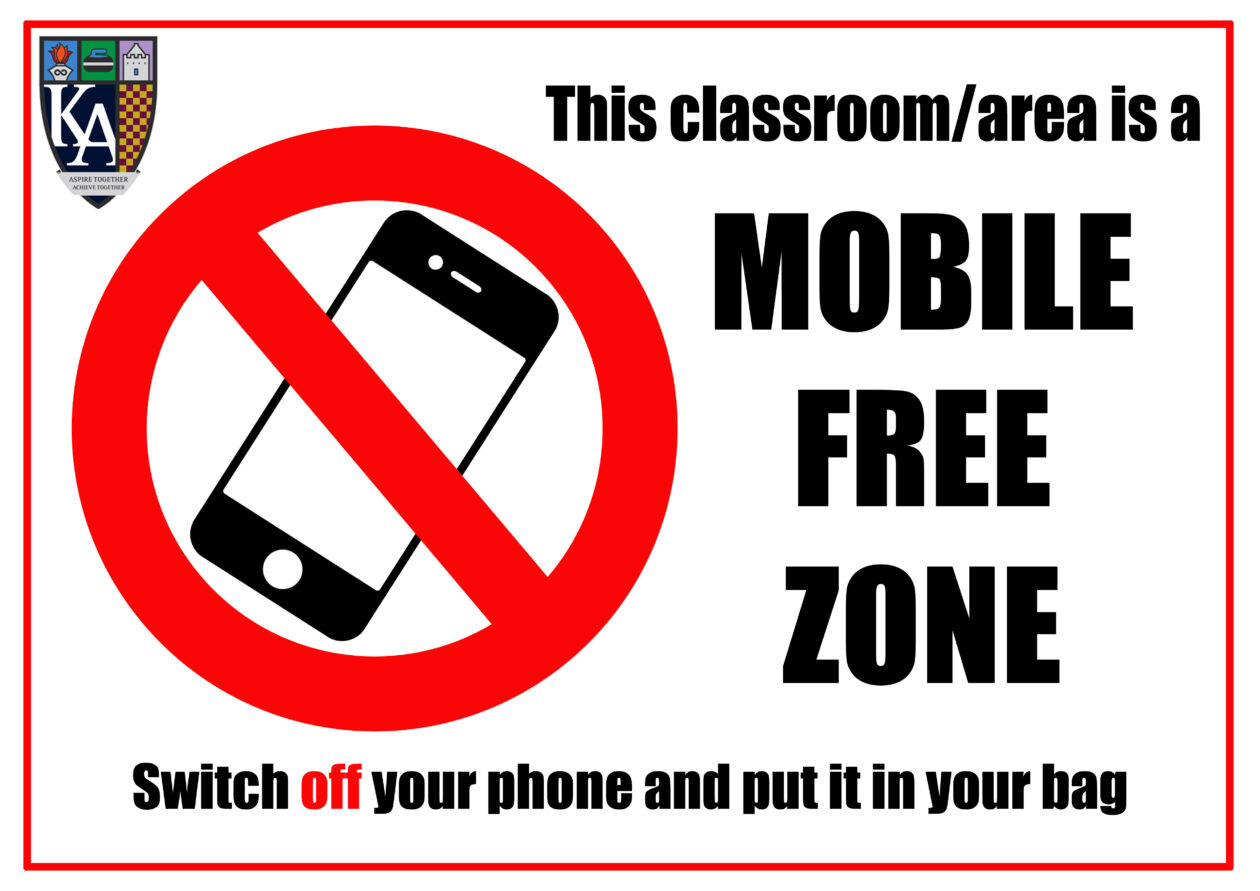
Under our “Bag It or Box It” approach, pupils are expected to keep their phones in their bags unless a member of staff has given permission for them to be used for learning. If a pupil uses their phone without permission, they will be asked to put it away in their bag. Should this continue, the pupil will be asked to place their phone in the classroom phone box for the remainder of the lesson.
This graduated approach allows pupils the opportunity to make positive choices while providing clear and consistent expectations. It reinforces personal responsibility, supports high standards of behaviour and helps to minimise unnecessary distractions for all learners.
Ultimately, our aim is to create a learning environment where technology supports learning when appropriate, while ensuring that pupils remain focused, engaged and ready to achieve their full potential. Below are the posters displayed in class.
TICC
Trauma Informed Contact & Care (TICC) is a police and education early intervention partnership which supports children and young people exposed to domestic abuse. This partnership support our existing GIRFEC (Getting It Right for Every Child) process and ensures that prior to the start of the next school day, a Named Person (in secondary the young person’s Pupil Support Teacher) / Child Protection Coordinator will be informed that young person has been exposed to a domestic incident in the last 24 hours.
The information given to schools allows the provision of immediate early support depending on the wellbeing needs and wishes of the pupil.