Care Experienced children and young people may face a range of challenges that can impact on learning, engagement and wellbeing. These may include:
- Experiences of trauma or loss, including abuse, neglect or challenging home circumstances
- Disrupted education, including placement moves and interrupted learning
- Attachment and relationship difficulties, impacting trust and engagement
- Emotional and mental health needs, including anxiety, low self-esteem or dysregulation
Head Teachers must ensure that these factors are recognised proactively and that school systems are responsive, flexible and inclusive. Trauma and adversity can affect brain development, behaviour, relationships and attainment, and should be understood as underlying need rather than simply behaviour.
Creating a Nurturing, Inclusive School Ethos
Head Teachers are responsible for establishing a whole-school culture that reflects corporate parenting values:
- Nurturing and relationship-based practice across all interactions
- High expectations with appropriate support
- Non-judgemental, compassionate responses to behaviour
- Consistency and predictability to build safety and trust
A nurturing environment, grounded in strong relationships, has been shown to improve wellbeing, confidence and attainment, particularly for learners affected by disadvantage and trauma.
ACE Aware Practice
Head Teachers should ensure staff have an understanding of Adverse Childhood Experiences (ACEs) and their potential long-term impact.
Key expectations:
- Staff understand that ACEs (e.g., abuse, neglect, household adversity) are common and can impact learning and behaviour
- School policies and practice reflect awareness of cumulative adversity
- Responses prioritise support, resilience-building and early intervention
This awareness supports staff to respond appropriately and avoid misinterpreting distress as defiance or disengagement.
Trauma Informed Practice
Head Teachers must lead the implementation of trauma-informed approaches across the school.
This requires:
- A workforce able to recognise the signs and impact of trauma
- Practice that responds in ways that prevent further harm and support recovery
- Adaptations to behaviour policies, curriculum and environment to reflect need
Core principles include:
- Safety, trust and consistency
- Choice, collaboration and empowerment
- Relationship-based practice
All staff should understand that trauma-informed practice is everyone’s business and embedded in daily interactions.
Bereavement
Many care experienced children and young people will have experienced bereavement, loss and separation, which may include:
- Death of a parent, sibling, carer or significant adult
- Loss of relationships through entering or moving within care
- Ongoing or ambiguous loss (e.g. separation from family members)
Bereavement for care experienced learners is often complex and cumulative, and may be intertwined with trauma, attachment disruption and instability. Responses to loss may therefore present as:
- Distressed or dysregulated behaviour
- Withdrawal or disengagement from learning
- Difficulties forming or maintaining relationships
- Re-emergence of trauma responses at key transition points
Head Teachers must ensure that bereavement is understood within the wider context of trauma and care experience, recognising that grief may not be linear and can reoccur over time.
Homelessness
Addressing Stigma and Promoting Awareness
Head Teachers must ensure that stigma associated with care experience is actively challenged. This includes:
- Promoting positive, non-stigmatising language
- Ensuring confidentiality and respectful handling of information
- Providing professional learning for staff on care experience
- Embedding awareness within PSHE/Health and Wellbeing education (age-appropriate)
Schools should foster a culture where care experienced children and young people feel valued, respected and included, in line with their rights and entitlements.
Promoting Inclusion and Peer Support
Head Teachers should ensure structures are in place to support positive peer relationships:
- Opportunities for friendship building and inclusive participation
- Peer mentoring, buddy systems or nurture groups where appropriate
- Reducing barriers to participation in wider achievement, clubs and school life
Strong peer relationships are central to wellbeing and belonging, particularly for care experienced learners.
The Promise and the Role of Schools
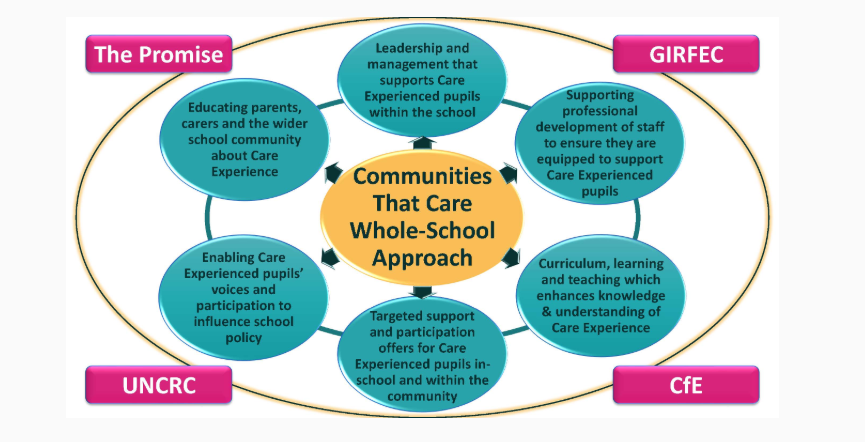
Head Teachers must ensure that school practice aligns with The Promise, Scotland’s national commitment that all children grow up loved, safe and respected.
In practice, this means:
- Placing relationships at the heart of school culture
- Listening to and acting on the voice of the child
- Ensuring consistency, stability and belonging in school
- Embedding trauma-informed and nurturing approaches as core practice
Keeping The Promise is not an additional initiative, but a foundation for inclusive, rights-based education, aligned with GIRFEC and wellbeing approaches.
Impact on Children and Young People
It is important we understand the lived experience of our children, young people and their families and the effects and stress this can have on their ability to attend, engage with their learning and subsequently attain and achieve in school. Appendix 6 provides examples of possible stressors that may impact of children and young peoples educational experience.