Personal Reflections of COP26 as a DLO – Gary Johnstone

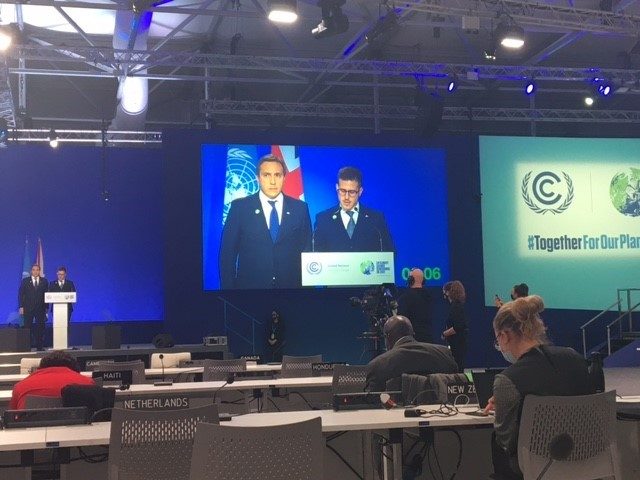
Captains Regent delivering San Marino’s National Statement

Many months ago I expressed an interest in being involved in supporting COP26. Partly driven by my background as a teacher of geography and modern studies, I have maintained an interest in the environment and geopolitics. But my motivation was of course more fundamental; there are few of us that can’t have been moved and therefore called to action recently as we have witnessed the awful impact of global warming on people and our planet. Added to that, I hoped that COP26 would be a real success and game changer. As a proud Glaswegian, Scot and Brit, I hoped that we would be remembered positively by the thousands who attended. I was very fortunate to be offered the role of Delegation Liaison Officer (DLO) working with the Foreign, Commonwealth and Development Office (FCDO).

Each DLO was there to prepare for the arrival of world leaders and their delegations. I was assigned the San Marino delegation and it was a pleasure to work with the country’s leaders and ministers. San Marino, for those who might not know, is a small enclave within Italy. It is the oldest republic in the world, dating back to around 300 AD. My life as a DLO was made more interesting as this little nation is unique – it is the only country in the world with two Heads of State (Captains Regent) – a fact that very few people are aware of – and this meant that in any meetings or photo opportunities I had to ensure that this was realised and respected. The Captains Regent (sounds much better in the Italian – Capitani Reggenti) could never be separated and never one treated more important than the other. Whilst San Marino is the oldest country in the world, it has the youngest Head of State (joint), Captain Regent Giacomo Simoncini who at a mere 27 makes other world leaders like Emmanuel Macron and Justin Trudeau look like old men! Captain Regent Francesco Mussoni makes up the other half of the joint Heads of State for the Republic.

Captains Regent Preparing for Glasgow Declaration Family Photo

For a number of weeks prior to the World Leaders’ Summit I was involved in ensuring the logistics of travel, border control, airport greeting, Covid testing, accommodation and security was tailored appropriately for the delegation. The two days of the summit were frenetic. I had the privilege of access to all areas including the VVIP lounge where World Leaders spent their down time. As a DLO I had to facilitate bi-lateral meetings and brush-byes with presidents, prime ministers and ministers all within a time-restricted yet fluid situation. This also meant guiding leaders to the correct location at precise times throughout the two days. A huge moment was the delivery of the National Statement when each country was given three minutes to tell the world about their commitment to change. As they say in the musical Hamilton, I can honestly now say “I was in the room where it happened.”

San Marino was one of the 40 original countries to sign up to the Glasgow Leaders’ declaration on forest and land use. This demonstrates a commitment to halt and reverse deforestation by 2030. It is so pleasing to think our city’s name will be associated with this huge initiative.

The role of DLO was challenging in a number of ways for us. Can you imagine the power of persuasion required to convince over 100 World Leaders that it was a good idea to go from the SEC (blue zone) to Kelvingrove Art Gallery for the evening reception by way of an electric bus? Or how to tactfully choreograph the timing and order of such an unusual experience – each of us with the tickets to allow our leaders on the bus!

Captain Regent Francesco Mussoni , President Joe Biden, Captain Regent Giacomo Simoncini and Minister Luca Bercalli relaxing at Kelvinhall

It was for me a real honour to be involved in such an historic event. Who would have thought that an opportunity would present itself allowing one to literally rub shoulders with cardinals, presidents and prime ministers. Fighting with the world’s press was a regular white-knuckle ride and I am afraid at one point I came off the worse for wear under the scrum of photographers chasing down President Macron. The job was physically exhausting (my commute started at 5.47 am in Bishopton station each day and lasted well into the night), exhilarating and rewarding. To my colleagues I would reflect that many of the skills we develop as HMI stood me in good stead for this role. Resilience, diplomacy, managing expectations, receiving huge amounts of information and presenting it accurately and simply, keeping calm and responding positively – they are all in our tool bag. A younger me might be tempted to pursue a career with the FCDO!

In finishing, Her Majesty The Queen urged world leaders to earn a place in history by answering the call of future generations. I hope COP26 galvanises our leaders, yes – but more than just our leaders – businesses and civic society too including our own organisation to re-double our efforts to make COP26 the defining moment it needs to be.
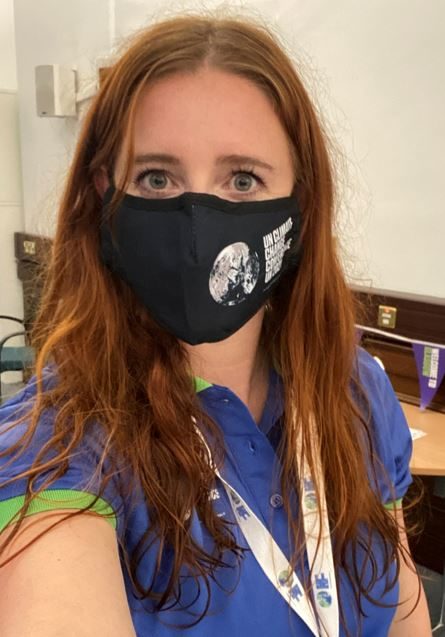
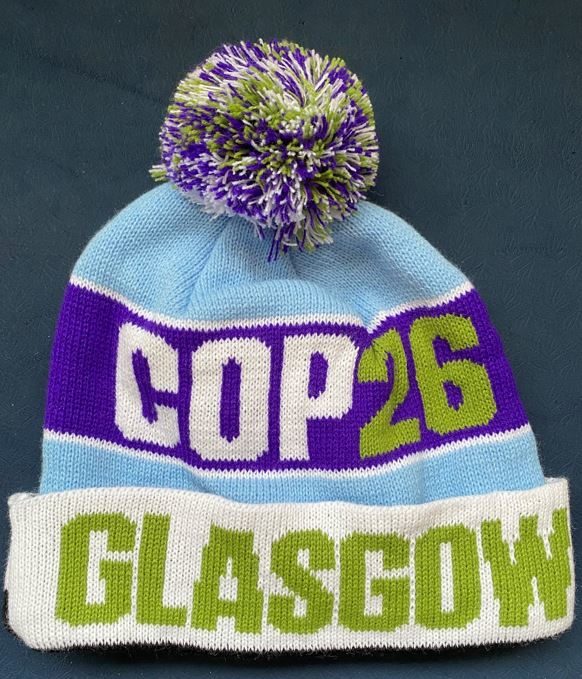


Volunteering at COP26 by Fiona Shaw (Development Officer, Improving Gender Balance and Equalities)

It was a dark, dreary lockdown day in January 2021 when I first saw the opportunity to be part of one of the most significant and exciting events the City of Glasgow has seen – COP 26 Climate Summit.

Ten months on and I have completed two of my volunteering shifts at COP26. After originally applying to be part of the Active Transport team I was disappointed to find out there wasn’t a place available. However all was not lost as, a few weeks after finding this out, I was invited to be part of the Media team….an ambiguous yet very intriguing position! Turns out it would involve hosting the conference’s Destination Media Hub in the centre of the city and meeting and greeting members of the press.

The Hub itself is a celebration of all the sustainable practice Glasgow has to offer in terms of culture, business and social initiatives. Dotted around the room were plenty of products and initiatives that celebrate Scottish innovation and its approach to a circular economy: Jaw Brew beers (who used old bakers rolls to make their pioneering beer: Hardtack and Roller), a plant pot company Potr who take fishing rope waste and turn it into self-watering plant pots, ACS clothing who are the largest clothing rental and renewal service provider in Europe and Kabloom who produce biodegradable ‘guerilla gardening grenades’ plus many more! All of this accompanied by the dulcet tones of Glasgow musicians playing in the background on the ‘Glasgow makes music’ playlist.


On my shifts so far I have welcomed members of the press, offered them a comfy seat, a place to take calls and a hot drink and escorted them to meet dignitaries from the conference. I have also met like-minded volunteers and we have worked together to highlight good news stories from across the city to be passed on to members of the press. I was really keen to celebrate the work of schools and communities in these stories so I made sure lots of these were sent their way!

Volunteering is always enjoyable and a lovely way to gain new skills and give back to the community, but volunteering at COP26 is certainly special, memorable, and I feel grateful to have been part of it.  But like many of us, I am hoping the world leaders do reach an historic agreement that actually tackles the climate emergency.

As a final thought, I wanted to share a link to a video from the LfS MOOC course that really struck a chord with me this week and really made me think: The High Price of Materialism https://youtu.be/oGab38pKscw.


Educate on Climate day, New York Times Climate Hub, 5th November

Mark Irwin reflects on his visit to Educate on Climate day at COP26.

Every Saturday growing up, I would visit my grandparents in their flat in Govan.  I would peer out of their kitchen window, looking across the graving docks and the Clyde to the gothic tower of Glasgow University high on the hill, and ask questions about all that I could see.  Today I look back towards their flat from the train window as I head to the New York Times Climate Hub.  The tented expanse of the COP 26 Blue Zone covers the riverbank from the SEC to the Riverside Museum.  The graving docks are lit up with letters 7m high and 70m long. The text “No New Worlds” faces the leaders and delegates across the river, a reminder to all of the climate  emergency we face.


I pass through the layers of security at the Climate Hub and stand in the foyer to get my bearings.  Instantly I bump into people I’ve been working with these last few months online and it really is a fantastic feeling to finally meet in person.  I listen to a panel discussion from the World Health Organisation on the impact of climate change on health and mortality around the world.  It is a stark message, and one that needs to be heard more.  I bump into more teachers and we head for a table to talk about what we have heard, and what we can do to move Learning for Sustainability forward post COP 26.  Words that feature often are empathy, humanity, empowerment alongside the need to make deeper connections across Scotland and the world.  I listen and reflect on how important it is to listen to those on the frontline, and hope that the delegates in the Blue Zone are doing the same.


It’s a Friday.  It’s the world’s biggest summit on climate change. So of course there is a Fridays for the Future climate march, the global movement started by Greta Thunberg.  It has grown from Greta sitting solo in strike outside the Swedish parliament in 2018 to over 14 million strikers worldwide in 7,500 cities. The Glasgow march leaves from Kelvingrove Park, only 10 minutes from the Hub.  I head over to meet some young people and to chat to them and their parents about the March.  About 30,000 protesters head off towards George Square to hear young climate activists from around the world.  I head back to the Hub feeling exhilarated by these conversations.


I’m back in time to grab a coffee and head in to the Forum for a session on Future Proofing pupils for the Changing world of work.  It’s a lively and fascinating panel, including Chris van de Kuyl of Minecraft fame, and AI researcher Professor Rose Luckin of UCL.  However it is a comment from Professor Dave Reay of Edinburgh University that really strikes a chord with me.  It’s not about making our young people “Future Ready”, its actually supporting them to be “Now Ready”.


Professor Reay’s comment solidified a feeling I’ve had since COP 26 began.  We use the word future all the time when we talk about climate change and its impacts. But does the use of this word give decision makers a get-out to put off the actions urgently needed now?  Hearing from people from across the globe, and in particular young people who are already living with the effects of climate change, it’s clear that delivery of actions needs to happen now.  If it is left to the future, then it is too late.


COP 26 blog – A step out into a new world

STEM Education Officer Mairi Thomson reflects on her visit to COP 26 and its legacy.

Leaving for the launch of the New York Times Climate Hub I was struck by the poignancy of the moment: this would be the first time I had been on a train since the pandemic began. Like many, my ‘working from home’ life had quickly adjusted to the daily commute to the back room. It had been easy, all too easy, to avoid the city these last 18 months, managing to strike a balance of working, dog walking and family but the forgotten jacket on the train quickly transported me to the present reminding me this was different!


The city was strangely quiet. I had expected to see scenes of activism just like the ones that had filled my television in the days before. I don’t think people had wearied – just that the carefully curated road closures had led me a different path. The hum of helicopters, the chatter of languages, the green lanyards and the camera bags told me I had reached the Climate Hub.

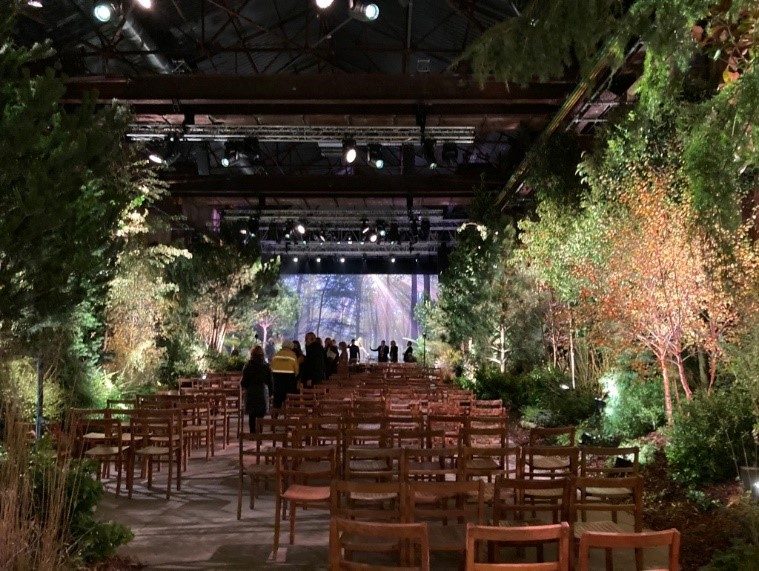
Through security and COVID checks, inside was an oasis of calm. A reverence for nature greeted me through the living art installation by ES Devlin.  197 trees and plants temporarily installed to represent the 197 countries who ratified the United Nations Framework on Climate Change.  The art cleverly nudged me to breathe in the importance of this COP and to pause and reflect on not only the enormity of the crisis facing humanity but also the urgency.

Each of the evening’s contributors offered up something unique from their perspective.  The New York Times editor in chief spoke of journalists seeking truth to tell the most urgent climate change stories of our time, how they use drones to go places people can’t and how using local photographers shows both intimacy and fear. Describing Greenland’s ice sheet as Swiss cheese reminded me (in case I had forgotten) that climate change is devastatingly real.  Nicola Sturgeon reflected on the significance of COP being hosted in Glasgow, a city at the forefront of the industrial age, how the science shows us we are running out of time, how we need to reduce emissions and reach net zero but without leaving people and communities behind. Beattie Wolfe performed her song from Green to Red as we were treated to a visual representation of 800000 years of carbon emission using data from NASA.

By all measures the night was a success but what measures are our leaders, our activists or indeed am I using to determine whether this COP has been successful?  Big announcements are one thing but important action happens at a local level.  Dave Reay, expert in Carbon Management. says that the most powerful thing anyone can do in terms of taking climate action is to talk about it. Talk with family, talk with community, talk with peers. Yes! This is something I can do (and those of you who know me know I love to talk!).  So with this in mind I am stepping out into the soon to be new and post-COP world and I am filled with hope and possibility about what we can achieve together.

COP26 – Use Data Science to reduce your school’s carbon footprint

Just launched  – a new live lesson for learners P7-S4.

The event ‘Use Data Science to reduce your school’s carbon footprint’, which is free, will be held on 9th Nov (2pm) and aligns well with COP26. Each live lesson focuses on a data science topic and brings together a YouTube livestream event with a series of guided web-based activities.  The first live lesson, ‘Defend the Rhino’, focused on machine learning (training cameras to spot poachers and save rhinos!).  The second ‘Data Selfie’ live lesson supports learners to explore data visualisation.

You can access both lessons from the events page in the Data Education in Schools website: Events for data education – Data Education in Schools (dataschools.education)

Details of ‘Use Data Science to reduce your school’s carbon footprint’ can be found here: Data Skills Live: Use Data Science to reduce your school’s carbon footprint Tickets, Tue 9 Nov 2021 at 14:00 | Eventbrite

The live lesson format has been developed in partnership with Skills Development Scotland and Digital Skills Education.  It’s proven to be very popular with 9643 learners (to date) having engaged in the first two activities. The 10,000 learner isn’t far off now!

The Environment : Questions for Learning


Education Scotland has just published a new book entitled

The Environment: Questions for Learning

The book has been 10 years in the making and has been very kindly shared with Education Scotland by Scottish-born author, Karen Currie, who has been living in Brazil for 40 years. The book contains lots of questions and ideas to help make Interdisciplinary Learning connections in learning through Learning for Sustainability.

Karen approached Education Scotland because she has been keeping a watchful eye on the Curriculum for Excellence’s journey from afar and has a longstanding interest in Learning for Sustainability and Scotland’s curriculum.

Please remember to encourage anyone who reads the book to share one idea back…

Help us celebrate Scotland’s contribution to Learning for Sustainability.


Here is a fantastic opportunity to showcase and celebrate Scotland’s contribution to Learning for Sustainability with an international audience.

Learning for Sustainability Scotland (LfSS) is Scotland’s Regional Centre of Expertise (RCE) in ESD (Education for Sustainable Development). This is a centre for everyone and anyone involved in ESD-related activity across all educational sectors in Scotland and you can read more about them here.

They are also part of a global network of over 180 similar Centres, recognised by the UN University and in November 2021, they will be hosting the 12th Global RCE Conference. The Conference will be held online from the 16-18th November and all 180 Centres and their networks have been invited to attend.

Be part of the celebrations!

LfSS are delighted that such a prestigious event is coming to Scotland. This is a wonderful opportunity to showcase and celebrate some of the fantastic learning that is happening across Scotland to make sustainability part of the everyday for learners of all ages and backgrounds. LfSS would be very grateful, therefore, if you would consider sharing your LfS story as part of this. You have until 1st November to send your contribution to them.

There are two ways you can share your activity:

  1. As a ‘Postcard’:
  • This would consist of a short video clip (5 minutes or less), outlining your activity. Ideally, it would include footage of your work and the people involved in it, and either a voiceover and/or text outlining your activity, its aims and its outcomes/impact. Accompanying music would be especially welcome! LfSS will be selecting two of the postcards submitted to them for showcasing during the Conference itself and all postcards will be uploaded to their online ‘Sharing Space’ for delegates to view at their leisure.
  1. As a contribution for their online ‘Sharing Space’:
  • LfSS will be building an online platform for sharing good practice from across Scotland and from their RCE colleagues worldwide. You can send them content in any format you choose: e.g. video, PDF, graphic/photograph, or as a link to content on your own website.

Please contact the organisers at enquiries@lfsscotland.org if you’d like any additional information. Closing date 1st November.

Scottish Learning Festival – Suggested LfS Pathway

As SLF 2021 fast approaches, please find below one suggested LfS Pathway through the SLF programme this year.

Tuesday 21 September SLF 2021 Programme Update 5

SESSION 1 10:00 – 10:45

Learning for sustainability

Using the local environment and outdoor learning effectively to develop and promote learning for sustainability in the primary school.

Primary practitioners

SESSION 2 12:30 – 13:15

Approaching COP 26: Learning for Sustainability through Social Studies and RME.

Join us to consider opportunities for exploring Learning for Sustainability (LfS) in the context of Social Studies and RME. Link LfS, Social Studies, RME and the wider curriculum to get your learners ready for COP 26.

Local authority and Education Scotland staff


Wednesday 22 September SLF 2021 Programme Update 5

SESSION 4 14:00 – 14:45

Yearning for outdoor learning – building back better post-lockdown

A selection of practice from across Scotland demonstrating outdoor learning approaches developed through lockdown. How do we build on these opportunities and take outdoor learning to new heights? Gwyneth Quinn, East Ayrshire; Natalie White, Bualnaluib and Poolewe Cluster, Highland Council, Kate Samuel, Hyndland Secondary School

SESSION 5 15:45 – 16:30

#GettingReadyforCOP26

A session exploring key resources, activities and ideas to engage learners in climate education and Learning for Sustainability as Scotland prepares to host the UN COP26 Climate Summit in November. Debbie Matthewson, Stow Primary, Scottish Borders with Education Scotland staff


Thursday 23 September  SLF 2021 Programme Update 5

SESSION 1 08:00 – 08:45

Scottish Virtual Nature School

Led by Dr Clare Warden, this Scottish Government funded support for outdoor learning benefits children and families across Scotland. Hear about the wide ranging impact from ELC practitioners who have participated.

Dr Clare Warden and practitioners

SScotCHEM CLIMATE CHANGE CHALLENGE: Scientists, Schools & Sustainability

Chemistry Week (1-12 November) is an annual celebration of the chemical sciences. This year, to coincide with the 26th UN Climate Change Conference of the Parties (COP26) in Glasgow on 1-12 November 2021, Chemistry Week will last for the full 12 days of the Conference.

The ScotCHEM CLIMATE CHANGE CHALLENGE: Scientists, Schools & Sustainability will align with the activities of COP26 and Chemistry Week 2021 – with a theme of sustainability.

ScotCHEM represents chemistry research in Scotland – across universities
and connecting with industry, government and, most importantly, education.

ScotCHEM invite entries for a challenge to prepare public engagement material aimed at primary school pupils in Scotland.  Centred around the issue of sustainability and climate change, this material should promote the role of chemistry in driving solutions to climate change as well as promote chemistry as a science and as a career for primary school aged children.

The outcome of the challenge is to provide a sound scientific basis to better understand climate change and advances towards sustainability, for primary school pupils.

Creating a link to COP26 will provide opportunities for engagement with this major event being hosted in Scotland.

The project will also provide on-going curriculum-linked resources that can be used well beyond the duration of the challenge itself, thereby creating a longer-lasting legacy and extending the reach of the activity.

Through the national remit of ScotCHEM and by working closely with Education Scotland, we hope to increase the number of chemists actively participating in meaningful school engagement across Scotland.

The challenge is open to researchers within ScotCHEM member departments, at any career level (PhD to Professor).

The following topics/questions have been identified as being of particular interest and relevance to primary school pupils regarding climate change.

• What is climate change – busting the myths?
• What am I, as a researcher, doing to tackle climate change?
• What can you, as a young person, do to help tackle climate change?

Submissions should be either a short (3-5 minute) video or short PowerPoint presentation that answers one or more of these questions, keeping the overall theme of sustainability in mind.

Submissions should also align with the Scottish curriculum.

Winning entries will be showcased throughout Scotland, via Education Scotland and ScotCHEM channels, to primary schools and to the public during Chemistry Week 2021.

The winners will also receive a £1000 prize (one per theme) which can be used for the following:
• Further public engagement activities related to chemistry and climate change
• Developing new research under the theme of sustainability
• Improving the sustainability of their research

In addition, any engagement resources judged to be excellent by our panel will be brought together to create a resource for Scottish schools to access when talking about sustainability and climate change. These resources will be made available through Education Scotland’s online platform as well as ScotCHEM’s YouTube channel.

The challenge is open to all postgraduate researchers and staff within ScotCHEM member departments, at any career stage.

Deadline for Challenge submissions 5pm Friday 15th October 2021.
Review of challenge entries by schools 21st – 28th October
Challenge winners announced 29th October
Showcasing of winners during Chemistry
Week 2021 1st – 12th November

Entry forms should be submitted by email to scotchem@st-andrews.ac.uk
Entries must be received by 1700 Friday 15th October.
Enquiries to Dr Alan Wiles (Director of Operations ScotCHEM)
scotchem@st-andrews.ac.uk

Report a Glow concern
Cookie policy  Privacy policy