STEM Blog

August 29, 2012
by User deactivated
0 comments

STEM Central Bioengineering and the London 2012 Paralympic Games

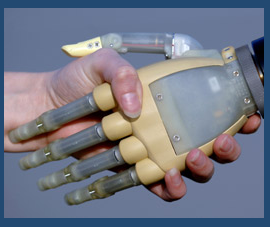
The London 2012 Paralympic Games starts today, an ideal time to tap into our STEM Central Bioengineering context and explore Scotland’s role in repairing, assisting and augmenting impaired body functions.  

An article from the BBC today “Paralympics: Should technology push athletes beyond their limits” might provide a useful start point for discussion.


http://www.educationscotland.gov.uk/stemcentral/contexts/bioengineering/index.asp

August 23, 2012
by User deactivated
0 comments

Shetland’s Tidal Turbine

The BBC reports today on a ‘world first’ as plans to build a community owned tidal turbine in Shetland are announced. “Renewables” as a context offers opportunities to integrate the sciences, social subjects , mathematics and technologies with responsibilities of all. Our STEM Central Renewables context includes videos and learning journeys approached through the format of Engage, Explore, Explain, Elaborate and Evaluate. Why not take a look at STEM Central today?

August 22, 2012
by User deactivated
0 comments

Twig Science Films: Teacher Led Career-long Learning Opportunity

A date for your diary, join us on Glow TV on Monday 3rd September 16:00. Twig World (the creators of Glow Science) has upgraded its content on Glow. This is an opportunity to chat directly with the Twig team about how Glow Science can support the curriculum, and share practice with other practitioners.

For full details of this and other events log in to Glow and view the current schedule:

https://portal.glowscotland.org.uk/establishments/nationalsite/GlowTV/tvpages/Schedule.aspx

(Glow log-in and password required).

August 20, 2012
by User deactivated
0 comments

If you could be an engineer in Scotland…what would you do?

Engineers touch every aspect of our lives but frequently we do not recognise who they are or what they do.

To inspire young people to become engineers we must first help them to understand what it is that engineers do, what inspires them and what it takes to become one. Engineering as a rich, stimulating and challenging context for learning in sciences, technologies and maths is the basis of Education Scotland’s STEM Central resource.

Today saw the launch of a challenge for learners in primary schools in Scotland. Scottish Engineering and The Leaders Award for STEM are challenging learners to become Leaders for STEM in their schools by considering what they would do if they were an engineer.

Engineers will visit schools and answer questions from learners, hoping to inspire a generation with their experiences.

Learners are challenged to draw or write ‘What I would do if I was an engineer in Scotland.’ Competition closing date is 30th November 2012 with winners announced on the 7th December 2012 and all shortlisted entries displayed in The Barony Hall at the University of Strathclyde Glasgow on 15th and 16th December.

For more information how to enter visit: www.leadersaward.com.

Leaders Award co-ordinator: Susan Loxley susan.loxley@leadersaward.com

August 15, 2012
by User deactivated
0 comments

STEM Central Bioengineering and a torch bearer’s story

An Olympics related story which could provide the stimulus for using the STEM Central Bioengineering context.  Kieran Maxwell, a 13 year old who had his leg amputated as a result of cancer, is to get a new prosthetic leg, reported in this BBC News story “Kieran Maxwell’s new limb”. Learners could consider in what ways prosthetic limbs differ, and how the design of one may make it more appropriate than another for Kieran.

August 14, 2012
by User deactivated
0 comments

Advice and Guidance to support National Qualifications in Sciences

Yesterday, we published new advice and guidance associated with National 5 Biology associated with Inheritance.

There are a number of areas in this advice and guidance which would lend themselves to discussion in the classroom. What does this look like? What is the difference between learners talking, and discussing? Arguing and debating? What tools and approaches can be used to ensure learners are developing their skills in discussion, argumentation, and debate?

The teacher’s handbook from the English-Speaking Union (ESU) Scotland may be of use in planning for learning and teaching for the senior phase. 2012 is the year of the ESU’s Speak up Scotland! Science Debating project. Within the easily digestible, practical teacher’s handbook are a range of techniques and approaches which can be used to structure debate within the science classroom, and include all learners within the class. It explains how to plan and structure a formal debate, if that is what you are looking for, including how to structure a speech, a format for judging the content and skills of the participants – useful for teacher observation or peer evaluation. Other approaches described include balloon and role play debates. Exemplification is given for role playdebates in bio-prospecting and badger culling.

The booklet also contains starters for debates such as:

“this house would ban research on embryonic stem cells” – ties in with the National 4/5 qualifications in Biology and our published advice and guidance on Health and Disease.

Each section includes “fast facts”, and suggested questions to ask – does an embryo have human rights? how do we know how old the universe is? how do we control nanoparticles in our environment; or artificial organisms we create?

All of this is also available on the project website where you can find out how schools are using the debates and the feedback from learners.

If your learners need support in building confidence to speak in front of others, why not look back to our Debating in Schools resources published in 2007 which include Building Speaking Confidence: Guidance for first-time speakers.

August 13, 2012
by User deactivated
0 comments

SLF 2012: Forensic Rookies, Transition and the AstraZeneca Science Teaching Trust: Scottish Islands and Mainland ICT and Science project

We’ve been keeping you up to date with this inquiry based science project since last December. Don’t forget that you can find out more by joining us at session N1A at SLF 2012, presented by Professor Susan Rodrigues and Neil Taylor. A vodcast overview of the project can be found on the scienceedresearch channel on YouTube.

The workshop will share the findings of a recent project involving 3 pairs of primary & secondary schools from several different local authorities, and the sustained impact in those local authorities where this project is being rolled out further. Learners and practitioners views and feedback will be shared. This project was supported by funding from AstraZeneca Science Teaching Trust and led by Professor Susan Rodrigues and Neil Taylor as part of the suite of ‘Partnerships in Primary Science’ (PIPS) CPD projects.

The workshop will include an opportunity for delegates to have hands on experience of the six investigative tasks, using the kit provided to schools, funded by AstraZeneca Science Teaching Trust. There have been a series of videos made using learners and practitioners which will be used within the session, and these will are also available via the ScienceEdResearch channel YouTube.

The individual vodcasts for each school:

Brae HighBlairgowrieCoupar AngusInveralmond Community HighUrafirthWestfield

Visitor registration for SLF 2012 is now open!

August 12, 2012
by User deactivated
0 comments

Using the STEM Central Sound Context…how fast is sound?

The forthcoming STEM Central context on Sound for early years to fourth level offers opportunities to explore the speed of sound through different substances. But what do these speeds mean to learners and how do they compare to speeds with which they might be more familiar? Capitalising on the 2012 Olympics which draws to a close this evening, why not relate it to the speed of athletes they may have seen on TV this summer? This interactive from the New York Times “One Race, Every Medallist Ever” may be of use in making this connection.

August 8, 2012
by User deactivated
Comments Off on Electric Transport and TEDEd’s new YouTube channel

Electric Transport and TEDEd’s new YouTube channel

Our STEM Central Electric Transport context is currently aimed at third and fourth level. In the next school year, we will be publishing an extension to the context for second level. Offering opportunities to embed sustainable development and give insight into STEM in everyday life, the second level extension will highlight green buses on Scottish roads. Last year 15 buses engineered at Alexander Dennis Ltd in Falkirk took to the streets of Edinburgh, with partial funding from the Scottish Government’s Green Bus Fund.

The video Electric Vocabulary from TEDEd’s YouTube channel tells the story of how “charge” and “battery” became part of our everyday language of “electricity”. Useful for your own background and understanding, or for learners at second level.

August 3, 2012
by User deactivated
0 comments

Scotland’s First Marine Energy Park

If you’re planning learning and teaching associated with the STEM Central Renewables context, some recent news to incorporate. Scotland’s first marine energy park opened on 30th July 2012, aiming to help progress marine power development in Scotland. The park is designed to link researchers and industry working in marine energy. Find out more in this BBC news article.

Report a Glow concern
Cookie policy  Privacy policy