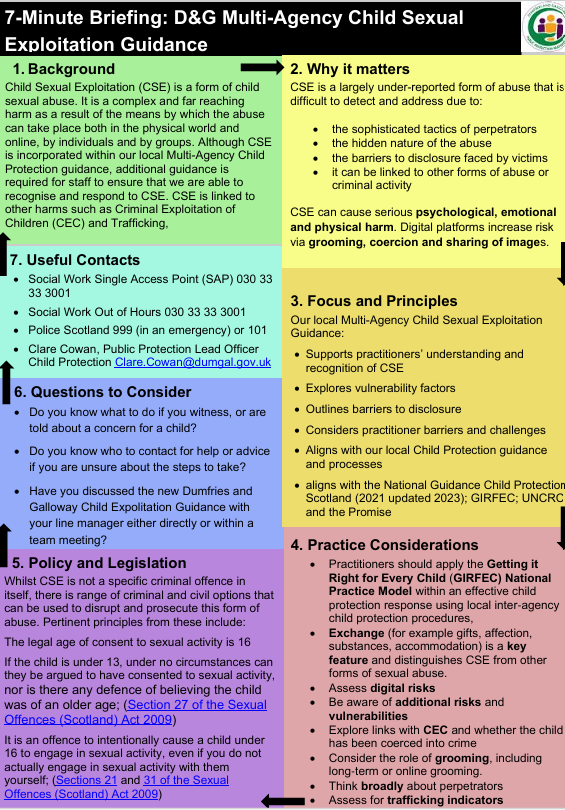
Child Sexual Exploitation (CSE) is a form of child abuse in which a young person is manipulated, coerced, or forced into sexual activity in exchange for something they need or want, such as money, attention, affection, status, substances, or perceived protection. It can also involve perpetrators gaining power or control over a child through grooming, intimidation, or violence. CSE can happen in person or online, and young people may not always recognise themselves as victims.
Recognising the Signs
CSE can be difficult to identify, as it often involves subtle grooming and complex relationships.
Education staff should remain alert to patterns and changes in behaviour, including:
- Sudden changes in mood, attendance, or engagement with learning
- Unexplained gifts, money, or access to phones/devices
- Secrecy around online activity or new relationships
- Going missing from home or school
- Signs of coercion, control, or fear linked to specific individuals
- Changes in appearance, behaviour, or peer groups
No single indicator confirms exploitation, but a combination of concerns should always prompt further attention.
Responding to Concerns
If you have a concern about a child or young person:
- Act immediately
- Record observations factually and clearly
- Report concerns to your school’s Child Protection Coordinator or safeguarding lead without delay
- Follow Dumfries and Galloways child protection procedures and escalation pathways
- Avoid asking leading questions or conducting your own investigation
- Reassure the young person and take their concerns seriously
CSE requires a coordinated, multi-agency response. Your role is to notice, respond, and pass on concerns to ensure children receive the protection and support they need.
All education staff play a vital role in safeguarding. Maintaining professional curiosity, building trusted relationships, and understanding the signs of exploitation can make a critical difference. Early identification and timely action are key to protecting children and young people from harm.