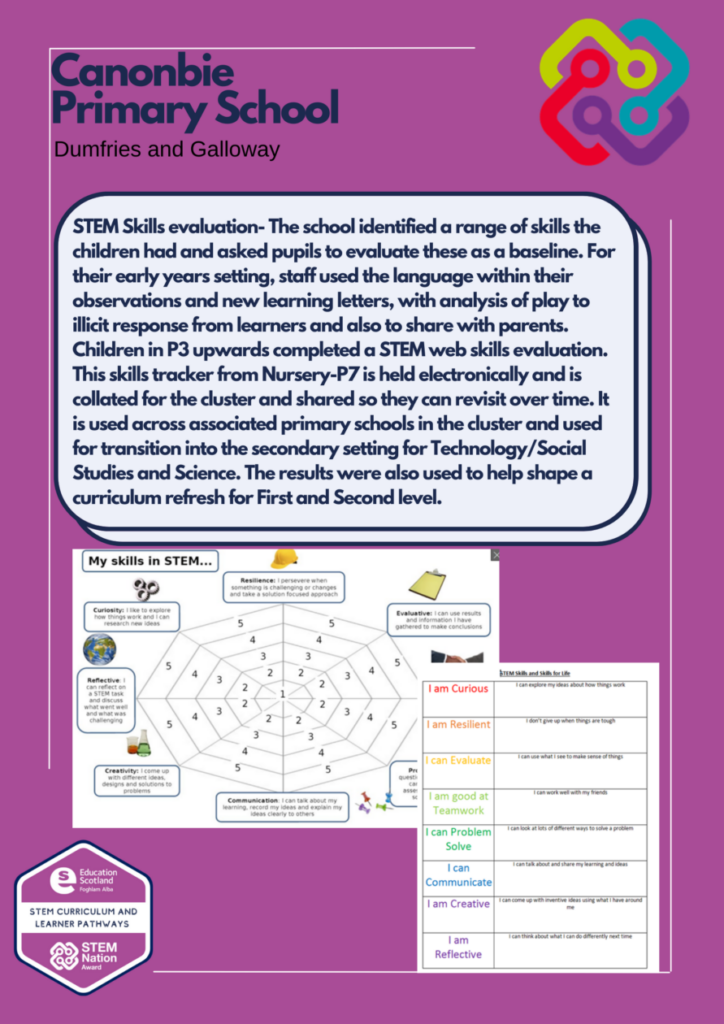
The STEM curriculum and learner pathways element recognises the work of settings in developing an inspiring STEM curriculum. Settings applying for this element will have considered the needs of all learners when designing their STEM learner pathways. The STEM curriculum will be delivered through the
four contexts of learning: curriculum areas, interdisciplinary learning, personal achievement and the wider life of the school or setting.
What does this look like in an ELC and school setting?
- STEM is helping us deliver literacy, numeracy and digital learning across the four contexts of learning: curriculum areas, interdisciplinary learning, personal achievement and the wider life of the school/setting. Our approach strongly supports Learning for Sustainability and the United Nations Sustainable Development Goals including learning about the climate emergency and threats to biodiversity, and reflects the articles of the UNCRC.
- We are using creative approaches in STEM to promote curiosity, open-mindedness, imagination, problem solving and diversity.
- Collaboration with learning community colleagues is helping us to improve continuity and progression in STEM learning.
- We are helping learners develop a belief in their own abilities. The support we provide to learners and their families helps learners make informed choices about STEM learner pathways, not limited by stereotypes.
- We encourage all learners to develop a wide range of skills and take account of labour market needs when planning the curriculum to prepare learners for a variety of STEM careers, including green jobs.
What does this look like in a CLD setting?
- STEM is helping us to deliver literacy, numeracy and digital learning through engaging contexts. STEM learning strongly supports Learning for Sustainability, the United Nations Sustainable Development Goals including learning about the climate emergency and threats to biodiversity.
- We are using creative approaches in STEM to promote curiosity, open-mindedness, imagination, problem-solving and diversity.
- Collaboration with learning community colleagues is helping us to improve continuity and progression in STEM learning.
- We are helping learners develop a belief in their own abilities. The support we provide to learners helps them make informed choices about STEM learning and progression routes.
- We encourage all learners to develop a wide range of skills and take account of labour market needs when planning the curriculum to prepare learners for a variety of STEM careers, including green jobs.
- All learners across our provider are given opportunities for personal achievement in STEM learning.
Hints and tips


ELC practitioners may wish to explore this guide exploring how the STEM Nation Award aligns with Froebelian principles.
Interesting practice examples