This element celebrates the work settings are undertaking to address the issues of equity and equality in STEM. The links on this page will direct you to a range of resources and professional learning opportunities that will help to support developments related to this element.
What does this look like in ELC settings and schools?
- We are taking steps to improve gender balance, equality of opportunity, equity, diversity and inclusion through STEM.
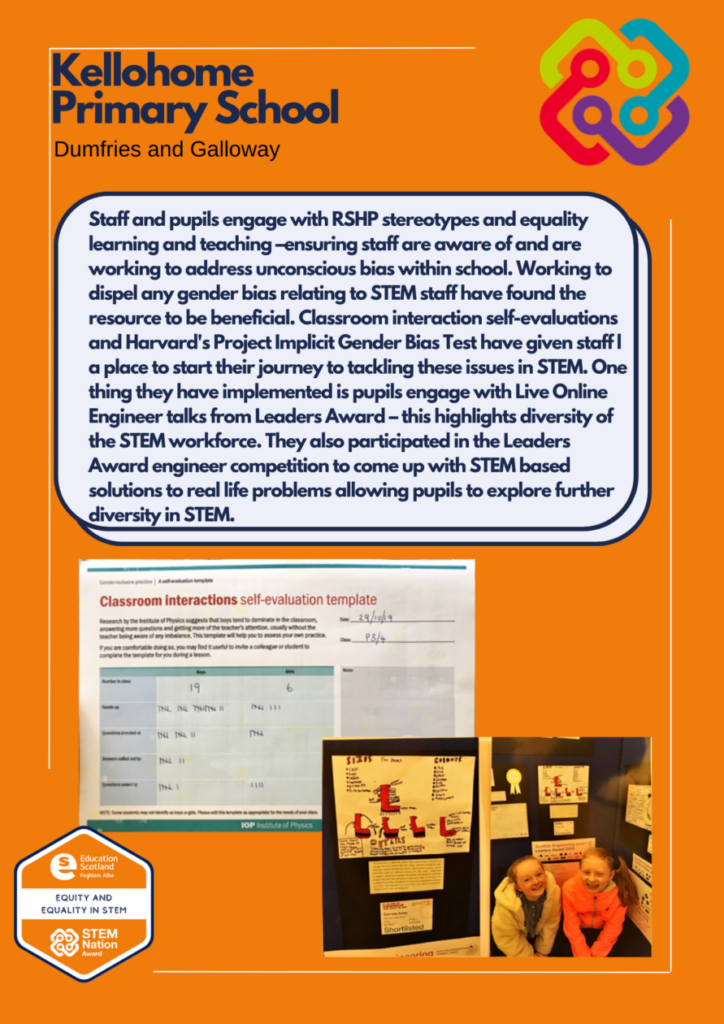
- Sustained action challenges gender stereotypes and addresses practitioners’ own unconscious bias.
- All learners across our setting are given opportunities for personal achievement in STEM.
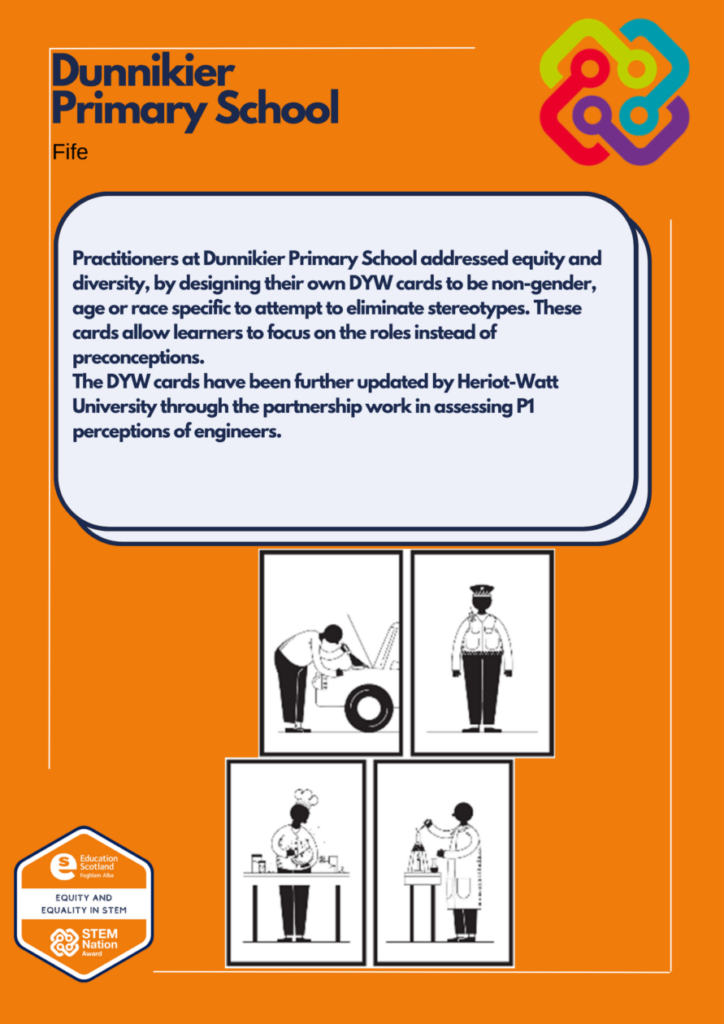
- Preconceptions about career and learning pathways are being challenged. We actively seek opportunities to celebrate diversity in the STEM workforce with learners, parents and families.
- Our tracking and monitoring process helps us plan interventions to ensure progress and effective skills development, particularly for learners who face additional barriers.
- STEM learning has a positive impact on attainment and achievement in literacy, numeracy, health and wellbeing and across STEM curricular areas.
What does this look like in CLD?
- We are taking steps to improve gender balance, equality of opportunity, equity, diversity and inclusion through STEM.
- Sustained action challenges gender stereotypes and addresses practitioners’ own unconscious bias. Our actions and plans are informed by ongoing professional learning relating to equity and equality.
- All learners across our provider are given opportunities for personal achievement in STEM.
- Preconceptions about career and learning pathways are being challenged. We actively seek opportunities to celebrate diversity in the STEM workforce.
- Our achievement tracking processes help us to plan interventions to ensure progress and effective skills development, particularly for learners who face additional barriers.
- STEM learning has a positive impact on attainment and achievement in literacy, numeracy, health and wellbeing and across STEM curricular areas.
Interesting practice examples
Resources
Policies, data and planning
- Education Scotland: Equalities policy guide
- Data guide for primary schools and early learning and childcare settings
- Data guide for secondary schools
- Youth Equity + STEM
- Equity in Informal STEM Learning: Using the Equity Compass (Future Learn)
- Making Spaces: Towards equitable makerspaces
- A Three-Step Guide to Equitable Makerspaces (Future Learn)
Improving gender balance and equalities
- Education Scotland: Improving gender balance and equalities 3-18
- Education Scotland: Improving gender balance, equity and equality in STEM
- Video: Part 1: Is STEM for the masculine and brainy?
- Video: Part 2: STEM and self-efficacy
- Gender equal play in early learning and childcare