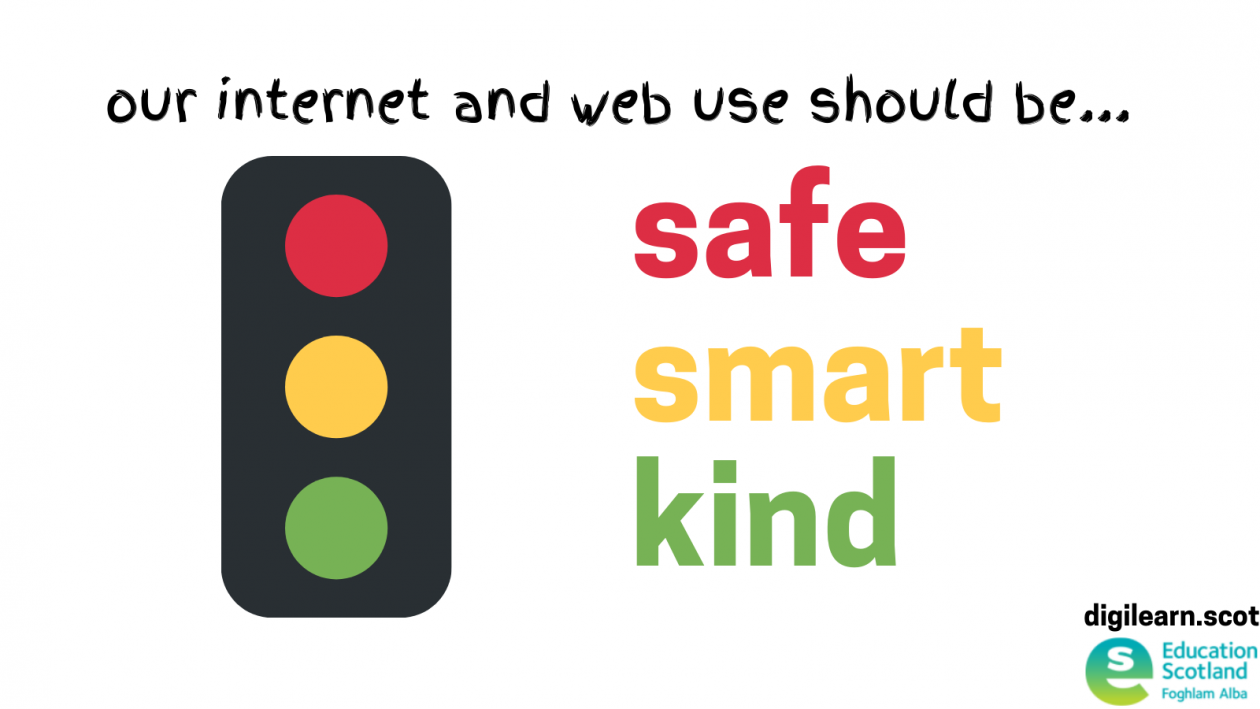
Share what internet safety looks like in your setting Please fill out this form
The Scottish Government (2017) states: “Every child and young person has an age appropriate and evolving understanding of the opportunities and risks which exist in the online world.”
This is defined within these outcomes:
- Children and young people are aware of their rights and responsibilities in the online world
- Children and young people are resilient and are equipped to help themselves and their peers
- Children and young people are able to identify when they, or their peers, are at risk, and know what to do if they spot something
Have you tried these free internet safety resources?
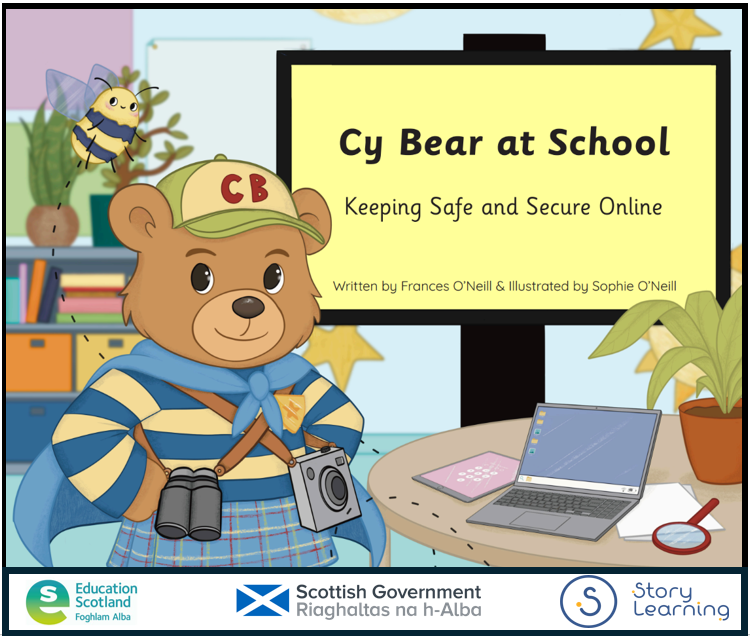
Introducing a brand new first concept storybook raising cyber security awareness for younger children aged 4-7 years. In today’s digital world, learning how to stay… Read more
Examples of learning from previous games live lessons back to Making Games A primary teacher from Rowantree Primary School in Dundee shared this with us:… Read more
Into Film support for BAFTA YGD back to Making Games We have partnered with Into Film again to support educators with YGD participation. Game Making… Read more
More about the BAFTA Young Games Designer competition back to Making Games YGD is “a chance for 10–18-year-olds to design, develop and present new game… Read more

Education Scotland is keen to support as many children and young people participate in playing and making games as possible. We are excited to work… Read more
Assessing your own practice It is important to not only develop effective information literacy skills but also to assess how these can impact our own… Read more
Upcoming CRIS Webinars