Year: 2014

S2 IDL at Braes High School

Fiona Malcolm, Faculty Head of Social Subjects and RMPS at Braes HS worked with a range of colleagues to create an interdisciplinary unit of work entitled Braes Anatomy. Over the course of last session, all S2 pupils experienced connected learning across science, history and religious, moral and philosophical education. The theme which connected this learning was vaccination and its impact on society past and present. In science, pupils discovered how vaccination works with the body’s immune system, and in RMPS they explored the ethics of the ways in which vaccines are produced and used. During history lessons, pupils explored the pioneering role of Edward Jenner and his discovery of the first “vaccinations” as the cure for smallpox.

The overarching learning intentions for this connected learning were:

By the end of these courses, I will:

Be able to develop an understanding of medical knowledge and innovation in the past and present

Be able to develop an understanding of social, moral and ethical views on medical discoveries, past and present.

The project was launched during a history lesson, then each teacher taught their subject content discretely. Click here to see the introductory teaching presentation and here to see the final one for pupils. Pupils then used the 2 weeks leading up to their Easter holiday in their RMPS lessons to begin the task below – they completed this as a homework task. Click here to see the overall IDL homework task.

You are part of the original scientific team that discovered HPV. This is the most important scientific discovery on cancer research in the past 5 years. As such, your evidence is in demand. To keep your funding, you have to produce an article for Medical News Today sharing your findings on HPV.

You must consider the social, moral and ethical implications of your research, including the historical background.

One challenging element of the collaboration for staff was their shared responsibility for marking the pupils’ work. To help with this, each department prepared assessment guidance on their subject content – click here for science, here for history, and here for RMPS key learning points. Fiona and colleagues are still working on how best to manage the joint assessment and maintain their focus on teaching for deep understanding and higher order thinking in line with Curriculum for Excellence ideals.

Staff involved in the project are keen to develop it further this session because it obviously engaged pupils’ interest in all 3 subjects. By making the overlap between subjects evident to the pupils, staff increased the coherence and relevance of learning. Pupils have responded positively and enthusiastically, and can better appreciate how curricular learning in school is actually used and applied in an interconnected way in the workplace and by society. Despite the challenges of finding time to communicate and co-ordinate their work, Fiona and her colleagues have designed connected learning which uses an interesting theme to integrate effective assessment, and develop a shared set of skills, knowledge and understanding for their pupils.
STEM support materials for Interdisciplinary Learning

STEM Central is a very rich source of support materials for discrete and interdisciplinary learning which develops understanding of Science, Technology, Engineering and Mathematics. Click here to explore the range of learning journeys and contexts available. These resources also support planning of learning which meets recommendations of the Learning for Sustainability Report. Click here to view a second level learning journey linked to the theme of Using Water, and here to view a third level example. These documents demonstrate how to bundle related experiences and outcomes across the STEM subjects. They also show the prior learning required for the study, and the skills being developed. There are suggested success criteria, learning experiences and evidence of learning and next steps. Most learning journeys have additional “challenges” which  follow on and allow pupils to apply and deepen their understanding using an unfamiliar context – click here to see an example. The STEM website also has excellent information on how higher order thinking skills are integrated into the learning journeys.

Senior Interdisciplinary Learning Partnership

In early September 2014, Yvonne McBlain of Falkirk Council Education Services met  with Alan Christie, Community Engagement Manager and his colleague David Love of Falkirk Council Housing Services to explore potential partnership working. Alan and David had noticed links between the pupil entitlements of our education services policy Learning to Achieve, and their Housing Services’ Tenants’ & Residents Participation Strategy 2013-16. They hope to involve Falkirk young people from S5 & 6 in a Stepping up to Scrutiny Course (click to view) they intend to run between February and March 2015. The course is accredited by the Chartered Institute of Housing – level 3 (GCSE equivalent) Award in Resident Scrutiny http://glo.li/Z6MOgx . The course  takes around 5 days over 8-12 weeks and pupils will work with politicians, senior managers, residents and employment training unit participants. This would therefore be a very diverse working group which could significantly enrich the experience of the young people involved.

Initial discussion between Alan, David and Yvonne suggested that this opportunity might enhance and enrich existing course work in Modern Studies. Yvonne will also consult school pupil council representatives about the opportunity  and alert colleagues in a pastoral or careers advice role. Participation in this course offers valuable chances to challenge and apply a range of transferable and higher order skills such as: development of text analysis, interpersonal skills, team working, and a culminating task which will require pupils to collaboratively evaluate a range of data and apply systems thinking to their suggested action plan.

What is interdisciplinary learning?

 Education Scotland states that  interdisciplinary learning: “enables teachers and learners to make connections across learning through exploring clear and relevant links across the curriculum. It supports the use and application of what has been taught and learned in new and different ways. It provides opportunities for deepening learning, for example through answering big questions, exploring an issue, solving problems or completing a final project.”

The importance of interdisciplinary learning as one of the 4 contexts for learning is highlighted by this quotation. Education Scotland has just published assessment and moderation exemplar materials which show how teachers carefully select a relevant and related “bundle” of experiences and outcomes. These  exemplars (click here to view the collection) provide an assessment overview of the significant aspects of learning being developed  in one subject area, but almost always show the teacher making a type 1 connection between one or more subject areas and/or with the cross-cutting themes of Curriculum for Excellence.. Click here to see how E & Os within HWB & LIT were linked at early level. Click here to see how higher order reading skills were integrated with contexts for learning at first level. To see how modern language vocubulary skills and thinking skills within literacy were linked at second level, click here. To explore how RME & Buddhism were linked to modern life at third level, click here. These do not prescribe the way these things must be done – they simply show how teachers have planned, delivered and assessed linked learning  for their pupils. They may act as useful examples of very focused IDL which provides breadth, challenge and/or application opportunities for pupils.
Graeme HS Meta Literacy Event

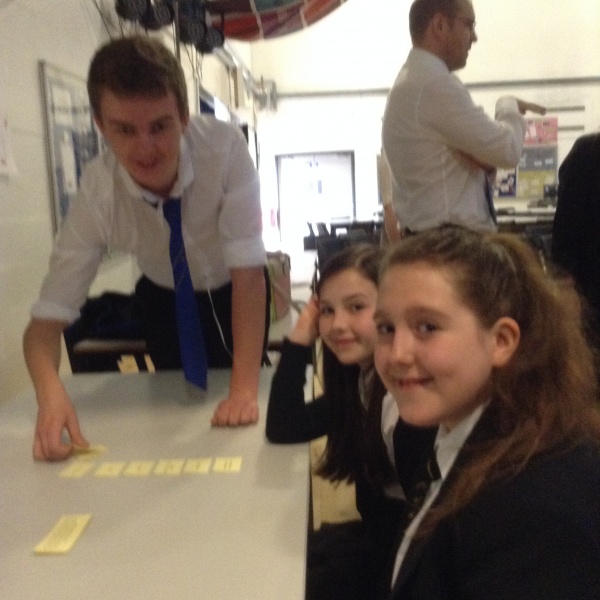
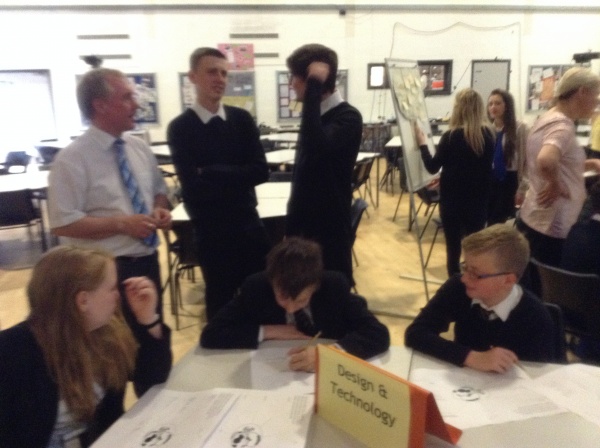
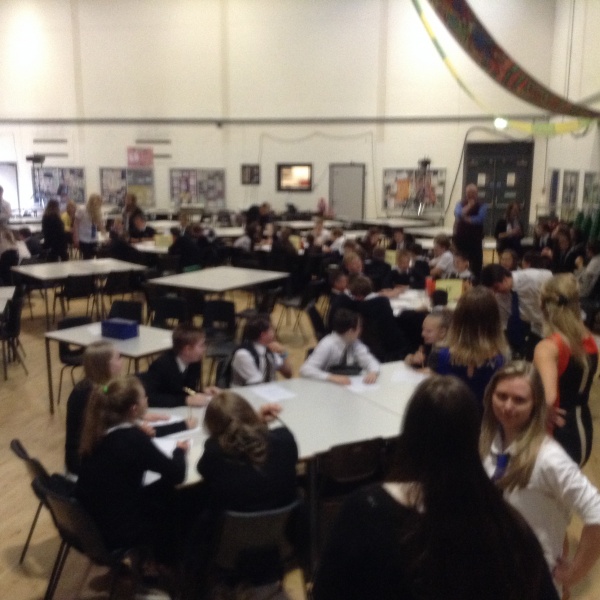
On 18th June 2014, Graeme High School staged a meta-literacy event involving subjects from each of the 8 curricular areas within Curriculum for Excellence. The whole of the new S2 year group attended this event, with new S6 pupils acting as facilitators at each of the workshop stations. The event was a culmination of development work by teachers in every subject area looking to extend literacy across learning strategies. Click here to see the rota of activities.

Caroline Harper, principal teacher of English worked with colleagues in school to develop teaching strategies which enriched and deepened awareness of  literacy across learning and helped pupils transfer and apply their skills more effectively.  

The activities experienced by pupils during the meta-literacy event developed skills such as: mind-mapping, note-making, summarising, visual words, using “post its” and extending vocabulary. Each subject area devised a task which was relevant to their course content, and pupils rotated each 15 minutes. The activities were facilitated very ably by the S 6 pupils and school staff  visited the event to see how other departments integrated these literacy skills. The event provided valuable ideas which could be applied in a range of contexts and shared practice very effectively.

Pupils were engaged throughout and gave very positive verbal feedback. The literacy experience was enriched by this event and pupil awareness of how to apply their literacy skills was enhanced. There was a lovely collaborative and exciting atmosphere during the event which added to the positive ethos within the school. Caroline and her colleagues were pleased that the event widened their exemplification of literacy across learning, and acted as a showcase for staff development work. Read more in Falkirk’s Literacy Strategy blog http://glo.li/1luPT26

Bonnybridge PS Commonwealth Games Legacy runners up

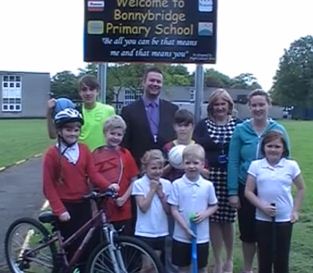
Sarah Ritchie and colleagues from Bonnybridge PS worked with pupils to create a range of learning experiences linked to the Commonwealth Games and building on their Olympic Games legacy. Their plan helped children learn about citizenship at a local and global level, and resulted in the school being nominated for the Legacy Award at the Scottish Education Awards. Although they did not win, everyone involved was proud of the difference this interdisciplinary learning has made to pupils this session, as this extract from their Facebook page explains:

So, we never won the Legacy Award but we had a brilliant time at the ceremony!! We were the only primary school to make the final so that’s a massive achievement and a big well done to our pupils, staff and parents. We got a nice £250 voucher and other goodies to take away.

For a more detailed understanding of the learning involved, click  http://t.co/wGfHrzXBbD

New Education Scotland BGE Resource

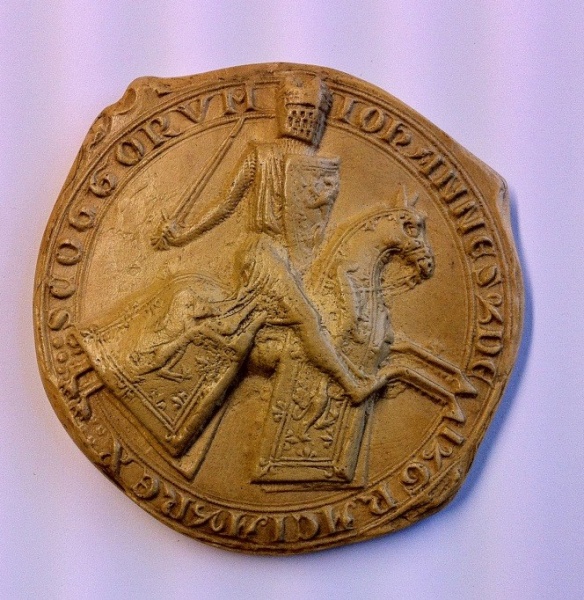
Click here to view  a new set of resources about life in medieval Scotland published by Education Scotland. The ‘People of Medieval Scotland’ resource materials and learning journeys are the result of a collaboration between scholars at the University of Glasgow and school teachers and Education Scotland officials in a project funded by the Arts and Humanities Research Council and Education Scotland. The resources and supporting documents have been produced by Joanna Tucker from the University of Glasgow, with Dr John Reuben Davies and Professor Dauvit Broun. They provide valuable and reliable source material and ideas to support interdisciplinary learning linked to the medieval Scotland context.

Click here to view the thirty-two sources which can be used at all levels. These aim to make the lives of people living in medieval Scotland more accessible to practitioners and learners.

Click here to see examples of practitioners’ learning journeys (for pupils at every level) using these resources. Click to view a plan of 3 learning experiences linked to the reign of John Balliol. This second-third level learning journey bundles experiences and outcome across social studies, literacy and health and well-being.

British Council IDL Resources and Competition

The British Council have a range of education resources which may be useful sources of ideas for interdisciplinary learning linked to sustainable and international education. Here http://schoolsonline.britishcouncil.org/classroom-resources is a link to the resource section of their website.

Click here to take a look at the Rivers of the World resource pack. It has learning experiences for various age groups linked to bundles of social subject, science, art & design and maths learning. These include field work skills to support taking learning out of the classroom.

You may have time to use any comparative river study work already done with your primary 5 & 6 pupils in this http://glo.li/1kx9OMY competition run by the British Council – see details below:

Win a trip to Totally Thames with Rivers of the World  


Enter your primary school into our ‘Design a River Creature’ competition
 
The prize We will pay for the winning team to take part in the Totally Thames season of events and enjoy lots of fun activities including a student workshop at the British Council and a visit to the Tower Bridge Experience.
What do I need to do?

Using the Rivers of the World education pack as a resource, ask students to work in groups of five to create an art work and an accompanying piece of creative writing. It can be based on a real or imaginary creature from an overseas country and river ecosystem.

Who can enter?

Primary Schools Years 4 & 5 (5 and 6 in Scotland)

Larbert Village PS Comenius Visits

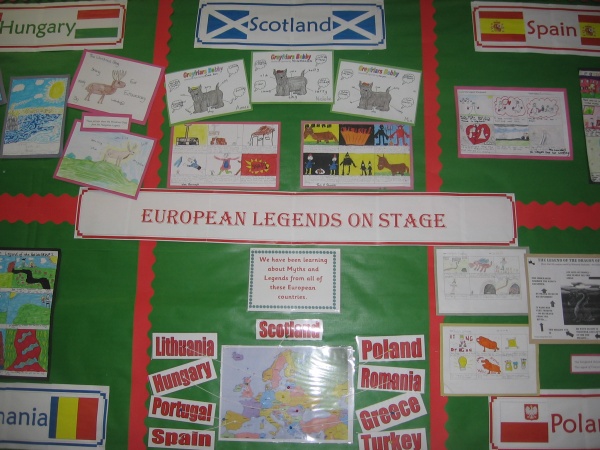
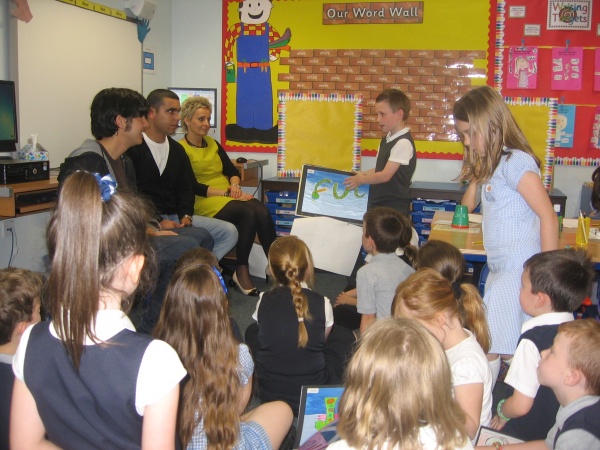
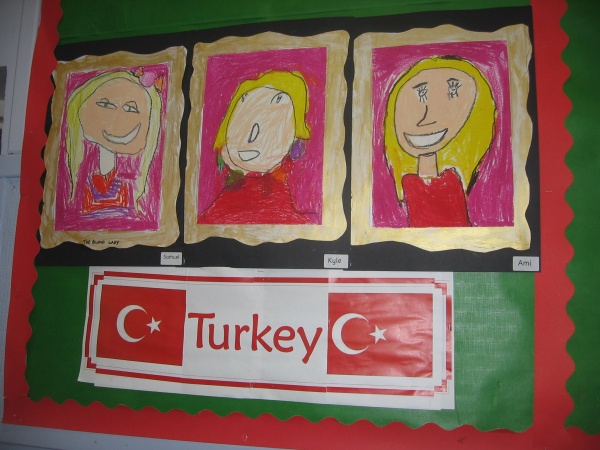
Staff at Larbert Village PS have used interdisciplinary learning to  prepare their pupils for their Comenius visitors during week beginning 2nd June 2014. Children have extended their knowledge and understanding of International Education by studying traditional  tales from the 7 European countries which their visitors come from. Laura Willox and staff colleagues planned their teaching around these stories to develop their pupils’ literacy skills,  and to offer an engaging context for pupils to apply other curricular skills. Pupils in all stages have read at least one story from each country and have been able to interpret these through drawing, storyboards and story telling sessions. They collated their work into a “floor book”  and were able to share these with their visitors.

 In primary 2W, pupils asked their Spanish visitor about other Spanish legends and found out about his part of Spain and Spanish customs. They also learned that their assumption that Spanish people have a siesta at lunchtime was not true – a valuable reminder not to stereotype! 

 The children all had different views about each story. For example, some pupils relished the scary Portugese story while others liked the stories with dragons, magic and romance. Click here to view what the children said about their preparations for the visit.

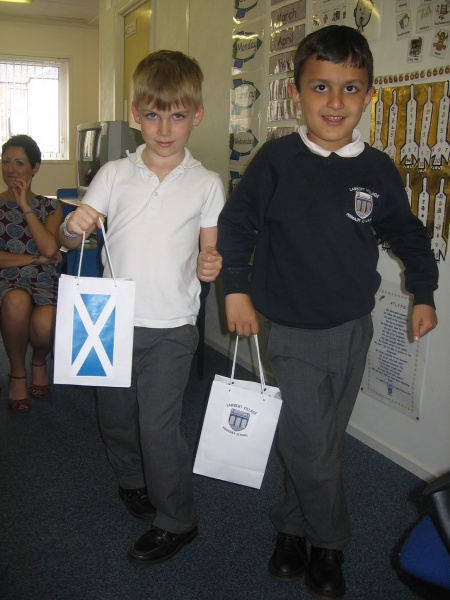
The children in the Butterfly room of the enhanced provision unit had the important task of designing, and sourcing the contents for, a small souvenir gift bag for their visitors. As you can see, the children were deservedly proud of their Scottish themed bags complete with shortbread, tablet, Larbert Village pencils and Saltires!                                     

All in all, this has been a really valuable process for everyone involved and has contributed to building a really positive ethos within the school and its community as well as to their programme of interdisciplinary learning.

Deanburn Primary School Global Storyline Celebration

On Friday 30th May, Liz Stephen and Laura Beattie of Deanburn PS celebrated the conclusion of their Giant of Thistle Mountain global citizenship storyline. They have both been part of the first cohort of  Falkirk teachers being trained by the West of Scotland Development in  Education Centre (WOSDEC) to deliver their global citizenship storylines.

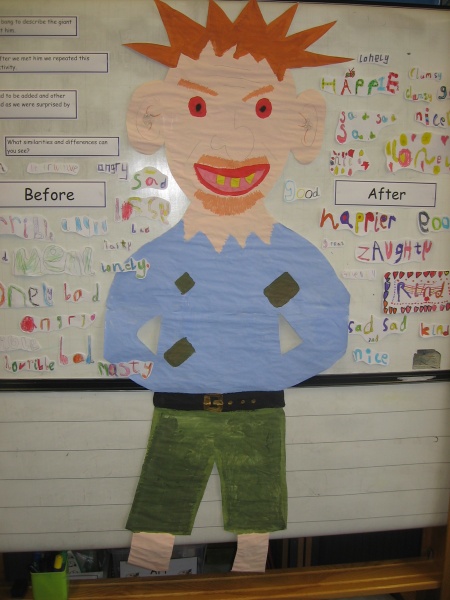
All of the teachers who have taken part in this interdisciplinary learning have reported very valuable impact on their pupils. This includes development of pupil understanding of social justice and equality (Why is the giant so unhappy? What can we do to help?), their respect for diversity (Don’t assume the giant is bad because he is loud and scary-looking), and their critical thinking and ability to understand the importance of communities.

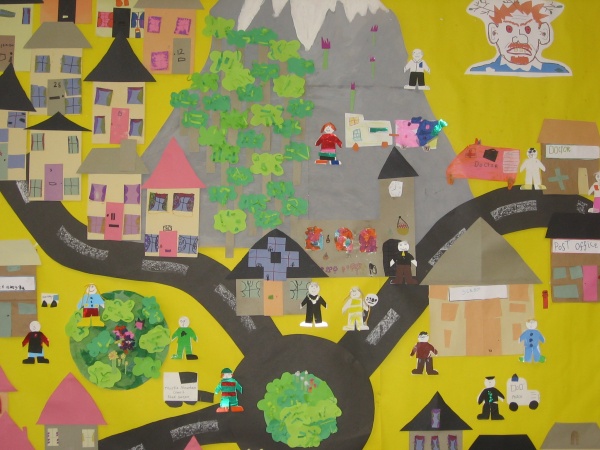
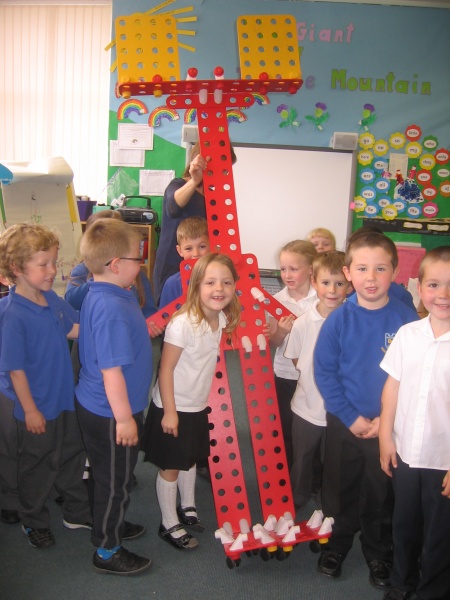
The pupils in Liz Stephen’s primary 1 class greeted fellow pupils, parents and other guests by miming their character role in their imaginary village of Thistle Mountain. They then took their guests on a guided tour of their work throughout the storyline and the frieze and model village they had created. Both classes had created their own giant too.

This storyline bundles a small number of experiences and outcomes from Religious and Moral Education, Health and Well Being and Social Subjects. It skillfully combines active learning experiences with drama interludes where the children are in role and have to deal with very difficult questions and issues. They are taken on a journey which effectively supports them in forming their social attitudes and emotional development. There was lots of evidence of deep understanding of the dangers of stereotyping and the value of co-operation and collaboration to build a succesful community. It was clear from the children’s readiness to take on their character role, that they thoroughly enjoyed the whole experience. (Click here to view a video compilation of the work displayed)

 Laura effectively built opportunities for pupils to apply their literacy knowledge and understanding through a before and after “role on the wall” activity. Each class created their own giant and village using their chosen media.

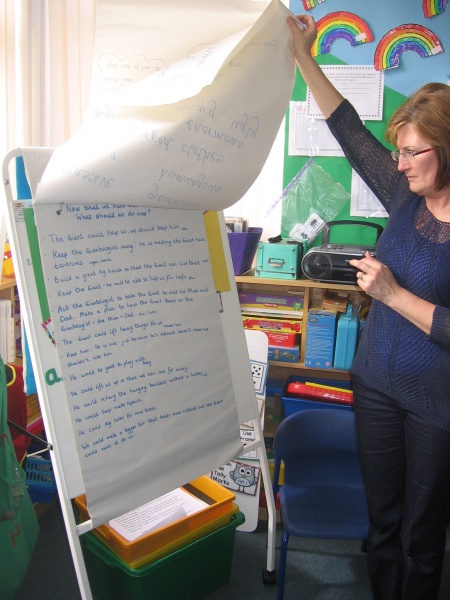
Liz and her class used a flip chart to capture their developing ideas throughout the project, and this was available for parents to view during their visit. It can be very difficult to capture evidence of developing learning during discussion with groups of children, and Liz found this flip chart method worked really well.