🎲✍️ Writing Meets Numeracy and STEM in P5–7! ✍️🎲
Today our P5–7 class took part in a fantastic cross-curricular lesson which combined literacy, numeracy and STEM learning in a fun and creative way!
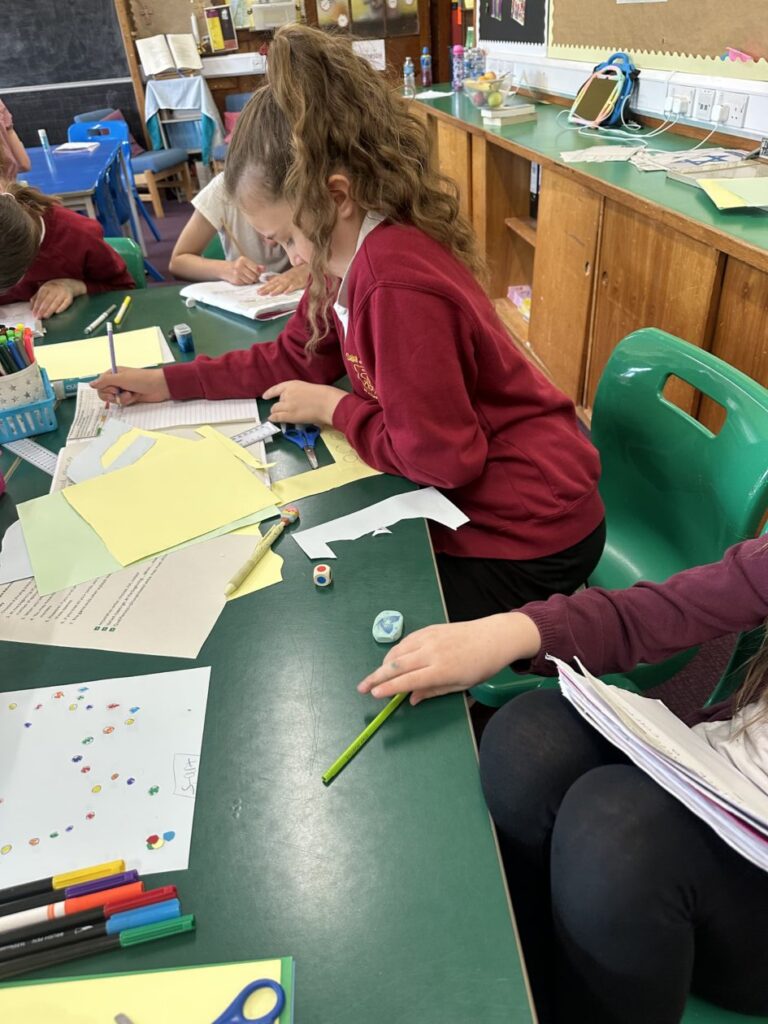
As part of our current procedural writing unit, pupils have been learning how to write clear instructions. To put these skills into practice in a meaningful way, they worked in teams to design and create their very own board games.
Each group had to think carefully about the key features needed for a successful game, including:
🎲 The aim of the game
🎲 Rules and instructions
🎲 Challenges or obstacles
🎲 Number elements such as counting spaces, scoring points or solving maths questions
🎲 A creative design that would make people want to play
This required lots of teamwork, planning, creativity and problem-solving as groups discussed ideas and made decisions together. Many pupils included numeracy elements such as number challenges, calculations and scoring systems, while others used STEM thinking to test whether their games worked fairly and effectively.
Once the games were created, pupils then completed the literacy element of the lesson by writing clear procedural instructions explaining exactly how to play their game. They had to think carefully about sequencing, command language and making their instructions easy for others to follow.
This was a brilliant way to bring learning to life and show pupils how writing skills can be applied in real and creative contexts. It was fantastic to see so much collaboration, enthusiasm and imaginative thinking throughout the lesson.
Well done to all of our young game designers and procedural writers! We can’t wait to test out more of these fantastic games 🎉
🌍 UNCRC Links
- Article 28: Every child has the right to education.
- Article 29: Education should help children develop their talents and abilities.
🌱 Sustainable Development Goals (SDGs)
- SDG 4: Quality Education
- SDG 9: Industry, Innovation and Infrastructure
💚 SHANARRI Indicators
- Achieving: Developing literacy, numeracy and problem-solving skills.
- Included: Working collaboratively in teams.
- Active: Engaging in hands-on learning.
💡 Meta-skills
- Creativity
- Collaborating
- Communicating
- Critical Thinking
- Sense-making
- Focusing
🌟 The Four Capacities
- Successful Learners: Applying writing skills in a real-life context.
- Confident Individuals: Sharing ideas creatively.
- Effective Contributors: Working as a team to solve problems.
✝️ Strands of Faith
- In the Image of God: Using creativity and talents positively.
- Signs of God: Recognising the joy of learning together.