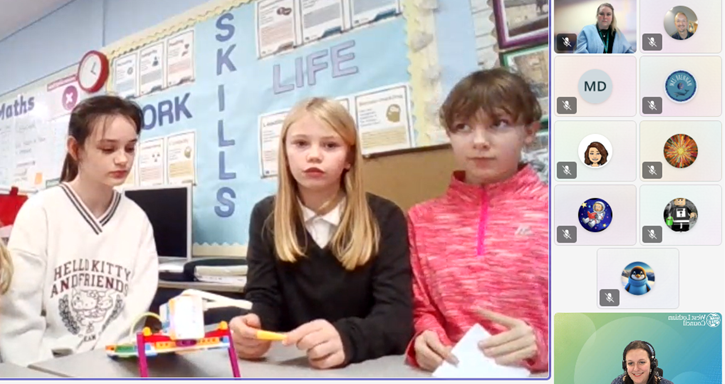
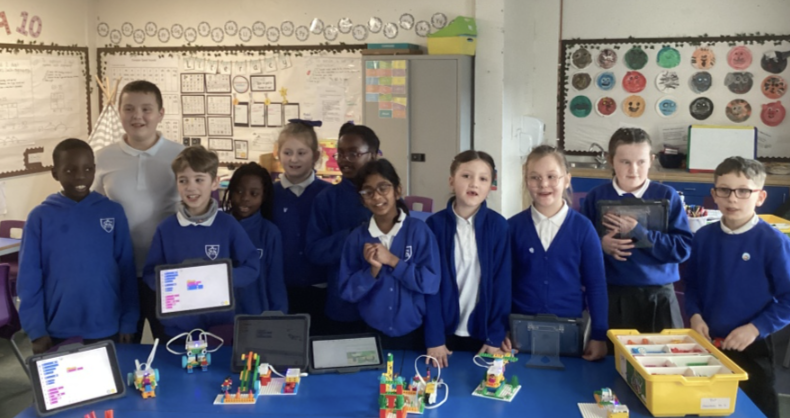
Pupils at Howden St Andrew’s recently explored the LEGO SPIKE Essential kits, using sensors, motors and block coding to design and create a range of carnival-themed games.
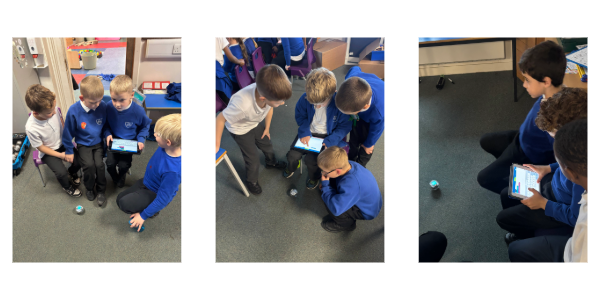
P4–6 pupils were excited to get started and quickly began exploring how the kits worked. Over the course of six weeks, they used the LEGO kits to design creations that could solve a problem, then used block coding to bring them to life.
They showed creativity and curiosity as they developed their ideas further, adapting and improving their projects to make them more interesting, unique and, in some cases, more complex.
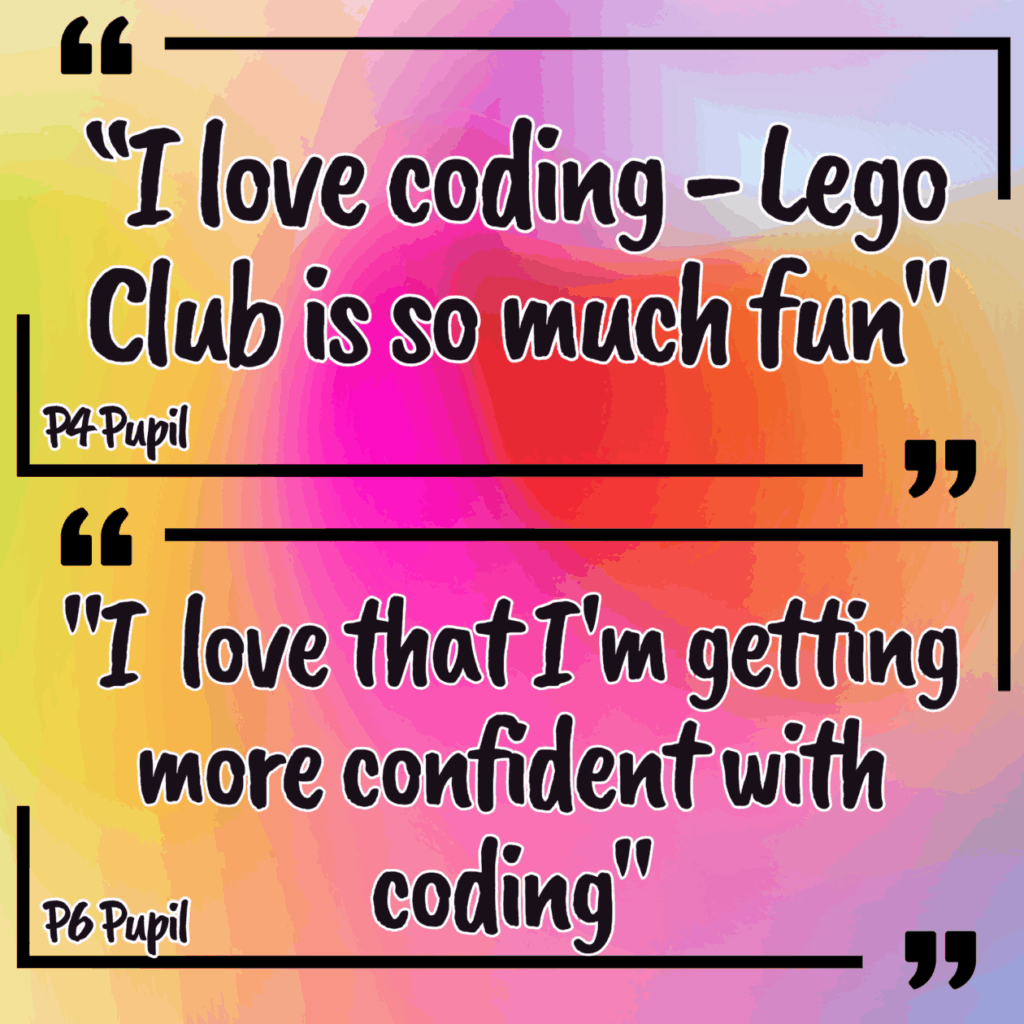
As they became more confident, pupils started to experiment more with their code.
Instead of just following instructions, they have been taking ownership of their projects by:
- adding their own triggers and movements
- experimenting with sound effects
- trying out more complex “if/then” style programming
🎡 Designing Their Own Carnival Games
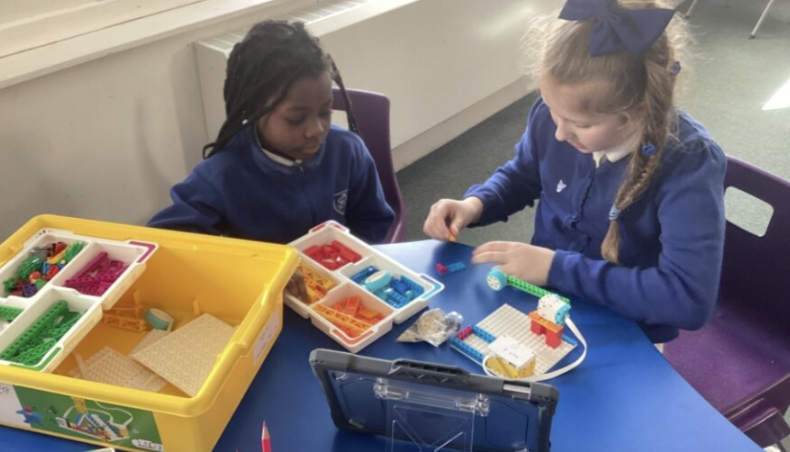
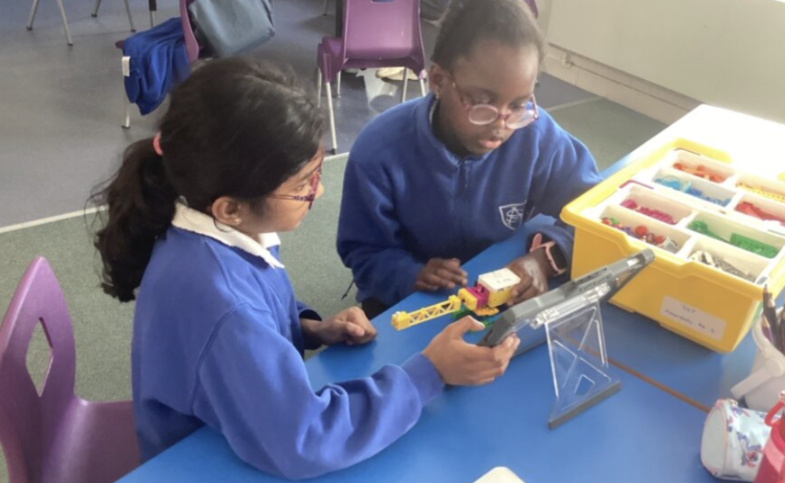
This block’s big challenge has been building carnival‑themed games, and learners have risen to it with enthusiasm. Using what they’ve learned about:
- motor rotations
- sensors
- speed control
- angles
- cause & effect in coding
…they’ve turned their LEGO kits into exciting, playable creations.
🏀 A Highlight: The LEGO Basketball Game
One standout project came from a pupil who designed a basketball‑throwing game entirely from scratch.
- He coded the LEGO motor to throw the ball toward a hoop.
- He used a sensor to detect when a goal was scored.
- He added sound effects to celebrate successful shots.
- He built his own reset mechanism so the motor rotated back into position.
He deepened his understanding of angles, discovering what a 90‑degree turn truly looks like in practice – how far the motor rotates, whether that angle generates enough force to throw the ball, and how to adjust it when it didn’t. This was maths‑in‑action at its best: experimenting, testing, refining, and making connections.
🔍 More Brilliant Thinking from the Groups
Other groups showed fantastic STEM thinking too:
- One team explored motor rotations, discussing how far their mechanism needed to turn to make their game work smoothly.
- Another group experimented with speed settings, predicting and testing how increasing speed affects the distance a ball would travel.
These moments captured the essence of the club: pupils thinking critically, applying real‑world STEM concepts, and discovering answers through hands‑on testing.
🌟 A Celebration of Skills, Curiosity & Teamwork
Across the block, learners have shown:
- Resilience by trying again when things didn’t work
- Collaboration by helping each other debug and improve
- Leadership by taking ownership of their designs
- Creativity by turning technical components into imaginative games