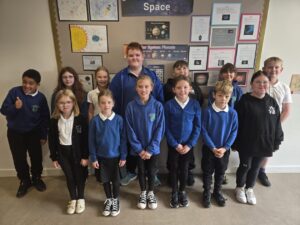
We would like to introduce you to the dyslexia committee members for the year 26/27.
We would like to introduce you to the dyslexia committee members for the year 26/27.
The Dyslexia Committee has had a very productive term so far, with pupils exploring what dyslexia is, how it can affect learning, and how we can make our school environment more inclusive and supportive for everyone.
We began by looking closely at what dyslexia actually is. Pupils learned that dyslexia is a difference in the way the brain processes language, particularly reading, spelling and writing. It is not related to intelligence, and many dyslexic learners think in creative, visual and problem‑solving ways.
We also discussed what dyslexia can feel like. Committee members explored real-life examples and shared how challenges with reading or remembering information might impact confidence, organisation or classroom tasks. This helped us build empathy and understanding across the group.
A big focus has been celebrating the strengths that often come with dyslexia, including:
We highlighted how these strengths are valuable in school and in future careers.
To help pupils see dyslexia in a positive light, we looked at celebrities and successful individuals with dyslexia. This included actors, athletes, entrepreneurs and authors who have spoken openly about their experiences. Their stories helped show that dyslexia can be a source of strength and innovation.
The committee explored which fonts are easier for dyslexic learners to read. We looked at:
We discussed why these fonts help — clearer letter shapes, wider spacing and simpler forms.
We reviewed the supports already in place across the school, such as:
The committee also began exploring other tools that might be helpful, including apps, browser extensions and additional assistive technologies.
To raise awareness in a fun and memorable way, pupils have been working on raps and songs about dyslexia. These celebrate strengths, challenge misconceptions and help spread a positive message across the school.
Our next big goal is to present to each class and demonstrate how to use our dyslexia‑friendly reading pens. Committee members will explain what the pens do, who might benefit from them, and how they can support reading independence.
Our Dyslexia Friendly Committee is committed to making our school a place where all learners feel supported, understood, and able to thrive.
What is dyslexia?
Dyslexia is a specific learning difference that primarily affects reading, writing, and spelling. It has nothing to do with intelligence—many people with dyslexia are highly creative and think in unique, innovative ways. In fact, well-known figures such as Albert Einstein, Walt Disney and Richard Branson have all spoken about their experiences with dyslexia.
Our aims:
To raise awareness and understanding of dyslexia within the school community
To promote teaching practices that are inclusive and accessible
To provide resources and support for students, staff, and families
To celebrate the strengths and talents of those with dyslexia
By working together, we aim to ensure that our school is a truly dyslexia-friendly environment where every student can succeed.
There have been changes to the Dyslexia Friendly School Award. It has been rebranded as the Dyslexia and Inclusive Practice Award. We will be working towards achieving this new award during this session.
This Year, Dailly Primary Dyslexia Friendly School group are preparing to apply for our silver award. The main task to achieve this is to create a dyslexia friendly library. We have been classifying all our books in all our library areas.


The DFS Pupil Voice Group have been researching what we can do to make learning easier for everyone. We have created a mind map to share our learning which is one dyslexia friendly way of showing learning.