

The Digital Schools Award (Scotland) (DSAS) framework
In Scotland, the DSAS programme certifies schools’ use of digital. Your setting might use the DSAS framework as a guide for your strategy and the award as recognition of your work. The framework currently has five sections:
- Leadership and vision
- Use of digital technologies to deliver the curriculum
- School culture
- Professional development
- Resources and infrastructure
DSAS framework and checklists: use this link to visit the Digital Schools Award (Scotland) website for more information
Digital Skills for Scottish Educators
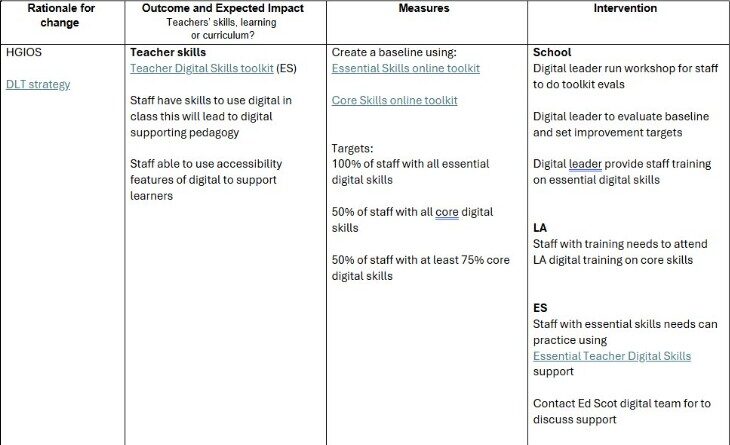
The guidance on Digital Skills for Scottish Educators provides a clear and defining list of skills and knowledge that all educators should have. These digital skills underpin the ability to make effective use of digital in learning and teaching. They are also the skills that should be taught to children and young people and therefore it is essential that educators have them.
The Digital Skills for Scottish Educators page has a form to evaluate your digital skills and an option to duplicate the form – this can be shared with staff and your collected results will form a baseline of staff digital skills.
Use this link to go to the digital skills for Scottish educators page
Effective use of digital in learning and teaching
When educators are digitally skilled, your setting may ask them to use digital technology to affect learning and teaching. This could include, but is not limited to:
- accessibility tools to meet more learners’ needs
- ‘flipped learning’ that allows children and young people to develop their understanding at home and utilise this in class
- creating multimedia teaching materials, such as videos, slides, graphics or web pages
The use of such technologies should be intentional and designed to enhance learning and teaching in some manner. The selection of technologies should be matched to staff digital skills and the aims of your strategy,
Use this link to go to the effective use of digital in learning and teaching page
Digital skills for children and young people
The skills that children and young people require will vary by age, stage and individual experience. Being confident in their own digital skills will empower educators to deliver the digital skills curriculum, including:
- how digital technology works
- the skills to use digital technology
- understanding how digital technology affects us
Use this link to go to the digital skills for children and young people page
Support to develop your digital strategy
Book a call with the Education Scotland digital skills team.
We’ll work with you to evaluate your current practice, explore your aims and work with you to make effective use of digital in your improvement planning. This will include:
- a call to discuss initial aims, opportunities and needs
- a plan to improve staff skills and learner opportunities
- ongoing support and training as required

You must be logged in to post a comment.