The educator toolkit documents defines the skills and knowledge required to be an educator in Scotland. These align to professional standards for the Scottish Social Services Council (SSSC) and the General Teaching Council for Scotland (GTCS).
The Digital Skills for Scottish Educators toolkit
Using digital skills effectively in learning, teaching and assessment
TPACK is a model to support the effective use of technology in learning and teaching. It splits educator knowledge and skills into three broad categories:
| content knowledge pedagogical knowledge, and technological knowledge |
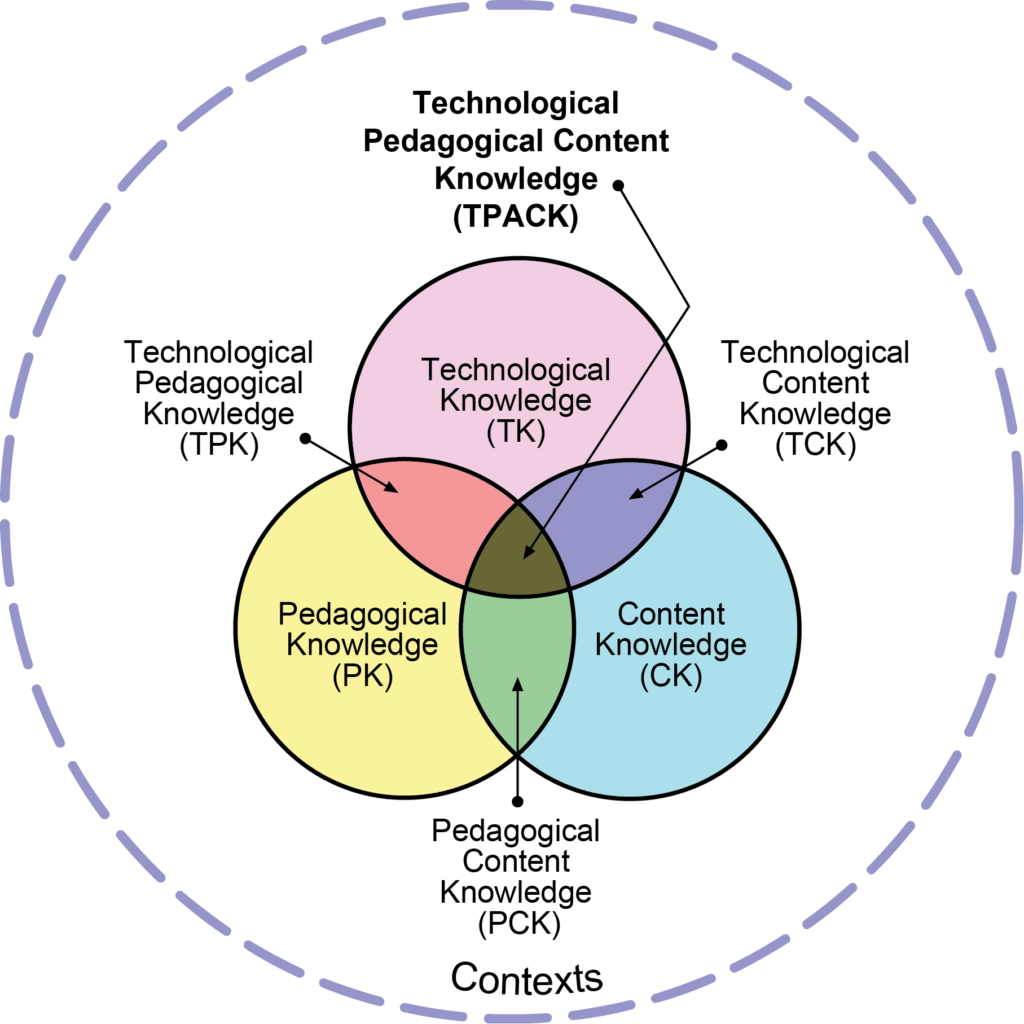 |
The intersection of all three categories is technological pedagogical content knowledge (TPACK).
Find out more about TPACK with this link: TPACK page on Wikipedia
Technical knowledge is defined by the Digital Skills for Scottish Educators toolkit (mentioned above): this is the link for the guidance on educator digital skills
Content knowledge is provided by the Experiences and Outcomes in Curriculum for Excellence: use this link to view the Experiences and Outcomes documents
Pedagogical knowledge can be based on Education Scotland’s learning, teaching and assessment cycle.
Within this cycle, the seven principles of curriculum design provide a comprehensive framework for teachers to design effective learning experiences. They are:
- Challenge and Enjoyment
- Breadth
- Progression
- Depth
- Personalization and Choice
- Coherence
- Relevance
The sections below provide examples and guidance for examples of technical and pedagogical knowledge (TPK) being combined effectively:
Accessibility
Begin with learners’ understanding