Positive Relationships and Behaviour in Rosslyn School
This section sets out how Rosslyn School implements Fife Council’s policy on Relationships and Behaviour, ensuring a consistent, rights‑based and nurturing approach across our 3–18 provision. Fife Council emphasises that effective learning and teaching depend on a foundation of positive behaviour, respectful relationships, and an appropriate curriculum (Fife Council Policy – available on the intranet).
Our school’s approach is grounded in relational practice, children’s rights, and high‑quality pedagogy, ensuring that the focus remains on what staff do to create the conditions in which all learners can thrive.
Curriculum and Context for Learning
Our curriculum rationale and guidelines support staff in designing relevant, motivating and meaningful contexts for learning. By building experiences around the strengths, interests, needs and aspirations of our learners, we increase engagement, participation, and readiness to learn.
We recognise that an effective curriculum is integral to positive behaviour and wellbeing, as highlighted by Fife Council’s focus on aligning curriculum, relationships, and behaviour.
Interactions
Positive relationships are at the heart of everything we do. Staff interactions are:
- Responsive and dynamic, adapting to learner need in real time
- Skilled and intentional, with staff observing carefully and scaffolding support
- Playful, friendly and fun, fostering joy, trust and emotional safety
- Communication‑rich, modelling language, gesture, sign and AAC systems
- Purposefully planned, including the careful use of scripted responses
We recognise behaviour as a form of communication. Supporting communication development—through AAC, Signalong, gesture, objects of reference, and other systems—is core to reducing distressed behaviour and increasing learner autonomy.
Experiences
We are developing consistent approaches to delivering opportunities for child‑led learning and play across the school, informed by Realising the Ambition: Being Me. Staff design learning experiences that are:
- Holistic, supporting cognitive, social, emotional and physical development
- Relevant, motivating or new, promoting curiosity and engagement
- Milestone‑focused, reflecting developmental progressions
- Personalised, shaped by regular consultation with families on what matters most under the four capacities
Our multi‑sensory approaches ensure learners receive the right sensory information to understand activities, people and their environment.
Spaces
Our learning environments extend beyond the classroom. We use our:
- School building and sensory spaces
- Outdoor areas and community locations (parks, shops, transport, soft play, sports centres, pools, Lochore Meadows, and local woodland)
- Partnership settings including our local primary school and early years centre, providing language‑rich environments and high‑quality social modelling
These varied spaces allow us to deliver highly meaningful learning, life‑skills development, and generalisation of communication and social skills.
Specialist Staff and Partnerships
Practitioners
Rosslyn School is staffed by a highly skilled and experienced team, including:
- GTCS registered teachers with varied backgrounds and experience in ASN
- PSAs who are SSSC‑accredited at SCQF Level 7
- Staff with specialist ASN qualifications or social care experience
- Staff trained in a wide range of clinical, therapeutic and educational practices
Their expertise includes:
- Moving and Handling (including small holds)
- Eating and drinking support, delivered in partnership with Speech & Language Therapy
- Overcoming barriers to learning
- Emergency medication (including epilepsy protocols, Paraldehyde and VNS support)
- Medication administration (oral and PEG)
- Gastrostomy, PEG and pump feeding
- Communication systems (Signalong, AAC devices, PECS, objects of reference, movement gesture and sign)
- Intensive Interaction
- Story Massage and TacPac
- TEACCH and ASD‑specific strategies
- Visual impairment adaptations
- Sensory regulation approaches
- Proactive management planning
- Risk assessment
- Adapted technologies
Our multi‑agency partnerships—including therapists, health professionals, social work and community organisations—strengthen our ability to meet complex needs holistically.
Alignment with Nurture and Rights‑Based Practice
Our school policy on relationships and behaviour operates alongside our nurturing approaches, creating an environment characterised by:
- emotional safety
- predictable routines
- attunement and co‑regulation
- respect for children’s rights under the UNCRC
- trauma‑informed practice
- equitable access to support
This aligns with Fife Council’s emphasis on relational, trauma‑informed and rights‑based approaches as foundations for positive behaviour.
Pupil Profiles
Pupil Profiles provide a comprehensive overview of each learner’s needs, strengths, and support requirements. They support our commitment to personalisation, effective planning, and proactive approaches to wellbeing, learning and behaviour. Profiles are dynamic documents that are updated as needs change and reflect multi‑agency recommendations where appropriate.
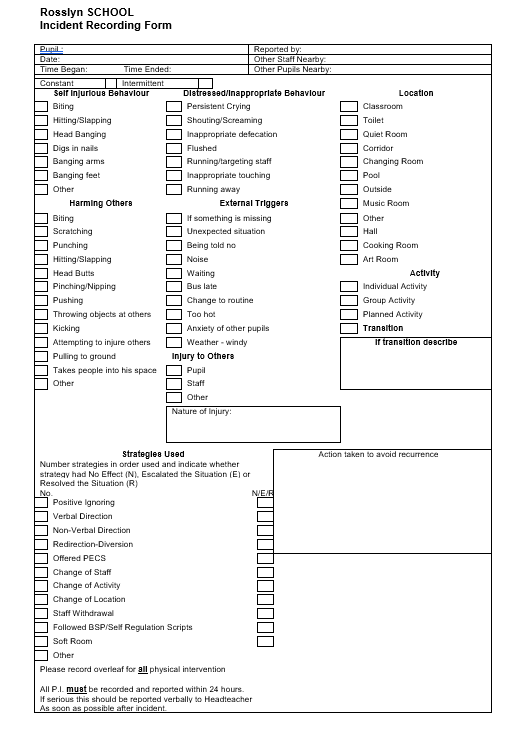
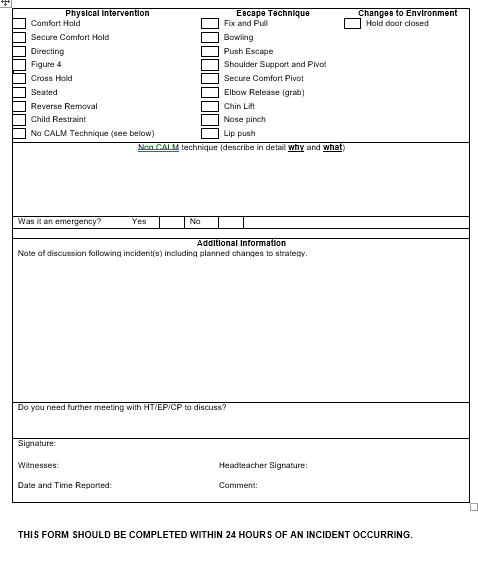
The information from these forms then goes in to a system where we can track:
- Frequency of episodes
- What ‘harm’ has been caused
- What de-escalation techniques are working
- If any physical intervention was necessary
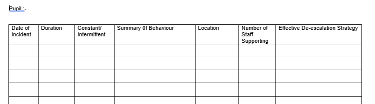
This informs our Pro-active Management Planning and reviews.
Pro-active Management Planning
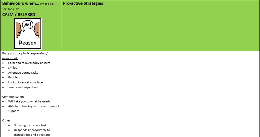
Green captures calm and relaxed behaviours.
Strategies would include:
- Quiet and calm environment.
- Timetable and transitions – visuals used.
- Communication systems.
- Sensory regulation activities built in to the day etc.
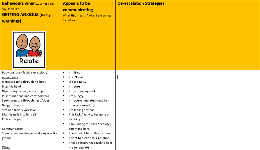
Amber spots the early signs of anxiety. It is important that staff interpret what they think is the cause and act promptly.
Strategies would include:
- Acknowledge what is happening in the environment and offer reassurance.
- Offer ear defenders, weighted blanket etc.
- Change of location.
- Change of activity.
- Clear expectations – ‘Now and Next’ – Reduce the length of the activity or the demand within it.
- Out rule pain or discomfort as a cause – perhaps paracetamol is required etc.
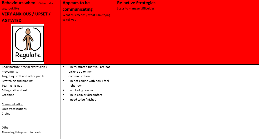
Red is our reactive strategies. Although reactive, we can still suggest a range of approaches that staff should use.
Strategies would include:
- Proximity – Can staff create space to allow the learner to self-regulate.
- Offer soothers (2 options as more may well be overwhelming).
- Direct instructions to an area i.e. Green Room.
- Key words to be used with symbols and signing as required.
- School alarm system can be used to call for support etc.

Blue is time to get back on track. It is important that staff do this in a timely way, and test for compliance.
It is likely to take at least 20 minutes to regulate from a heightened state to baseline – if not longer! Be patient.
Strategies would include:
- Use of timers to show that ‘time-out’ is coming to an end.
- Now and Next.
- Compliance activity – this is a familiar and fun activity that can support engagement. Staff are still mindful of proximity and the adrenalin cycle. They are also keen to ‘move on’ as soon as possible. Routine is often the best distraction and allows the learner to feel safe again.
- Commendation – Thank the learner for their efforts to regulate and tell them they have done a ‘good job.’
- A smile goes a long way!

Case Study
In this case study we hope to demonstrate the value of relationships and trust.
Kristina is the class teacher.
She welcomes our young man from the bus. This is key as he knows from the moment he arrives in school who he is working with today.
She is happy to see him, welcomes him and waits.

Kristina sees that he is heightened. He will often arrive in school requiring support with his feelings and body sensations.
He goes back on to the bus and has kicked out towards the escort before coming off the bus again and transitioning in to school.
Kristina notices he bumps in to her along the corridor. She recognises this as a need for pressure and does not overreact as she plans ahead.
Importance of relationships
- Kristina knows him so well.
- He is following his routines, but she picks up that he is still heightened.
- She uses humour and
he responds.
- He glances at the shelf where his book is kept during the day.
- Kristina notices immediately. She tells him his book is in is bag.
- He can empty his own bag, yet Kristina decides not to add this demand yet. This is a deliberate decision. She get’s his book for him and asks him to communicate his choices.
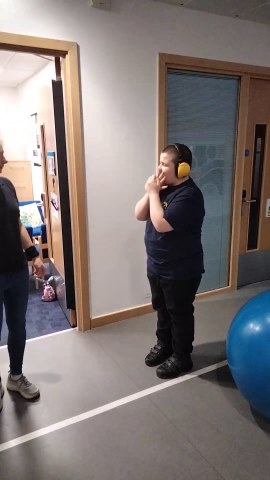
This is then followed through and he is given a few minutes on the physio ball in the corridor.
Kristina is assessing his body language, sounds and facial expression. She asks if he is ready, and waits.
He goes back to class where he has a 5 minute relaxation time.
This routine is familiar and he responds.
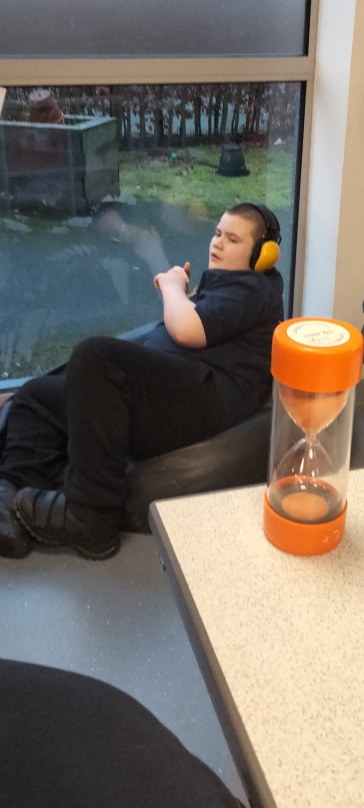
After 5 minutes he returns back to his timetable and moves on with his morning.
This process from bus to engagement with his timetabled jobs has taken 20 mins.
Had Kristina not taken the time and responded to how he presented, it is likely that his behaviours would have escalated quickly. He would have been in the green room (seclusion) for 30 mins and staff would have been injured. If he reaches this level of distress it is hard for him to recover, and our data shows that he will most likely be back in the green room 2 or 3 times.
“The majority of distressed and dangerous behaviours can be mediated and often prevented. Ensuring and implementing high quality learning and teaching, effective behaviour management systems and positive relationships in schools are the essential foundations on which to build more specialised approaches to managing extreme behavioural challenges” (ref. De-escalation Pack, 2022).
Fife Policy – “Promoting Positive Relationships and Behaviour Guidance” states:
Expectation examples Responsibilities for all Staff:
Reflective Questions –
Did Kristina:
• promote and model positive behaviours and build relationships – Yes
• Plan learning that engages, challenges and meet the needs of all learners – Yes
• Use a visible recognition mechanism (this is recognition as opposed to reward) – Yes
• Be calm and give ‘take up time’ when required. – Yes
• Prevent before sanctions. – Yes
Staff Wellbeing, Professionalism and Team Culture
At Rosslyn School, we recognise that remaining calm in moments of heightened or escalating behaviour is not always easy. Staff may not always be able to predict when a situation will intensify, and at times will draw on their knowledge of a learner’s history to anticipate potential triggers. Despite these challenges, our staff consistently present a calm, friendly and reassuring presence, modelling the emotional regulation and relational safety that underpin our whole‑school approach.
We are proud of the strong, supportive culture that exists across our school. It is the collective effort, positive spirit, specialist skillset, and unwavering commitment to getting it right for every learner that make Rosslyn School a safe, nurturing and rewarding environment for children, young people and staff alike. Our team demonstrates professionalism, compassion and resilience every day, and these qualities are central to the positive relationships that drive effective behaviour support.