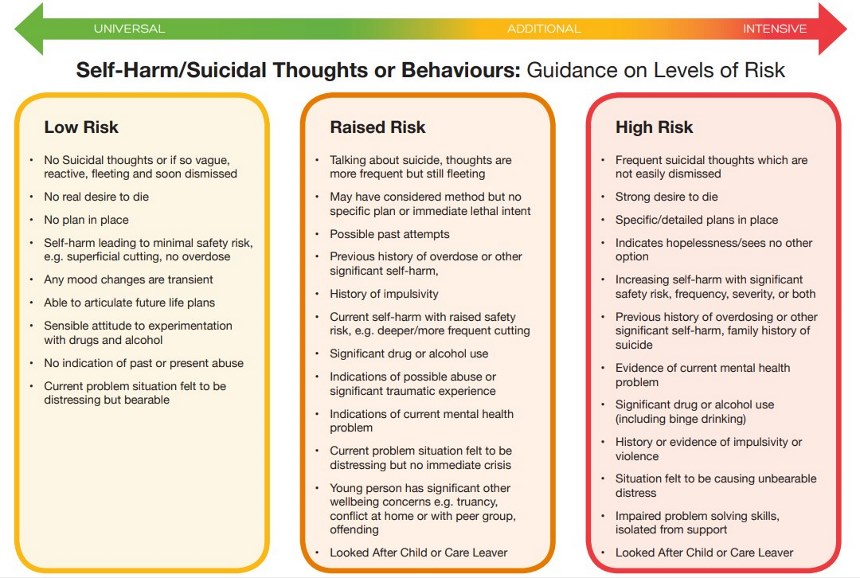
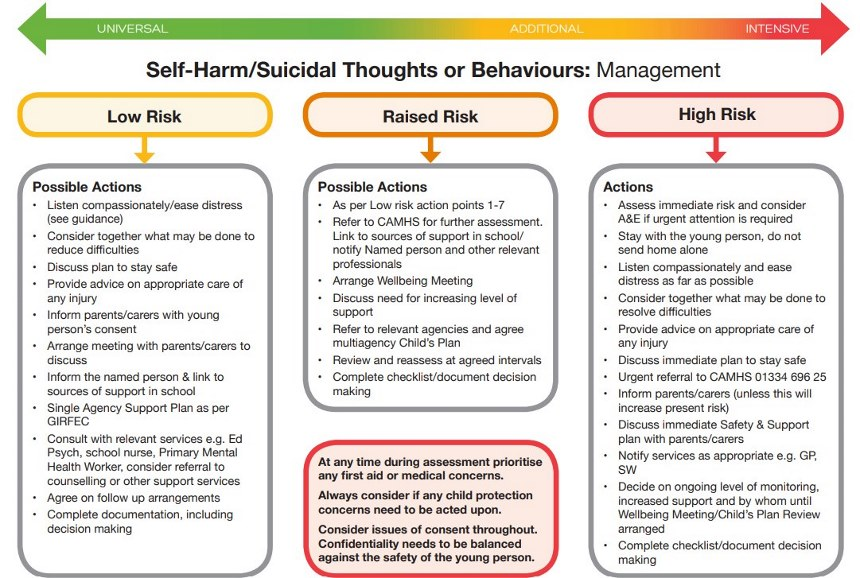
Self-harm/ Suicide
Self-harm can affect anyone at any age but is more common in young people. A lack of research means we do not know how many autistic people self-harm. Autistic people are more likely to self-harm than non-autistic people, and autistic girls/women are more likely to self-harm than autistic men.
Self-harm v/s self-injurious behaviour
Some autistic people may hurt themselves in various ways, such as banging their head on surfaces, biting their hands or arms or pulling their hair. This is known as self-injurious behaviour. Harm is not the intent. It is the result of an attempt to regulate or express immediate physical pain or discomfort, or communicate a particular need. Self-harm is intentionally causing physical pain or harm to yourself, often as an attempt to manage difficult emotions or distress. It doesn’t necessarily mean that someone wants to end their life, and can also be called non-suicidal self-harm (NSSI). Read more about self injurious.
Possible functions of self-harm
- Dealing with intense feelings or distress
- Trying to feel in control
- Self-punishment
- Wanting to feel something when emotionally numb.
- Sensory differences – trying to regulate/manage sensitivity to sound, light, texture and touch or attempt to seek proprioceptive sensory feedback through deep pressure.
Possible signs of self-harm
-
- Keeping fully covered around others, i.e. wearing long sleeves at inappropriate times
- Spending more frequent or longer periods of time in the bathroom
- Unexplained injuries, usually on the wrists, arms, thighs and chest
- Unexplained blood stains on clothing or tissues
- Signs of low self-esteem, expressing feelings of failure, uselessness, or hopelessness
- Spending more time on their own, becoming more private or defensive
- Avoiding activities where they have to change clothing, such as swimming
- Signs of depression – low mood, tearfulness or a lack of motivation or interest in activities they used to enjoy.
Top Tips
- Be curious and adjust possible triggers that may be causing an autistic person to self-harm, i.e. unnecessary social/academic pressure, overwhelming sensory stimulation or sudden transitions.
- If they are self-harming because they seek the sensation it gives them, try to find a safer age-appropriate alternative that offers them proprioceptive feedback (deep pressure) throughout their school day (see sensory diet section).
Responding to a disclosure of self-harm
- Clarify the limits of confidentiality as early as possible in the conversation
- Acknowledge their distress and show concern
- Talk at their pace and give them time to talk
- Try to understand the sequence of events that led them to self-harm
- Present yourself as confident and in control (however you may feel inside)
- Be realistic about what you can and can’t do but don’t avoid talking about self-harm
- Be interested in them as a person and not just as someone who self-harms
- Talk to them about the key adults in their lives and develop a sense of who supports them
- Ask the young person what they want to do and plan the next steps together
- Be strength focussed
- Try to end by offering HOPE and a problem solving approach
- Agree what the follow up plans will be
Remember to
- Be aware of the limitations within your professional role
- Follow your service/organisational policy or protocol
- Use the support available to you – e.g. manager, colleagues, supervisor
- Contact other agencies for advice or to refer on where appropriate
- Liaise with all involved in line with guidelines on confidentiality and consent
Resources
Self harm and suicide