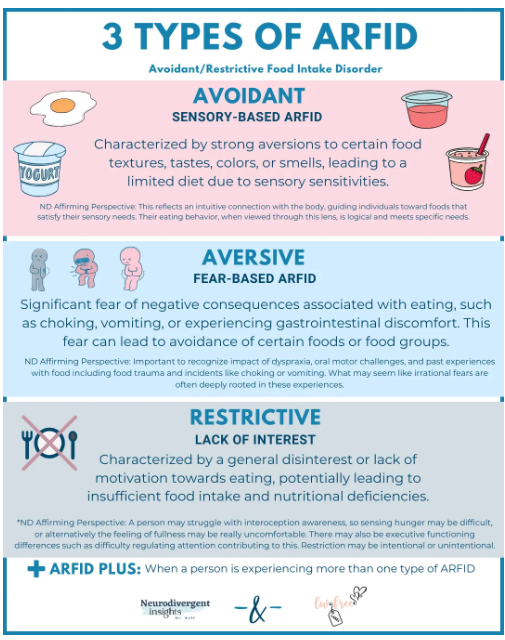
Difficulties around food and diet are more typical for autistic people. Autistic girls mainly experience issues with restriction, varying in severity and cause. From sensory based aversions to the look, smell, taste and feel of certain foods (which forms part of the newly categorised Avoidant and Restrictive Food Intake Disorder, ARFID) to significant calorie reduction and life-threatening weight loss. The social impacts of eating disorders, such as inability to eat with others, can greatly impact autistic people.
Unlike their peers, autistic pupils may not enjoy break and lunch times at school due to the following reasons:
- Lunch and break times being a less structured time of their school day and the dinner hall being unpredictable.
- They could be self-conscious about eating in public when they feel that others are looking at them.
- They may be sensitive to the smell/look of their peers’ food, chewing noises, the sound of cutlery, people talking at the same time and chairs being moved in the dinner hall.
- They could be self-conscious about their food looking different/ more bland compared to that of their peers due to their limited diet and sensitivity to the taste, texture and look of certain foods.
- Awareness of their differences in conversation and social interaction skills during lunch time.
- They may be fearful of bullying and social isolation.
School can support in the following ways
- Organise smaller, lunchtime clubs.
- Try using social stories if a pupil is concerned about a particular situation in the dinner hall.
- Ensure that there is good supervision during lunch time by staff who have an understanding of autism.
- If the pupil finds lunch time too overwhelming in the dinner hall, a less stimulating environment could be offered to reduce sensory input.
More information on different restrictive eating behaviours and its roots
- ARFID – Avoidance restrictive food intake disorder National Centre for Eating Disorders
- Paediatric ARFID Service – Aneurin Bevan University Health Board
Health referrals for restrictive/ avoidant eating
- Food and health | NHS Fife resources for healthy diet and weight
- Eating disorder advanced intervention team | NHS Fife for remaining concerns about selective eating and weight loss(See suggested resources at bottom of page).