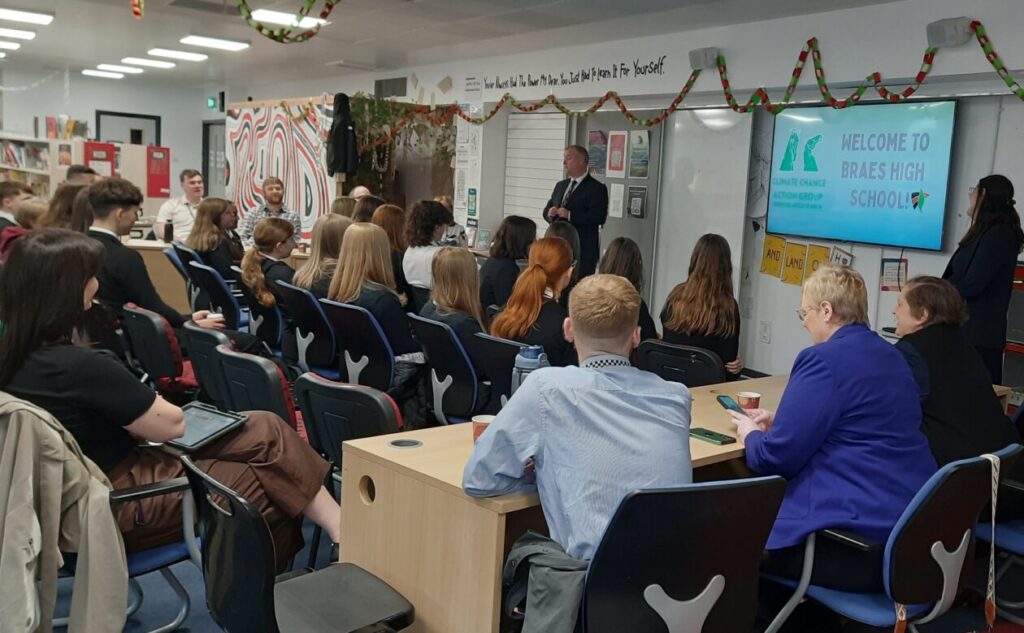
On Thursday 11th June 2026, around 25 young people from 7 Falkirk Council High Schools attended the Climate Change Action Cross Party Working Group meeting with: Councillor Deakin (who holds the climate change brief), local Councillor Hannah (Lower Braes Ward), council leader Councillor Meiklejohn, and our Falkirk Council Climate Change Team. Dr Samantha Wilson-McCaw and her eco group of young people organised the event with the support of her head teacher Iain Livingston and Learning for Sustainability curriculum leads in other secondary schools. Yvonne McBlain, education support officer, holds the Learning for Sustainability remit currently and attended to represent our central education team.
Dr Wilson-McCaw and Mr Livingston welcomed everyone, then the Braes eco group of young people shared an overview of the impressive range of ways in which they and their fellow pupils are combating climate change and promoting sustainability in their school.
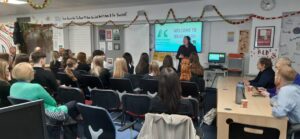
Claire Gibson, Energy and Climate Change Co-ordinator, then chaired the meeting and councillors Deakin, Hannah and Meiklejohn introduced themselves to the young people and their accompanying teachers. Claire explained that this meeting was a forum where the young people attending (as representatives of their peers) could share information and ask questions or raise climate related issues which were important to them.
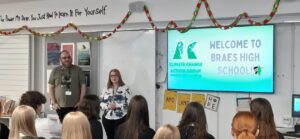
The questions, and discussion which followed were initially focused on waste, then recycling opportunities and limitations. Councillors and climate team colleagues were able to provide detailed facts, figures and future plans in response to these. The questions and issues posed by the young people included:
- Why don’t we have a bottle deposit scheme?
- Is sustainability possible in the future?
- Re fast fashion (its reputation for exploitation of workers and its damage to the environment) Although some of us know these things, not everyone does and if they don’t have much money and are not informed then it’s understandable that they might choose to buy from these manufacturers.
- Re our right to vote for councillors and politicians whose manifestos represent our priorities as citizens – I’m not old enough to vote yet but I want more teaching about what my choice should be.
- Re climate change – should we be doing more and should we learn more about its impact in school?
- We are less impacted by climate change in Scotland than many other parts of the world. People don’t care enough about this.
- Should we use a survey to gather creative ideas from across our schools for combatting climate change?
- Re success and impact of Braes HS tannoy reminders to pupils about littering around their school – Should we talk more about the difference simple changes like this can make? Perhaps campaigning, and making the room and time to talk about these things in school? Rather than being called geeky for caring about eco stuff – should we make this kind of behaviour more normal?
In response to these questions and the wider issues raised, the councillors and climate team colleagues shared official information about current arrangements and future council plans. When relevant, the teachers, Mr Livingston, and Yvonne McBlain shared additional information to build the young people’s understanding of the school, local authority and wider national bureaucracy which affected the issues they had raised.
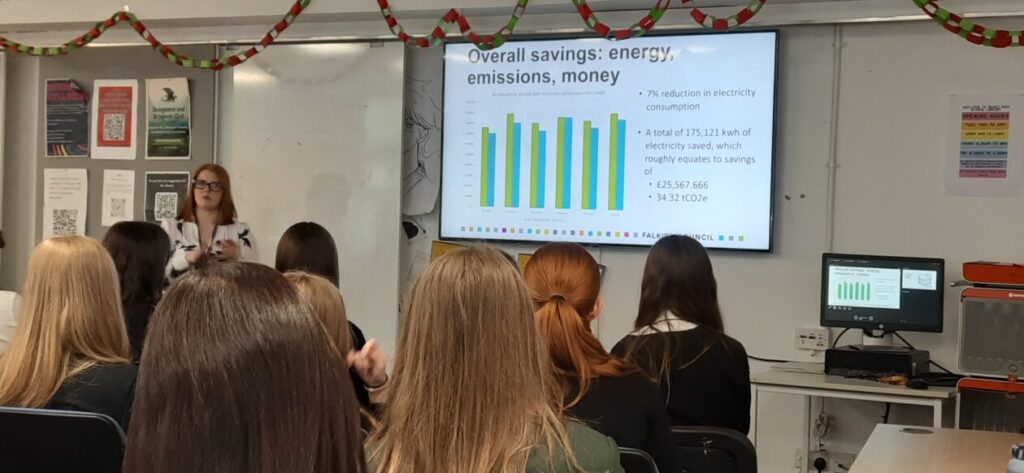
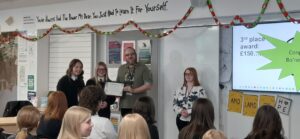
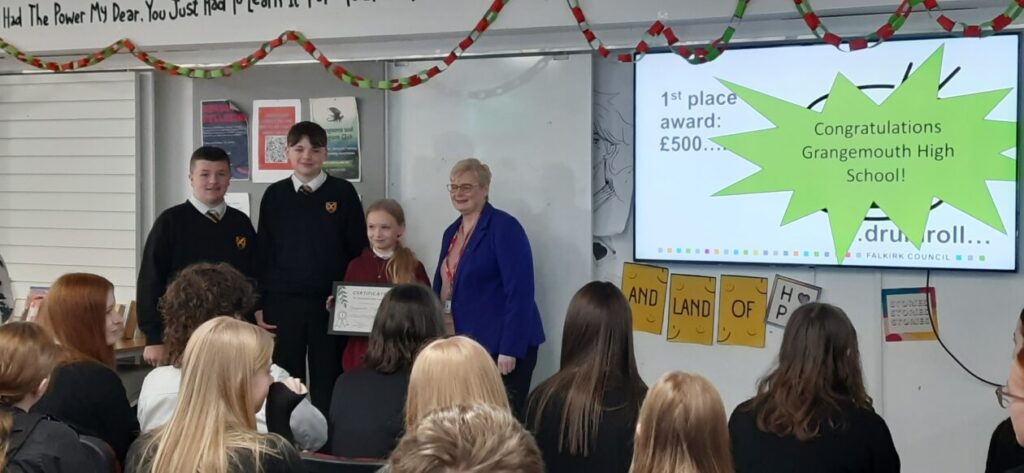
Claire then shared information about the secondary Schools Energy Challenge which 6 of our secondary schools took part in between October 2025 to March 2026. Compared to a 3 year average of the same period of time in total, these schools reduced their use of electricity by a total of 7% – saving 175 121 Kwh, £25, 567.66, 32.32 tCo2e (the equivalent of taking 50 diesel cars off the road for that period of time). Bo’ness Academy came third, winning £150 (for pupils to decide how to spend in school), Falkirk HS were second (winning £250) and Grangemouth HS gained first place, winning £500 for in school projects.
Claire gave the audience details of the Digital Energy-Saving Campaign competition which is running until 25th June 2026. She then asked for ideas for new potential challenges for schools and received the following suggestions:
- increase recycling
- reduce food waste
- increase opportunities for pupils and staff to reduce their carbon footprint
- design a sustainable business challenge
This led to discussion of waste issues relating to school catering facilities and processes and Mr Livingston and our councillors explained the contractual and staffing challenges around reducing dining hall waste of all kinds. They, and Yvonne have noted these for further investigations also.
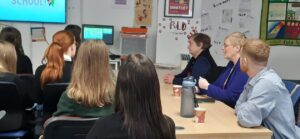
Councillor Meiklejohn closed the meeting with a vote of thanks to all, but particularly to the young people who were “being advocates for combatting climate change”. She shared how much she values having the elements of the Falkirk Agreement from our last Falkirk Climate Summit built into our Climate Emergency Action Plan and other plans made by Falkirk Council services. Young people in all Falkirk secondary school settings will have the opportunity to represent their fellow pupils on an annual basis at future Climate Change Action Cross-Party Working Group meetings.