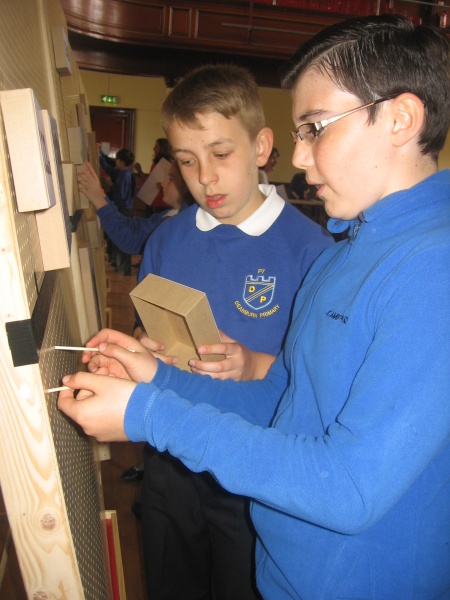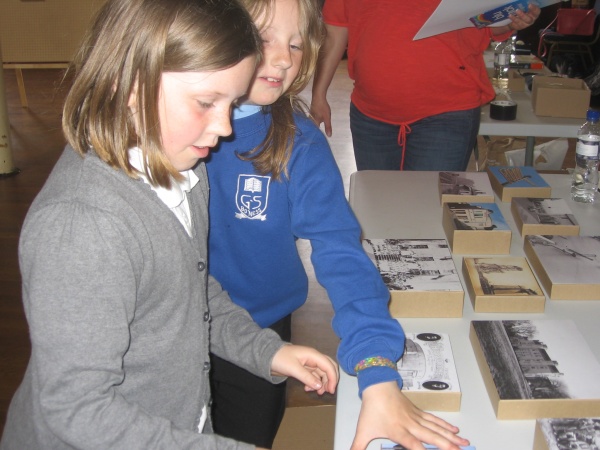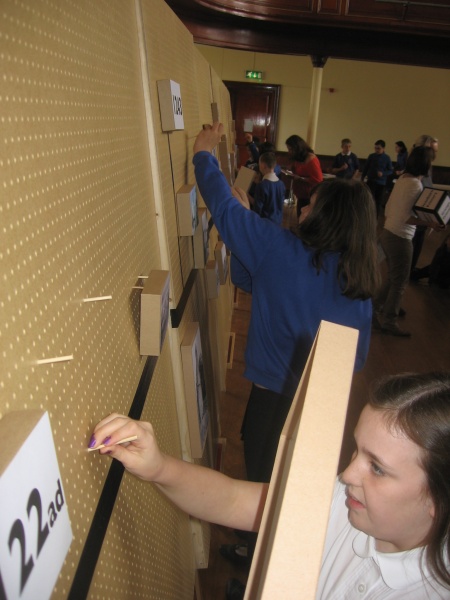
During the summer term of 2026 in Grange Primary School all staff and children experienced learning about their local heritage through storyline methodology. Storyline is a pedagogical approach which is naturally interdisciplinary and/or cross-curricular. It is known for its engagement of learners’ interests, creativity, agency and even their emotions! This project was initiated by Yvonne Jamison, class teacher, Ruth Duncan, principal teacher and their senior leadership team, as Grange prepared to provide the Bo’ness Fair Queen and her retinue. Yvonne had previously attended Storyline pedagogy professional learning provided by Yvonne McBlain and recognised how this approach could help increase the knowledge of Grange children and their families about this aspect of their local heritage.
All staff used two collegiate meeting times to plan their whole school storyline with the “Yvonnes”. These resulted in collaborative plans for all stages using the Bo’ness Fair context and Yvonne J then supported colleagues throughout the term.
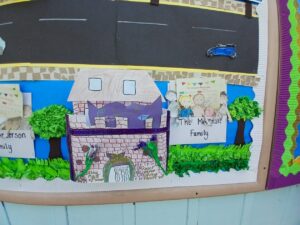
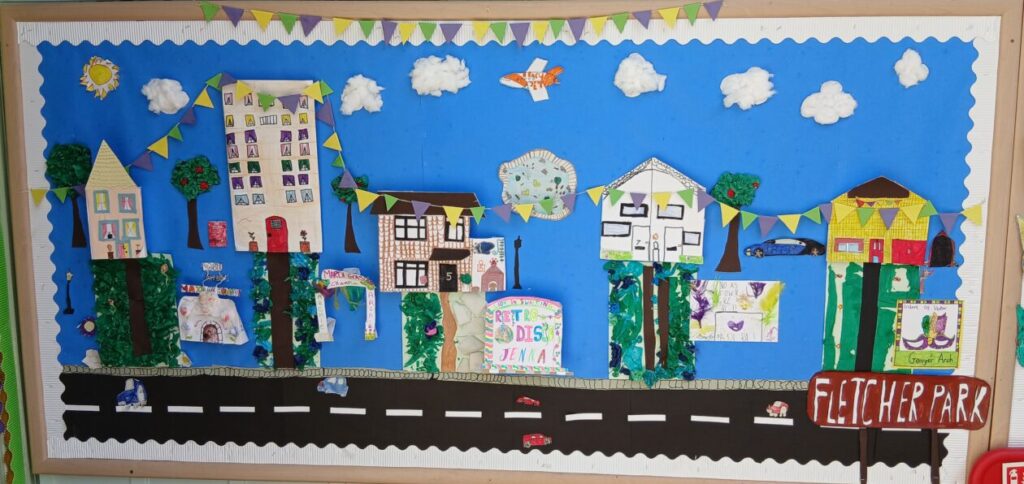
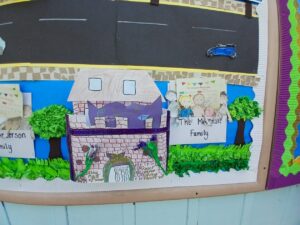
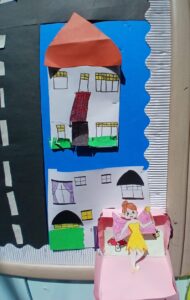
Storyline episode 1 included learning about community in general and the Bo’ness community in particular. Each class invented a new, imaginary Bo’ness street & each group within each class created a new home within the street.
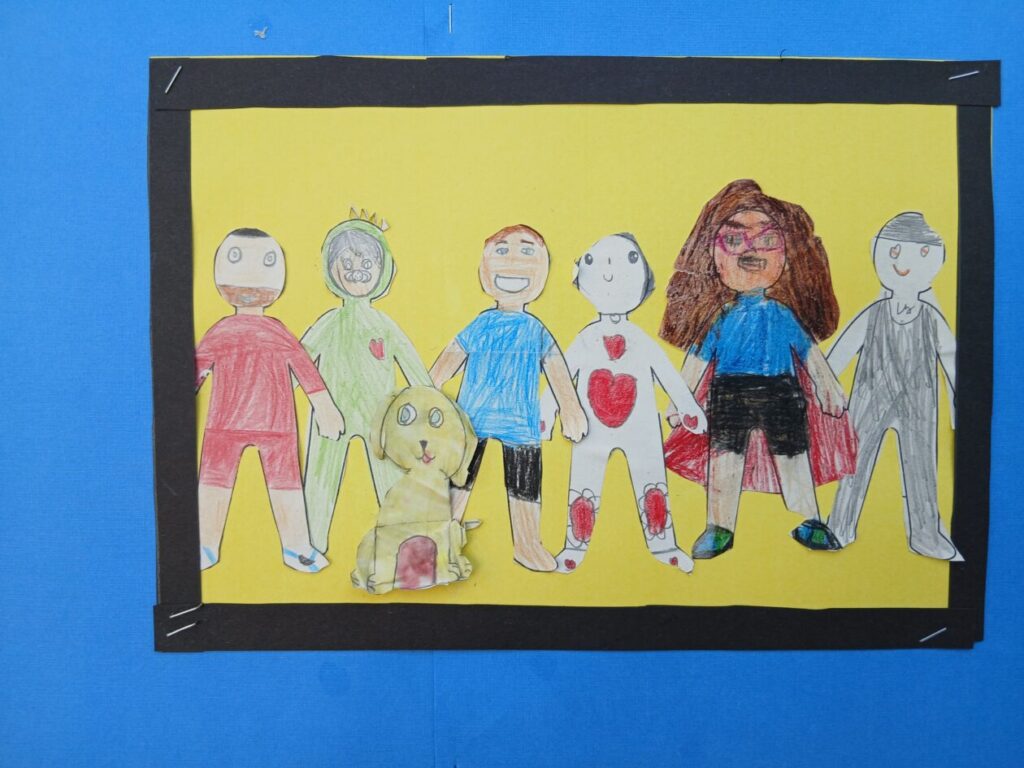
Storyline episode 2 each group in each class created the family who lived in their home. The children drew/played/spoke and wrote about their imaginary characters. Teachers differentiated these activities.
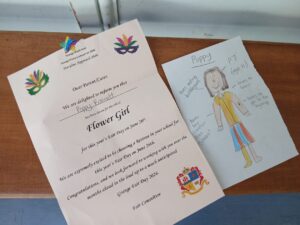
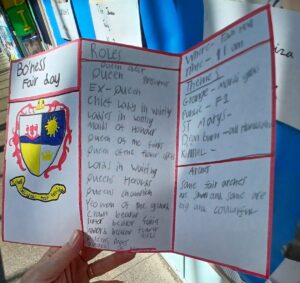
Storyline episode 3 each group received a letter informing them that a child in their imaginary family had been picked as a character in the Fair Queen’s retinue. This initiated research and learning about the history of the Bo’ness Fair as an important local tradition and occasion.
Storyline episode 4 the imaginary families prepared for their child’s big day within the Fair retinue. This included decorating the front of their imaginary family’s home or building a “Fair arch”. After much creative cutting, building and decorating to the class friezes, you can imagine the children’s dismay when they received the news that storm Zebedee was about to blow through Bo’ness threatening all of their work! 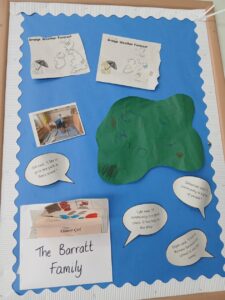
Storyline episode 5 all groups had to demonstrate their resilience by repairing the storm damage to their streets, homes and arches. They reviewed their learning from their storyline and prepared to share this with their guests during an open afternoon just before the real Bo’ness Fair.
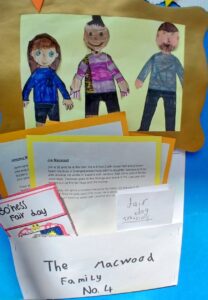
The Impact of this whole school collaboration included:
- An engaging learning context which united the school as, and with, its community
- A learning context which was relevant, cohesive and productive during this busy summer term
- The learning context enabled better understanding of real life retinue participation
- The adoption of a new pedagogical approach for staff and children
- Children enjoyed their learning (see quotes below)
- Children and staff were creative, responsive, playful and solved problems together
- Staff relished the purposeful and exciting “buzz” of collaboration through storyline
- Practitioners observed that children’s collaboration and social skills improved
- Practitioners also noted increased engagement in learning
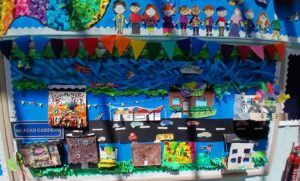
Children’s Feedback (sample gathered during the celebration event for the community)
T – Primary 3:
- Learning like that – it’s fun, I liked it until it got rained!
- My favourite bit was making the house.
- It’s valuable when children have fun and like doing stuff.
H – Primary 3:
- I think it was kind of fun but hard to build (my house) – the bricks and the roof were hard.
- I was Liam in my family – I was 50 years old and it wasn’t that bad!
- There was a storm in our village, our house was in danger – it was a tornado and I was scared!
- I learned that it’s really fun and helpful to help people when they get into trouble.
Three children in Primary 6 were asked what they thought of learning like this:
- R – I thought it was really good…it helped us to take part of our imaginations and part of real life and put them together. Makes it really fun.
- P – I think it’s quite interesting… we looked at different street names. I didn’t know about street names in Bo’ness. We used Google maps to explore our streets. It was fun researching.
- Ru – I thought it was really fun making up characters with your imagination…and making houses for them. It was difficult at times but good. When I was putting up the bunting beads kept falling off and I didn’t know what to use to make them stick. It was hard but I liked the challenge.
What was your favourite part?
- R – building the arch was the best part
- P & Ru – We were excited to build it – happy and proud of ourselves – yes.
Is it a good idea for your school to learn this way at this time?
- R – Yes – our school, it’s good to copy up our theme …Mardi Gras…and we have the queen.
- Ru – Some of us are in the real retinue. We researched what the retinue do so it was really useful.