Learning Journeys with Mr Atkinson

Welcome back to the P6a blog! We hope you enjoy reading about what we have be exploring with Mr Atkinson in his Learning Journeys.

Last term we finished the Learning Journey, Roads of the Future which encouraged  the pupils to explore the Sustainable Development Goals. P6A investigated how the SDGs could be incorporated into designing a new road and reflected on what were the most important factors to selecting the best place to build them on. They also learned about the properties of a variety of materials and used atlases and online maps to locate different roads in Scotland.  The class also compared different types of road crossings and we discussed some examples that exist in the local area.  Whilst debating the construction of the HS2 the class examined the pros and cons of using other modes of transport which led to some great conversations. The final experience of this Learning Journey involved working in teams to successfully construct a sustainably designed road for the Transport Scotland – Academy9 Sustainable Solutions Challenge which is linked to the A9 road project. The groups displayed excellent communication, collaborating, critical-thinking, initiative, adapting and creativity skills when designing their Tinkercad prototypes which they successfully used to assist with building their models. I was so impressed with everyone’s efforts and thank you again for donating materials.

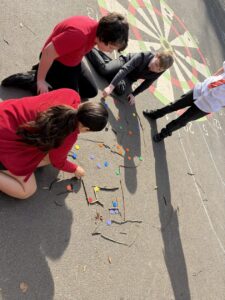
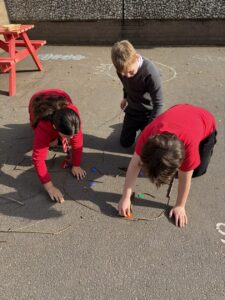
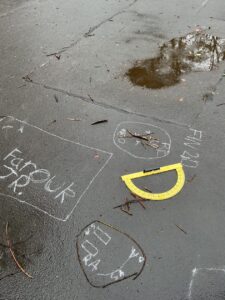
We have just recently started our new Learning Journey, Adapting to Climate Change. P6A as been researching how far animals can communicate and then we revisited different types of measurements. We started off with converting and then the pupils were challenged to solve calculations involving measurements. Building on this, the class explored how to draw using scales and then we all went outside to draw scaled distances of how far animals can communicate using chalk.

Collaboration & Communication

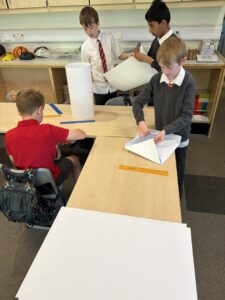
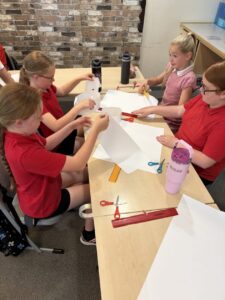
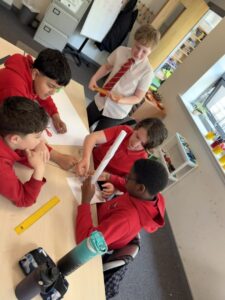
This week in class, we have been focusing on the importance of working together in both small and large groups. Through a variety of learning activities, pupils have been developing their ability to collaborate effectively, share ideas, and support one another to achieve common goals. This was demonstrated through paired reading sessions of our class novel, discussions and research of religious milestones and building and measuring the volume of 3d models. It has been fantastic to see the children encouraging each other, listening respectfully, and building confidence as they work as part of a team.

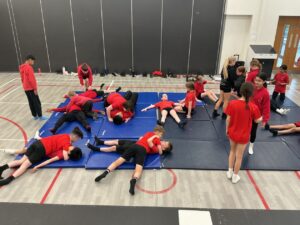
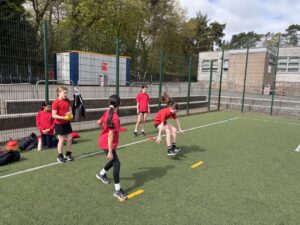
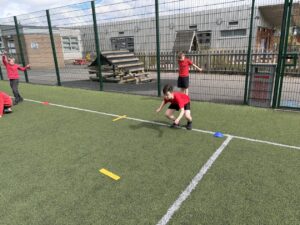
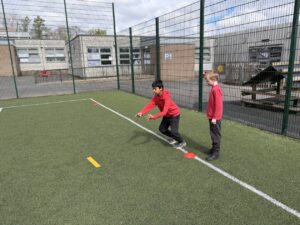
This was also developed In PE, where we have been developing our athletics skills, with a particular focus on jumping. Pupils explored different jumping techniques, thinking about balance, control, and power. They worked in groups to practise and improve their skills, offering feedback and celebrating each other’s successes. It was wonderful to see such positive teamwork, with children motivating and supporting one another throughout the session.


Settled in Strong!

We have settled quickly back into the swing of things after the Spring holiday and it has been fantastic to see everyone so engaged in their learning.

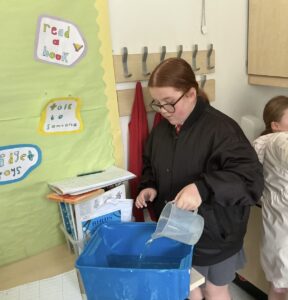
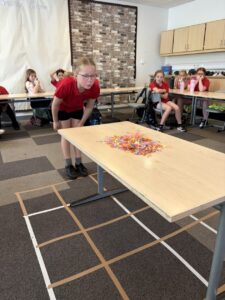
In maths, we have been developing our understanding of volume. We have been reading scales, measuring and predicting volume, and converting between litres and millilitres. Taking a hands-on approach has really helped us apply our learning to real-life situations and deepen our understanding.

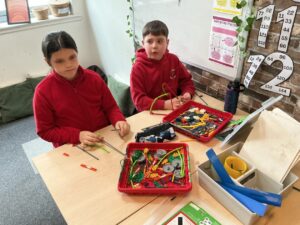
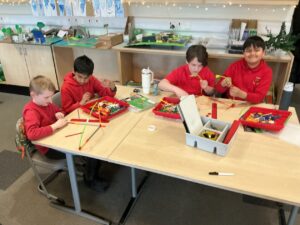
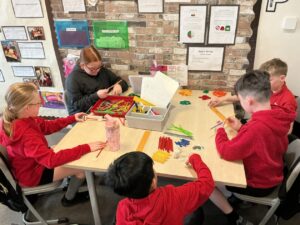
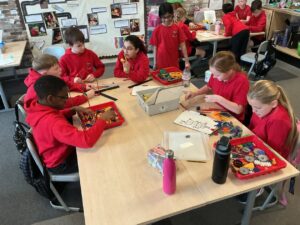
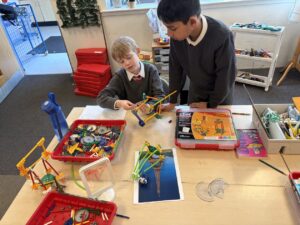
As part of our wider learning, we have also been using K’nex to build football goals by following a set of criteria. This challenged us to think carefully, solve problems, and work collaboratively as a team. We then put our creations to the test by playing a game of table football, where we worked together to create our own set of instructions and rules.

It has been a brilliant start to the term, and we are looking forward to continuing to build on these skills in the weeks ahead!

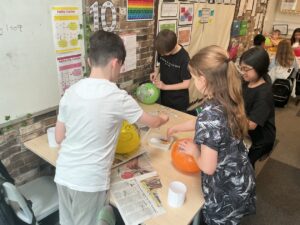
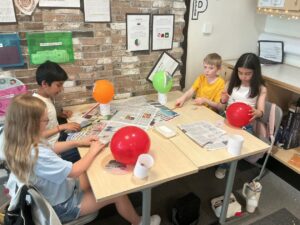
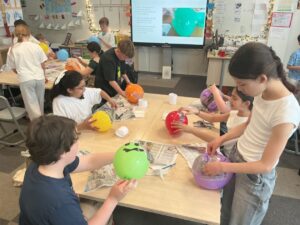
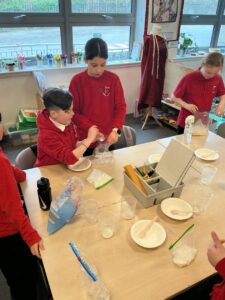
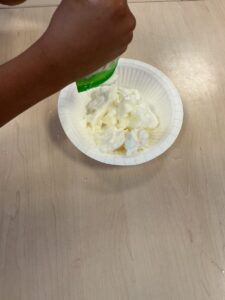
This week, we arrived at the end of our learning journey exploring “How can materials change?” by investigating how materials freeze and how temperature can impact the speed of freezing. The highlight of this lesson was making ice cream in a bag! The class got hands-on experience as they used ice as a variable to see how it changed the freezing speed of a liquid. They learned the importance of fair testing by keeping all other factors the same, ensuring that their results were reliable and valid. It was a fun way to connect scientific understanding to a real-world process, and of course, they got to enjoy the delicious outcome (we decided if doing this to home, we’d probably add some sugar/sweetner.)

Finalising our lesson off,  we played a game of Cops and Robbers to review everything we’d learned. Each pupil shared five key facts they had discovered during the journey, then “stole” five more from their peers. This was a great way for the class to reinforce their knowledge, while also practicing teamwork and communication.

Throughout this learning journey, P6a practiced important scientific skills like forming hypotheses, observing results, and recording data. They also developed their collaboration skills, sharing insights and learning from one another; one of the Metaskills.

We’re Loving Angles Instead

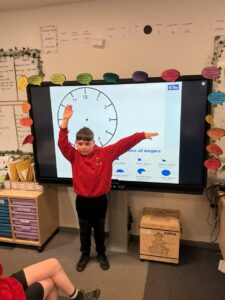
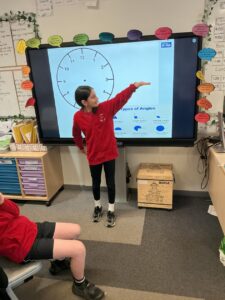
What an on point week we’ve had! Our class have been exploring the fascinating world of angles. We’ve been busy measuring, building and moving to understand how angles shape the world around us.

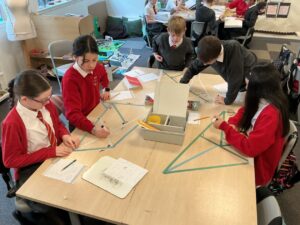
We used K’nex to rebuild the Eiffel Tower! As we built, we had to identify the specific angles required to give the tower its iconic shape. We saw plenty of angles helping to create those sturdy triangles that keep the structure standing tall.

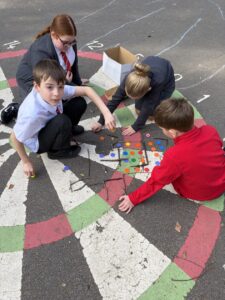
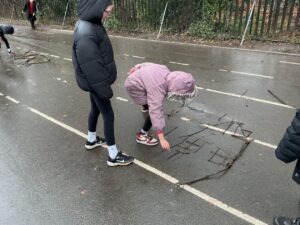
We headed outside in small groups for a game of Pac-Man. Instead of joysticks, we used mazes used from sticks and directional language and angle turns (90°, 180°, and 360°) to navigate the “maze.” It was a fantastic way to see how angles relate to movement and position.

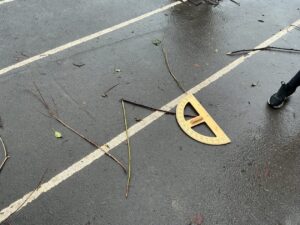
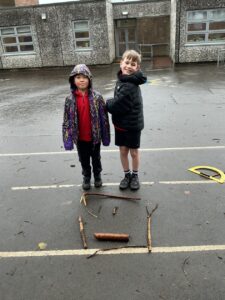
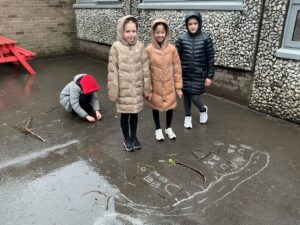
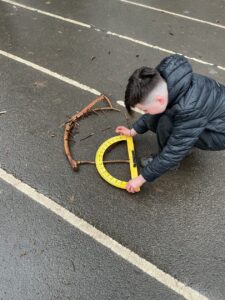
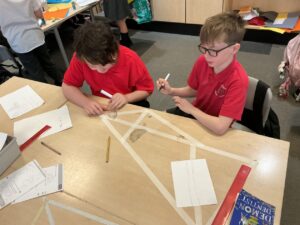
The rain didn’t stop us creating stick art outside. In groups we created images, ensuring they had different types of angles. We identified and classified angles, using angle names, we estimated angle sized and then measured using a protractor.

Curious Minds at Work!

This week in class we have been developing our meta skills, with a strong focus on collaboration, curiosity, sense making and critical thinking.

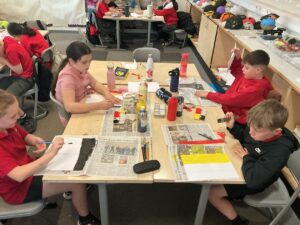
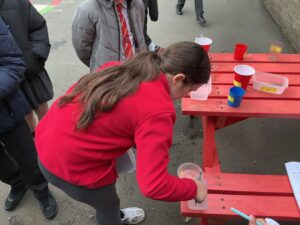
Our learning journey is exploring the big question “How can materials change?” The class began investigating their own smaller question: “What materials are soluble?” Pupils worked together to test different materials in water, sharing their hypothesis before observing what would happen. Through discussion and experimentation, they demonstrated fantastic curiosity and teamwork as they tried to make sense of their results. It was great to see the pupils questioning why some materials dissolved while others did not and explaining their thinking to their peers.

In maths we continued developing our understanding of fractions, decimals and percentages. Pupils worked in pairs to solve Tarsia puzzles, where they had to correctly match triangles by converting between the different forms. This task encouraged lots of mathematical discussion, problem solving and perseverance as pupils worked collaboratively to complete the puzzle.

World Book Day 2026

To celebrate World Book Day, P6a have begun to create their own storybooks to read and gift to their P1 buddies.

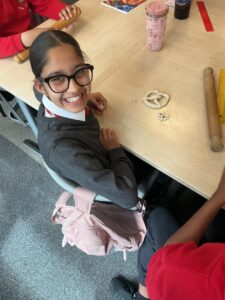
Developing their fine motor skills, hand eye coordination and life skills, P6a used a needle and thread to create a felt bookmark for their personal reading book. They have been putting these to good use during the class DEAR time (drop everything and read).

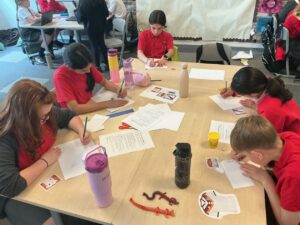
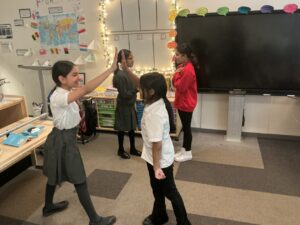
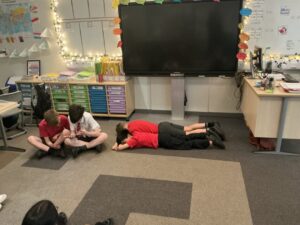
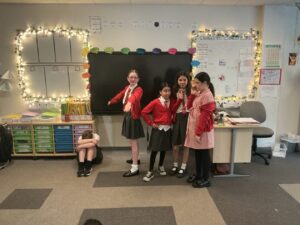
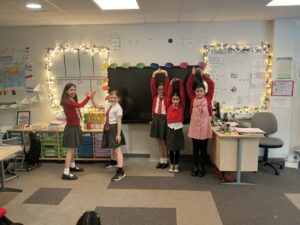
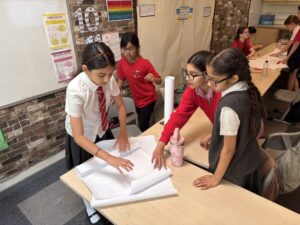
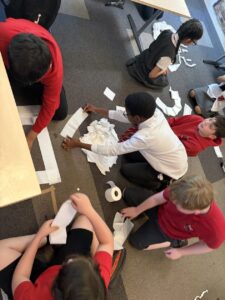
Working in small groups P6a made a scene from a story. Their collaboration, creativity and problem solving was impressive throughout.

.

The Class is Alive with the Sound of Music!

This week, our classroom was filled with excitement, curiosity, and plenty of wonderful sounds as we welcomed two  S6 pupils from Eastwood High School. They led an engaging and interactive music lesson all about the different instrument families found in an orchestra.

We learned about the four main instrument families: strings, woodwind, brass, and percussion. The pupils explained how each family produces sound and shared examples of instruments.

The highlight of the lesson was having the opportunity to explore and try a variety of instruments ourselves. Everyone had great fun experimenting with the different sounds and learning how each instrument works. It was wonderful to see so much enthusiasm, teamwork, and curiosity.

A huge thank you to the S6 pupils for sharing their knowledge and inspiring us. Who knows—we may have some future orchestra members in our class!


Patterns & Sequences

This week we have been using lots of different materials to help us make sense of number patterns and sequences, including squared numbers, triangular numbers and Fibonacci sequence. Not only have we learned about common difference, terms and nth numbers, we have been able to apply our learning and create patterns for our peers to solve.


Team Work Makes the Dream Work

We have recently completed a block of lessons developing key skills through rounders, including communication, teamwork, coordination, throwing, batting and catching. This week, we have begun transferring many of these skills into the sport of cricket. While learning new rules, procedures, language and techniques, we are continuing to work together, communicate effectively and support one another as a team. This has helped them see how skills learned in one activity can be applied successfully to new sports and challenge.


Report a Glow concern
Cookie policy  Privacy policy