Complete
Brain Development

🌟 Why Brain Development Matters
Your child’s brain grows faster from pregnancy to early primary school than at any other time in life. Experiences, relationships, play, and learning shape how the brain develops—laying foundations for health, learning, behaviour, and wellbeing throughout life.
Teenagers’ brains are still under construction — especially the parts responsible for planning, decision‑making, and managing emotions. This explains why teens can be mature one moment and impulsive the next.
How does the brain grow from babies to teenagers:
 Helpful Lealfets
👶 Nursery / Early Years (0–5)
🧠 What’s happening in the brain?
- Rapid growth of brain (neural) connections—millions formed every second.
- Strong influence of responsive caregiving and interactions.
- Play builds thought, language, motor, and emotional skills.
- Experiences strongly influence later health, learning, and behaviour.
💡 How parents can support early brain development?
- Talk, sing, and read with your child daily.
- Provide lots of play opportunities—messy play, outdoor play, imaginative play.
- Build routines that help your child feel safe and connected.
- Respond warmly to your child’s cues and emotions.
🎥 Suggested clips
Primary School (5–12)
🧠 What’s happening in the brain?
- Growth in areas responsible for memory, attention, and problem‑solving.
- Increasing ability to control (regulate) emotions and behaviour.
- Play, reading, and structured learning strengthen cognitive pathways.
💡 How parents can support primary‑age brain development
- Encourage reading for pleasure.
- Support curiosity—ask questions, explore nature, build things together.
- Provide predictable routines for sleep, homework and screen time.
- Help children talk about feelings and develop coping strategies.
🎥 Suggested clips
Secondary
🧠 What’s happening in the brain?
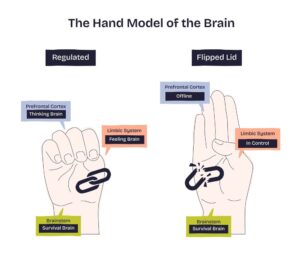
- Major development in the prefrontal cortex (decision‑making, planning, impulse control).
- Heightened emotional responses due to earlier‑developing limbic system.
- Teens seek independence, identity, and peer connections.
- Sleep, stress, and environment strongly influence learning and wellbeing.
💡 How parents can support teenage brain development
- Encourage good sleep habits—teens need 8–10 hours.
- Support independence while maintaining boundaries.
- Talk openly about emotions, friendships, and online life.
- Promote physical activity and balanced routines.
- Help them break tasks into manageable steps—this supports executive function.
Helpful Lealfets
🎥 Suggested clips.