Safeguarding, Child Protection and Wellbeing
A Guide for Parents and Carers
Our shared commitment to keeping children and young people safe, protected and supported
1. Our Commitment
At Stranraer Academy, we aim to create an environment in which every child and young person is safe and feels safe. We recognise that safeguarding is everyone’s responsibility and that the welfare of children is the paramount consideration in all decisions and actions.
We work in partnership with children, parents, carers and relevant agencies to promote wellbeing, reduce the risk of harm, respond promptly to concerns and ensure that children receive the support they need.
2. What Do We Mean by Safeguarding and Child Protection?
Safeguarding means promoting the welfare of children and young people and protecting them from harm. Child protection is the specific action taken when there are concerns that a child may be suffering, or may be at risk of suffering, significant harm.
Abuse and neglect are forms of maltreatment. They may involve someone causing harm or failing to act to prevent harm. Children may experience harm at home, within families or peer networks, in care settings, in the community, or through online and digital environments.
3. Types of Harm or Abuse
- Physical abuse
- Emotional or psychological abuse
- Sexual abuse
- Neglect, including medical neglect
- Domestic abuse and its impact on children
- Criminal exploitation and child trafficking
- Historical abuse
- Radicalisation or extremism-related concerns
There are, sadly, many other circumstances that may cause concern. Staff are trained to recognise possible indicators and to act when something does not seem right.
4. Our Approach at Stranraer Academy
- Every child has the right to feel safe and protected from harm.
- All children have an equal right to protection, regardless of background or personal circumstances.
- Some children may require additional safeguards because of previous experiences, communication needs, disability, dependency or other vulnerabilities.
- Children are listened to, valued and supported to identify a trusted adult they can talk to.
- Safeguarding is embedded in school policies, procedures, relationships, learning and the wider life of the school.
- We maintain effective anti-bullying, online safety, complaints, whistleblowing and health and safety procedures.
- Concerns are recorded securely and shared appropriately with those who need to know.
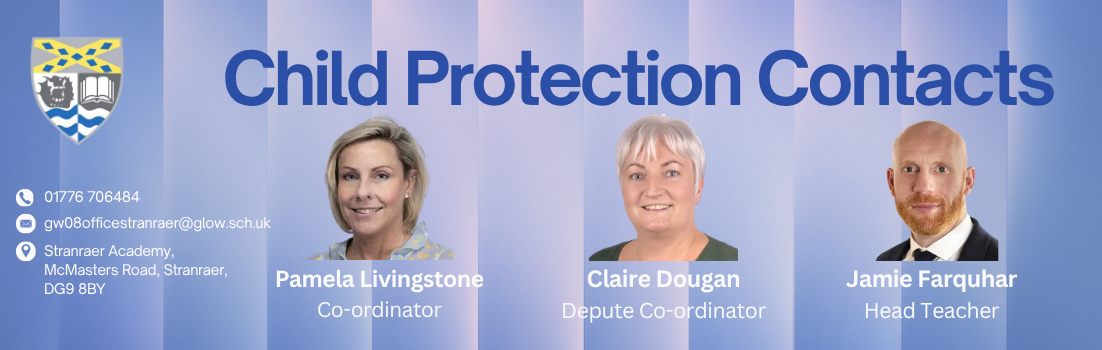
5. Who Leads Child Protection in School?
| Role | Name | Contact |
| Child Protection Coordinator | Pamela Livingstone | gw08livingstonepamel@glow.sch.uk |
| Depute Child Protection Coordinator | Claire Dougan | gw08douganclaire@glow.sch.uk |
Children and young people can also speak to any member of staff they feel comfortable with, including their Pupil Support teacher. Staff will pass concerns on to the appropriate person without delay.
6. If a Child or Young Person Is Worried
We encourage children and young people to:
- Speak to a trusted adult at home or in school.
- Tell their Pupil Support teacher or another member of staff.
- Use the Pupil Support Team contact arrangements displayed around the school.
- Remember that they do not need to deal with a worry on their own.
7. If Your Child Tells You Something Concerning
Please:
- Listen calmly.
- Let them explain in their own words.
- Reassure them that they have done the right thing by telling someone.
- Take the concern seriously.
- Contact the school or an appropriate professional promptly.
- Seek support for yourself if needed.
Please avoid:
- Promising to keep the information secret.
- Asking leading or detailed questions.
- Making the child repeat their story unnecessarily.
- Trying to investigate the matter yourself.
- Taking action alone when professional support is required.
8. Confidentiality and Sharing Information
If a concern about a child’s safety or wellbeing arises, information must be shared promptly with the Child Protection Coordinator, Depute Coordinator or the child’s Named Person, in line with relevant procedures. Information should not be shared more widely than necessary.
It is always better to share a genuine concern that later turns out to be unfounded than to do nothing when a child may be at risk. The key message is: trust your instincts and report concerns without delay.
9. Working with Families and Partner Agencies
We work closely with parents, carers, Social Work, health professionals, Skills Development Scotland and other partner agencies where appropriate. Where a child is subject to a Child Protection Plan, agencies work together through a multi-agency assessment and plan to improve the child’s circumstances and safety.
10. Further Information and Support
- Dumfries and Galloway Public Protection: www.dgppp.org.uk
- Dumfries and Galloway Children’s Services Partnership: blogs.glowscotland.org.uk/dg/dgchildrensservices/
- CAMHS Dumfries and Galloway: dghscp.co.uk/camhs/
- NSPCC: www.nspcc.org.uk
11. What Parents and Carers Can Do
- Talk regularly with your child about how they are feeling and who they can speak to if worried.
- Encourage safe and respectful online behaviour.
- Let the school know if there are circumstances affecting your child’s safety, wellbeing or ability to cope.
- Contact the school promptly if you have a concern about a child, even if you are unsure whether it is significant.
- Work with school staff and partner agencies so that support can be put in place early.
If you are worried about a child, please do not wait. Speak to someone.
Policy reviewed: 8 June 2026
This parent guide should be read alongside the full Stranraer Academy Safeguarding, Child Protection and Wellbeing Policy and relevant Dumfries and Galloway procedures.