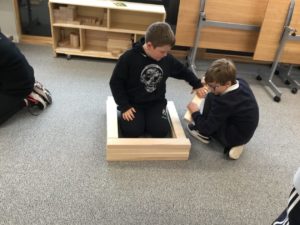
Some of our P7 and P5 pupils enjoy a session with the RDA group on Monday mornings.
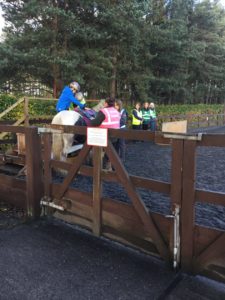
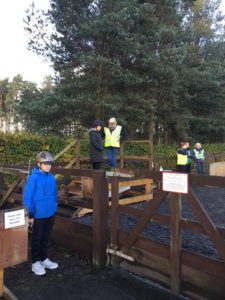


Some of our P7 and P5 pupils enjoy a session with the RDA group on Monday mornings.
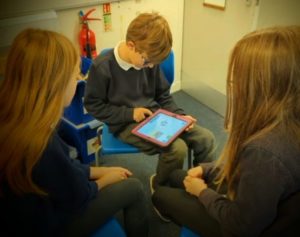
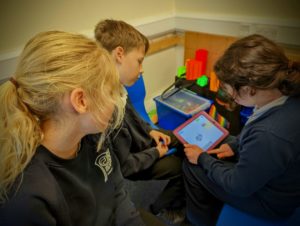
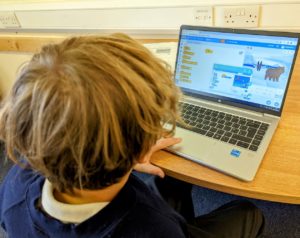
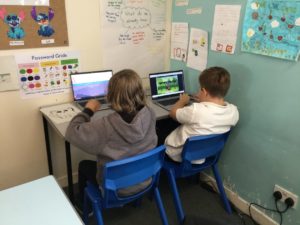
Some P6 pupils have enjoyed learning how to code with Ms Hakim. They have made use of the Beebots, programs on the Ipad and Scratch. This is what they had to say:
“Getting to use the coding games on the Ipad was fun.”
“I enjoyed using Scratch.”
“It was good, really fun.”
“Scratch is good if you are someone who likes to create animations.”
“I liked using the Lightbot.”





P5 have had an excellent start to the year as they have settled in really well to their new classroom area and worked hard in each aspect of their learning.
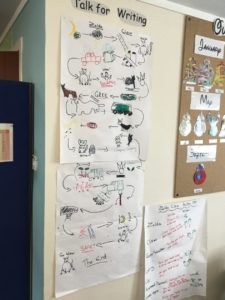
This term we have been developing our understanding of spelling common words through using Wraparound spelling. From this we have been able to look at spelling patterns as well as looking at the words in more depth by thinking about the sounds and syllables used as well as the strategies that we can use to aid in remembering and practicing our spelling. We have also being looking into the genre of suspense in Talk for Writing. As a class we have been analysing the text of Zelda Claw and the Rain Cat. We have been creating a story map to help us remember the story as well as using the text to aid us in thinking about what makes a suspenseful story. The pupils, from the discussions and activates completed, have then been able to create their own suspenseful story. To further help in this and deepen our understanding the pupils have also been reading the class novel of Varjak Paw by S.F Said.
In Numeracy we have been looking into as a class Place Value and not only been thinking about number with 4 digits in the 1000s range, but they have also begin to develop their understanding of place value to 1 decimal place. The pupils have been able to complete this learning through a wide range of active and engaging learning, through the use of play, to complete their activies and develop their learning further where the pupils have also had opportunities to take charge of their own learning. This term we have also looked deeper into Addition and Subtraction where the pupils have been developing their understanding of mathematical family facts when adding and subtracting multiples of 10 and 100. From this the class have been able to use and build upon their prior learning as well as build on strategies that they can use to work out the calculations.
For our first project the pupils were tasked with learning about wheat for the Dandelion and Harvest Festival. During this time the pupils learned what wheat looks like, the life-cycle, how wheat is harvested and finally what can be made using wheat. The children designed posters, as well as created and presented PowerPoints on what they had discovered to speak to the rest of the school about at assembly.
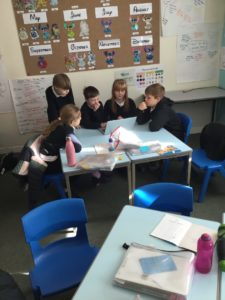
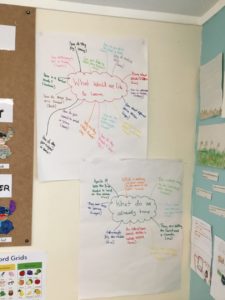
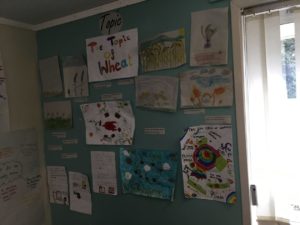
Our next project was to answer the question how was it made? The pupils decided that they wanted to learn how rockets are made. At the beginning of the topic the class were able to discuss what they already knew about rockets and the idea of space. Each child then researched and made PowerPoints which they presented to the class about the different planets in our solar systems. We have carried out experiements about how rockets fly through the use of force and friction. We have also looked in the current astronauts of the time such as what and how they eat and how space crafts can communicate with earth.
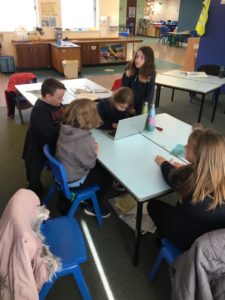
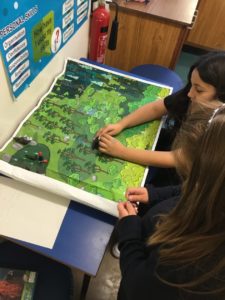
The P5s have been completing some wonderful independent learning sessions throughout this term. During this learning though play approach the pupils have been developing:
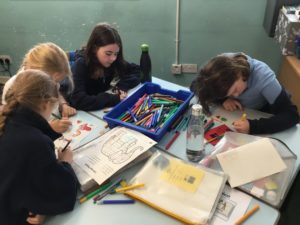
It has been a great start to the year with a lot of fun and laughter, as well as learning, and are looking forward to the rest of the year!!
Literacy
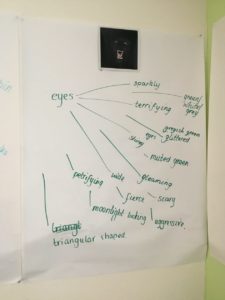
This term we have been studying the genre of suspense. We have been writing our own suspense stories based on Pie Corbett’s Zelda’s Claw and the Rain cat, thinking about all the key features involved in a successful suspense story. We have been using the Talk for Writing method to help us learn these texts, innovate on them, and then write independently. To complement our writing, we have been reading the novel Varjak Paw by S.F Said. This has helped the children to draw comparisons between their own writing and the writing of accomplished authors.
We are continuing to use The WrapAround Spelling scheme to look at spelling patterns and words in more depth and the strategies we can use to help us spell words accurately.
Numeracy
This term we have been looking at place value of numbers up to 100,000. We have used various activities to explore number working particularly on representing whole numbers using numerals, words and number lines as well as partitioning whole numbers into hundreds of thousands, tens of thousands, thousands, hundreds, tens and ones.
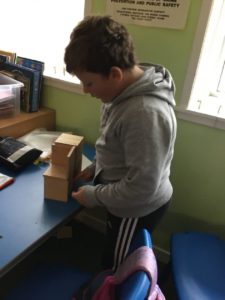
We have spent a lot of time linking play with our numeracy which has engaged the children in fantastic number conversations where they have successfully managed to link previous learning to new material.
Health and Well-being
Primary 6 have had weekly basketball lessons with Miss Masson and have also been practising their teamwork and communication skills in PE with Mrs Malcolm.
We use our Zones of Regulation every day in class for check in to help us recognise, understand, and talk about our emotions.
Topic – the Dandelion Festival and ‘How was it made?’
Primary 6 learned all about how barley is grown and harvested and what barley can be used for. We then shared this learning at our school’s Dandelion Festival assembly in September.
We have worked collaboratively to research the planets in our Solar System and talked about what makes the Earth different and similar to the other planets in the solar system. We plan to continue this project into the new term by creating and designing our own ‘Mars rover’.
Independent Learning through Play
The P6 children have done lots of fantastic learning through play, developing a range of skills like teamwork, communication, and problem solving, as well as advancing their learning in other areas. For example: