Category: Whites

  • Large White (Pieris brassicae)

    Large White (Pieris brassicae)

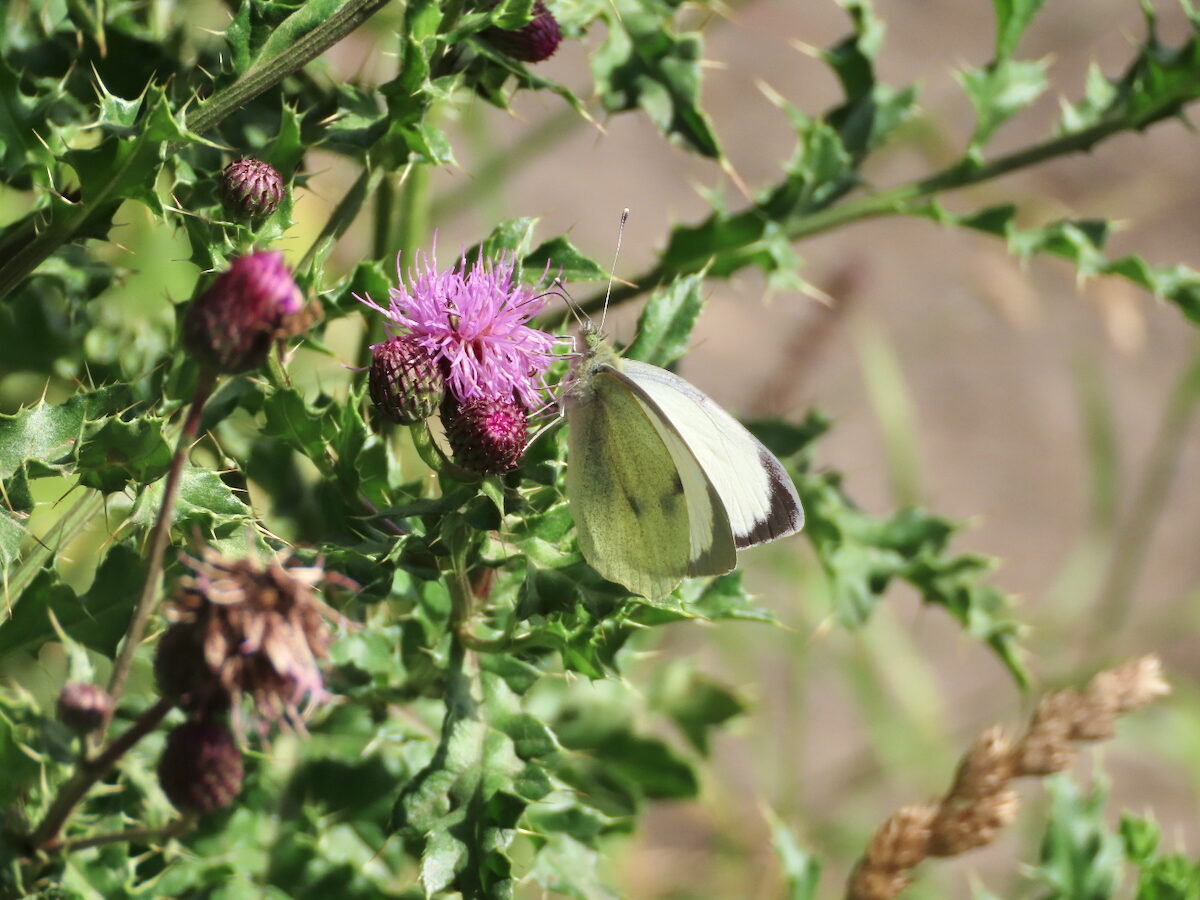
    The Large White, sometimes called the “Cabbage White,” is a familiar garden visitor with bright white wings, black wingtips that extend further down the forewing than in the similar Small White, and, in females, two bold black spots on each forewing. It is larger and more powerful in flight than its smaller relatives and is a common sight in gardens, allotments, parks, and farmland across Britain, often arriving in large migratory numbers from continental Europe each summer. As its nickname suggests, its foodplants are brassicas — cultivated cabbages and related plants — along with wild crucifers and nasturtiums.

    Unlike most whites, the Large White lays its eggs in tight clusters of ten to a hundred or more on the underside of leaves, and the resulting caterpillars are gregarious in their early stages, feeding together in conspicuous yellow-and-black bodies covered in short hairs, capable of stripping a cabbage plant bare. Their bright warning colouration reflects the toxins they sequester from their foodplants, making them unpalatable to birds. There are two or three generations a year, with the species overwintering as a chrysalis, often attached to fences, walls, or tree trunks well away from the original foodplant.

  • Green-veined White (Pieris napi)

    Green-veined White (Pieris napi)

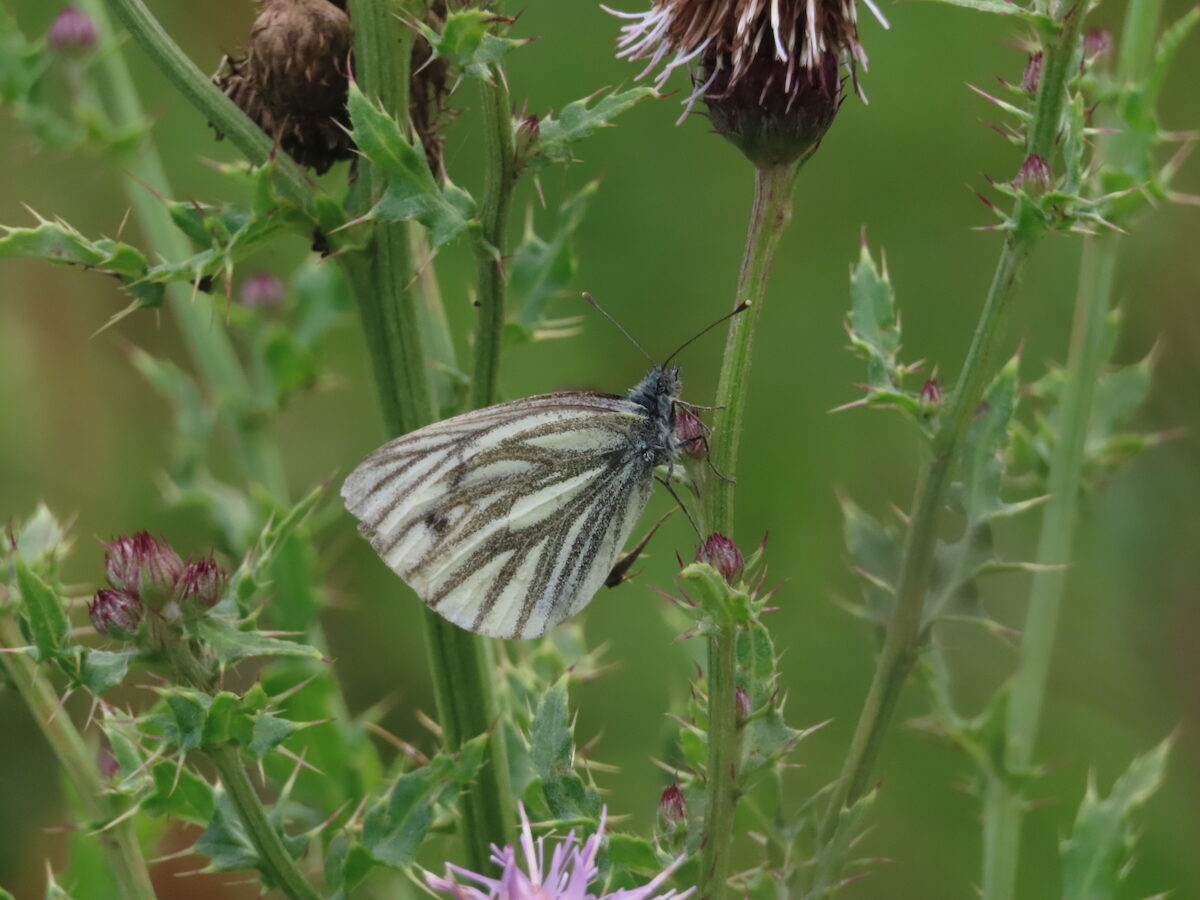
    Often confused with the Small White, the Green-veined White is best told apart by the dark scales tracing along its wing veins, which give a greyish-green, veined appearance on the underside (most visible when the wings are closed). The upperside is creamy white with grey-black wingtips and, in females, one or two black spots. It’s a butterfly of damper habitats than its white relatives — hedgerows, woodland rides, riverbanks, and damp meadows — and rarely strays into vegetable gardens, since it avoids cultivated brassicas. Its foodplants are wild crucifers such as garlic mustard, cuckooflower, and hedge mustard.

    The pale green, downy caterpillars feed unobtrusively on the leaves of these wild mustard-family plants rather than cultivated cabbages, which is why it causes no real harm to gardeners’ crops. Eggs are laid singly on the underside of leaves, and there are usually two generations a year in the UK, sometimes a partial third in warmer areas, with the species overwintering as a chrysalis attached to plant stems or other secluded structures.

Report a Glow concern
Cookie policy  Privacy policy