Author: John

  • Small Tortoiseshell (Aglais urticae)

    Small Tortoiseshell (Aglais urticae)

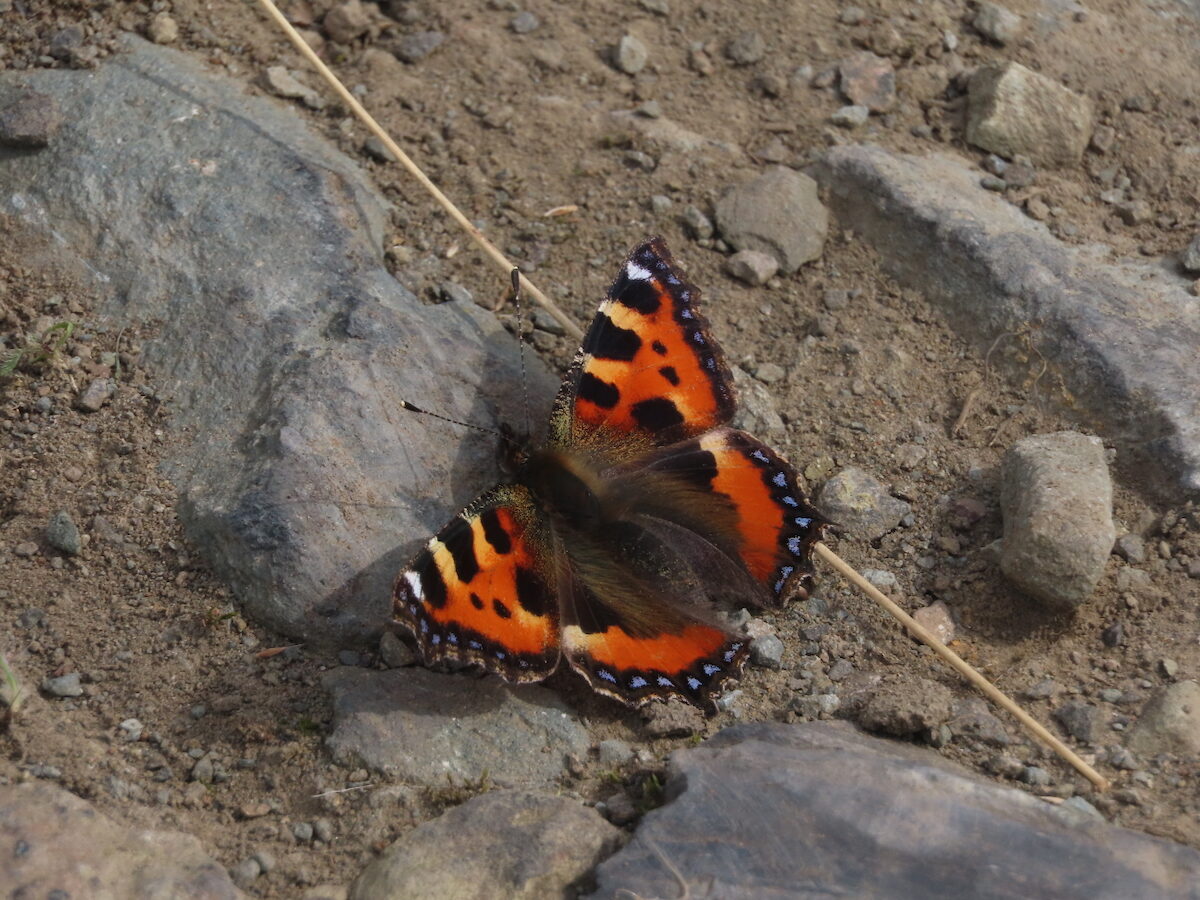
    The Small Tortoiseshell is a familiar and much-loved garden butterfly, with bright orange-red wings patterned with black and yellow blocks along the forewing and a border of blue crescents along the wing edges. It is a common sight almost everywhere in Britain, from gardens and parks to farmland and mountainsides, and is one of the first butterflies to appear on warm days in early spring, having overwintered as an adult. It feeds readily on a wide range of garden flowers and, like its close relatives, relies on common nettle as its foodplant.

    Females lay large clusters of eggs on the underside of young, sunlit nettle leaves, and the caterpillars live and feed gregariously within a communal silk web for their early stages before dispersing to feed and pupate separately as they grow larger; they are black and speckled with yellow markings and covered in branching spines. There are typically two generations between spring and autumn in most of Britain, with the summer brood’s adults feeding up on nectar before seeking out sheds, log piles, or house eaves in which to hibernate over winter.
  • Peacock (Aglais io)

    Peacock (Aglais io)

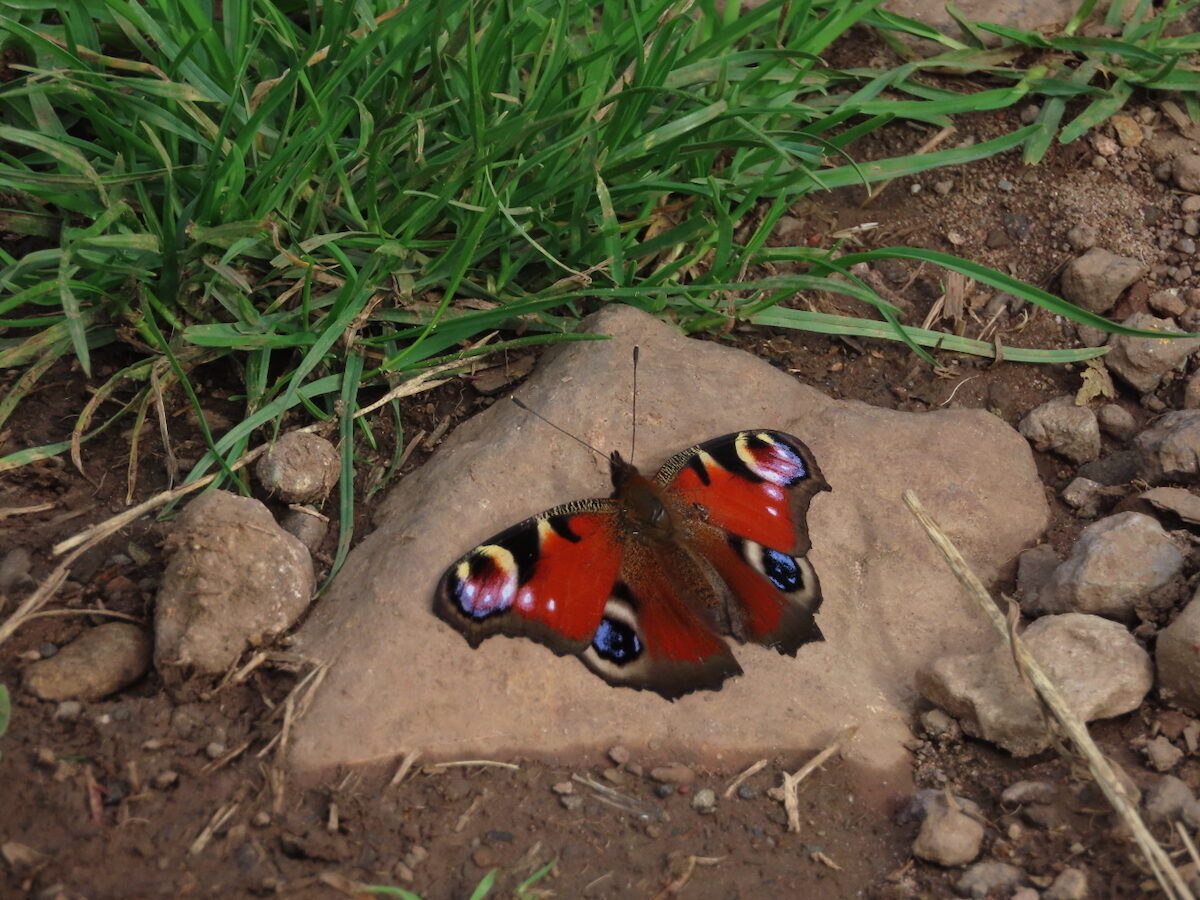
    The Peacock is one of Britain’s most striking butterflies, its rich rusty-red wings adorned with four large, iridescent blue-and-black eyespots that give the species its name and serve as a startling defence against predators when the wings are suddenly flashed open. The underside, by contrast, is a dull, sombre blackish-brown, providing near-perfect camouflage when the butterfly rests with wings closed among dead leaves or in dark crevices. It’s found almost everywhere — gardens, woodland edges, hedgerows, and parks — wherever nectar and its foodplant grow, and adults are frequent visitors to buddleia, ivy blossom, and other rich nectar sources. Its foodplant is common nettle (Urtica dioica).

    Female Peacocks lay large batches of eggs on the underside of young nettle leaves, and the caterpillars that emerge are gregarious, feeding communally in silk webs spun over the foodplant; they are black, speckled with tiny white dots, and covered in branching spines. As they mature, the caterpillars disperse before pupating. There is typically one generation a year, with newly emerged adults feeding up in late summer before hibernating over winter in hollow trees, sheds, or log piles, ready to fly again and breed in early spring.

  • Red Admiral (Vanessa atalanta)

    Red Admiral (Vanessa atalanta)

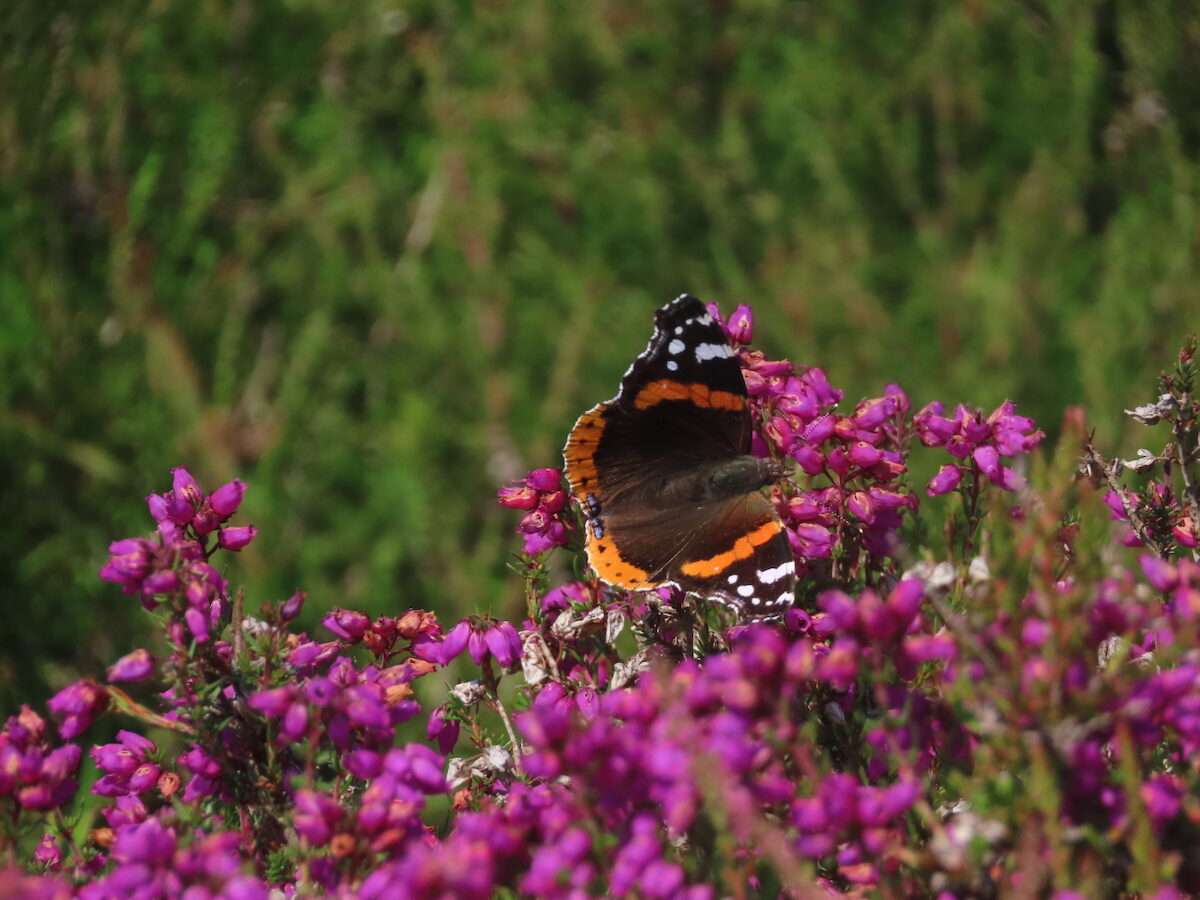
    The Red Admiral is a large, powerful, and unmistakable butterfly, with velvety black wings crossed by bold orange-red bands and marked with white spots near the tips. It is a strong, fast flier and a familiar sight in gardens, where it is especially fond of buddleia, ivy blossom, and fallen fruit, though it can turn up almost anywhere from woodland to coastal cliffs. Rather than being a true resident in the traditional sense, much of the British population arrives each year as migrants from continental Europe, though increasingly mild winters mean more individuals now survive here year-round. Its foodplant is common nettle.

    Eggs are laid singly on the tips of nettle leaves, and the solitary caterpillars — variable in colour from black to greenish, studded with branching spines — construct a protective tent by folding and silking a leaf around themselves, feeding from within this shelter. There are usually two generations in Britain between spring migrants and the summer brood that follows. The species cannot reliably survive harsh frosts at any stage, so while some adults now attempt to overwinter in sheltered spots in the south, the population is topped up each year by fresh arrivals from further south in Europe.

  • Large White (Pieris brassicae)

    Large White (Pieris brassicae)

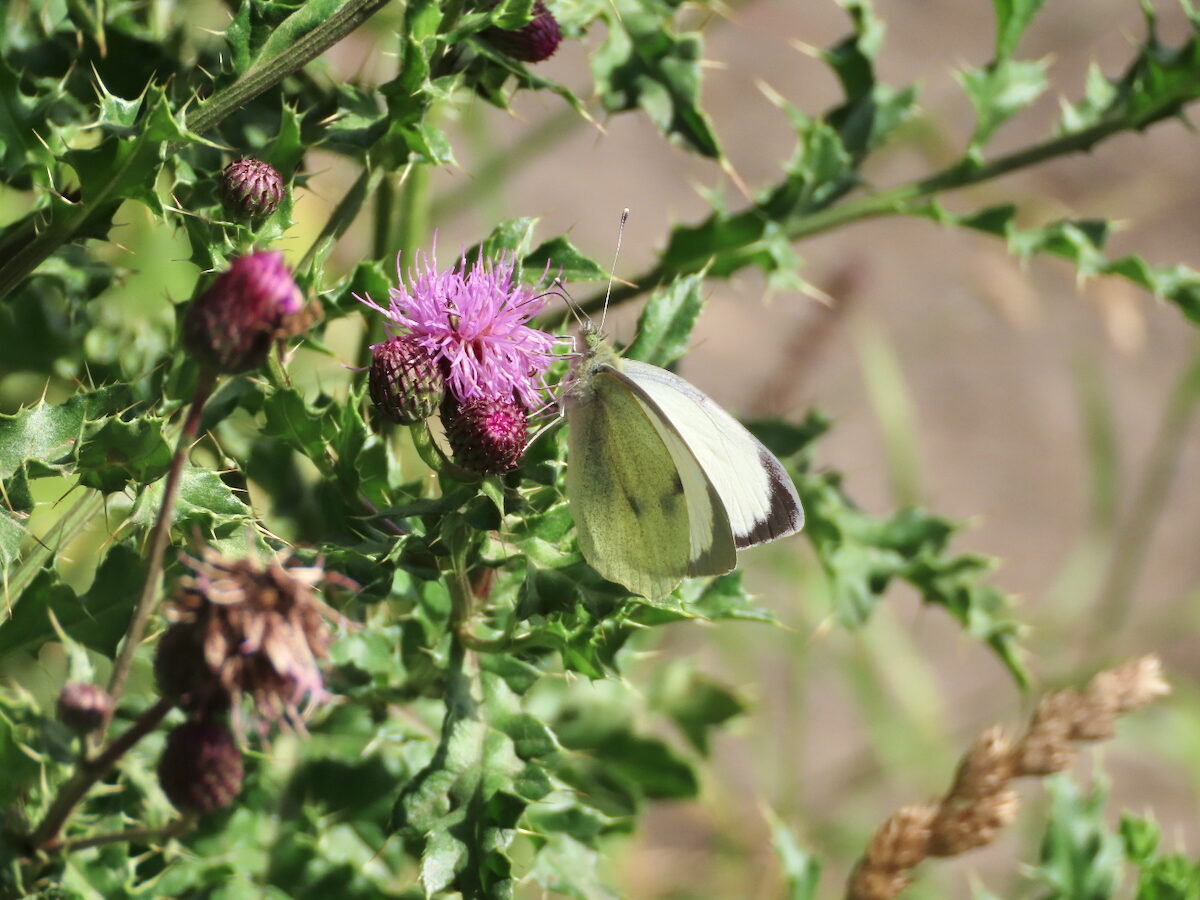
    The Large White, sometimes called the “Cabbage White,” is a familiar garden visitor with bright white wings, black wingtips that extend further down the forewing than in the similar Small White, and, in females, two bold black spots on each forewing. It is larger and more powerful in flight than its smaller relatives and is a common sight in gardens, allotments, parks, and farmland across Britain, often arriving in large migratory numbers from continental Europe each summer. As its nickname suggests, its foodplants are brassicas — cultivated cabbages and related plants — along with wild crucifers and nasturtiums.

    Unlike most whites, the Large White lays its eggs in tight clusters of ten to a hundred or more on the underside of leaves, and the resulting caterpillars are gregarious in their early stages, feeding together in conspicuous yellow-and-black bodies covered in short hairs, capable of stripping a cabbage plant bare. Their bright warning colouration reflects the toxins they sequester from their foodplants, making them unpalatable to birds. There are two or three generations a year, with the species overwintering as a chrysalis, often attached to fences, walls, or tree trunks well away from the original foodplant.

  • Green-veined White (Pieris napi)

    Green-veined White (Pieris napi)

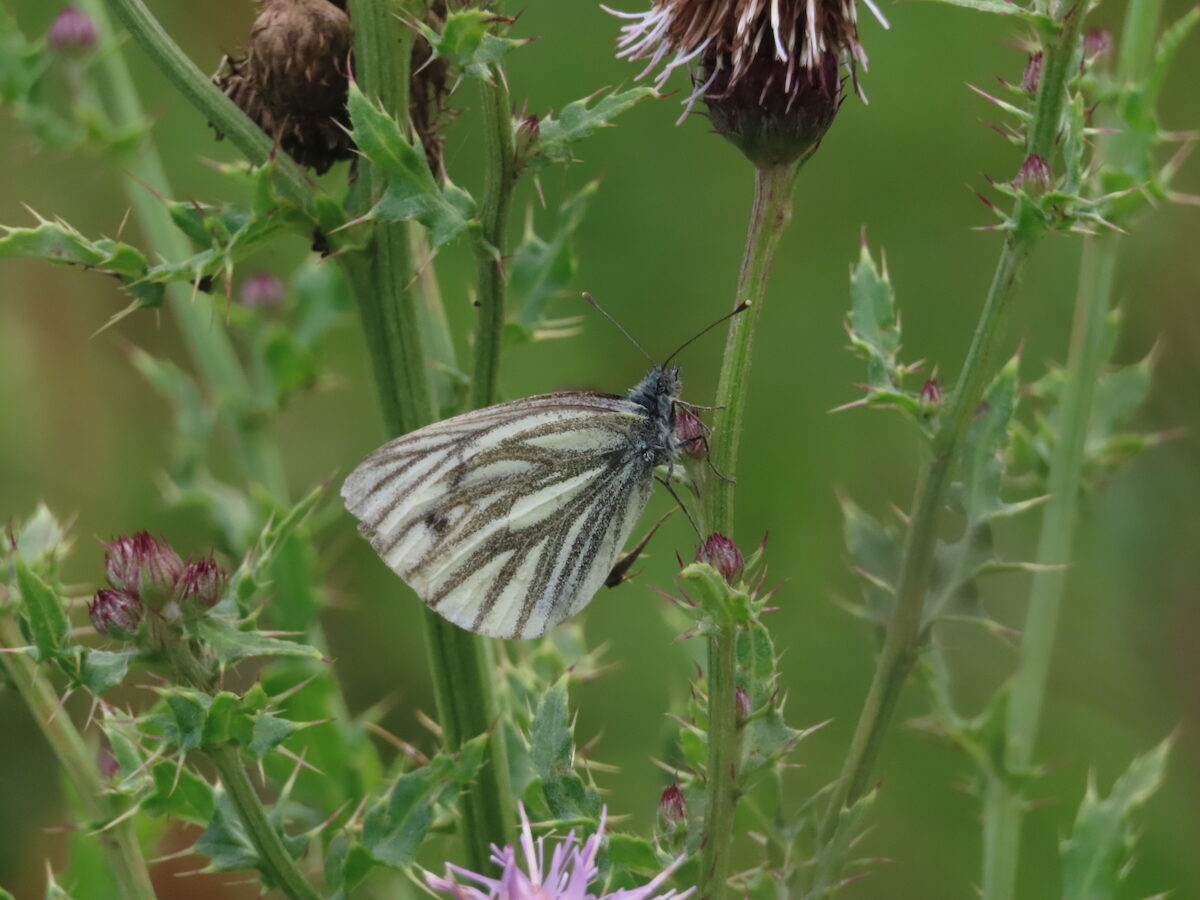
    Often confused with the Small White, the Green-veined White is best told apart by the dark scales tracing along its wing veins, which give a greyish-green, veined appearance on the underside (most visible when the wings are closed). The upperside is creamy white with grey-black wingtips and, in females, one or two black spots. It’s a butterfly of damper habitats than its white relatives — hedgerows, woodland rides, riverbanks, and damp meadows — and rarely strays into vegetable gardens, since it avoids cultivated brassicas. Its foodplants are wild crucifers such as garlic mustard, cuckooflower, and hedge mustard.

    The pale green, downy caterpillars feed unobtrusively on the leaves of these wild mustard-family plants rather than cultivated cabbages, which is why it causes no real harm to gardeners’ crops. Eggs are laid singly on the underside of leaves, and there are usually two generations a year in the UK, sometimes a partial third in warmer areas, with the species overwintering as a chrysalis attached to plant stems or other secluded structures.

  • Common Blue (Polyommatus icarus)

    Common Blue (Polyommatus icarus)

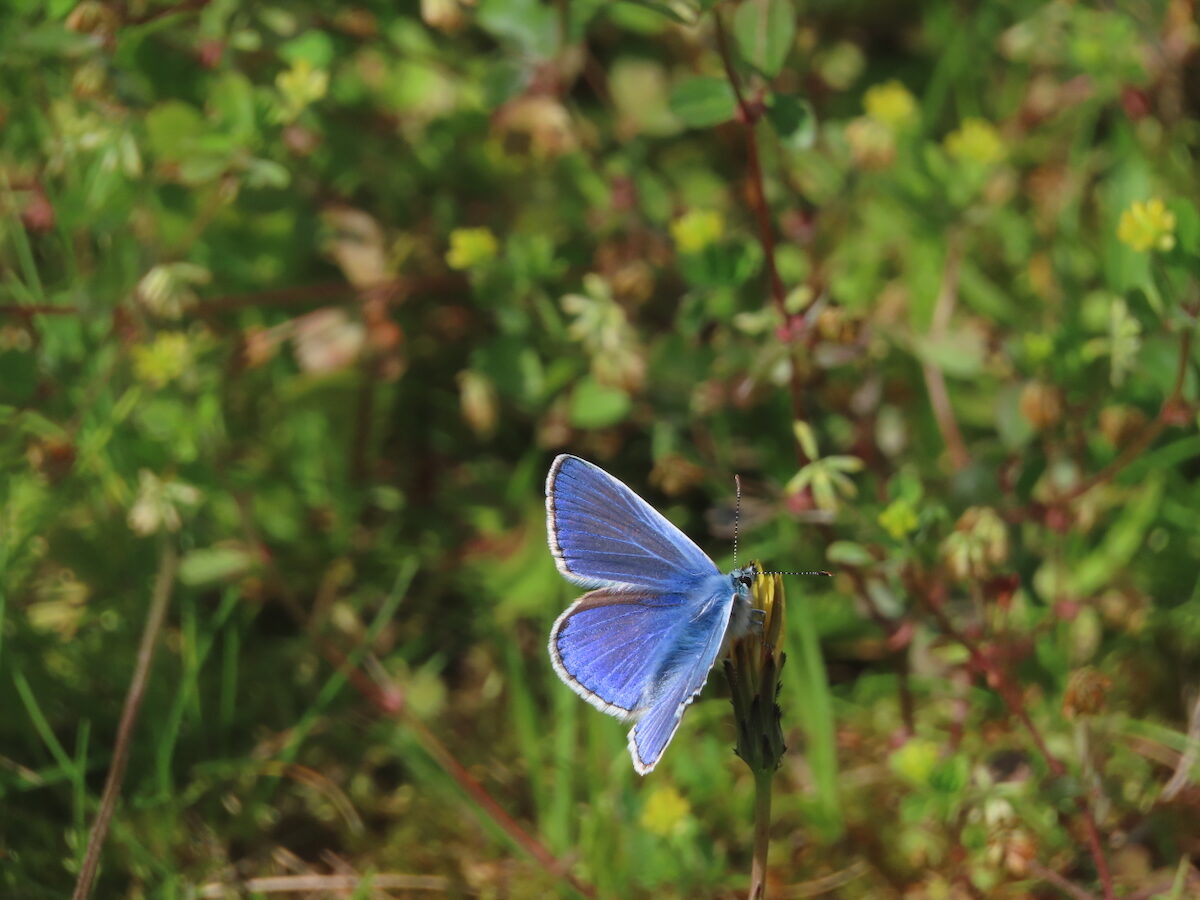
    The Common Blue is Britain’s most widespread blue butterfly, found in grassland, meadows, roadside verges, and coastal dunes wherever its foodplants grow. Males are a vivid violet-blue with a narrow dark border and white fringe, while females are far browner, often with only a dusting of blue near the body and a row of orange spots along the wing edge — leading to frequent misidentification. Both sexes have undersides of grey-brown peppered with black spots and orange lunules, providing camouflage at rest. It thrives on unimproved, flower-rich grassland with its main foodplant, bird’s-foot trefoil.

    Eggs are laid singly on the foodplant, usually bird’s-foot trefoil but sometimes other legumes such as black medick or white clover, and the caterpillars are small, green, and slug-like, feeding by grazing the leaf surface. Interestingly, the caterpillars have a mutualistic relationship with ants, which tend them for the sweet secretions they produce in exchange for protection from predators. There are usually two, sometimes three, generations between May and October, with the species overwintering as a partly grown caterpillar low down in the grass sward.

  • Comma (Polygonia c-album)

    Comma (Polygonia c-album)

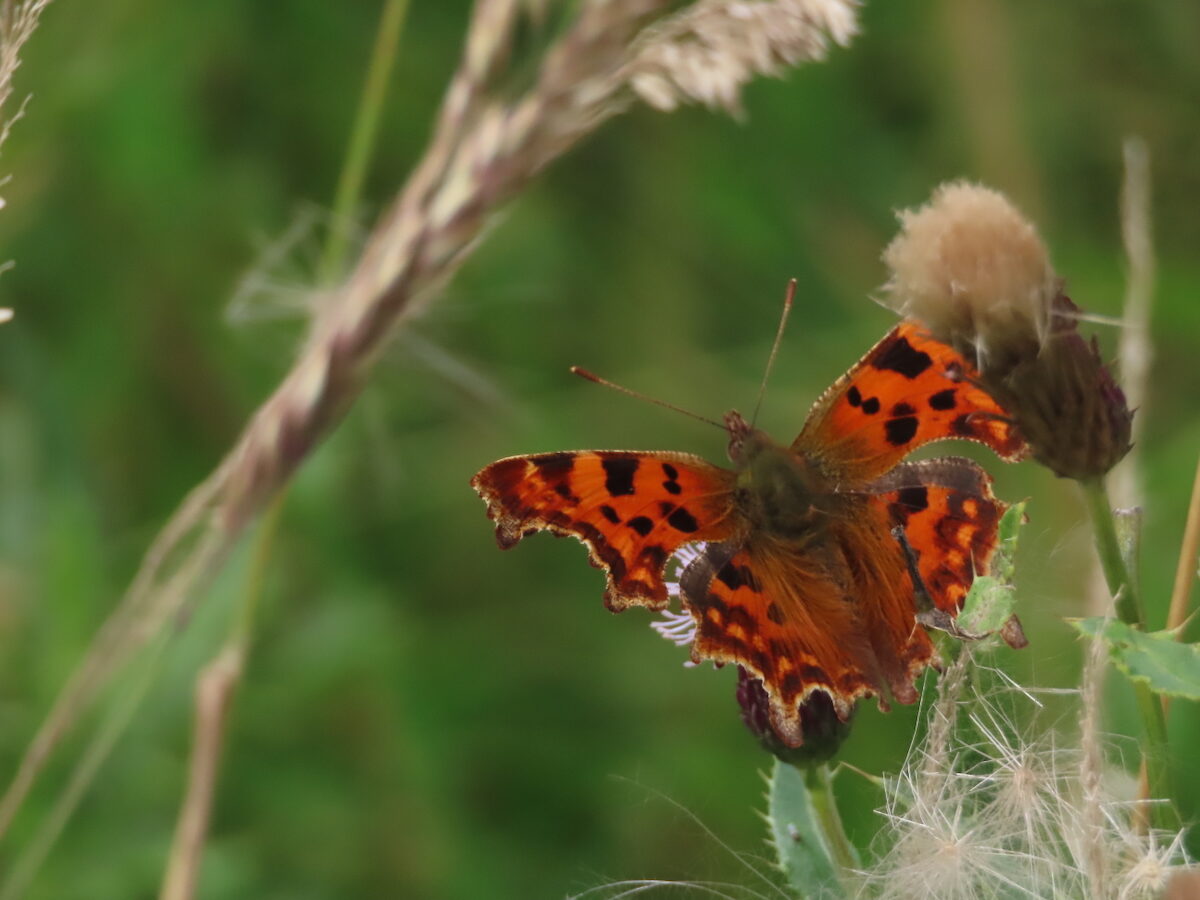
    The Comma is one of Britain’s most distinctive butterflies, instantly recognisable by its ragged, jagged-edged wings that make it look like a dead leaf when at rest — a superb piece of camouflage. The upper wings are a rich orange-brown mottled with darker patches, while the underside is a dull, mottled brown bearing a small white “comma” or “c” mark, from which it gets its name. It favours woodland edges, gardens, and hedgerows, and is often seen basking on sunny paths or feeding on ripe fruit and ivy blossom in autumn. Its main foodplant is common nettle (Urtica dioica), though it also uses hop and elm.

    Female Commas lay their eggs singly on the upper surface of nettle leaves, and the caterpillars that hatch are unusual in appearance — dark brown-black with a large cream-white patch across the back half of the body, resembling a bird dropping, which helps protect them from predators. There are typically two generations a year, with adults from the summer brood feeding up before hibernating as adults over winter, tucked into woodpiles, tree hollows, or dense vegetation, ready to emerge on the first warm days of spring to breed.

  • Speckled Wood (Pararge aegeria)

    Speckled Wood (Pararge aegeria)

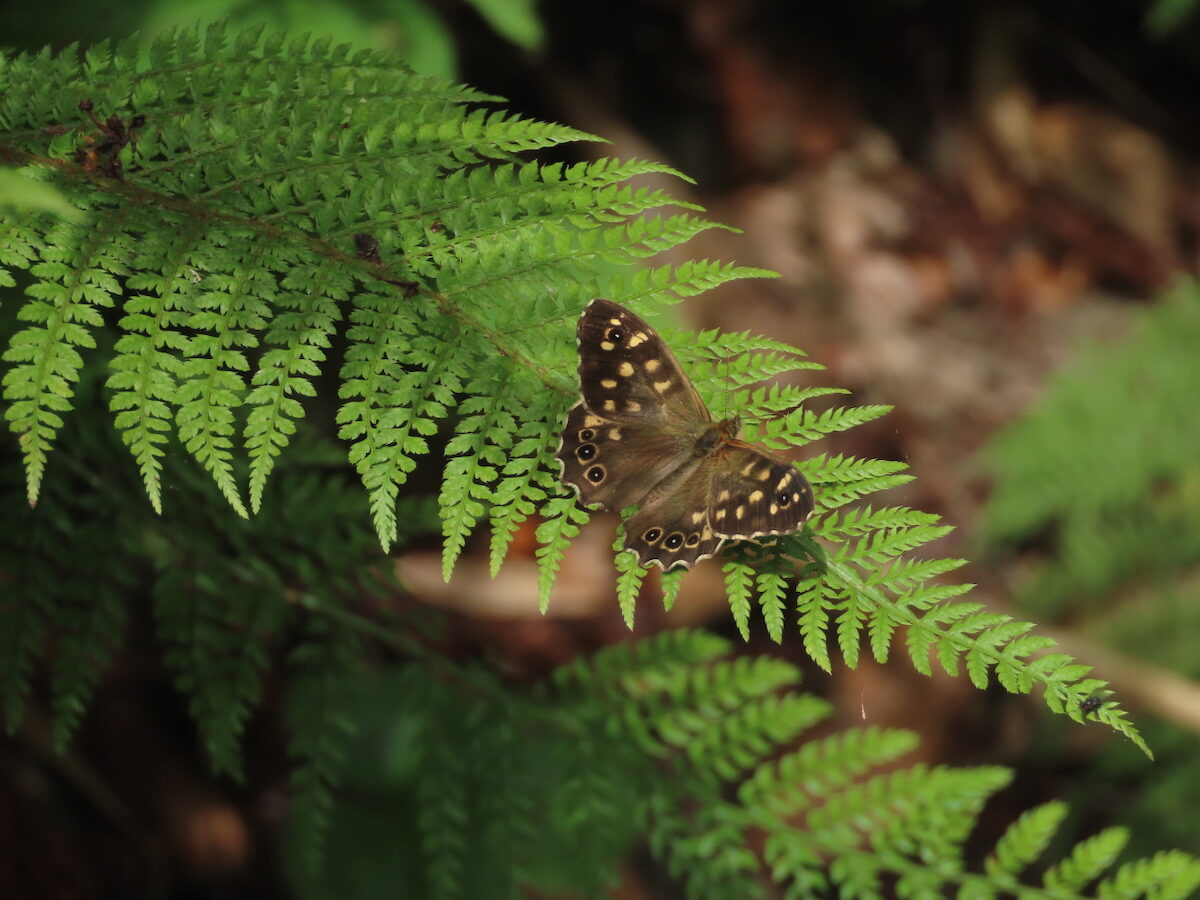
    The Speckled Wood is a subtly beautiful, shade-loving butterfly with dark brown wings dappled with cream-yellow spots, giving it excellent camouflage as it basks in dappled sunlight on the woodland floor. As its name suggests, it favours woodland rides, hedgerows, and shady gardens far more than open, sunny habitats, and males are notably territorial, often seen engaging in spiralling aerial battles to defend a patch of sunlit foliage. Unusually among British butterflies, the adults feed mainly on honeydew secreted by aphids high in the tree canopy rather than on flower nectar. Its caterpillars feed on various grasses, including cock’s-foot, Yorkshire fog, and common couch.

    Eggs are laid singly on grass blades in shaded, sheltered spots, and the caterpillars are green with faint pale stripes, feeding by night to avoid predators. The Speckled Wood is unusual in being able to overwinter at two different life stages — either as a caterpillar or as a chrysalis — which allows it to have a long and overlapping flight season with up to three generations between spring and autumn, making it one of the more complex and adaptable life cycles among British butterflies.

Report a Glow concern
Cookie policy  Privacy policy