Effective use of digital in learning, teaching and assessment

National standards for educators expect practitioners to have the digital skills to support or enhance learning in some way. How Good is Our School (HGIOS) is the national guidance on high quality learning, teaching and assessment and provides examples of highly effective learning, teaching and assessment. This section provides a model and examples for making effective use of digital technology to support or enhance learning, teaching and assessment in line with HGIOS.

Find out more about national standards with this link

Find out more about HGIOS with this link


TPACK

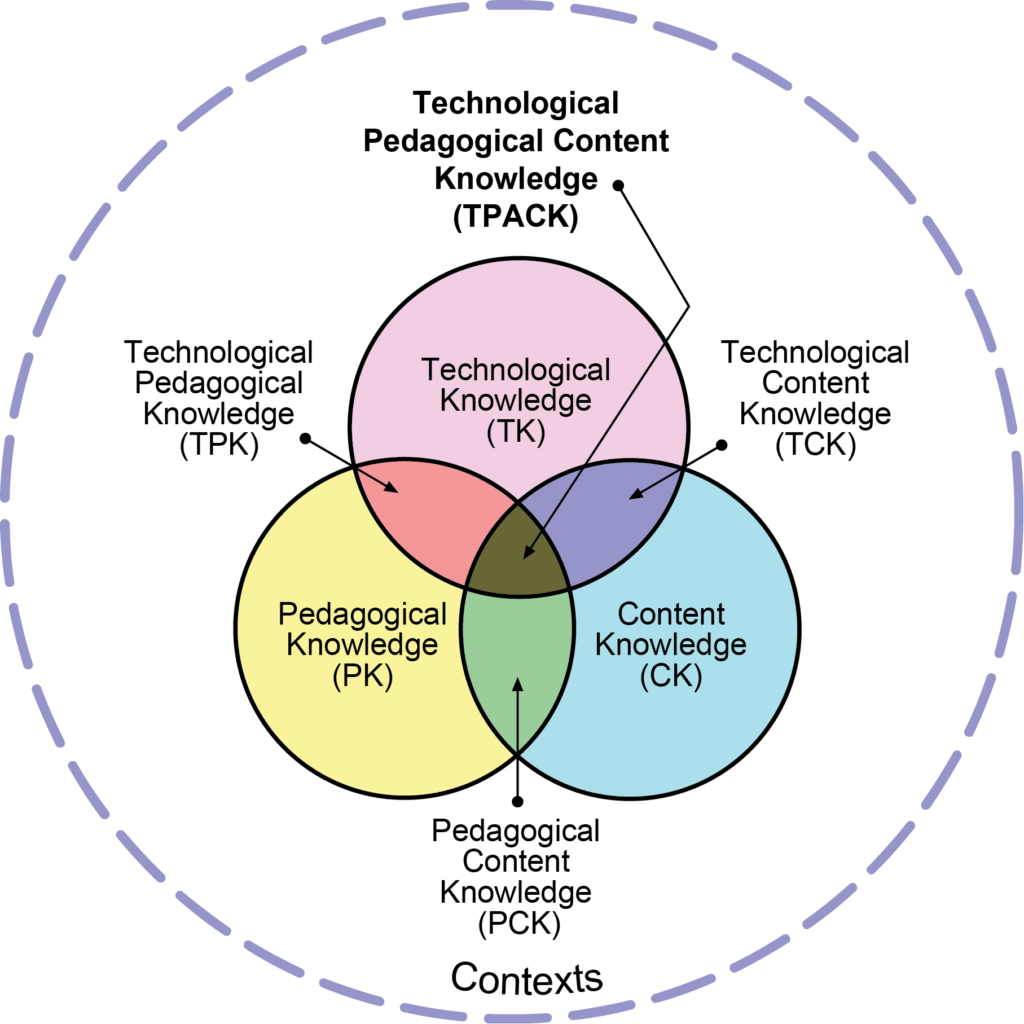
TPACK is a model to support the effective use of technology in learning and teaching. It splits educator knowledge and skills into three broad categories:

content knowledge
pedagogical knowledge, and
technological knowledge

The intersection of all three categories is technological pedagogical content knowledge (TPACK).

Find out more about TPACK with this link


Technical knowledge

The Digital Skills for Scottish Educators guidance defines the skills and knowledge required to be ‘digitally literate’ as required by national educator standards. This includes:

  • setting up and using devices
  • communicating and creating documents
  • accessing accounts, information and media online
  • keeping devices and accounts secure

View the digital skills for Scottish educators guidance with this link


Content knowledge

Curriculum for Excellence (CfE) defines the learning to take place for children and young people aged 3-18.  The Youth Work Outcomes & Skills Framework provides guidance on the learning that young people can undertake.

View the CfE Experiences and Outcomes documents with this link

View the Youth Work Outcomes & Skills Framework with this link


Pedagogical knowledge should be based on HGIOS section 2.3 (learning, teaching and assessment):

  • Staff access and apply relevant findings from educational research to improve learning and teaching
  • Learning resources clearly identify what is to be learned and assessed
  • Assessment approaches are matched to the learning needs of learners and are used to support them to demonstrate where they are in their learning
  • A quality body of evidence is used to support assessment judgements and decisions about next steps
  • Learners receive high-quality feedback that is effective in informing improvements in learning

View the HGIOS 4 document with this link


Next steps

The University of Glasgow created a toolkit for reflecting on the use of digital and AI technologies in learning and teaching. It encourages users to consider how digital and AI technologies are selected, implemented, and evaluated in relation to educational aims, learner needs, and professional values. This aligns with HGIOS 4 section 1.5. Users are encouraged to engage critically with the materials, apply them to their own settings, and contribute feedback and examples of practice.

View the digital learning and teaching toolkit (UofG)


Education Scotland has created guidance, with examples, of how digital technology can be used to support or enhance learning, teaching and assessment based on HGIOS.