
The first meeting for the Pilot Review for Computing Science takes place on 26th November 2024.
The Agenda for the day is as follows
Workshop 1 – Examine the evidence: The Why and the What
Agenda
10:00 Arrival and Registration
10:20 Welcome and Ice Breaker
- Overview of the day
Kirsty McFaul, Education Scotland
10:35 Setting the Scene
- Introducing Curriculum Improvement Cycle.
Andy Creamer, Education Scotland
11:00 Provocation Session 1
- Where are we now in Scotland? An Industry and Business Perspective
Karen Meechan, Scotland IS - What is happening and what does it tell us? Overview of Computing in Schools.
Brian Clark, Education Scotland
11:30 Comfort Break
11:45 Provocation Session 2
- What is happening and what does it tell us? Overview of Computing in Further Education.
Iain Shand, West College Scotland - What does current research tell us and where are we going? Overview of current pedagogy research
Dr Sue Sentence, Raspberry Pi Computing Education Research Centre - What does current research tell us and where are we going? STACS perspective
Professor Quintin Cutts, STACS University of Glasgow
12:30 Group Knowledge Capture: cross group discussion
- Where are we now?
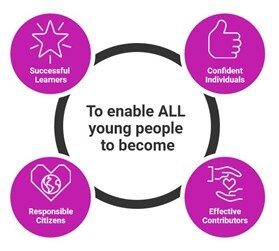
- How is Computing Science contributing to the 4 capacities – what is working?
13:00 Lunch
Opportunity to view other group responses
13:30 Group Discussions – 3 Key Questions
- Why Computing Science?
- Looking ahead to 2030, what knowledge, skills and attributes will learners require to realise the ambitions of computing science in education?
- What are the challenges and opportunities for learners in acquiring the knowledge, skills and attributes you have identified?
14:45 Summary and overview of Group Discussion activity
15:00 Next Steps
- What next?
- How will we get there?
- Exit pass activity
15:30 Close.
Strategic Director of Education Scotland – Ollie Bray, recently spoke to CS teachers about the curriculum improvement cycle. You may find it useful to watch prior to the meeting.

Computing Science – Some Interesting Reading
- What is Computing Science?
- Es and Os
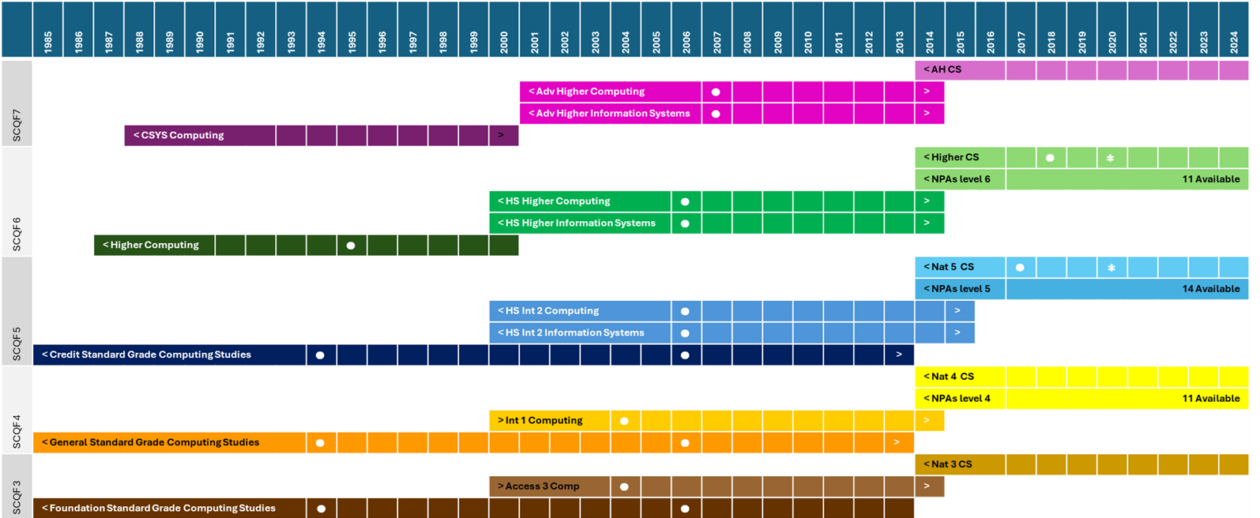
- Brief Timeline of CS Qualifications
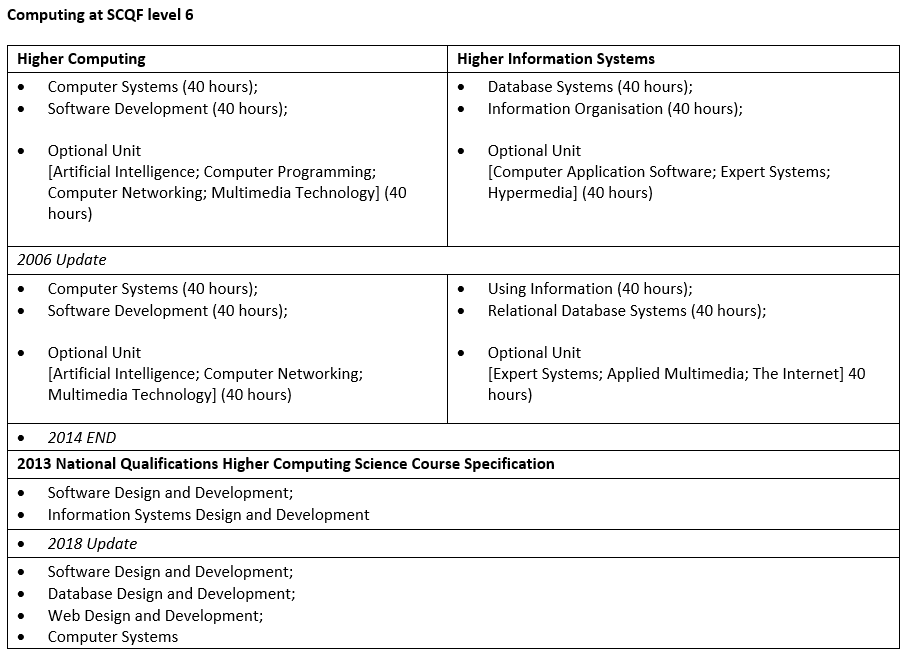
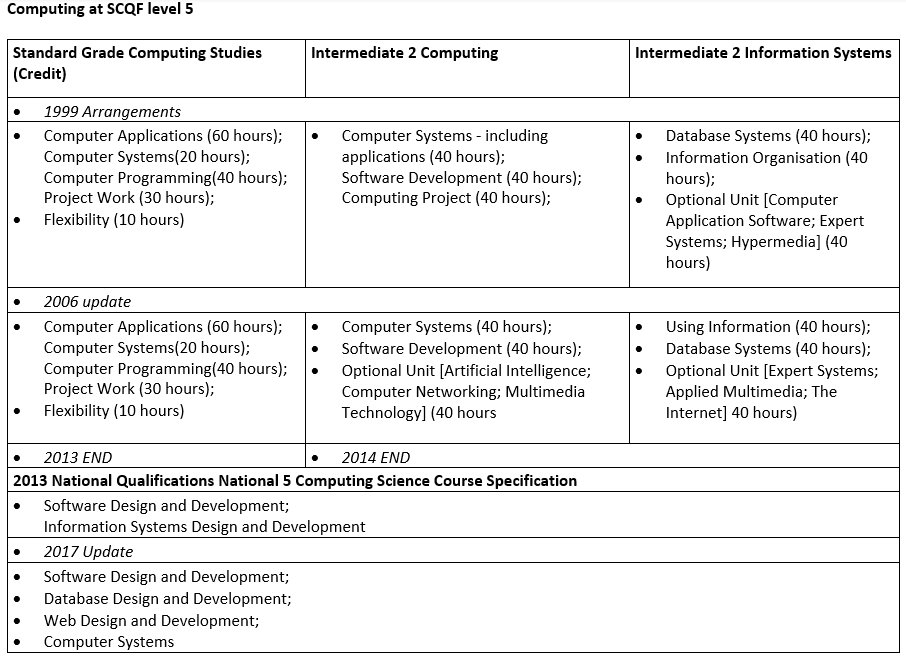
- CS course content over time
- Current Senior Phase course options at SCQF Levels 4, 5 and 6
- McKinsey Technology Trends Outlook 2024
- STACS Suggested Reading
- Interesting Links
Here is a collection of definitions, not prescriptive, of Computing Science taken from the web. Also included is the summary of the rationale for current SQA Nat 5 Computing Science course and the current Experience and Outcomes.
You may find them useful when considering the question “What is Computing Science”. If you have time, search the web or ask AI what Computing Science is.
Britannica
Computer science, the study of computers and computing, including their theoretical and algorithmic foundations, hardware and software, and their uses for processing information. The discipline of computer science includes the study of algorithms and data structures, computer and network design, modeling data and information processes, and artificial intelligence. Computer science draws some of its foundations from mathematics and engineering and therefore incorporates techniques from areas such as queueing theory, probability and statistics, and electronic circuit design. Computer science also makes heavy use of hypothesis testing and experimentation during the conceptualization, design, measurement, and refinement of new algorithms, information structures, and computer architectures.
Computer science is considered as part of a family of five separate yet interrelated disciplines: computer engineering, computer science, information systems, information technology, and software engineering. This family has come to be known collectively as the discipline of computing. These five disciplines are interrelated in the sense that computing is their object of study, but they are separate since each has its own research perspective and curricular focus.
Code Academy
Computer science is the study of computers and how they work, including software, hardware, and algorithms. An algorithm is a list of instructions for completing a task. In computer science, an algorithm tells the computer what to do and how to do it.
Computer science is an umbrella term that covers everything from artificial intelligence and data science to robotics, game development, cybersecurity, and more. While you might think of computers like laptops or desktops, computer science involves everything to do with computing. That means everything from cell phones to ATMs to wearable technology like Fitbits.
It’s also a way of thinking:
“Computational thinking is about understanding how computers solve real-world problems. There are things we do every day that use computational thinking. If I’m meeting a friend at a restaurant, and I know where the restaurant is, I’ll naturally find the shortest or most efficient path there. Being able to recognize how we think computationally and translating that to programming is a big part of gaining that foundational computer science knowledge.”
MIT
Computer science deals with the theory and practice of algorithms, from idealized mathematical procedures to the computer systems deployed by major tech companies to answer billions of user requests per day.
Primary subareas of this field include: theory, which uses rigorous math to test algorithms’ applicability to certain problems; systems, which develops the underlying hardware and software upon which applications can be implemented; and human-computer interaction, which studies how to make computer systems more effectively meet the needs of real people. The products of all three subareas are applied across science, engineering, medicine, and the social sciences. Computer science drives interdisciplinary collaboration both across MIT and beyond, helping users address the critical societal problems of our era, including opportunity access, climate change, disease, inequality and polarization.
University of Oxford
Computer science is about understanding computer systems and networks at a deep level.
Computers and the programs they run are among the most complex products ever created; designing and using them effectively presents immense challenges. Facing these challenges is the aim of computer science as a practical discipline, and this leads to some fundamental questions:
- How can we capture in a precise way what we want a computer system to do?
- Can we mathematically prove that a computer system does what we want it to?
- How can computers help us to model and investigate complex systems like the Earth’s climate, financial systems or our own bodies?
- What are the limits to computing? Will quantum computers extend those limits?
The theories that are now emerging to answer these kinds of questions can be immediately applied to design new computers, programs, networks and systems that are transforming science, business, culture and all other aspects of life.
University of Glasgow
Computing science is wide-ranging: from programming and engineering large software systems, to the design and evaluation of human-computer interfaces, algorithms, computer and network systems, artificial intelligence, information retrieval and big data systems.
University of Edinburgh
Computer science concerns understanding, designing, implementing and using computing systems. These systems can range in scale, and complexity, from the tiny components of a single processor to the globe-spanning internet.
The core concepts of computing come from mathematics, logic, and engineering, such as:
- what it means to compute
- what can or cannot be computed
- how computers work
Computer science also concerns the practical techniques of programming computers to solve real and difficult problems. There are many links to other subjects, including:
- electronics
- physics
- mathematics
- biology
- psychology
- linguistics
- sociology
University of Dundee
Computer science is the study of computers and computational systems. It’s about understanding how computers work and creating new ways for these to solve complex problems. To become a computer scientist, you’ll need to understand concepts such as:
- algorithms
- data structures
- programming languages
- computer architecture
- software development methodologies
Some computer scientists will specialise in artificial intelligence (AI) and machine learning. Others might choose a field such as user experience (UX).
As the world changes and technology advances, so does computer science. You can see this in the use of computer science. It’s in things like smart devices and driverless vehicles.
SQA National 5 Computing Science
The National 5 Computing Science course encourages candidates to become successful, responsible and creative in using technologies, and to develop a range of qualities including flexibility, perseverance, confidence, and enterprise. At this level, the course covers a common core of concepts which underpin the study of computing science and explores the role and impact of contemporary computing technologies. It also includes a range of transferable skills, which opens up a wide range of career and study opportunities.
It enables candidates to:
- apply computational-thinking skills across a range of contemporary contexts
- apply knowledge and understanding of key concepts and processes in computing science
- apply skills and knowledge in analysis, design, implementation, testing and evaluation to a range of digital solutions
- communicate computing concepts and explain computational behaviour clearly and concisely using appropriate terminology
- develop an understanding of the role and impact of computing science in changing and influencing our environment and society
The course has four areas of study:
- Software design and development
- Computer Systems
- Database Design and Development
- Web Design and Development
|
Experiences and Outcomes |
|||||
|
Organiser |
Early |
First |
Second |
Third |
Fourth |
|
Understanding the world through computational thinking |
I can explore computational thinking processes involved in a variety of everyday tasks and can identify patterns in objects or information. TCH 0-13a |
I can explore and comment on processes in the world around me making use of core computational thinking concepts and can organise information in a logical way. TCH 1-13a |
I understand the operation of a process and its outcome. I can structure related items of information. TCH 2-13a |
I can describe different fundamental information processes and how they communicate and can identify their use in solving different problems. TCH 3-13a I am developing my understanding of information and can use an information model to describe particular aspects of a real world system. TCH 3-13b |
I can describe in detail the processes used in real world solutions, compare these processes against alternative solutions and justify which is the most appropriate. TCH 4-13a I can informally compare algorithms for correctness and efficiency. TCH 4-13b |
|
Understanding and analysing computing technology |
I understand that sequences of instructions are used to control computing technology. TCH 0-14a I can experiment with and identify uses of a range of computing technology in the world around me. TCH 0-14b |
I understand the instructions of a visual programming language and can predict the outcome of a program written using the language. TCH 1-14a I understand how computers process information. TCH 1-14b |
I can explain core programming language concepts in appropriate technical language. TCH 2-14a I understand how information is stored and how key components of computing technology connect and interact through networks. TCH 2-14b |
I understand language constructs for representing structured information TCH 3-14a I can describe the structure and operation of computing systems which have multiple software and hardware levels that interact with each other. TCH 3-14b |
I understand constructs and data structures in a textual programming language TCH 4-14a I can explain the overall operation and architecture of a digitally created solution TCH 4-14b I understand the relationship between high level language and the operation of computer TCH 4-14c |
|
Designing, building and testing computing solutions |
I can develop a sequence of instructions and run them using programmable devices or equivalent. TCH 0-15a |
I can demonstrate a range of basic problem solving skills by building simple programs to carry out a given task, using an appropriate language. TCH 1-15a |
I can create, develop and evaluate computing solutions in response to a design challenge. TCH 2-15a |
I can select appropriate development tools to design, build, evaluate and refine computing solutions based on requirements. TCH 3-15a |
I can select appropriate development tools to design, build, evaluate and refine computing solutions to process and present information whilst making reasoned arguments to justify my decisions. TCH 4-15a |
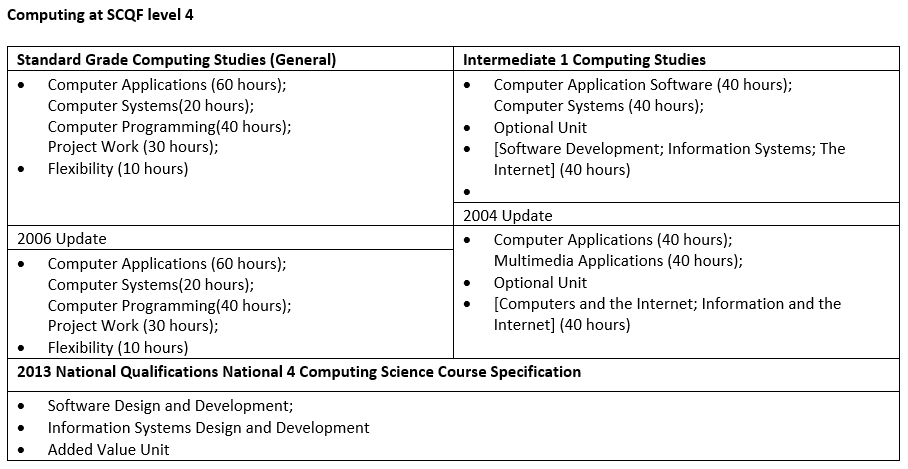
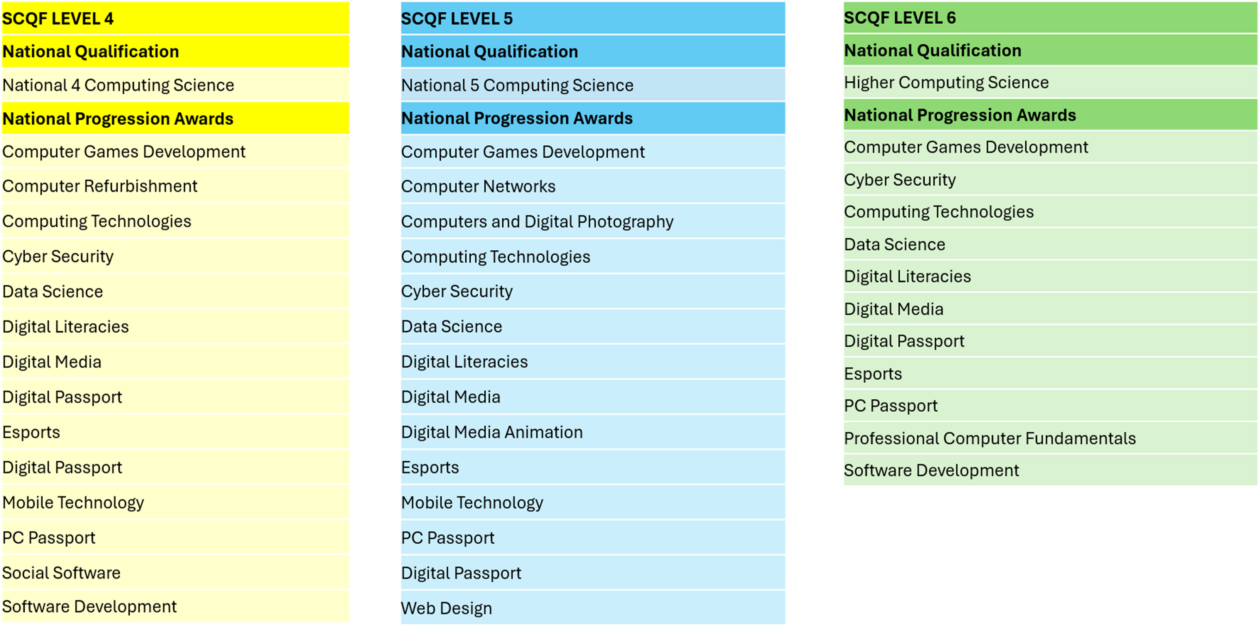
When we think about Computing Science and associated technologies in education, we often look at how this area of study can lead to positive destinations and careers for our learners. The McKinsey Technology Outlook 2024 highlights which technology trends matter most for companies in 2024. New analysis by the McKinsey Technology Council highlights the adoption, development, and industry effects of advanced technologies. View online
Extracts:
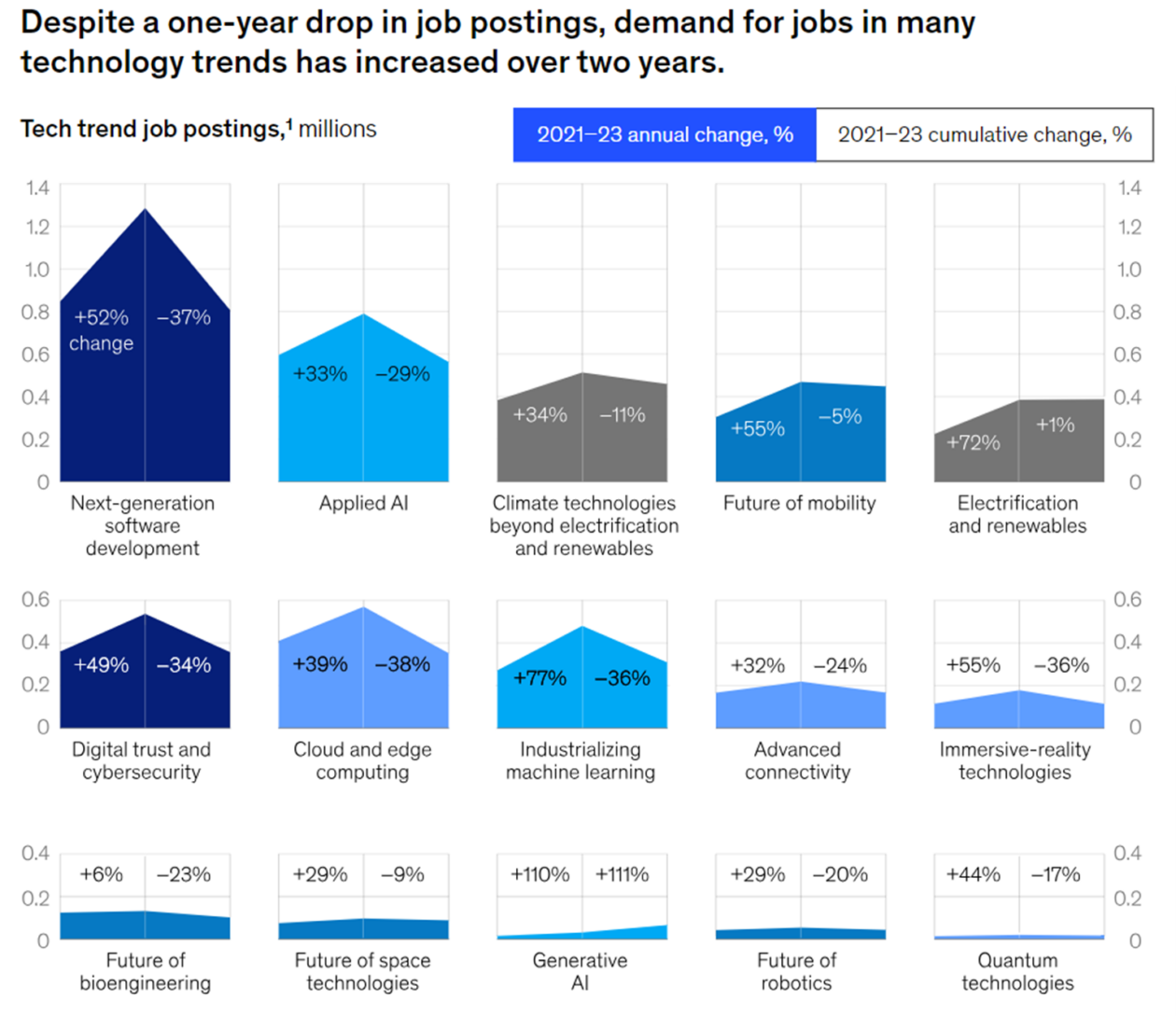
Analysis of 4.3 million job postings across our 15 tech trends underscored a wide skills gap. Compared with the global average, fewer than half the number of potential candidates have the high-demand tech skills specified in job postings. Despite the year-on-year decreases for job postings in many trends from 2022 to 2023, the number of tech-related job postings in 2023 still represented an 8 percent increase from 2021, suggesting the potential for longer-term growth
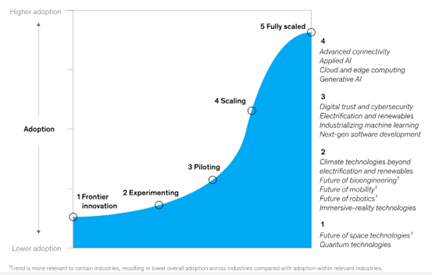
Across the 15 technologies, adoption levels vary across different industries and company sizes, as does the perceived progress toward adoption.
STACS and Computing Science
Scottish Teachers Advancing Computing Science
Big Ideas in Computing Science
The Big Ideas of K-12 Computer Science Education
Seven Big Ideas of Computer Science (From the AP CS Principles Curriculum Framework)
Creativity and Computing Science
Creativity in Computer Science
Studying interrelations of computational thinking and creativity: A scoping review (2011–2020)
Computing Science Curriculum
Research review series: computing (England)
A changing nation: how Scotland will thrive in a digital world (Scotland)
The Curriculum in Scotland
The Curriculum Improvement Cycle
You can download a PDF of the agenda here: Computing Science Pilot Review – Workshop 1 – Agenda and Reading – Nov 2024
You can download the reading as a PDF here: Computing Science Interesting Reading

You must be logged in to post a comment.